Press Releases

Interfaith Alliance President Welton Gaddy on the Passing of Rev. Bob Edgar

Rev. Bob EdgarWASHINGTON, DC – On behalf of its members, board of directors and staff, Interfaith Alliance president Rev. Dr. C. Welton Gaddy released the following statement on the death of Rev. Bob Edgar, who was a strong ally in the organization's work to protect religious freedom.

It is with profound sadness and shock that I learned of the death of Rev. Bob Edgar, a dear friend of mine, an avid supporter of Interfaith Alliance, president of Common Cause, former General Secretary of the National Council of Churches of Christ in the USA, and a former member of Congress.

Bob has been one of most consistent and loudest cheerleaders for the work of Interfaith Alliance. And, he has been a close personal friend with whom private conversations were always valuable. Less than a week ago in a meeting at the Aspen Institute I teased Bob about his puns and jokes, but I admired the fact that I never once heard him stop hoping or saw him without a smile on his face. Standing on the sidewalk around Dupont Circle last week, Bob and I talked for a long time about our work and concerns. We spoke seriously about the personal cost involved in our commitment to the kind of unrelenting activity required in trying to make our country a better, more secure, and more caring place to live. We both agreed the toll it took was worth it because of the passion we had for our work

Bob Edgar will be missed by many of us who now, far too soon, grieve his death and who always will be grateful for his life.

Please enjoy this compelling interview Welton had with Bob in Vietnam in 2011.

Play

Rev. Bob Edgar and Welton Gaddy at the Capitol

Interfaith Alliance President Welton Gaddy Calls for Restraint in Reporting on the Boston Marathon Bombings

WASHINGTON, DC –Interfaith Alliance President Rev. Dr. C. Welton Gaddy released the following statement today expressing his grief and anger at the perpetrators of the Boston Marathon bombings, while urging the media and the public to resist the urge to assign motives until more information is known.

The bombings at the Boston Marathon were a horrible tragedy and their perpetrators must be brought to justice. Our hearts go out to the people of Boston and we share the grief and anger they feel. Following the release of the suspects’ photos yesterday, we awoke this morning to news that one suspect was killed and authorities were closing in on the other. At the same time it became clear that others may be involved.

Information on the background of the suspects has been scarce, and what we have been told about them has changed significantly as new evidence emerges. Authorities have been careful not to assign motives to these suspects and I would urge the news media and the public at large to follow that example. Justice for the victims of the bombings will not be served by stereotyping, rampant speculation, and hatred; rather it will be achieved by prosecuting those responsible under the rule of law.

Unfortunately, in the last few days too many members of the media have engaged in conjecture based on stereotypes and grainy photos. They have assumed motive based on skin color and ethnic origin. This shoddy reporting has resulted in innocent bystanders being implicated in crimes they had nothing to do with, where they were in fact as much victims as anyone else. Sadly, we have also already heard reports of innocent individuals who are or “look” Muslim being accosted and attacked in the streets.

Regardless of the religious background or the ethnic origin of the suspects, it says no more about the broader communities from which they come than Timothy McVeigh’s actions said about Christians when he bombed the Alfred P. Murrah Federal Building in Oklahoma City on this very day 18 years ago.

The actions of the sick individuals behind this terrorist attack have already devastated the lives of far too many people. We cannot allow them to cause further damage by letting their actions inspire hatred and violence against Muslims, other religious minorities, and people presumed to belong to these maligned minority groups. That kind of collective punishment goes against everything we stand for as Americans.

Interfaith Alliance Joins Legal Brief Opposing Louisiana’s School Voucher Program

Washington — Seeking to invalidate a Louisiana school voucher program recently signed in to law by Governor Bobby Jindal, Interfaith Alliance has joined an amicus brief that challenges to the program on the grounds of religious freedom. The brief, submitted on behalf of Americans United for the Separation of Church and State, the ACLU, the ACLU of Louisiana and the Interfaith Alliance, argues that the scheme will impermissibly redirect taxpayer dollars intended for public schools, to private schools who will use those funds to provide a religion-based education.

Rev. Dr. C. Welton Gaddy, who has been an outspoken critic of the voucher scheme both as president of Interfaith Alliance and in his capacity of Pastor for Preaching and Worship of Northminster (Baptist) Church in Monroe, La. Rev. Gaddy issued the following statement:

"Louisiana’s school voucher program is bad for religious freedom and bad for public education. It allows tax dollars to be used to fund curricula infused with theology at every level and across subject matters. While not all private schools teach from a religion-based curriculum, nearly every private school available to Louisiana students is a religious school. As a pastor and resident of Louisiana myself, this issue is not merely philosophical—it is one in which I have a personal stake."

'Let me be clear: I am not bothered by a Christian school teaching its students the same tenets that children in my church learn every Sunday. What I find appalling is that these schools are teaching theology in science, history and math classes and, through school vouchers, are doing so with my taxes. I defend their right to teach future generations about their faith, and the right of any Louisiana citizen to choose a private religious school over a public one—but neither the parents nor the schools should receive financial support from our government to do so."

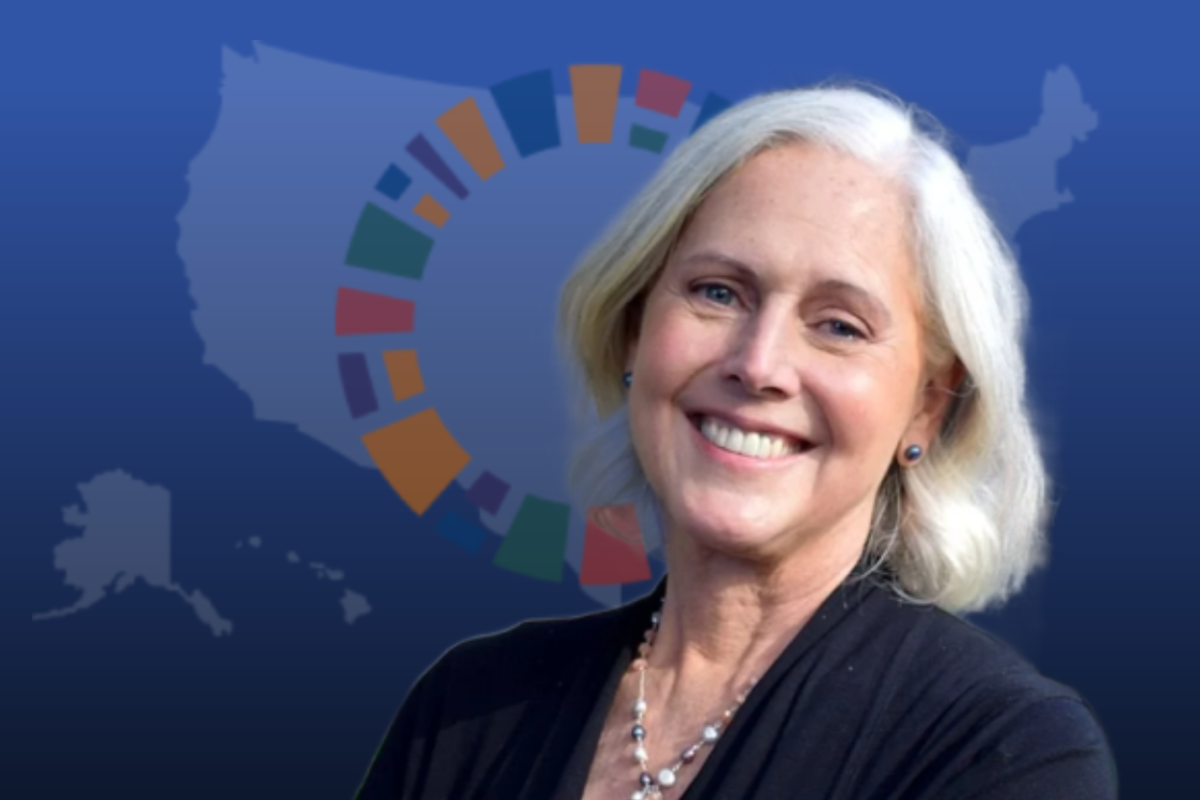
Interfaith Alliance Celebrates the Appointment of Melissa Rogers to Head the White House Faith-Based Office

Washington, D.C.—Today, the White House announced President Barack Obama’s appointment of Melissa Rogers as the new Director of the Office of Faith-Based and Neighborhood Partnerships. Interfaith Alliance President, Rev. Dr. C. Welton Gaddy issued the following statement praising the appointment of Rogers:

"I know of no better person President Obama could have appointed as the new Director of the Office of Faith-Based and Neighborhood Partnerships than my valued friend and longtime colleague Melissa Rogers. For more than 25 years, Melissa has been a trusted coworker in the fight to protect religious liberty. Melissa’s rich experience in the dialogue between law and faith, as well as between religion and government, will serve our nation well."

"During President Obama’s first term, great efforts were made to bring the faith-based initiative more in line with the Constitution and to better protect social service beneficiaries. As a member of the task force on the President’s Advisory Council charged with bringing the faith-based office more in line with the Constitution, I saw the benefits of Melissa Rogers’ wisdom, skill, and leadership among diverse traditions and differing points of view. Though I have been opposed to a faith-based office in the White House since the entity was first established, with Melissa as the leader of that office, I have more confidence than I ever have felt before that the office will pay close attention to the religious liberty clauses in the Constitution. Much work is yet to be done on the proper relationship between federal money and sectarian organizations, including resolving whether these organizations can continue to accept taxpayer dollars while discriminating in hiring based on religion—which I do not believe they should be allowed to do. I know of no individual better suited to oversee this important endeavor, with sensitivity to the competing views and priorities at play, and with great integrity, than Melissa Rogers."

Interfaith Alliance Submits Testimony to House Hearing on Anti-Semitism

Written Testimony of Rev. Dr. C. Welton Gaddy, President of Interfaith Alliance
Submitted to
The House Committee on Foreign Affairs
Subcommittee on Africa, Global Health, Global Human Rights, and International Organizations
for the Hearing Record on “Anti-Semitism: A Growing Threat to All Faiths”
February 27, 2013

As a Baptist minister, a patriotic American and the President of Interfaith Alliance, I submit this testimony to The House Committee on Foreign Affairs Subcommittee on Africa, Global Health, Global Human Rights, and International Organizations for the Hearing Record on “Anti-Semitism: A Growing Threat to All Faiths.”  A national, non-partisan organization, Interfaith Alliance celebrates religious freedom and is dedicated to protecting faith and freedom with members nationwide who belong to 75 faith traditions as well as those without a faith tradition.

Interfaith Alliance focuses not only on religious freedom but also on uniting diverse voices to challenge extremism, toward an end to bigotry and ignorance.  One of Interfaith Alliance’s top priorities is combating religion-based discrimination, whatever form it takes, and hatred against religious groups.  In the last few years domestically, much of our focus has been on combating anti-Muslim bigotry, as well as bigotry against Sikhs and Hindus.  Unfortunately, hate crimes, violent attacks on mosques and temples and Muslim, Sikh and Hindu individuals have too often shown the need for this work, for dialogue, for better education about our neighbors of different faiths.  This is not to say that anti-Semitism has ceased to exist in our nation—sadly it has not—but if I have learned one thing, it is the cyclical nature of bigotry against minority faith groups; at one time it was Catholics, at too many times it has been Jews and now it is Muslims, Sikhs and Hindus.  Each wave of antagonism against one faith or another leaves indelible blemishes on our country.

Though the scope of this hearing is anti-Semitism abroad and the scope of our work is on domestic issues, we know that bigotry does not stop at national borders.  Throughout history, we have too often seen the impact of hatred abroad here at home, and vice versa.  I applaud the sentiment of the title of this hearing and would add that bigotry against one group—be it a group that is religious, racial, ethnic or otherwise—should be seen as a threat to any group of individuals who can far too easily fall victim to stereotyping and generalizations of a virulent nature.  

Yet, the issues we face here in the United States are not unique to our nation.  Bigotry against religious communities can take many shapes depending on the country, the city even, in which we focus our discussion.  Nazi and Holocaust rhetoric and the occasional overlap of anti-Israel sentiments with broader anti-Semitism are just a few of the signs that, sadly, anti-Semitism is not yet a thing of a past and indeed continues to morph into new (and sometimes subtler) forms.  Similarly, solutions take different forms in different parts of the world based on the facts on the ground. 

Though the primary focus of my work—both at Interfaith Alliance and beyond—is here in the United States, it is not my only focus.  In the 15 years I have led Interfaith Alliance, I have participated in many international conferences that have informed my work at home—much of it related to anti-Semitism.  Participating in two international dialogues hosted by the King of Spain and the King of Saudi Arabia, I witnessed a gaping absence of Jewish participation and a quiet unwillingness to talk about the need for a Jewish presence.

Personally, I have had great opportunities to exchange best practices, share the American experience of interfaith cooperation abroad, and learn from the on-the-ground experiences of colleagues worldwide.  Most recently, a trip to Israel with several other civil rights leaders to learn about the conflict between Jews and Arabs taking place in the Middle East was eye-opening and inspiring.  Though no simplistic answers suffice when combatting anti-Semitism, I must observe that anti-Semitism could be reduced considerably by the public paying attention to more accurate information about what is occurring in the Middle East.  Interactions with Sikhs, Muslims, Hindus and leaders in other traditions have taught me that the problem with anti-Semitism is not inherent in any religion.  The problem results from propaganda, poor media coverage, and uninformed political leaders who stir up prejudice.

Across the past 15 years I have not met anybody that wanted to foster anti-Semitism.  During the same time I have encountered scores of people who revealed an anti-Jewish bias as a result of misinformation or incomplete information about the truth on the ground in the Middle East and the political and financial support for both Jews and Muslims abroad.  With the help of Jewish, Christian and Muslim leaders along with supporters from other religious traditions, Interfaith Alliance has sought to serve as an agency of mutual understanding and mutual cooperation.  Make no mistake about it though, that work among us, even as among any person or institution doing that work, requires patience and a will to listen to criticism in order to get to a better place.

Whatever the result of this hearing, be assured that I personally and Interfaith Alliance institutionally are willing to do all we can to eliminate the presence of anti-Semitism in the United States.  We are delighted you share that goal.