State of Belief
Amy Spitalnick: Antisemitism and Democracy
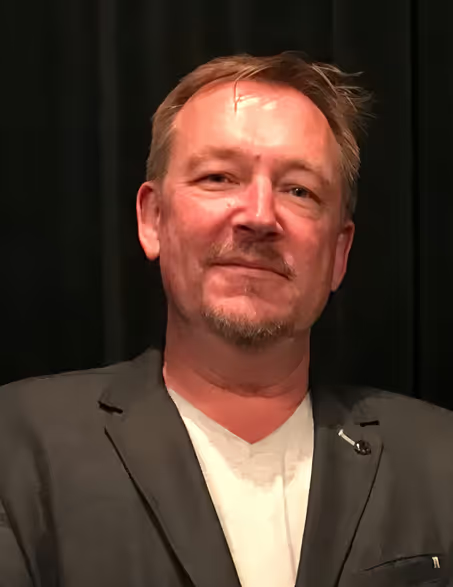

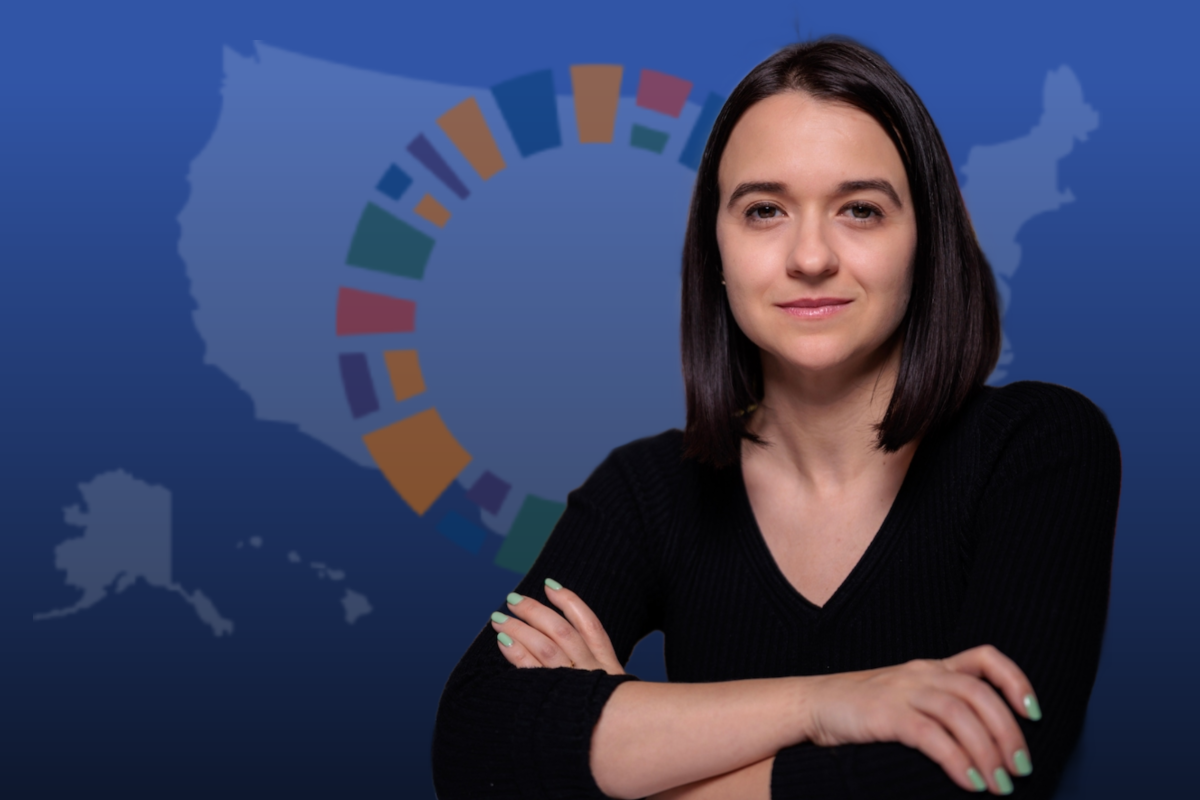
In a time when fundamental democratic norms are increasingly contested and targeted, religious identities and freedoms are threatened by increasing hate crimes, conspiracy theories, and misinformation. Amy Spitalnick of the Jewish Council for Public Affairs is working to put out these fires by fighting antisemitism and anti-democratic extremism, protecting religious freedom, and encouraging difficult conversations across lines of difference.
For this week's episode of The State of Belief, Interfaith Alliance’s weekly radio show and podcast, Amy joins host Rev. Paul Brandeis Raushenbush to discuss antisemitic actions and tropes, and how they pose a grave threat to broader multi-faith liberal democracy.
“We know that we're not alone in this, and we know that so many communities in the region and here in the United States are still very much sitting in that pain and that trauma because of the ongoing war; the ongoing, hostages that are being held; that the loss of innocent Palestinian lives; the horrific toll on Israel and the Israeli people. And again, the waves of hate here at home that we're continuing to grapple with. And we have no choice in this moment but to think about what this all means - not just to this question of allyship and helping people understand what it means to show up as an ally right now, which has been such a huge part of our work at JCPA - but also to not shy away from those hard and challenging conversations, even as some of the loudest voices tell us that the pain and the grief we're feeling mean we should just put up walls and walk away.”
- Amy Spitalnick, CEO of the Jewish Council for Public Affairs, the national convener of Jewish coalitions working across communities to build a just and inclusive American democracy. Amy is the former executive director of Integrity First for America, which won its groundbreaking lawsuit against neo-Nazis, White supremacists, and hate groups responsible for the Charlottesville violence. An expert on extremism and building effective partnerships for good, Amy has worked for a number of federal, state, and local officials, as well as campaigns and advocacy organizations.
Transcript
REV. PAUL BRANDEIS RAUSHENBUSH, HOST:
Amy Spitalnick is CEO of the Jewish Council for Public Affairs, the national convenor of Jewish coalitions working across communities to build a just and inclusive American democracy. Amy is the former executive director of Integrity First for America, which won its groundbreaking lawsuit against neo-Nazis, White supremacists, and hate groups responsible for the Charlottesville violence. An expert on extremism as well as building effective partnerships for good, Amy has held positions in government as well as activist organizations, and I am, for obvious reasons, thrilled to welcome her to The State of Belief today.
Amy, thank you so much for joining us!
AMY SPITALNICK, GUEST:
Thank you so much for having me.
PAUL RAUSHENBUSH:
This seems like an amazing position for you. You've been in it for about a year, right?
AMY SPITALNICK:
Almost a year. I started full-time, in early September of last year, and had exactly one month before our world exploded in the way that we all know. And I feel really fortunate to be in this role right now. It is just a deeply painful and challenging time for the Jewish community. A frightening moment in the fight for democracy and against broader extremism. And for me, there is no place better positioned to mobilize the Jewish community to fight for our own safety and our democracy than JCPA. So I just feel incredibly fortunate to be in this role right now, as challenging as it might be.
PAUL RAUSHENBUSH:
I understand that feeling, because both of us are in situations where our work is not easy right now, but at least we're not one of those people who's saying, what can we do? We have lots to do.
Maybe it would be helpful for our listeners - and for me - I'd be interested just to hear a little bit about your background: where did you grow up and what kind of family environment as far as Judaism goes. What's your background?
AMY SPITALNICK:
So I'm a granddaughter of Holocaust survivors. And for me, that really, I think, shaped so much of my worldview growing up. And I think, also, for so much of my life, I was a Jew in America at a time when antisemitism was not running rampant, when threats to our democracy were not so pronounced.
And to now, at this point in my life, sort of see how that shifted has also really shaped a lot of who I am. I grew up in New York, just outside the city. As I mentioned, my grandparents, my mom's parents, survived the Holocaust and came here to New York in hopes of a better life for their family. And they found it. My grandfather was a cab driver, among many other roles he had. My grandmother was a seamstress. They raised my mom, who became a New York City public school teacher, as was my dad - daughter of two, now retired, New York City public school teachers. And so much of that really shaped my worldview.
I think my desire to be in public service, in the broad sense of the word - spent a good amount of my career in New York government and politics, because I believe that so much of this work protecting communities, protecting our democracy, protecting fundamental rights - is happening on the state and local levels around the country.
And so that included roles in New York City Hall and the mayor's office, as well as in the New York Attorney General's office, where I was fortunate to lead communications and policy during the Trump administration at a time when we saw state attorneys general really being on the frontlines of the fight to protect our communities: from combating the Muslim ban and all three of its iterations, to protecting immigrants and the rollback of DACA, to environmental rollbacks, to the rise in hate crimes that we saw spike in late 2016 after that election.
And so that work was really much like JCPA feels right now - right place at the right time, a place where we knew state AGs and, in particular, the New York Attorney General's office could have an outsized impact in the fight to protect communities’ rights. I was so fortunate and heartened to be a part of that team at such a crucial moment, and I think it really shaped how I understand the rise of anti-democratic extremism, of hate crimes, and of the threats to our community. So much of what really came to the fore in August of 2017 during the violence in Charlottesville.
And I think, like so many Americans, the visceral feeling I felt watching that torch march, and then the horrible car attack and broader violence the next day, was a mask-off moment in this trajectory in which antisemitism, racism, White supremacy, extremism has become increasingly pervasive and normalized in our society, and in turn calls us to do something about it.
PAUL RAUSHENBUSH:
Yeah, well, first of all, let me say as someone who has two kids in New York City public schools, thank your parents for their great contribution. I'm so grateful for the public schools in New York City. We're fortunate to be in a wonderful school, but it's an amazing service - and the teachers are incredible.
Just hearing you talk about Charlottesville, that was a moment for me when they were saying, “Jews will not replace us, Jews will not replace us.” And I was like, what are they talking about? And this goes way back, this idea of the Great Replacement Theory and all of this stuff. And I'm embarrassed to say, how could I have been so ignorant?
PAUL RAUSHENBUSH:
But I think many of us were skating along the surface and not realizing what was happening underneath. And, you know, this antisemitism that is kind of melded with White supremacy and also anti-Black racism and all kinds of things. So, certainly, you have had an amazing trajectory, and congratulations. Your work at Integrity First - I remember when you won that lawsuit, and it was just so important that there was some reckoning in that. Although we've seen that it didn't diffuse it and it didn't go away.
In fact, we're in a moment - I just had a conversation, recently, with Margaret Huang, who's the president of the Southern Poverty Law Center, on this show. And we were talking about the hate report from 2023. And it's really horrific, just the white Christian Identity movement and its connection with antisemitism is absolutely shocking.
Could you give us a little background on the Jewish Council for Public Affairs? What was the genesis of that organization? I know it's gone through some iterations, and I'm just curious if you can kind of give us a little background of the organization you stepped into.
AMY SPITALNICK:
Yeah. So JCPA is marking its 80th year this year, in 2024. It was founded in the dark days of World War II and the Holocaust, at a time when Jews in America were trying to figure out how to build the sorts of coalitions and partnerships and political power we needed to stand up for the Jews of Europe, to fight for our safety - and the safety of all communities - at a time that really felt so helpless. And JCPA was founded to really be the formal piece of the Jewish community that worked across diverse communities, building those coalitions, building those relationships.
And that's been at the core of our work. JCPA was central to organizing the Jewish community during the Civil Rights Movement. We were one of the three co-founders of the Leadership Conference on Civil and Human Rights, of which we're still a very proud member and work very closely with. And throughout our history have really been at the forefront, particularly working with Jewish community relations councils across the country, of which there are 125, focused on this question of community relations, of bridge-building, of coalition-building, of how do we protect the sort of inclusive democracy that we know is inherent to Jewish safety and the safety of all communities?
And at a moment like this, when we know these rights, the safety of Jews and so many communities is under threat, and as our democracy is facing new threats and challenges, the work of JCPA has never been more urgent. And it also means that we need to keep adapting that work to meet the moment.
So I was brought in about a year ago as the new CEO, to lead what we're calling the new JCPA. We intentionally restructured some of our work to make it more nimble, more responsive to the moment that we're in. and this is taking a few different forms, including these new action networks that we just launched this spring, focused on protecting and advancing our democracy and countering antisemitism and all forms of hate - recognizing that Jewish safety is inextricably linked with the safety of each and every community in this country, and with inclusive, pluralistic democracy. And so, mobilizing national Jewish organizations and our non-Jewish allies and interfaith partners, along with our local Jewish communities through the JCRC’s, synagogues, and others.
We're mobilizing together for the policies on the federal, state and local levels; the advocacy, the coalition-building, the programming and public engagement that we need to advance - not just this narrative, not just understanding of how inextricably linked all of our safety and futures are, but also the actual policies and concrete actions that will protect our democracy and keep our community safe at this really dire moment.
PAUL RAUSHENBUSH:
I'm very excited by all that you've been doing. And my team at Interfaith Alliance, we've been showing up at some of the public activity when we've been able to, and everybody reported back saying, this is just a great moment. It's super exciting. So congratulations. I know it's an incredible amount of work, especially with what I think we would call a legacy organization to move it in this moment. But also, I think, we are, really, in a moment. And I don't want to kind of skip over the trauma of October 7th, and that very much endures in the Jewish community. And as you know, I have close family members who are Jewish.
I'm going to use a description - you can correct me, but some people have described it as a kind of a sense of existential threat, that for some people, they're just really feeling this moment so deeply, and also looking around and saying, who can we partner with? Who does care about us? And these are legitimate questions that this moment raises. And I think what I'm hearing from what you're saying and what you're doing, is: we're going to continue to forge those relationships and ask the question.
AMY SPITALNICK:
Absolutely. Look, October 7th was, for me, perhaps one of the most painful days I've had - not just as a professional, but as a Jew and as a human being. And that is true for nearly every Jewish American I speak to, no matter their precise relationship with Israel. Jewish Americans’ relationships with Israel are complicated, much like our relationships with so many things. You know, two Jews, three opinions. It's a very complicated dynamic. But at the end of the day, the vast majority of American Jews have some sort of relationship with Israel. And seeing the deadliest day for the Jewish people since the Holocaust, which is what October 7th was, really, for so many, reinforced a lot of the intergenerational trauma and pain that many of us carry with us.
And we're still in that trauma because there are still hostages in Gaza. The war is still ongoing, and even in recognizing our own pain and trauma and grief as Jews, we also know that we're not alone in that. We know that the Muslim community, the Arab-American community here in the United States, has also faced unprecedented waves of hate and extremism following October 7th, much like the horrific spike in antisemitism. And that includes the murder of a six-year-old Muslim Palestinian child in Chicago in the fall, and attacks on three Palestinian college students, as well.
And so we know that we're not alone in this, and we know that so many communities in the region and here in the United States are still very much sitting in that pain and that trauma because of the ongoing war; the ongoing, hostages that are being held; that the loss of innocent Palestinian lives; the horrific toll on Israel and the Israeli people. And again, the waves of hate here at home that we're continuing to grapple with.
And we have no choice in this moment but to think about what this all means - not just to this question of allyship and helping people understand what it means to show up as an ally right now, which has been such a huge part of our work at JCPA - but also to not shy away from those hard and challenging conversations, even as some of the loudest voices tell us that the pain and the grief we're feeling mean we should just put up walls and walk away.
And that's really hard.
PAUL RAUSHENBUSH:
One of the things that I saw, followed very closely what you recently did, was a conversation with AOC, with the Representative, who you may have known from your work in New York politics. But you had a really frank conversation with her - as part of a very progressive wing of the Democratic Party and close, I think, with many of the most outspoken critics of Israel in this moment - and yet you invited a conversation, a public conversation, to say: okay, I'm not going to shy away from that question. Let's talk about it. Let's talk about it in a way that actually feels potentially productive. And I'm curious to hear your narrative about what happened with that conversation, and also how you understand it. Was it productive? What was the outcome of it?
AMY SPITALNICK:
So, you know, over the last year, in particular, I've been doing a lot of thinking and writing on this question of antisemitism and how it intersects with our democracy, including a report that we just released on this question. And part of that work has been thinking about: how do we engage new communities in the conversation on antisemitism? Because clearly, what we've been doing - the sort of siloed, myopic, particularist way we talk about antisemitism - is not necessarily breaking through in the way that we need to. The spike and the horrific rise in antisemitism that we've seen over the last few years, but certainly since October 7th as well, has put a fine point on this.
And so when the opportunity to speak to the congresswoman and her thousands and thousands of social media followers – millions, probably - came up, it felt impossible to say no. These are exactly the sorts of conversations we should be having. Not because the congresswoman and I agree on everything, as we said during that webinar - we certainly don't agree on everything. I've had very fundamental disagreements with some of the language and policy she's taken on Israel and Gaza, for example, much like she disagrees with certain policies I take or JCPA takes. And those are precisely the conversations that we should be having - despite and across those lines of disagreement.
And so being able to talk to not just her, but probably over 100,000 people who've watched it already, if not more, this brings what I hope was a more complex and nuanced understanding of antisemitism, of the current reality that we're facing, and how it is, again, inextricably linked with all communities’ safety and rights in our democracy right now to an audience that wouldn't otherwise hear from someone like me. And I'm really grateful to the congresswoman and her office for that opportunity.
It's also joined by my colleague Stacey Burdette, who's a fantastic thought partner in this work, who has spent time at the ADL and the Holocaust Museum and elsewhere. And in that conversation, as you said, we had really frank discussion of what antisemitism looks like - not just the antisemitism that I think progressives understand, when it's Nazis in Charlottesville chanting “Jews will not replace us,” and the cycle of violence that spurred. But the very real antisemitism that we've seen crop up in the Israel conversation.
Not all criticism of Israel is inherently antisemitism. We know that's true. We know that criticism of Israeli policy and its government and military actions is not just legitimate, but also important to our democracy and important to our geopolitical reality. But we also know that that criticism can - and has, in many cases, particularly since October 7th - crossed the line, whether it's on college campuses or on social media or elsewhere, into antisemitic tropes and conspiracy theories and language so often rooted in language around Jewish control or Zionist control and power; holding Jews accountable for the actions of the Israeli government on the other side of the world, targeting Jewish institutions, including my own synagogue in the fall; or increasingly so, seeing efforts to effectively remove Jews from the very spaces and coalitions we need to be in through efforts to ban and boycott Zionists, which, as I mentioned, the vast majority of American Jews have a relationship with Israel.
For me, Zionism simply means belief that there should be a Jewish homeland in a place where we have deep historic connections, and it goes hand in hand with the Palestinian right to self-determination and two states living side by side. And when we say ban and boycott Zionists, it effectively means to me and to so many American Jews who believe in Israel and its right to exist, even if we don't agree with the Israeli government on everything: ban and boycott the vast majority of American Jews.
And helping progressives, helping others engaging in this conversation understand how that translates and opens the door to real-world antisemitism is so crucial right now. Because again, when our coalitions are being fractured in this way, when the loudest voices in all directions are trying to pull Jews apart from the very pro-democracy, anti-hate spaces we need to be in right now, it is only going to make each and every one of us unsafe.
And so the conversation with the congresswoman, I think, was a really frank, important unpacking of a lot of these issues. I was heartened by some of her comments on that webinar talking about the fact that there, yes, is, in fact, very real antisemitism that can manifest in the Israel conversation and that it threatens our progressive values and our democracy. And similarly, the following day, when we saw a horrific antisemitic protest outside the Nova memorial exhibit in New York City, her really clear tweet condemning that, which I think, in turn, helped create some permission for other key progressive leaders to say to say the same.
And that doesn't mean that I've agreed with everything she’s said since. There have been things she’s said that I find troubling or problematic. But it also means that by leaning into these hard conversations, and having those frank discussions where we are talking constructively and respectfully, but frankly, we can actually begin to move the needle in a way that makes all of us safer.
PAUL RAUSHENBUSH:
Were there things that she said that maybe you hadn't heard before from the other side? That may or may not be true, because I know you're listening for ways to partner and listening for opportunities to be in solidarity with other communities. But I'm just wondering if there was a moment where you're like, okay, thank you for saying that. I hadn't thought about that before.
AMY SPITALNICK:
Yeah, well, see, two things. One, the congresswoman's very frank condemnation of how antisemitism can exist in the Israel conversation, and how that is a threat to the fight for peace that everyone is hypothetically working towards and to the progressive and democratic values. And I have not heard it said so explicitly and clearly from someone who is such a high-profile, very clearly unequivocal, progressive leader. And that's important.
And similarly, she talked about some of the own struggle she's facing as a woman of color who has so often been accused of antisemitism, and how we can actually make sure that in talking about antisemitism, we are not inadvertently or intentionally weaponizing it, in a way, but rather calling people in instead of calling them out where possible. Helping anyone from members of Congress to our neighbors understand why certain things they say might be harmful or painful. Helping people understand where that line is between criticism of Israeli policy, of the Israeli government and antisemitism, and how some of these conspiratorial tropes and language manifest.
And also recognizing that sometimes we do see, particularly women of color, disproportionately targeted by some of these accusations in a way that others who are either normalizing antisemitism, intentionally or not, are not. And so understanding that and hearing people who want to show up, who want to have these hard conversations, who want to engage when they say that, feels really important.
PAUL RAUSHENBUSH:
Really, really important. You mentioned a White Paper that that you put out around antisemitism. Where can people find that? Is there a URL? And what was the name of the paper?
AMY SPITALNICK:
So I was really fortunate to partner with a great group of Jewish and democracy-focused foundations over the last year to explore this question of how we can better connect the conversations on antisemitism and democracy. And so the report is literally Antisemitism X Democracy. And it's on the JCPA website, JewishPublicAffairs.Org. It's not a short report; It's also not a particularly long report if folks want to check it out. And there's also a summary of it in the form of an op-ed titled, We Must Work Across Communities to Fight Antisemitism and Defend Democracy that you can also find on our website. And the idea here is is multifold.
First of all, I think that we still need to do a much better job in the public conversation of helping people understand what antisemitism is and how it serves as this threat to democracy. We know that antisemitism functions as this form of religious, racial, or ethnic prejudice, like so many other forms of hate. Hating Jews because of who we are, or what we look like, or how we practice our religion, or simply because we're Jews. But what's unique about antisemitism is it functions as this conspiracy theory, which is rooted in lies and tropes about Jewish control and power. And we know that those conspiracy theories are used not just to attack Jews, but to go after so many communities’ safety.
We saw this, for example, in the cycle of violence from Charlottesville to Pittsburgh to Poway to El Paso to Buffalo, all fueled by antisemitic conspiracy theories and leading to mass violence against not just Jewish people, but immigrants, Latino, Black communities and others. And so, too, as our democratic norms and values erode, we know it only allows antisemitism to continue to flourish - because it creates the environment for these conspiracy theories, these tropes, to thrive.
And so we're in this constant feedback loop, in which antisemitism is normalized in the form of these conspiracy theories, whether the Great Replacement, whether some of these conspiracy theories related to Jewish or Zionist control and power that we've talked about, or other forms like QAnon - as that's normalized, all communities are ultimately made unsafe, including, increasingly, in a violent way. And our democracy is threatened in a very real way as we see these conspiracy theories fuel dehumanizing policies targeting voting rights, immigrant communities, the LGBTQ community, reproductive rights, and so much more. And so, too, are Jews made unsafe, not just because we know that the erosion of democracy creates the conditions for antisemitism to further flourish, but also Jews have historically been safest in inclusive, pluralistic democracies where all people are safe. And that has been true here in the United States. It's what brought my grandparents here after surviving the Holocaust. It's why my parents’ generation and me, until this moment, have felt like this is the place where, as a Jewish person, it was the safest place for us to be.
And so we need to be clear-eyed about the ways in which antisemitism and democracy are inextricably linked. And the goal of this report is not just to better understand that connection, and through message research and other public affairs work that we did as part of the report, and we're now building out at JCPA, better tell that story. But also think about, in terms of our landscape, in terms of the infrastructure of the Jewish community, the democracy space: what more can we be doing to break out of the silos that we so often treat this conversation? Empower messengers to better tell this story, not just within the Jewish community or the interfaith community, but across the diverse communities that are engaged in this work, and need to understand why the fight for Jewish safety is the fight for democracy and all community safety - and the fight for all community safety and our democracy is the fight for Jewish safety.
PAUL RAUSHENBUSH:
I love that. What are some of the issue areas that you work on? Obviously, antisemitism and the Jewish people is first and foremost. But you've kind of really underscored the point that that expands into a lot of different areas of concern. And I'm just wondering, do you have five areas that you particularly are working on? I'm saying that as the CEO of an organization that is working really hard to figure out, what are the ways we can make the most impact with the resources we have. And so I'm curious what you view as your additional areas of concern.
AMY SPITALNICK:
Yeah. So, you know, the world's on fire right now. So I think, much like you, I'm feeling like we need to be doing everything everywhere all the time. And also, it's not going to be effective to do that.
So similarly, we have been trying to really sharpen where we can have the greatest impact - not just because we know what's most at stake right now when it comes to rising hate and anti-democratic extremism, but also carving out our lane within the Jewish communal infrastructure.
We have a number of amazing organizations that do incredible work on a variety of issues, but there really is a vacuum in the Jewish community when it comes to advancing and protecting our democracy at this crucial moment, and telling the story of the deeply interconnected nature of hate. And so I would say those are the two places where we're really leaning in through these action networks that we launched this spring.
On the protecting democracy front, this includes a few pieces, and I think it's so important to understand that when we think about policies to combat antisemitism and broader hate, democracy policies are those policies, too, for the very reasons we've been talking about. And so that's everything from voting and civil rights - bills like the John Lewis Voting Rights Advancement Act on the federal level; state level voting rights acts. We've seen so much of this play out in the courts, of course, in a variety of ways.
It's election protection and civic engagement at a time when we've seen the very fundamentals of our elections be called into question through election denialism and the conspiracy theories behind it, and making sure that Jews and all people are able to turn out in an educated and effective way at the polls.
It's understanding how this is playing out in our schools through book bans and curriculum challenges. We've seen, over the last few years, an exponential increase in direct attacks on what students are learning - from White supremacy and slavery and racism, to LGBTQ rights and the LGBTQ community, and even, in certain places, this actually having direct impacts on Holocaust education. It's a perfect microcosm of how inextricably linked this extremism is. And whether they’re book and curriculum bans in red states, where we have seen this exponential increase, or in other states like California, where we are working with our partners to both support and advance ethnic studies curriculums and also make sure that they are actually inclusive of the Jewish community, of the Jewish experience, which has been lacking in certain places. And so there's a lot that we can be doing in that regard.
And more broadly, countering disinformation and extremism. The ways in which, particularly in the last few years - Charlottesville was a perfect example of this, where the violence was planned almost entirely on social media, and we've seen it in the cycle of extremism since and in the pos- October 7th rise in hate, which has been, in so many ways, driven by social media and online bigotry - we know that the fight against disinformation and online extremism is at the core of how we more broadly protect our democracy and our communities. And yet we are not teaching media and digital literacy in many of our schools - or, frankly, to adults who need it just as much as our kids. We are not helping people understand how to engage smartly in social media.
We did a webinar in the fall with our friends at the Center for Countering Digital Hate, just simply intended to empower all people to engage more constructively online; to not inadvertently amplify the most extreme voices, the trolls, who thrive on pitting our communities against each other right now.
I'm on the board of a great organization called PERIL: the Polarization and Extremism Research and Innovation Lab at American University, that's doing really crucial research on how we inoculate against hate online. And, they're, along with PEN America and other partners, a core part of our steering committees for the Protecting Democracy Action Network. And so, again, these democracy policies are policies that keep Jews and all communities safer, and we need to understand them that way.
And then the Parallel Action Network is our is our countering hate and bigotry action network, where we're not just mobilizing to counter antisemitism, but more broadly mobilizing to protect the rights of all communities - whether it's LGBTQ rights and safety, as we've seen an exponential increase in attacks on the trans community and drag community and so many other ways to effectively dehumanize and attack the LGBTQ community. Advancing racial justice and countering White supremacy. Protecting immigrant communities and rights on a variety of levels, whether it's protecting asylum seekers and others, and more. Speaking out and countering Islamophobia and anti-Arab hate, including mobilizing over 160 Jewish groups in the fall to unequivocally reject Islamophobia and anti-Arab hate in the wake of October 7th, looming hate crime prevention and reporting, criminal justice reform, reproductive rights and countering misogyny, gun violence prevention - these are all at the core of not just Jewish safety, but the safety of all communities. Because one, we know our Jewish community is deeply diverse, and so there are a number of Jews, Jews of color, immigrant Jews, LGBTQ Jews and others who are facing compounding forms of bigotry right now. And again, as hate against any one community increases, it fundamentally fuels and animates hate against others.
PAUL RAUSHENBUSH:
Well, a couple of questions coming out of that. These action networks, how does one find out about them? How does one sign up for them? How does one get involved in them? I assume these kind of are embedded within the wider Jewish communal framework. But for our listeners who might be part of that community, how do they make sure that they're able to sign up in their local community?
AMY SPITALNICK:
Well, so the most important thing folks can do is go to JewishPublicAffairs.org. And you will see at the very top a link to watch our Action Network kickoff and get involved and sign up. And you can not just sign up but actually take action, whether it's supporting, for example, the Showing Up for Students Act, which would provide real, crucial funding to the Office of Civil Rights at the Department of Ed, which is tasked with protecting the civil rights of all students, including Jewish students, at a time we know antisemitism has increased on campus; but also LGBTQ, Black, Muslim, immigrant, other students.
We know that, for example, OCR caseworkers are each carrying over 50 cases apiece. We need to be investing in the actual infrastructure; we have to protect students. So you can take action on bills like that. On improving hate crimes reporting and the Countering Antisemitism Act, which would put real resources behind the historic White House National Strategy. On the John Lewis Voting Rights Advancement Act. And we also have a series of tools and resources from our partner organizations, both Jewish organizations and non-Jewish allies, so that folks who are looking to, for example, dig in on book bans, on protecting the LGBTQ community and others in their local communities, can see what's already out there, and working with us, working with their local JCRC, Jewish Community Relations Council or other partners, including synagogues and rabbis who are going to be key to this effort, begin to mobilize locally.
And there's so much to do right now, the hope behind these action networks, the goal behind these action networks, is to make it as easy as possible for people to take action - not just on a national level, but to figure out from the menu of options we provide what they can do locally that will have the greatest impact in their communities. Because no two communities are alike right now. We know that some of the JCRCs and folks we work with in Florida are grappling with much different issues than those in California, or in Ohio, or in Illinois, or in Texas. And we want to make sure that we are providing, through a menu of opportunities, for people to engage on democracy and countering hate in the way that is most resonant to their local needs.
PAUL RAUSHENBUSH:
Part of the reality that you've already stated, you know, two Jews, three opinions. And I'm curious how you work recognizing that really broad diversity that sometimes takes generational ways that it shows up: as you mentioned, Jews of color, immigrant Jews. Political lines... So what is the way that you kind of approach the diversity within the community that you do feel responsible to and with?
AMY SPITALNICK:
Well, I think, one, it's starting out at the places where we know there's actually consensus. We know, for example, that the Jewish community writ large continually lists democracy as one of the top issues, if not the top issue, that we're concerned about. And so that means leaning into that. We're carving out the space in the Jewish communal infrastructure to do that democracy work right now.
We also know particularly post-October 7th - but certainly well before it - that antisemitism and rising hate and extremism are of deep concern. And Jews can not just hold our own pain and grief right now, but also be deeply concerned - both because of our own diverse identities and our commitment to these broader values - with the rising hate that's targeting so many communities. And so that, first and foremost, are some baselines.
On Israel - look, this has been the age-old conversation in the Jewish communal infrastructure. We know a few things. We know, as I mentioned earlier, that the vast majority of American Jews do have a relationship with Israel, even if they don't support its government and its policies. And that's deeply complex. How do we recognize that relationship? How do we make sure that we are understanding that in the context of the Israel conversation and where it can cross into antisemitism, and also make sure that our community remains inclusive and welcoming to Jews who hold complexity in their relationship with Israel, who have different views. And so much of this, as you said, is playing out in a generational level.
We know that younger Jews, for example, have a fundamentally different relationship and understanding with Israel than perhaps my… You know, I'm the last generation of American Jews who really, I think, grew up at a time when Israel was under existential threat. The Second Intifada was so formative to my own relationship with Israel. I lived in Israel and studied at Hebrew University, where the cafeteria was bombed during the Intifada, just a few years after it ended. And I'm probably among the last generation of American Jews who experienced that. And except for October 7th, most younger American Jews and younger Americans have not had that experience with Israel. They've only known in Israel in which, frankly, Bibi Netanyahu has been prime minister. And that shapes their worldview, their understanding of Israel, the threats it faces and their feelings about its government and its policies. And we need to be clear-eyed about that.
We need to create space for real complexity and hard conversations, both within the Jewish community across lines of difference, and then across diverse communities, to help people understand the Jewish community’s relationship with Israel, the important role it plays in our tradition and our identity - for many American Jews, but certainly not all - and how to engage on it and disagree on it in a way that is helpful and constructive and not harmful. And that is really where we, I think, at JCPA, can play a crucial role - because that conversation is having such direct and dire impacts on our ability to work here at home: mobilizing our own community, but again, building the coalitions we need to advance democracy to protect all communities at this moment. And not shying away from that complexity is so crucial right now.
PAUL RAUSHENBUSH:
Yeah, acknowledging it, and actually, kind of the way in some ways analogous to the way you leaned into the conversation with the congresswoman - recognizing that you don't have to start with saying: we agree on everything, let's talk. Instead recognize: okay, we're going to not agree on some things and let's talk. And I think that it's a brave and difficult stance.
I am curious: who are some of the people in the landscape, either Jewish or non-Jewish, who you would love for our listeners to go like, hey, pay attention to this person, they're saying something really interesting that maybe you haven't heard it before. Because I think we tend to be in our own media silos, and our friends and family send us stuff, and sometimes we miss… There's a lot of inspiring and important thinkers and doers out there, and I'd love for you to have this opportunity to kind of lift up some of the folks that you've met over the last year of your work at, JCPA, but also in previous iterations of your leadership. Who are some people that it would be great for our listeners to know about?
AMY SPITALNICK:
Well, I will say, particularly in the last year, since October 7th, the conversations I've had - certainly within the Jewish community, but even more so outside of the Jewish community - have really given me a lot of strength and hope. There are some who are looking around saying, who is standing with us, who are our allies? And for me, it's been more complex.
There were those who have broken my heart, and that's fair and important to understand. And also, there are those who were among the first to call me in those immediate days, saying, I imagine you're feeling a lot of pain right now. I think people like Maya Wiley, who leads the Leadership Conference on Civil and Human Rights, she was a colleague of mine in New York City Hall a decade ago, and we are both now in these roles where, by nature of the world, we've been working together really closely on a variety of fronts, and I'm just so grateful for her leadership. Not because we agree on everything, not because everything the Leadership Conference says and does is exactly what I would say and do; but because the ways in which she is working so hard to keep this coalition together, at a time when civil and human rights are under existential threat is so important. And we're grateful. As I mentioned, JCPA was one of the founders of the leadership conference decades and decades ago, and the role it's playing now, I'm really honored for us to be a part of.
My friend Eric Ward, who I'm sure you know, has been one of my favorite thought partners in this work through the Charlottesville effort and now at JCPA. I was just with him in Pittsburgh for the groundbreaking of the new Tree of Life, where he gave just such beautiful remarks, as a member of the advisory committee there. And I will say the work that's happening in Pittsburgh is so inspirational. The Tree of Life that is led by Carole Zawatsky there, the new center that they're building. There were fantastic remarks as well by the second gentleman, Doug Emhoff, and the governor, Josh Shapiro.
I think watching that whole ceremony - if you're looking for some rays of light right now, that is a place. And it's a community that when the White supremacist antisemitic shooting happened in 2018, the entire Pittsburgh community mobilized across interfaith lines, across racial lines, across all different lines of difference to come together in support of the Jewish community, because there was a recognition that our safety is deeply linked, that our resiliency is deeply linked. And so seeing that play out in Pittsburgh, seeing how they've taken the unthinkable and turned it into this opportunity to tell the story about contemporary antisemitism and hate in America through Tree of Life is inspirational.
PAUL RAUSHENBUSH:
Just on that, we had the filmmakers who made “Repairing the World: Stories from the Tree of Life,” on this show. And I've seen that film, and it is pretty remarkable. And I'm so glad that work is continuing and it's so important.
AMY SPITALNICK:
Me, too. And it was just so meaningful to be there. And I mentioned Eric Ward, Eric and I, along with our friend Wajahat Ali, who's a Muslim American writer, have been doing maybe a little bit of a road show over the last six months or so: schools, labor unions, civil rights spaces, film and TV writers, other spaces, trying to model how you can actually have these hard conversations right now across lines of difference. How can we talk about Israel and Gaza? How can we talk about antisemitism, Islamophobia, anti-Arab hate, racism at this moment of deep pain and grief across disagreements, and make sure that we are not allowing our pro-democracy anti-hate coalitions to fracture. We're not letting, as Waj calls it, Thanos - the broader White supremacy, extremism and hate that is coming for all of us - we are not letting this moment fracture the coalitions. We need to protect against that. And as he reminds us, it's coming for all of us. And that means that we need to figure out a way to stay in coalition with one another to call out antisemitism, Islamophobia, anti-Arab hate, racism in all its forms - and to protect and stand up for one another.
And it's not easy right now when the loudest, most extreme voices are working overtime to pit us against one another. But it's existential. And those conversations - particularly when they involve students and other young people - have been another sort of glimmer of hope over the last six, nine months at a time when I certainly needed it.
PAUL RAUSHENBUSH:
I love that you're doing that. This was always the case, but it feels heightened right now. Like, they said that one thing. And so we can't talk to them. I can't show up in the same room with them, because then people in my community will attack me for showing up in a room like that. And my guess is that you do get criticism for talking to AOC and to being with people who have said things that others disagree with. I mean, maybe everybody just loves you all the time, completely. But my guess is that you get a lot of questions. And this isn't you - I mean, this is all of us who are trying to continue to keep lines open. We get questions like: you can't talk to them because of what they said. And it's very hard to figure out…
I think what you're doing is really brave and completely the way forward. And so I'm just so grateful that you can. But I am curious: the personal toll, also, of being in the spotlight, trying to do something hard, and getting criticism, sometimes, from the people who are closest to you.
AMY SPITALNICK:
Well, look: I think if any of us who do this work weren't getting criticism, we wouldn't be doing the right thing. And for me, that tells me that we are doing the right thing.
I think about the AOC event. There were certainly some who criticized me within the Jewish community. I will say I was also heartened that the vast majority of Jewish leaders and others really appreciated the event, including some amazing rabbis, Elliot Cosgrove and my own Rachel Timoner, who gave sermons on it. And that was incredibly heartening. And I know, similarly, AOC got a ton of criticism from the left for platforming, quote, “A Zionist.” And that means that we were doing something, I think, important if we're both getting criticized in different directions.
Similarly, Wajahat Ali and I talk all the time about how there are voices in our own community, in the Jewish community, the Muslim community, who are saying that we shouldn't be talking to one another or engaging in the conversations. And just because we don't agree on everything, just because he might use language I wouldn't or vice versa, doesn't mean that we shouldn't be sitting down together. In fact, it means that we should be sitting down together and showing that despite those disagreements, we can still figure out a path forward for constructive engagement and working together to counter hate and protect our democracy.
And so it's not easy, right? None of us do this work because it's easy or lucrative or gives you all this free time. We do it because it's what we need to do right now. And it's, I think, to where we started this conversation: I feel very fortunate. I suspect you do, too, that I'm not looking around saying, well, what can I do? It's more: how can we do everything we need to do.
PAUL RAUSHENBUSH:
Right. And what does this moment require of us?
We end every show with a question about: what gives us hope, so I’ll present that question to you. What gives you hope, Amy?
AMY SPITALNICK:
What gives me hope are the people I've gotten to be in conversation with over the last year who are willing to have those hard discussions, who are willing to say: our safety is linked with one another; our futures are bound together and we are going to figure out a path forward. However hard it is, so that the loudest, most extreme voices don't succeed in pitting us against one another. And whether they are the interfaith leaders, the civil rights and human rights leaders, partners within the Jewish community, elected officials and others - it's those who are willing to have those hard conversations and to not shy away from those disagreements in pursuit of the pro-democracy, anti-hate coalitions we need right now that are giving me hope, and particularly at this moment when it feels like there is so much darkness and so much pain. The more we can lean into that, the more hope I find, and the more optimistic I become, for our future.
PAUL RAUSHENBUSH:
Amy Spitalnick is a superlative leader, organizer, and activist who serves as the CEO of the Jewish Council for Public Affairs. Amy, it's been so inspiring to be with you. Thank you so much for joining us on The State of Belief.
AMY SPITALNICK:
Thank you so much for having me.