State of Belief
“Nauseously Optimistic”: The 2026 Vote Through A Legal Lens

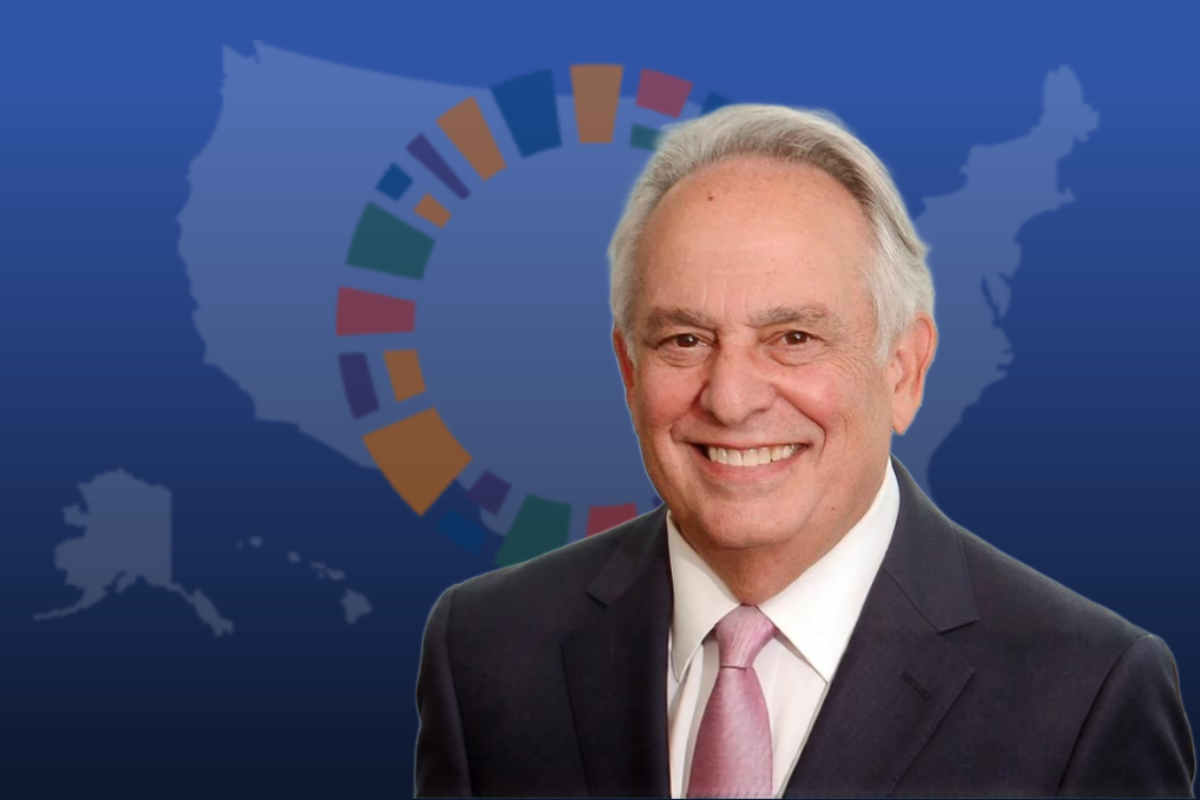
How are experts feeling about the coming election? Veteran election attorney Jerry Goldfeder, for one, quotes Sen. Raphael Warnock: he’s feeling “nauseously optimistic." Jerry joins Rev. Paul Brandeis Raushenbush for a master class on election law, voter confidence, and how communities can help protect the democratic process.
He also stresses that the election cycle won't end on November 3rd, and neither will the need for vigilance. Jerry’s message: vote early, stay informed, and support the people who make elections work – or become one yourself!
About our guest:
Jerry H. Goldfeder is an election and campaign finance attorney recognized nationally for more than 40 years spent working at the intersection of law, politics, and American democracy. Jerry’s the Director of Fordham University School of Law’s Voting Rights and Democracy Project, and Chair of the American Bar Association’s Standing Committee on Election Law.
He is the author of Goldfeder’s Modern Election Law, now in its 7th edition, and has represented candidates and elected officials at every level of government, from local office to the U.S. presidency. Jerry previously served as Special Counsel for Public Integrity to the New York State Attorney General.
The State of Belief host Rev. Paul Brandeis Raushenbush is President and CEO of Interfaith Alliance.
Transcript
REV. PAUL BRANDEIS RAUSHENBUSH, HOST:
Jerry Goldfeder is an election and campaign finance attorney. He's nationally recognized for more than 40 years spent working at the intersection of law, politics, and American democracy. Jerry's the director of Fordham University's School of Law's Voting Rights and Democracy Project and Chair of the American Bar Association's Standing Committee on Election Law.
He's the author of Goldfetter's Modern Election Law, now in its seventh edition, and has represented candidates and elected officials at every level of government - from local office to the U.S. presidency. Jerry previously served as special counsel for public integrity to the New York State Attorney General.
As we head into the home stretch of what is almost certainly going to be one of the most contentious elections of our time, I am so happy to have him join me today on The State of Belief.
Counselor, welcome.
JERRY GOLDFEDER:
Well, thank you so much for having me.
PAUL RAUSHENBUSH:
You know, I was just reading that and I was like, my God, everybody is so happy to be hearing you today. Because let's just name it, there's so much almost intentional uncertainty right now. Like people are, okay, I am going to vote. There's a lot of enthusiasm for voting. And at the same time, people are like, what's going on with the election? Maybe can you level set us as we start this conversation? How are you perceiving this election vis-a-vis other elections that you've been working with for forty years?
JERRY GOLDFEDER:
Well, first of all, again, thank you for having me. It's great to be with you. And this election really is different, because this is the first time we have a federal government, the executive of the federal government, the President of the United States, interfering with our elections and putting the Justice Department and all other executive agencies that he can think of in the way of a free and fair election.
Now, I think he will not succeed, but he's certainly stirring the pot. And even if he doesn't prevent people from voting, and even if he doesn't create enough question as to who won and who lost and so on, he's creating a kind of chaotic situation that's no good for democracy and raises in ordinary Americans - as well as election lawyers and faith leaders and so on - in ordinary Americans this question of, is our democracy working? And when all is said and done, that might really be his intention, just to make sure that people come away from this experience saying, I'm not so sure that this works. Because that kind of underscores his effort to be the president and not have any other groups or institutions play a real role in the way we govern ourselves.
So it's a little frightening that he's doing that, but thousands of lawyers, thousands of faith leaders, thousands of people in civic organizations have stepped up for many, many months and have put people in place and we are ready. We are ready to make sure that this goes as smoothly as it possibly can.
You know, a few weeks ago I was down in Atlanta, and I had the occasion to speak with the pastor of the Ebenezer Baptist Church, our good friend Senator Raphael Warnock. And he and I had a a chance to speak for a little while, and he said, “I come away”, I'm quoting him, “being nauseously optimistic.”
PAUL RAUSHENBUSH:
Whew, I like that phrase. I I am coming away nauseously optimistic. Well, I think that that's actually really a good way to put it. I mean, it's not like the most pretty way to put it, but it's a good way to put it, which you kind of laid it out. We're not crazy when we think that someone is disrupting our sense of security of our elections because it has been intentional. It has been intentional - and let's just name the irony here that everyone knows, but it has to be said - they were perfectly fine with the 2024 election. because it went their way.
JERRY GOLDFEDER:
Sure, that's right. That's right.
PAUL RAUSHENBUSH:
But all of a sudden they're still looking back to 2020.
JERRY GOLDFEDER:
And even the 2020 election, he may say that the presidential election was rigged, but he was perfectly fine with all the congressional elections and the gubernatorial elections. To say that he's inconsistent and it's ironic, what does he care? He doesn't really care. He has still invaded our consciousness with this feeling of unease.
PAUL RAUSHENBUSH:
Yeah. And I love that you really named like how many of us, and I love that you kind of showed the breadth. It's not just lawyers out there. It's faith communities. It's civic leaders. Basically so many people are really realizing that, okay, we have an intentional effort to confuse us, to make uncertainty kind of the the water in which we swim. But at the same time, that's what we're doing out there with The Vote is Sacred tour. We're saying at the same time, there's so many people out there who are ready to protect our election, to insist that it be safe and secure and that everyone can vote, and then also to count every vote. And then, of course, to seat the new Congress, no matter who the people elect. so we're looking at from now til November third, but then until January third.
JERRY GOLDFEDER:
That's right. Just to make sure that your listeners understand the business about January third. So we have our elections. We're right in the middle of the run-up to the election. We will finish our election on election day. It's not as if that's the election day, because people are voting already. And after election day, their votes are counted, they're recanvassed, some states have audits, and the winners will be the winners. The states will certify who the members of the new Congress are.
But if the races are tight, the procedure, the normal procedure - and I'm using that word on purpose - the normal procedure is the clerk of the House of Representatives gets the certifications from the states of who won, who lost, and so on. And he prepares - the clerk is a male - he prepares a roll of the new members. The new members are then seated. They then vote for a speaker, because every House is different. Our current Congress, our current House of Representatives, ends on January 3rd, and the new one begins on January 3rd. So the only public official who's a carryover is this person, the clerk of the House of Representatives appointed by the last speaker.
Now, the the clerk of the the House of Representatives is generally understood as a nonpartisan person, a professional, and so on. So on January 3rd, the clerk of the court, the only one there, gets the envelopes, the certifications of who won, who lost, produces a roll of the new members. They vote for a speaker, and the speaker swears in the new members. Now that's the norm.
PAUL RAUSHENBUSH:
That's actually really helpful to have that laid out. Thank you.
JERRY GOLDFEDER:
Sure. Now the concern is that if there are sufficient number of seats that are up in the air, that the Republicans - I know this is nonpartisan, but let's be clear - the Republicans will want to hold on to power and they may decide to, if they have enough votes, to not seat certain members of the House. Now, the funny thing about it is that just that generally doesn't happen. It's happened a few times in our history when there are genuine disputes. And then there's an investigation. The House is the judge according to the Constitution. The House is the judge of its own elections. So it can investigate and call witnesses and do its own count and recount. It doesn't even have to pay attention to what the states did in when they counted the election. It could do it independently, and that could hold up the seating of various members of Congress.
I don't think that's going to happen. And the reason I don't think it's going to happen is because there's such an effort for turnout here in the United States from everyone that I think the margins for almost all of the House seats will be clear. It will be clear, I think, as to who won and who lost. I choose to believe that. I take solace in the strength of our democratic institutions and the outpouring of our voters. So I think there will be a high turnout. I think the margins will be clear. So I think there's very, very little room for any finagling around by anybody as to seating a member of the House or not.
PAUL RAUSHENBUSH:
Tell me about the clerk. So Mike Johnson appointed him. And I think it's just all these little things - they're not little things, they're big things actually - but cumulatively they're a problem because Mike Johnson said he'll do everything in his power not to seat a Democratic House of Representatives.
JERRY GOLDFEDER:
Well he said that. But if the margins are…
PAUL RAUSHENBUSH:
No, I understand. But why would you say that? It seems like an abdication of your responsibility. It's insane.
JERRY GOLDFEDER:
Because that's who they are.
PAUL RAUSHENBUSH:
But you, when you say that, all of a sudden we're like, okay, so you didn't need to say that. No one asked you if you…
JERRY GOLDFEDER:
Well, actually, he needed to say that. And the reason he needed to say that is because he's on the same page as the president. This is what they're doing. What they're saying, they're communicating that there are problems with the election, that people may not be seated, that it may not be clear who won the House of Representatives, that maybe the House of Representatives won't be able to function on January third, and it may be chaos. And who does that benefit?
It certainly doesn't benefit the people of the United States. It benefits the guy sitting in 1600 Pennsylvania Avenue.
PAUL RAUSHENBUSH:
Right, because the executive doesn't change. And so it becomes a vacuum of power, which they've had that for the last two years.
But let's go back. So your career spans forty years. There's lots of things that people can go to law school for and end up doing. It's not like a done deal that you're for sure going to have to do election law. How did you do that? Because I think that's just a very interesting question for anybody who's in any field. how do you get to be an expert in this one thing when there were myriad of things you could have decided to focus your expertise in?
JERRY GOLDFEDER:
So first of all, there was no such thing as a class in election law when I went to law school. I I went to law school. I started in - I hate to say it, 1976. I was in the first class of the Cardozo Law School in New York City, which is fifty years ago.
PAUL RAUSHENBUSH:
That's amazing.
JERRY GOLDFEDER:
And nobody taught election law. Nobody thought of it in the mid seventies. It wasn't an issue, so I I didn't think of it either. And now, of course, I have taught election law at Fordham Law School and University of Pennsylvania Law School for 25 years. Now it's a thing, it's an area. And students come up to me all the time. How'd you get into this? How can I be involved in it? This kind of thing. It was totally serendipitous for me. I've always been involved in politics. Before I went to law school, I studied and taught political science. And before that I taught fifth grade in Bedford Stuyvesant in New York. And that was a a great experience.
So I didn't start off as a young man wanting to be a lawyer or even having any idea about election law. So because I was involved in politics, I got involved in campaigns. And I was involved in a campaign in Manhattan, New York City. A mayoral campaign in 1981. I was working for a candidate who was running against the incumbent mayor. The incumbent mayor at the time was Ed Koch. I was working for a little-known assemblyman, but he was a trade unionist. His name was Frank Barbero. And he was running in a Democratic Party primary to try to beat Ed Koch so he can go on to the general election and win as mayor of the city of New York.
And lo and behold, I got involved with lawyers involved in that campaign who wanted to kick off the ballot a third candidate. Because they wanted a head-to-head race between Frank Barbero and Ed Koch. Kick off a candidate. I didn't know anything about that. And what we did was, in New York, you have to submit petitions with lots of signatures to get on the ballot. And we went through the signatures to try to eliminate their validity so that we could kick off this third candidate.
So I got immersed in election law, ballot access law, that I didn't even know existed. By the way, we failed in getting this other candidate kicked off the ballot. Barbero went on to win every African-American assembly district in the primary, but lost decidedly in the primary. And Ed Koch got elected, but I learned all of this.
PAUL RAUSHENBUSH:
Well we can pause there for just a second because, actually, your mistake there is that you didn't just lie and say all of these are, are, you know, and create confusion and create doubt. You just actually accepted that the third candidate had enough to be on the ballot.
JERRY GOLDFEDER:
That's a very good point. That's exactly right.
PAUL RAUSHENBUSH:
That's where you started off wrong, Jerry. You didn't realize you're supposed to lie and you're supposed to say it's rigged. Why is it rigged against my candidate? I'm sorry to school you now, forty years later, but yeah.
JERRY GOLDFEDER:
He's supposed to say it was rigged. That's right. Exactly. Exactly. So my experience was totally coincidental. And then I more and more got involved and I learned a lot. I actually had to teach myself, but I had some mentors. and I learned it on my own and here I am all these years later.
But you know, I want to say that - you said that was my mistake, we should have said it was rigged and so on. You know, the president that we have now is really unique. we've had 11 presidents of the United States who have run for reelection and lost. The first ten weren't happy that they lost, but they graciously handed over the keys, if you will, to the Oval Office, and they left town.
The eleventh, President Trump, was the first one to say, it was rigged. He's created a new norm, if you will, which is the worst part about it. I mean, we have a Constitution, we have checks and balances, the institution of the Congress is supposed to function in a particular way, the executive is supposed to function in a new way. But not everything is written down. There are norms. The norms of, if you win, you take office. If you lose, you concede. That's not in the Constitution. That's not in any statute. That's the norm. And he has upset that norm to such a degree that all of us are so worried that states won't certify the real winners. The House of Representatives won't seat the real winners. And we're wondering if our norms are going to hold.
You know, what's really interesting is that in the last few years, we have compared ourselves to Hungary with Viktor Orban, who created this illiberal democracy and destroyed checks and balances in his country and held on to power. Peter Magyar ran against him just this past year, created a groundswell of support, had the message of corruption and bad economy. Sound familiar? And he won. And he won decisively. And what did Orban do? Orban said, I lost, I'm leaving. Well, that was shocking and wonderful.
PAUL RAUSHENBUSH:
Yeah, my son, my eleven-year-old son, who is obsessed with elections and all of this, he came in and said, Orban conceded. And I was like, that cannot be right. And we were all just absolutely shocked. I just don't know that Trump would ever do that.
JERRY GOLDFEDER:
I I think you're right. Trump, Bolsonaro, in South Korea. Orban actually did the right thing despite his history. And so we're going into these midterms and then we'll prepare for the election in 2028 wondering whether or not this democracy will hold because the norms seem to have been so disrupted.
PAUL RAUSHENBUSH:
Well, there's a piece of that that I always want to mention when we talk about 2020 and why they really cannot concede that they lost. Part of the thinking behind that, I'm convinced, is that the great majority of the evangelical backing for Donald Trump bought into this idea that he was anointed by God to win. And so when he lost, they did not accept it because they had been told by prophets in their midst that he was going to win.
And that's the reason - you remember seeing all of those people praying outside of the election offices and trying to do exorcisms on the machines - because they said, Well, that can't be, because God told us that he was going to win. And so you see none of like JD Vance, none of them will admit they lost 2020. And it's not just because they like they want to create this chaos. It's because a lot of their followers would say, you're betraying what God said, which was, You are anointed.
JERRY GOLDFEDER:
So let me ask you a question. Where did they get that from? Did they get that from Trump, or did they get that from their leaders?
PAUL RAUSHENBUSH:
No, no, they got that from this incredible religious movement with millions of adherents. Because remember, before January 6th, on January 5th, there were Jericho marches, there were rallies, there were revivals where people were saying, This is the righteous president, God has anointed this person. And remember on January 6th, the ubiquitous crosses and religious imagery. And so it's an important part of the election chaos that Trump is very aware of these people because they anointed him the Cyrus of the moment that was going to free the Christians in this country.
And so it's not just legal and it's not just politics. It's this really dangerous manifestation of religion that is in the mix. And we will we'll have an opportunity to talk about that more, but it is part of the mix.
JERRY GOLDFEDER:
Well, if you don't mind, I'd like to talk about that for a minute or two. How do you counteract that? You're the faith leader, I'm not.
PAUL RAUSHENBUSH:
Here's the thing, you cannot go toe-to-toe with those prophets and say, You're wrong. That will not work. So you have to create an entire ecosystem that outweighs it. You cannot, you don't debate people who have said, “I am an anointed prophet who is speaking the will of God into the world.” They're not going to listen to you say, Well, let's talk about this. And they're totally convinced.
And they're still out there, by the way. I mean, this is millions of people. So you don't try to convert people like that. You just create an entire ecosystem of people who also recognize, okay, this guy, this guy who's doing all these things that are harming my community, maybe I was misled. You create this off-ramp. And also you rally the millions and millions of American religious people from all different traditions who recognize the threat that that kind of thinking poses to them, to their own religious liberty. Because if you have a messianic figure in the White House, whatever he says goes, and you are secondary class.
And by the way, me as a Christian, I don't count at all - I'm the wrong kind of Christian.
JERRY GOLDFEDER:
How do they feel about me?
I'm worse. I'm the worst. So anyway, there's just an added element of danger that I think that maybe not everybody realizes plays into this insistence of winning in 2020, because there's millions of their supporters, arguably the ones that sent them back in 2024, who insist that God wanted - and they still do - that God not only wanted, God had anointed him to win. And so it had to be the work of the devil and people refusing.
Anyway, let's get to something like brass tacks. What do you want every person in America who is eligible to vote, who's going to vote, what do you want them to know when they walk in?
JERRY GOLDFEDER:
First of all, I want them to vote early. I don't want people to wait for election day. If in a state there's early voting, do it. Go to the polls. And by the way, the polling places for early voting may not be the same as the polling places for election day. So look it up. Make a plan. Vote early. If you have to vote by mail, do it early. Do it sooner rather than later. And drop it off. The post office, even if there's absolutely no intentionality, the postal office is not the most efficient organization. We know that. Ballots get lost in the mail. It takes a long time. I just got a piece of mail returned to me that I sent to my grandson in Washington, DC. It took two months to come back because it had the wrong address. I don't know how it had the wrong address, it wasn't me. But in any event, it's just a small example.
So vote early in person, vote by mail in person. And if you can't do that, show up early on election day, because there might be long lines. There might be places where they run out of ballots, coincidentally. So you need to really take the bull by the horns, if you will, and say, I'm going to vote. And I think that there is a feeling in the land, if I may say it this way, there's a feeling in the land that it's important to vote. As you folks, Paul, have been saying, it's a sacred act to vote, especially this year. It's always true, but especially this year. Because I think that people understand we need to preserve our democracy.
Now, states and the federal government have been fiddling around with various rules. So for example, in North Carolina recently they closed a polling place that was housed in a college or a university, and the students marched for that's right.
PAUL RAUSHENBUSH:
Yeah, wasn't that wonderful? That visual summed up everything about this moment. If they try to close you down, you start walking to the next place.
JERRY GOLDFEDER:
That's exactly right. That's what the students did. They marched to a different place. They were not going to be deprived of their vote.
We just had a decision in New Hampshire where it's going to be difficult for students to use student IDs in order to vote. Not every state requires an ID, but the states that do, it's really important that people have the ID. And as I started to say that in New Hampshire they are limiting the use of student ID. If that's the rule, we need to work around it. The students need to get other ID that will work.
PAUL RAUSHENBUSH:
Let me ask you. He has a whole task force, millions and millions of dollars of election fraud. Millions of dollars. Talk to me about what is the reality of fraud in this country as far as as elections, because I think it's important to to kind of level set that.
JERRY GOLDFEDER:
Well, there's extremely little fraud. studies have been done showing that fraud is such a minuscule problem. Every now and again there's somebody who votes who's not eligible to vote. I don't know of any example where somebody shows up to vote in place of someone else. That would be fraudulent. If somebody votes because they think they can vote, even though they're not eligible, that's not fraudulent. That's a mistake. That happens.
There are people on the rolls who should not be on the rolls because they're not citizens, but it's mistakes that occurred either because they have automatic registration and the DMV put them on by mistake, or people think that they're eligible to vote and they register. It happens. It happens because people make mistakes. That's not intentional. There are examples from time to time of that happening. But having said that, 99.444% of our elections are clean, are well-run, there's hardly any fraud at all.
PAUL RAUSHENBUSH:
in some ways, we should be proud of the fact that we don't have that much.
JERRY GOLDFEDER:
We should be proud. That's basically a hundred percent.
PAUL RAUSHENBUSH:
We should be very, very proud. And you know, the other thing is that in the cases where there is some sort of fraudulent thing, it's not as though one party has a monopoly on doing that. It's not like that's all Democrats or that's all Republicans.
JERRY GOLDFEDER:
As a matter of fact, Paul, you're absolutely right. We've seen some examples where Republican voters have been fraudulently voting for Republican candidates. A congressional election a few years ago was thrown out completely because of Republican fraud. But look, even that, it's anomalous. It it happens so rarely. So people shouldn't take that in.
PAUL RAUSHENBUSH:
And not only should people not take that in, they should be putting that out there. If anybody starts talking about fraud, you just say, actually, that's 99.5% false. So what are you trying to do by talking about that? What are you trying right now? I think we should be confronting any politician or any influencer or anything like that who's trying to cast doubts on our election. We should be proud of our elections here.
And by the way, here's the thing: in 2024 - I'll be candid, that wasn't my favorite election. But I didn't like all of a sudden say, it's fraudulent. It's rigged. I didn't go out there and do that because I actually think this is something that we do fairly well. Not perfectly, because we have gerrymanding, there's a whole racist history. That's another thing. But as far as the fraud, we should be actually quite happy about that.
JERRY GOLDFEDER:
Absolutely. And as a matter of fact, there were public officials working in the administration who said that the 2020 election was one of the safest, the 2024 election was one of the safest. Trump fired those people and he actually started to prosecute them for saying that.
PAUL RAUSHENBUSH:
Which is the problem now. One of the reasons that people are worried now is because there were a lot of Republicans who actually were heroes in the 2020 election. The fellow in Georgia when Trump actually called him up and said, I just need eight thousand votes, man. I don't know how he's allowed to be president now when you say that kind of thing.
JERRY GOLDFEDER:
Well, he was indicted. He was indicted for that.
PAUL RAUSHENBUSH:
Yeah, and he should have been. But anyway, there were people, there were guardrails in 2020, good people from all parties who said, no, no, actually, this is real.
JERRY GOLDFEDER:
Well, and I think we need to emphasize that. We run our elections in a very decentralized way. There are fifty states and Washington DC. There are multiple counties in each state. We have thousands and thousands of trained, honest, hardworking election officials who only care about getting through the day in an uneventful way. They want to register, they want to sign people in, they want to give them their ballot, they want to make sure election day and early voting… These are poll workers, people who work as election officials. They want to count the vote, they want to make sure that the votes are counted properly. They want to certify the winners who are the winners. This is who runs our elections.
Our elections are not run in Washington. Our elections are run by ordinary people. Every now and again there is a person who is an election denier. But there's so few with so little influence. Most of our people, literally thousands in every corner of our nation, they just are going to work, signing people in, counting the ballots, doing their job.
PAUL RAUSHENBUSH:
And by the way, this is not an exclusive club. People can sign up to be poll workers. They are almost like a jury of your peers. It's really by design meant to be The People. So listeners, if I might, if they're still looking for poll workers where you are, you can sign up.
JERRY GOLDFEDER:
I have students who have been poll workers and they love the experience because it gives you a real window into the way it really works.
PAUL RAUSHENBUSH:
Democracy at work. And then the other thing is like, let's talk a second about those who certify the election. Because I think one of the things that we're encouraging faith leaders is, find out who's the certifier in your community. Reach out to them, just say, Hey, I serve at this congregation, this synagogue, this temple, this mosque. And I just want you to know, if there's anything I can do to be helpful in the days running up or the days after, you have my number. I want you to know that we're supporting you in your honest work.
JERRY GOLDFEDER:
And not only that, Paul, but these procedures are open to the public. People can watch this going on.
PAUL RAUSHENBUSH:
That's right. And I actually think that what we've been talking about is faith leaders who still have some degree of trust in the American population and the American imagination. You can also be someone who helps build trust by going and saying, Hey, are you doing a tour? Because a lot of time they do outreach and say, You can come, you can be here, and I think that as much as the faith community - and I know our listeners are from all different faith traditions, but also people of all different backgrounds who don't are not a religious. But really, anyone can be part of that process.
JERRY GOLDFEDER:
And there's a number of things they can do. They can, as you suggested, they can sign up to be poll workers to sign people in and so on. They can monitor the polls outside. And I think that we have a pretty robust group of lawyers and faith leaders and civic groups monitoring the polls outside just in case ICE shows up or National Guard or anything, we have our people outside giving a kind of ring of safety and security so people who are on line to vote feel secure, even if those folks are there.
PAUL RAUSHENBUSH:
Yeah. I and let's say a little bit about that, because that's actually something that all of us can be a part of. There's lots of organizing around that. And there's training you can take that's not extensive for de-escalation.
JERRY GOLDFEDER:
Yes. And this training people should take because you don't want to get into any altercations with ICE or anything.
PAUL RAUSHENBUSH:
This tradition of nonviolence which is a spiritual discipline that makes you even have more resolve. But it is about de-escalation. You should feel that you are equipped to be in that setting. And I'm so glad, Jerry, that you brought that up because that's something we've talked about a lot is that's an opportunity also to be a witness, but also to be there in case… Jerry, let me ask you this: There should be no ICE or National Guard or it would be illegal, right?
JERRY GOLDFEDER:
It would be illegal for any armed or uniformed persons. They are not allowed to be at polling sites. That doesn't mean just because it's illegal, that doesn't mean he won't send them. But lawyers are out there ready to go to court immediately. Papers have been prepared in case of that. And not only that, but bipartisan memos have been prepared for judges who are not necessarily familiar with election laws and so on. This is what you need to do in case we come to court because ICE is interfering or the Proud Boys are interfering or whoever else is interfering. We want people - and that's why it's so important for faith people and lawyers and all sorts of people to be outside polling places just to give comfort and security to voters so that people don't leave and that people are not disincentivized from coming because these folks have come to the polls. I hope they don't come.
PAUL RAUSHENBUSH:
But but it's also the reason that you should get some training and get trained up and be part of an organized group, because you don't want to actually be there and be perceived as intimidation.
JERRY GOLDFEDER:
That's true.
PAUL RAUSHENBUSH:
So it needs to be organized, it needs to be disciplined, and it's really just being encouraging and creating an intimidation-free vibe.
But you know, here's the thing. Jerry, you've been listening as well as I have. When Kash Patel says, Yeah, I may send in the FBI, you're like, That is so irresponsible. What do you mean by that? it's all just like what Mike Johnson said. This is not what you're supposed to be saying.
JERRY GOLDFEDER:
No, but that's what they're supposed to be saying according to their boss.
PAUL RAUSHENBUSH:
To their boss. But it's absolutely irresponsible for someone who is at the federal level to be saying anything about these elections because it's not their job. And I think it's meant to be a form of intimidation because anybody who hears that says, well maybe…
JERRY GOLDFEDER:
It is, it is. Just saying it.
PAUL RAUSHENBUSH:
So this is all very helpful. What else should people be carrying into…
JERRY GOLDFEDER:
Well, I want to leave you with a story before we conclude. So in 1876 there was a presidential election, and it was stolen from the winner. The winner was a Democrat, Samuel Tilden from New York. And the person who occupied the White House was Rutherford Hayes, who was a Republican. The Republicans in those days were more liberal. They called him Rutherfraud Hayes because it was a stolen election. And I won't get into all the details of why it was, but there's a general consensus. Even Justice Rehnquist wrote a book about how it was a stolen election.
So Tilden, who had been the governor of New York, had run for president, had the election stolen from him by a few states and the Congress and so on. He spoke to a civic group in Manhattan a few months after the election. And what he said was, The people who were supposed to be in the White House - talking about himself - are not there. The people who lost - Rutherford Hayes - are in the White House and they shouldn't be there. But, he went on to say, If I could reach people in every hamlet in the United States, I would say - now I'm quoting – “Be of good cheer. The Republic will survive.”
Now, for Tilden to have said that having had this presidential election stolen from him, I thought was very generous and really was the norm - and continued to be the norm through 2020 until Trump started carrying on about rigged elections and so on. I choose to believe that Tilden was right. I choose to believe we will get through this with all of our work. The work of people we don't even know, but thousands of Americans going to the polls, making sure that they're voting, making sure their votes count, monitoring the polls, and we will get through this, I'm hopeful, and our Republic will survive.
I choose to take solace in the strength of our institutions and the strength of of American voters. So I go into this election hopeful, knowing that there could be problems, but hopeful that we'll prevail and our democratic institutions, that our republic, will survive.
PAUL RAUSHENBUSH:
Well, I think the quote that sums it up is “Nauseously optimistic.”
Jerry Goldfeder is a veteran attorney who serves as director of Fordham University's School of Law Voting Rights and Democracy Project, as well as the chair of the American Bar Association's Standing Committee on Election Law.
Attorney Goldfeder, it’s so nice to be with you and thank you so much. This has been informative, kind of bracing and sobering, but also nauseously optimistic. We appreciate your time.
JERRY GOLDFEDER:
Keep the faith, Paul, and keep up the great work.

Democracy After the Midterms: A special election episode with Rebecca Solnit
November 3rd was both an end a beginning. A writer who thinks deeply about these issues, Rebecca talks to host Rev. Paul Brandeis Raushenbush about this election through the lens of her book "The Beginning Comes After the End."
"We Are Ready": Attorney Extraordinaire Norm Eisen Talks 2026 Midterms and Beyond
The co-founder of Democracy Defenders Fund and former Obama Administration ethics czar joins Rev. Paul Brandeis Raushenbush on the eve of the election to recount victories and unveil strategies for ensuring a full and fair vote.