State of Belief
Party At The Polls, plus Otis' Dream as The Vote Is Sacred Launches!

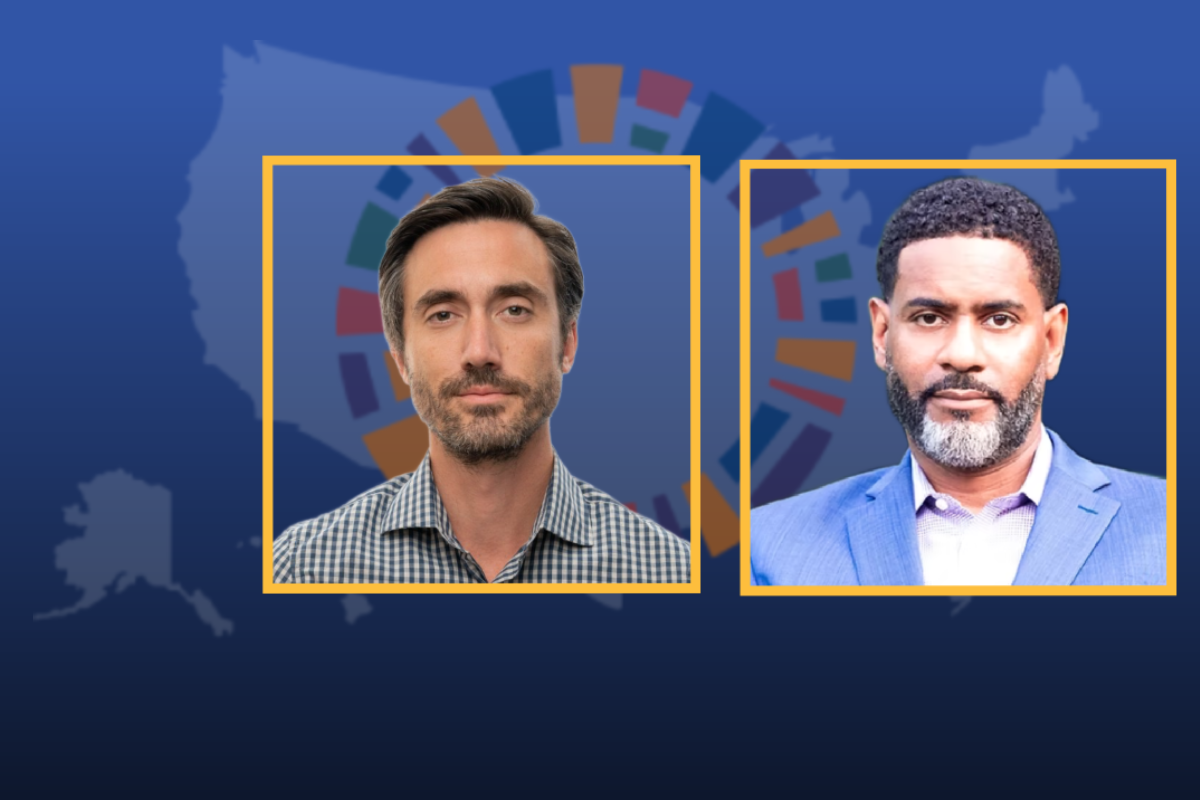
What’s one way to deflate the fear and uncertainty that’s being manufactured around the coming election? “By throwing a party at your local polling place and inviting your community to attend.” That’s the unorthodox suggestion from Kyle Lierman, CEO of Civic Nation. The tactic’s already been tried out, it works, and it’s only one of the creative ideas Kyle brings to his conversation with host Rev. Paul Brandeis Raushenbush on The State of Belief (hosted from Interfaith Alliance's The Vote Is Sacred bus, in motion!) With impactful projects such as Party at the Polls and When We All Vote, Kyle and Civic Nation are inspiring and empowering people nationwide to defend the vote - and democracy.
This week we also hear highlights from an event kicking off Interfaith Alliance’s The Vote Is Sacred bus tour in Omaha – Paul’s in-person conversation with Rev. Dr. Otis Moss III, who wrote and produced a short film about his grandfather’s attempts to exercise his right to vote in the Jim Crow south. You can watch the film at www.otisdream.com
Kyle Lierman held several prominent positions in the Obama White House, and led Michelle Obama’s democracy initiative “When We All Vote.” Today, Kyle is CEO of Civic Nation, a nonpartisan nonprofit that brings together organizers and educators who are working toward a more inclusive, more equitable America. In 2024, Civic Nation saw concrete returns for its work to increase participation among young and minority voters, and those efforts are being expanded this year to motivate a broad cross-section of eligible voters.
Rev. Dr. Otis Moss III is a powerhouse American pastor, preacher, author, poet, filmmaker, and civil rights advocate. He serves as the senior pastor of Trinity United Church of Christ in Chicago, Illinois, a position he has held since 2008. Born and raised in Cleveland, Ohio, he is the son of the prominent civil rights leader and pastor Rev. Dr. Otis Moss Jr.
The State of Belief host Rev. Paul Brandeis Raushenbush is President and CEO of Interfaith Alliance.
Transcript
REV. PAUL BRANDEIS RAUSHENBUSH, HOST:
Kyle Lierman has held several prominent positions in the Obama White House and led Michelle Obama's democracy initiative, When We All Vote. Today, Kyle is CEO of Civic Nation, a nonpartisan nonprofit that brings together organizers and educators who are working towards a more inclusive and equitable America. Civic Nation and Interfaith Alliance are also working together on important initiatives, and so I'm very happy to welcome Kyle to The State of Belief.
Welcome, and thanks for being with us!
KYLE LIERMAN:
Thanks so much for having me and we, as you said, have the privilege of working with the Interfaith Alliance and thanks for all the work you do.
PAUL RAUSHENBUSH:
Very kind. So Civic Nation, first of all, that name already inspires hope. Talk to me about the genesis of Civic Nation, when was it started, and what is the mission of Civic Nation?
KYLE LIERMAN:
So Civic Nation was started at a time when, not totally unlike today, the federal government was not tackling and solving big problems. It was in the early 2010s and Congress, frankly, just wasn't taking action. President Obama was putting out big calls to action, big policy proposals - whether it was let's make preschool universal, let's make child care universal, let's make community college free, let's do everything we can to stop sexual assault on college campuses - and those policy proposals, when they went to Congress, basically went nowhere.
And so Civic Nation took up the call and basically said, you know, we can take these great ideas and drive change through organizing individuals, community institutions, foundations, the private sector, mayors, governors, state legislators - we can make progress on these issues without Congress. And maybe one day that will lead to congressional change and federal policy, but let's not wait for that.
My favorite example was one of the earliest initiatives that Civic Nation threw in for, it was called the College Promise Campaign. At the time, President Obama had recently put out a call to action to make community college free across the country. Really, when you think about it, a no-brainer. But Congress basically did nothing with that idea. Today, because of the work that Civic Nation started and continues, it's spun out to be its own initiative, the College Promise Campaign, and over 50 % of community colleges across the country are free.
And so when we see big problems that we're facing, we all need to understand that we have agency. So Civic Nation trains folks, empowers them, provides them with the tools and the resources to make change in their communities on a variety of issues, whether it's stopping sexual assault on college campuses through our It's On Us campaign, or making sure our communities are registered and ready to vote through our When We All Vote initiative, or getting college students out to vote through our All On Campus Democracy Challenge.
So Civic Nation is a social impact hub that uses organizing to strengthen civic culture, civic power, and civic participation, and solve some of our country's biggest challenges.
PAUL RAUSHENBUSH:
I love that. That is so important. And it's so important to remember that actually, oftentimes, change - and probably most times - change does not start with politicians. Change starts with community, change starts with individuals, change starts with a vision - but then the sausage actually has to get made somehow, and that takes sustained effort.
You know, I think my listeners know I've been writing a biography of my grandmother Elizabeth Brandeis, who along with her husband created the first unemployment compensation bill in 1932 in Wisconsin that was later, three years later, used in the Social Security Act. But what they did to create that, it was an entire campaign about: What ideas will work? Who can we bring along with us? How can we create a a system that actually works for everybody, including businesses and the unemployed or potentially unemployed? It was just this idea of motivating civic participants. And her father had the famous line: “The most important political office is that of the private citizen.”
And this is what we're really about today, is that there's very little inspiring vision for America that's coming out of Washington, frankly. I mean a lot of it is just breaking things, not a lot of building. Except for data centers. But what is happening, I think, around the country is people are saying, okay, it's actually up to us. And I think that's where a group like Civic Nation is tapping into that power of the people. And I just love that.
There's all sorts of ways we can go with this, but right now democracy as a whole has a question mark around it, in part because of the actions of the administration, which has for the first time in fifty years taken us off the democracy, liberal democracy, chart. We've been backsliding for a while. I think it's groups like Civic Nation, alongside Interfaith Alliance and many others, we have to put America back on the democracy, the right side of the ledger.
KYLE LIERMAN:
Well, I couldn't agree more. I think it's felt like - and sometimes even today it feels like - people are waiting for someone or waiting for something to save us. And we have to save ourselves. Democracy is not looking good in this country right now. We have nobody to blame but ourselves. We all have to do more. We have to be better organizers. We have to be better active citizens. We have to be better sharers of good information. We have to be better neighbors. We have to get out from behind our phones and off our couches and be in community with people.
And it's so much easier to divide folks when they're alone. But when you're in community, when you're out there with your neighbors, with your friends, with your community, when you're going to places you might not otherwise have gone and you're being active and you're, frankly, to your point about there's not much optimism - let's be hopeful. Let's understand that if we take action together, we can solve these problems. so whenever I get down, I look in the mirror and say, what else can I be doing? And that's really our call to action that the country is like, what else can we be doing? Stasis isn't going to solve any problems.
PAUL RAUSHENBUSH:
Right. I want to add to what you said, there actually has been an intentional effort to make people feel divided and powerless. And you know, that's like the authoritarian playbook, if you want to use that language, really it thrives on people feeling like, well, there's nothing I can do. I have to just kind of hunker down and see if I can make it through and I can't trust my neighbor because they're this or they're that. It's not surprising we're having these emotions.
But at the same time, once you get out there, I mean that was one of the - while it had a lot of critics, No Kings was great because all of a sudden we're in the street and we're like, actually, I'm not alone. Actually, there are people around me - and that's great.
So one thing that's obviously very pressing: We're on the road in our The Vote Is Sacred bus tour. We're seeing people all around the country. And one of the things I wanted to talk to you about is your When We All Vote initiative. And specifically, I love… The first time I heard it, I was like, Party at the Polls. That for some reason sparked something in me. I don't know. I'm ready to party at the polls. So tell us a little bit about these initiatives that you're involved in.
KYLE LIERMAN:
Absolutely. Civic Nation started in a very small way testing this idea of throwing parties at or near polling places. And now we've done it election cycle over election cycle. And we've shown that if you turn voting into a celebration, if you turn it into a community activation and you get the word out about that, you can actually increase turnout by anywhere between 2 and 4%. And by the way, I think that's the low water mark. I think if we continue to do this well and we do it better, we can increase turnout by even more.
And to your point, it makes sense. People want to get out there. People want to be invited to things. People want to participate in things. sometimes the voting process and voting in and of itself, I think it's hard sometimes because for those of us that vote every time, it seems like, yeah, but for folks who haven't voted before, it can be an intimidating process. And I don't know everything that's on my ballot. I don't know this or that candidate. What we're saying to people is: Come out, celebrate our democracy and participate. And come with your neighbors, come with your friends, come with your congregation.
And to your point about your bus tour, I think about this, there's the macro versions of it and then the micro versions of it. So a macro version is we throw in with partner organizations around the country, and I think we're working with Interfaith Alliance on this, bus tours or big celebrations with a lot of music and food and fun and entertainers, DJs. But there's also micro versions of this. Every time I go to church with my three kids - don't get me wrong, they tend to listen, but let's be honest, the thing that they're most excited about is the donuts in the basement after the service.
PAUL RAUSHENBUSH:
I I am so disappointed to hear that. I was hoping for more piety from your kids.
Listen, the the fact that you are even making an effort is amazing. But I agree with you.
KYLE LIERMAN:
The point is like, okay, if my congregation understands that putting donuts and coffee and lemonade after the service makes it easier for dads to get their daughters to come - let's just take the coffee and the donuts and the lemonade to the polling place. Let's make it a little easier. Let's make people a little bit more comfortable. And in this particular year, at a time where there are threats of federal government interference at the polling places, federal troops, whether it be ICE or otherwise, let's build community as our antidote to fear and intimidation. Let's make sure people know that if they go, they're not showing up alone.
And so we run this huge program, but my hope is over years that we get put out of business. We're asking people to throw parties. You don't have to ask anyone to throw a Super Bowl party. They throw a Super Bowl party. Let's just have folks start throwing parties at their local polling places and having fun and bringing their neighbors out together.
PAUL RAUSHENBUSH:
I love that. You don't need permission to do this kind of stuff, but if you want to do that and if you want some guidelines and help, what's a good website for our listeners to go to?
KYLE LIERMAN:
So our initiative is WhenWeAllVote.org/party. And you can sign up, we'll get you all the tools and the rules about where and when you can have the party and all that. And so I definitely encourage people to check that information out. And we give guidance and best practices and we can sometimes link people up who are signing up in similar zip codes or areas who are thinking about doing it as well. So yes, WhenWeAllVote.org/party.
PAUL RAUSHENBUSH:
WhenWeAllVote.org actually on its own is a great website. And so Party at the Polls is just one aspect 2of it. But before we move on, I do want to just dive in a little bit because there has been this, it's remarkable that federal employees - I'll call them employees because they actually work for us - can casually throw out something like: We might send the FBI to the polls, which is what Kash Patel said. And whether or not they're allowed to do it - because they're not, it's illegal - just saying it puts a chill. And it's like, ooh, not sure I wanna risk anything, you know.
And so I just think it's important to name that Party at the Polls is not happening in a vacuum. It's really important to recognize that creating spaces where people will be there who will welcome you.
And by the way, I know I'm not speaking out of turn to say this is completely nonpartisan. This is not about, you don't have to show up if you're one party or another party or no party. Every party is welcome at the Party at the Polls. It really is about civic engagement, which is its own benefit to democracy. It's not about getting one party elected. It is about democracy working because we are all feeling empowered to vote.
KYLE LIERMAN:
Exactly. You know, there are a couple of things that we've been tracking recently that I think make the idea, also, in particular of nonpartisan civic engagement important. 43 % of young folks in this country don't identify with either political party. Certainly they have values and beliefs, but when you leave civic engagement to political parties, you're, right now especially, not inviting a whole group of people who want to participate in. And so we run fully nonpartisan, our organization's nonpartisan, the parties are nonpartisan, whether you're red or blue or orange or purple, you're getting a hot dog if you come to the voting barbecue.
And, you know, I think that idea of just being welcoming - to what you said - it's how can you be a welcomer? And I think about it as how can you be a good neighbor? You can be a good neighbor by throwing a party at your local polling place and inviting your community to attend and welcoming everyone.
PAUL RAUSHENBUSH:
I think the big thing is, everybody's like, well, what can I do? And it's like, well, first of all, there's a million things you can do. I have a whole laundry list of things you can do. But this is great. If one of your superpowers is having good parties or even just being a welcoming personality or someone who wants to bring people together, this is actually… Again, I'm not saying it's nothing. I'm actually saying it's really something, but it is not rocket science. You don't have to have a degree to do this. You just have to want to welcome people.
I think it's really important, and also be sure to check the rules because this isn't something that you can set up right in front of the polling scene. But what you do outside of that - you can go crazy. There's tailgating and then there's tailgating. You know what I mean? Figure out what kind of party you want.
And it's an opportunity to do something even with friends or neighbors and they don't have to be with people who you politically agree with. It actually could be even more powerful.
KYLE LIERMAN:
I always encourage folks to think about what networks and groups and activities they're a part of already. Actually, in my neighborhood, the local village, which is part of the Citizens Association, throws something called CUPA, which is a monthly coffee gathering in the neighborhood. And I was talking to them the other night, said, can you do CUPA at the polls? Great, this is not rocket science.
PAUL RAUSHENBUSH:
That's a great idea. Great idea.
KYLE LIERMAN:
It's simple, let's not make it overwhelming for folks. They don't have to have a stage and crazy stuff. It's a community gathering.
PAUL RAUSHENBUSH:
Yeah. I think we're going to get to the point where there's going to be fifteen parties at the polls and people are going to be party hopping, and eventually just head over to the poll.
KYLE LIERMAN:
Yes, that's fine. Good problem to have. It's funny, actually, one of the places that sort of was one of the original inspirations for this is in Australia, they have mandatory voting. Get a small fine if you don't vote. But they've created this tradition in Australia where if you go vote, you get a sausage. And they call them democracy dogs. And everybody who votes in Australia sort of expects that they're going to get a democracy dog at the end. That's sort of the culture shift that we're trying to create is, don't just go vote, but you're going to get some good time with your neighbors when you go vote.
PAUL RAUSHENBUSH:
Yeah. The culture shift that eventually I think we need to see is that the day has to be a holiday and we have to really encourage, and then you can have, really, some serious parties.
KYLE LIERMAN:
Hey, St. Patrick's Day - there are serious St. Patrick's Day parties and it's not a federal holiday, just to put it out there.
PAUL RAUSHENBUSH:
Fair, fair, fair. That's exactly right. So Kyle, tell us a little bit about your background, like where you grew up. Did you grow up in Maryland?
KYLE LIERMAN:
Yeah. I grew up in Montgomery County, Maryland. I refer to myself as a townie and I say that with pride. I live in my hometown. I was at my high school girls’ soccer game last night with my daughters. Same high school I went to, and, you know, I grew up in a family.
My mom was a pediatric nurse practitioner at a community health center in Washington, DC. My dad was involved in politics and I had a great experience growing up where I grew up and went to college and - this is going to date me a little bit, but the first YouTube video I can viscerally remember watching was Senator Barack Obama at the Jefferson Jackson dinner in Iowa. and I said to myself, I've got to go volunteer for that guy.
And so for my junior year winter break, I was like, I'm gonna go volunteer for a week. I'll go down to South Carolina. It's an early primary state and I'll volunteer. And I got hooked immediately. And I was like, there is no way I'm going back to college right now. This is too important. This is too incredible. And I got hired as an organizer and I volunteered in South Carolina.
Then I went to Maryland and Texas and Pennsylvania and Kentucky on the campaign. Then ended up in Virginia for the general election where I really - Virginia was really the place where I learned the most about voter registration and got me really interested in that work. But I was 21 and I was an organizer. And by the end I was managing 2,500 volunteers in Northern Virginia.
And it was this incredibly educational and empowering experience where as a 21-year-old I learned how to be an organizer, how to tell my story, how to build relationships, how to get people to take meaningful action together to tackle a big challenge.
PAUL RAUSHENBUSH:
Wow. That’s amazing. I mean, it's a great story about how Barack Obama forced you to drop out of college.
KYLE LIERMAN:
Exactly. And a few of the campaign staff encouraged it along the way. But it led me to meeting my wife, my future wife, and so many friends.
PAUL RAUSHENBUSH:
There is a sunnier way to look at that, I guess. But it is amazing, and it's interesting: We have an eleven-year-old son who is absolutely a political maven. He's like a savant. He can tell you every poll that's happening right now. He can tell you all of the initiatives. It's very interesting.
And I'm kind if like, wow, you know, in part because I'm in the mix of politics, but really, he takes it to the next level. At some point I'm always like, can we not talk about politics for five seconds? And I'm just so curious to see if it will last. But then it's very interesting how you just saw the moment and you went in and then it's been your life since then in various manifestations.
KYLE LIERMAN:
Well, as I look back on my childhood, I really had two vastly different examples of politics and civic engagement in my household. So my dad was super engaged in politics at a sort of macro level, and my mom, you know, while she was a pediatric nurse practitioner at a community health center, she was also one of those hyper locally-engaged moms and she was on a number of boards and helped raise money for local groups. She was involved in the school.
Actually, in 2016, I had this incredible moment - because my mom was the one who didn't get the spotlight; she was the quiet organizer. But in 2016, I was working at the White House. I was at the White House for about six years and I managed all of our work with the sports world, with education leaders, with young leaders.
But this one moment where I was like, God, my mom, was we were welcoming the 2016 Olympic team to the White House. And Katie Ledecky and I are from the same community. And Katie Ledecky walks in with her mom. And I introduce myself and I say, you know, hi, I'm Kyle Lierman. I'm from Bethesda. She goes, Kyle Lierman, is your mom Connie Learman? She's the mayor of our Starbucks! And so this superstar's mom knew my mom because she's organized and engaged and talking to people at the local coffee shop. And it was so cool.
That just spoke to me because, you know, her presence is felt in different ways. And so I get to organize at the macro level when it comes to civic engagement through my work at Civic Nation, but I also really try to organize at the micro level. I'm on my Citizens Association Board. I help us host events and dinners and I go to everything I can with my kids and my family. And I think it's important to work at both the macro level and the micro level.
But when I look back at that grounding and seeing both of those examples in my own household, I think that was really informative for me growing up.
PAUL RAUSHENBUSH:
Yeah, that is really beautiful. Now, you mentioned that you're a member of a church and I'm curious… Well, you know, of course Interfaith Alliance really is dedicated to having or inviting religious communities and people of diverse faiths and beliefs, including Atheist Humanists, Secular Humanists, to lean into democracy with their best selves and how can we live in a pluralistic, multireligious, multiracial society. How did religion factor into your upbringing, but then also your organizing mentality as you were in Virginia or any other state?
KYLE LIERMAN:
Well, in terms of my upbringing, I remember growing up being that kid who a lot of times really didn't want to go to church and my mom made me. My mom made me.
PAUL RAUSHENBUSH:
Shocking. Shocking. So your mom made you. We we grew up in very similar households, then.
KYLE LIERMAN:
Yes, my mom made me and I look back on it and I'm like, God, what an incredible mom. She forced me to do this weekly routine where I saw the same people every week. I heard something interesting and oftentimes I heard about how I could make more sacrifices in support of my community.
And I also loved CYO sports. I was a CYO sports junkie growing up. It's the Catholic Youth Organization. So the Catholic schools, a lot of them run these local sports leagues, but it really defined community for me. And I think religion so often can be at its best, something that brings people together across differences. But also bringing together communities and neighborhoods and even just that weekly routine, looking back on it, actually was important to me. And there are so many people who I met and I grew up with, who I stay in touch with. I'm going to the same congregation now where I was baptized.
PAUL RAUSHENBUSH:
Wow.
KYLE LIERMAN:
And looking back on it, I'm like, God, my mom, you know, through hell or high water, was going to make sure I went to church every Sunday. And that was great. It's one of those things that when you look back on it, you say thanks to your parents. And so it informed my sense and understanding of community and service growing up.
And then in terms of how it informs our work now, I think we have to look to, well, one, we have to work with religious institutions and organizations. So how are we providing institutions of faith with the tools and the resources and the knowledge to be better organizers when it comes to nonpartisan civic engagement and supporting our democracy. How can we work with a church to help them throw a party at the polls? How can we work with a church to make sure they have a tool to make sure their congregants are registered to vote? We do that work, but also drawing on examples of religious institutions as some religious institutions’ leaders are some of the best organizers in the country.
So I actually look back at Party at the Polls and it was inspired by Souls to the Polls, which was something that's been happening for decades. And it was religious leaders, Black church leaders who have been leading that work for decades, and we learned from them. And so it's been informative, also, for the strategies that we're implementing now.
PAUL RAUSHENBUSH:
So tell me, as we're in the final stretch of this election. What, for you personally, but also for Civic Nation and broadly for the American people, what is your dream? What is your hope right now? Because a lot of people are very frustrated, a lot of people are very down. but there's also a certain energy right now that that is bubbling up. How do you imagine tapping into something good into the future?
KYLE LIERMAN:
Wow. I think we have to figure out how we're turning that frustration into hope and that hope into action. And of course people should be frustrated. Prices are too high. Our leaders on television are telling us to hate each other. Videos that we see on social media are telling us to value things that frankly shouldn't be valued and dividing us, and we're sort of retreating and retreating into smaller and smaller bubbles and ecosystems.
What I have found hopeful is putting my phone down, deleting social media from my phone, and getting out in the community, spending the hour that I maybe used to spend on Twitter or Instagram going to a local soccer game. And the conversations that I have, by the way, you can be, when it comes to our democracy, the number of conversations that I have with folks about this issue or that issue when I'm at a local soccer game, I think are significantly more impactful than if I tweeted out my opinion. Because I'm talking face to face to someone who I know, who trusts me, who maybe their daughter or their son goes to school with my kids. And you have real conversations. You don't have to be a jerk about it. You don't have to be calling from your high horse, but I feel like I sort of soft fact-check sometimes. And I ask questions and I'm curious and it's really interesting to learn where people are getting their information. And sometimes when you learn where people are getting their information, you can suggest other sources.
But to your question, I really think it's about how, back to my first point, how are we turning that frustration into hope and that hope into action, and then providing folks with the tools they need to take action, but also not create an atmosphere where people don't feel like they have to ask for permission to take action. Don't wait for someone else to ask you to do something. Take action yourself.
PAUL RAUSHENBUSH:
Kyle Lierman is CEO of Civic Nation, which is nonpartisan, nonprofit, and brings together leaders and groups working towards a more inclusive and more equitable America. Right now, the focus is on voter turnout and protection in the midterm election, and this conversation has increased my confidence even more than our democracy really can and will stand.
Check out Party at the Polls: Go to WhenWeAllVote.org. WhenWeAllVote.org, you'll be able to find out more about Party at the Polls.
Kyle, thank you so much for joining me on The State of Belief.
KYLE LIERMAN:
Absolutely, great to be with you. Thanks for having me.
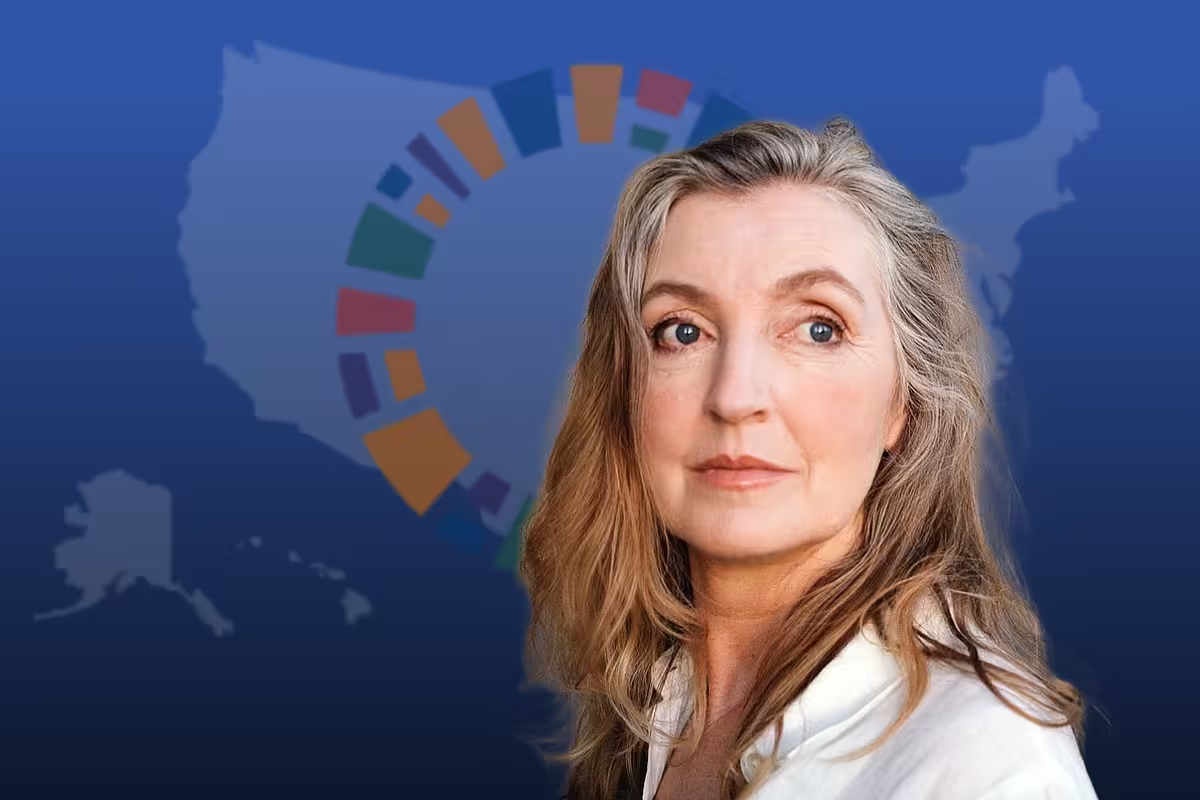
Democracy After the Midterms: A special election episode with Rebecca Solnit
November 3rd was both an end a beginning. A writer who thinks deeply about these issues, Rebecca talks to host Rev. Paul Brandeis Raushenbush about this election through the lens of her book "The Beginning Comes After the End."
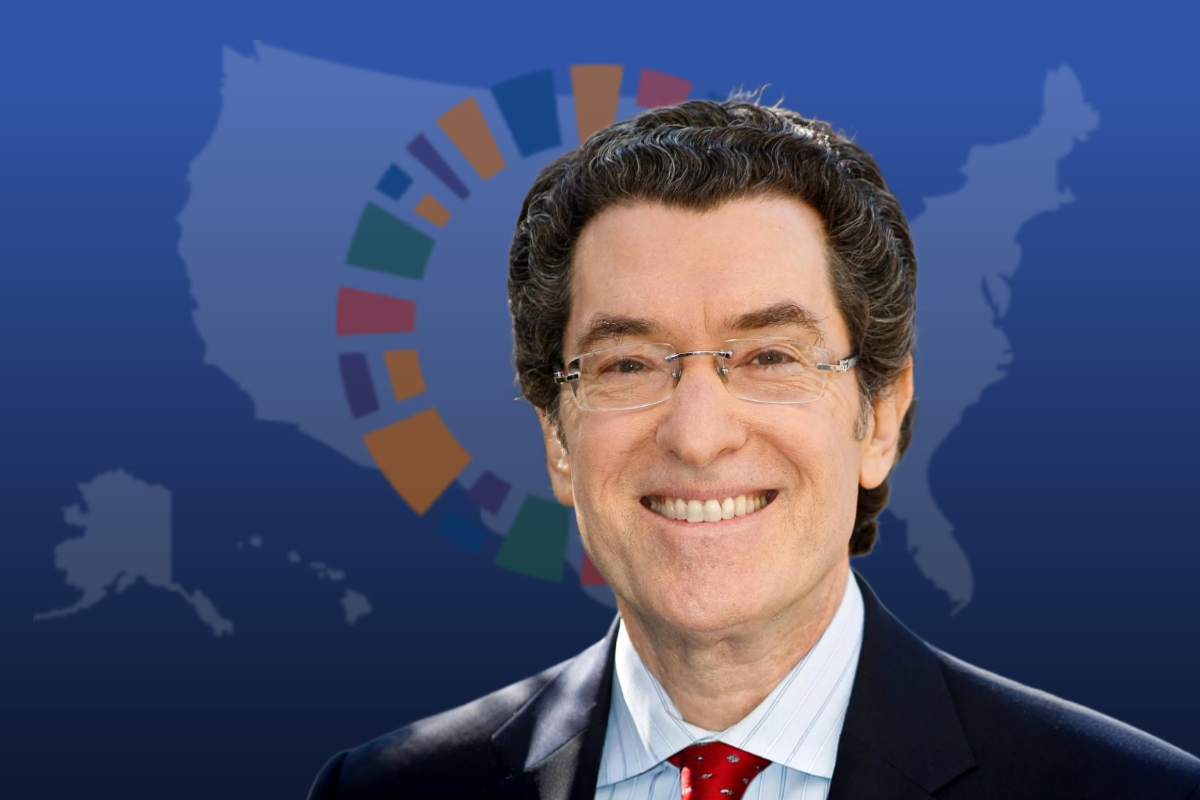
"We Are Ready": Attorney Extraordinaire Norm Eisen Talks 2026 Midterms and Beyond
The co-founder of Democracy Defenders Fund and former Obama Administration ethics czar joins Rev. Paul Brandeis Raushenbush on the eve of the election to recount victories and unveil strategies for ensuring a full and fair vote.
“Nauseously Optimistic”: The 2026 Vote Through A Legal Lens
American Bar Association Election Law Committee Chair attorney Jerry H. Goldfeder joins Rev. Paul Brandeis Raushenbush to discuss how lawyers, faith leaders, and many others are poised to defend the midterm election against all threats, foreign and domestic