State of Belief
These Military Leaders Are Protecting Democracy with Admiral Michael E. Smith

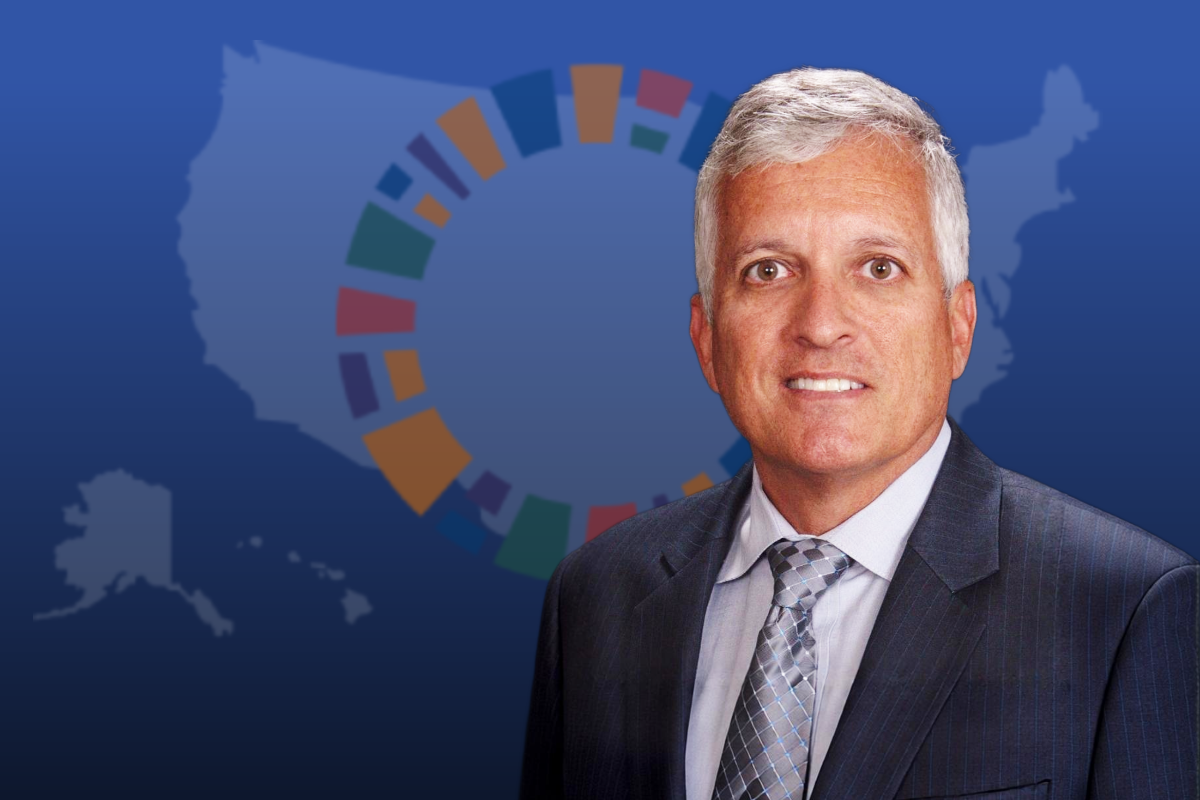
What does it mean to serve the Constitution—not a person or a political party? On The State of Belief, retired Rear Admiral Michael E. Smith joins host Rev. Paul Brandeis Raushenbush to discuss the military oath, democracy, and why faith and national security leaders must work together. We get the admiral’s perspective on how politicization can affect military leadership, morale, recruitment, and retention.
At the heart of the conversation is a shared responsibility: keeping the military nonpartisan and ensuring that people of different faiths, beliefs, and backgrounds are equally respected in all areas of life.
Adm. Michael E. Smith is founder and president of National Security Leaders for America, with a focus on protecting democratic norms and defending the right to vote. He retired after 32 years of service in the U.S. Navy, having earned a bronze star during one of his three combat tours overseas. His career culminated with a role as the independent authority responsible to Congress for evaluating the effectiveness of every ship and submarine in the Navy. Mike was also a key advisor and direct report to Admiral Mike Mullen, then the chairman of the Joint Chiefs of Staff and the Senior Military Advisor to the President.
The State of Belief host Rev. Paul Brandeis Raushenbush is President and CEO of Interfaith Alliance.
Transcript
REV. PAUL BRANDEIS RAUSHENBUSH, HOST:
Rear Admiral Michael E. Smith, retired after 32 years of service in the U.S. Navy, having earned a bronze star during one of his three combat tours overseas. His career culminated with a role as the independent authority responsible to Congress for evaluating the effectiveness of every ship and submarine in the Navy. Mike was also a key advisor and direct report to Admiral Mike Mullen, then the chairman of the Joint Chiefs of Staff and the Senior Military Advisor to the President.
Mike founded National Security Leaders for America, which is a bipartisan organization of retired military officers and national security professionals who are dedicated to protecting American democracy, strengthening national security, and upholding the Constitution and the rule of law. Members have turned out for Interfaith Alliance's The Vote is Sacred tour, and I am so happy and honored to welcome Admiral Smith to The State of Belief.
Admiral, we are so glad to have you.
MIKE SMITH:
Well thank you, Reverend, and I really appreciate both the opportunity to be here today, but also the opportunity you gave to my members to participate in your tour, because I think being able to bring national security leaders and faith leaders together is a very powerful team that can really advance our our interests.
PAUL RAUHENBUSH:
What's interesting is in some ways - and this is slightly controversial to say, but it it it shouldn't be - both faith and military, somehow you're kind of like, which side are they on? What are they trying to do? And you know, my father was a colonel in the Air Force. There's no reason for those things to feel that people in the military and faith leaders should not be all in for democracy, because it's what actually makes both the military and faith possible in this country. And yet there is an idea right now, like, where is faith? Where is the military? Talk a little bit about why you decided to found the National Security Leaders for America, because I think it might play in a little bit to this idea.
MIKE SMITH:
Well, you know, I agree with you. Today just the polarization of what I and my members believe are just basic democratic values is just unbelievable. I too, my father was a retired Navy captain, so I I grew up in that environment where it was all nonpartisan. The military and the entire construct of the Department of Defense was to be, you had one oath. Your oath was to the Constitution. It wasn't to an individual, and it certainly wasn't to a a political orientation.
So I think that what we're seeing today in in this effort - and I agree, it's with faith, as well - that this administration and in particular this Secretary of Defense who has has taken the list of religions that our country recognizes and truncated that down to just a list that he agrees with. And even then he had pushback where he had to add a religion, because - I believe it was the Mormons in Utah, initially he didn't acknowledge that.
PAUL RAUHENBUSH:
Stunningly, stunningly. I want to talk a lot about Secretary Hegseth because I am actually appalled by the use of that position in the way it's been used. But let's first get some really important definitions out of the way, because I do want you to talk a little bit about, you were in this environment and then you founded National Security Leaders for America. So tell us what was your impetus for that, and how long have you all been around?
MIKE SMITH:
So really, the impetus was the first Trump administration: just some of the things he was doing and some of the things he was saying, which to me were basic values, the respect for our allies. All of us in my organization served our entire careers understanding that the United States can't go it alone, that you have to respect and count on your allies, that it's in our interests to have allies. And here he was walking away from allies. So we came, I actually personally came to the Biden administration and said, let me bring together retired admirals and generals and ambassadors and cabinet secretaries, and we'll just talk about our oath and the values that are reflected in our oath. It wasn't meant to be partisan, it's not partisan. We are intentionally nonpartisan.
There are races that we don't get involved in because both candidates are pro-democracy. But I really came to the Biden campaign in 2020 and said, let me bring this together, because I know there's people that don't agree with the direction then-President Trump was was taking national security. And I thought we'd be done. It just came together. I mean, I'm a retired military guy. You know, I thought I'd have some job in defense selling missiles to some country, and I thought I'd be done by the end of that campaign.
Trump never went away. The events on sixth January occurred and we decided we would stick around. And so that's really what brought us together. And we're still very concerned about these basic democratic norms, which seem to be undermined every day by this administration.
PAUL RAUHENBUSH:
Well, again to kind of push the parallels between faith and the military, in some ways I really do think that Donald Trump and Pete Hegseth, they kind of view the military as their personal police force. And the same way Trump likes to say, like, “My Christians” - as if Christians work for him. And I just think it's so dangerous, this kind of megalomaniac where you really just begin to think that the government is yours - and that's authoritarianism.
And I think that this is what we're up against right now, kind of the pillars of any sort of government, whether that's military or faith or civic s sector or all the other ones. When are we going to say, no, actually, our allegiance is to the Constitution. Our allegiance is not to any one president. And for us as faith leaders, for me as a faith leader, I will say we don't serve any political office, we're not trying to say that we're at the service of the president. That would be kind of sacrilegious, in a way. So I do think it's really important to put that out there.
What are some of the main issues that you all are concerned with right now as we go into the last couple weeks of the election? I think one of the things that just comes up all the time is could Trump pull the Insurrection Act and decide that he can actually deploy the military domestically? I mean, that's kind of been a threat that's been hanging over us over the past couple years. How are you and your group understanding that threat in these last couple weeks of the midterm elections?
MIKE SMITH:
So actually, my group, we joined a pro-democracy coalition. That's actually where I first was introduced to members from your group. And it's all based on using all the pillars of civic society, so faith and business and labor and veterans, and come together to take this whole of society approach to what I consider to be democratic norms.
So we started in that organization and we took a look at what was going on with election security. And we identified a very small sliver of election security that we felt was not being addressed, and that is the potential to use the US military to influence domestic elections. Too much was being described about National Guard. It was really a leftover from the discussions last year, which we were very much involved in. But we actually won that case. Then it went to the Supreme Court in December, and we had been fighting the administration the entire year. The entire year, because they were improperly using the National Guard, and the Supreme Court agreed with that assessment. And so in December they were basically told if you're going to use the military, you need to first use the active duty military.
So as we looked at people talking about election security and the potential to use the military, we saw that those assessments really were flawed. And so we got together, again, we created this coalition and we said, How can we look at this problem and identify the threats? And, in fact, we came up with four scenarios where the administration chooses to lie to the American people they can deploy the military legally. It can be challenged in court eventually and hopefully overturned, but because we're talking about an election, we're talking about, really, two basic scenarios.
One would be deploying the military like under the Insurrection Act. You would deploy the military to a a large city, let's say a blue dot ain a red state for the purpose of suppressing voter turnout.
And the other one is where he uses his Article II Commander-in-Chief authority to claim that a foreign power has done a cyber attack or impacted voting machines. The one exception to the US military being deployed to polling stations is if there's an attack by a foreign government. So he could claim that, and send troops to polling sites to confiscate voting machines and disrupt the the chain of custody of legally filed ballots.
So those were the two areas we just looked at. We did a tabletop last month on this. Those are valid concerns, and we identified solutions to those concerns. And actually, we just put out a toolkit for elected officials that gives them advice on, if that should come up, how to handle that, how to approach it, how to speak to the people on it. And again, it's just a small sliver. People are doing so much great work in election security, but it is an area that we think has not been addressed adequately. So we did put out some advice to to help election officials.
PAUL RAUHENBUSH:
That sounds like incredibly important work and interesting to everyone, not just elected officials, but the the average American. People carry that fear in their bodies right now. The people are aware that that is something that seems possible. Your website, the address is NSL4A.org. And people can go there. You can find lots of great information. Learn more about the National Security Leaders for America. And also hopefully this toolkit very soon because it sounds really, really important.
And the American people have to understand what's going on if something like that happens, and what are some of the ways that we can all respond. So again, NSL4A.org. A great website. It has lots of information on here and things that we can learn from, but also things that we can do. And that feels really important.
I have to say, doesn't it feel strange to you? I don't know how old you are. I'm Sixty two. How old are you?
MIKE SMITH:
Sixty five.
PAUL RAUHENBUSH:
Yeah, so we're of a certain era and we've been through a lot in our lives. We went through the Nixon resignation. Lots of things have happened during our lifetime. This feels different somehow. Do you agree with that? I mean, it feels like we haven't quite dealt with this before, where the federal government, it feels like it could be mobilized against democracy itself.
MIKE SMITH:
I agree completely. I think that our country is starting to show that there are members of it who are not opposed to an authoritarian rule. I think for the first time in my life I can look at what's happening to America and believe that the state of democracy will not be as healthy when my children inherit it versus what I inherited from my father and my mother. You know, I think that democracy is under siege and that we really do need to address this as a collective, all of us.
You know, that's what I love about these pro-democracy coalitions. Because I think at at the end of the day, we all want our freedoms. It's being miscast. People are thinking that somehow if I support greater authoritarianism by a strong authoritative leader, by President Trump, that my liberties will will be fine. And I don't think that's true. We can see that every day. Religious beliefs and freedom of the press. Those are the three foundations of America. And here he is attacking the press…
PAUL RAUHENBUSH:
Yeah. The press and freedom of expression. We have people attacking libraries. Okay, so let's get into it with Pete Hegseth, because I just think it's this interesting combination, again, of faith and military where he comes from this world view which is very rooted in a kind of White Christian Nationalism idea, with Crusades on his body and everything he's saying. I don't know, it just feels so weird to me. Doesn't it feel weird to you? I know it's more dangerous than that, but it feels so crazy to hear him talking about no weirdos, no beardos, no, like, all of this stuff. And that's what he's using his time for right now. Sorry, I'm on a rant, I know. But I think a lot of us are just, like, what is happening?
MIKE SMITH:
I don't get it. You know, he has one mission that he's been given by the president. We can argue whether that's a legal thing or not, but he's been given the task of winning a war against Iran, and he's failing. And instead of talking, addressing how to win that war, he is fighting these 1950s-era view of what America should be and what the military should be. I mean, the fact that he removed almost every female and almost every minority from the promotion list to admiral and general is abhorrent. You know, that the only leaders of the military should be White men is just archaic. And that he continues to fight these battles every day while he's losing the war against Iran is incomprehensible.
PAUL RAUHENBUSH:
And the fact that the war itself has had these repercussions that many have talked about. But the fact that he is losing this war - but then it's been expanded and threatens peace throughout the Middle East. Not that there was peace, but it is really unbelievable. And you know, what you said about that he started, now, a department of religion in the military, but you know what that's going to be like. Because I, of course, want everyone in the armed forces to be able to express their religious beliefs or practice their faith. Whether that's Atheist, Zoroastrian, all of it you should be able to do. But you know that's not what he means when he's having one of these. And it it feels like we're in really dangerous territory there.
Also, this live execution that he's put out there. I just feel like again and again - you talk about your religion, but the majority of the people, this is, what is this? So I just feel like it's so important both for religious folks like myself to say this is not what we mean by religion in America. This is not what we want. And for military folks like yourself to say, this is a terrible thing for the the military, as well.
MIKE SMITH:
I agree. And I I think that is certainly the strength of partnering a national security person with the religious faith. I mean, what you just bring up, the public execution is counter to all the moral values that I grew up with. You know, this is what we challenged our enemies about, ISIS and everything else. I mean, I can only imagine then-Major Hegseth looking at his iPhone and seeing ISIS beheading prisoners and what did he think? I can't wait till I can do that? This is horrible. This is not what America is about.
And this is not just a a moral religious discussion - which I think it is, and I don't understand how anyone of a Christian value can can support a public execution - it's also a national security issue. This is going to embolden our enemies. All of these terrorists are going to use this to recruit to their cause and to come against the United States, let alone what the impact is on our serving members of the military and their morale. I mean, this Secretary of Defense is doing more to damage our readiness by some of his actions than has happened in the last twenty years.
PAUL RAUHENBUSH:
I don't want to give him too much time, but my final thought is just every time I see him he's just preening and he feels very like a made-for-TV character. And I just wonder, you have your ear to the ground for a lot of military folks and you've been around that kind of ethos. I I wonder how this plays with the rank-and-file of people who are in the military who are there for a variety of reasons. How does this play in the military itself? And what have you been hearing?
MIKE SMITH:
MIKE SMITH: (23:25.717)
You know, I I believe fundamentally that, especially when it comes to the leadership of our military, that we have leaders that are honorable. They have spent their entire careers, each promotion, reinstating their oath to the Constitution. Those leaders are still there. The Secretary has tried to fire anyone that he felt didn't believe in his values or, it appears, didn't pass some sort of loyalty test. But he is incapable right now of reaching down and eliminating all of the leaders.
But he is going after the highest levels. There are those beneath them that I am confident will replace the people he has fired, and there will still be an oath to the Constitution. My gravest concern is that, if in ‘28, if this administration continues for another four years, this politalization of the military that we're seeing now will be irreversible, and where we've always counted on it - doesn't matter who the president is, it doesn't matter the policies, you will have a a military that serves the Constitution. Eight years of this, and you will have a military that is political and that only serves the politicians ahead of them - and that is absolutely not what we want from our military.
PAUL RAUHENBUSH:
It also might impact recruitment because maybe the only people who would want to join the military are people who are like, yeah, heck yeah, I agree with the political views of that person on top - and so that's the reason I want to join, rather than I want to serve my country or for whatever myriad of reasons.
Speaking of it, tell us a little bit about your own background. We kind of leaped into this without getting anything about you. Where do you come from? What's your background? Were you raised in a faith tradition? Tell us a little bit about you.
MIKE SMITH:
So my father, again, was a career naval officer. My mother was from an Irish Catholic family, so I was brought up Catholic. So certainly I have a strong Christian belief. But you know, when I commanded my first ship, I encouraged, whatever your faith was, of the sailors on my ship to express that and to be able to reflect whatever belief you had that we would respect that because that's what America is all about.
And I think that the Christian values that I grew up in are not the Christian values that I see reflected in this Christian Nationalism. To me, it's all about taking care of those in need. It's taking care of the little guy. It's embracing that all of us, no matter where we are and who we are, we're God's children. And we should all be respected. And that we will only respect people of a certain type of religion is, to me, not what I grew up understanding God was all about.
So I think that the damage that's being done by the the perspective that it can only be a certain faith or only a certain gender or only a certain color of skin, is impacting not only recruiting, as you brought up, but I have to believe it's impacting retention. Now, I wouldn't trust anything they put out on those two issues, but I am confident that the recruiting has gone down, or, like you say, it's only in certain pockets. And I can't believe that the retention of our best women and our best minorities has been able to be sustained. And I think that this is damaging a whole generation of officers who served their career honorably and were among the best.
You know, when I knew the last head of the Navy, Lisa Franchetti, I remember talking to her when she was a captain and she was up for admiral. And I was like, Lisa, don't worry about it. You will make Admiral and we will all work for you one day. Because she was just awesome. And that Secretary Hegseth comes in and fires her on day one just because she's a female is absolutely ignorant.
And I when I commanded a ship, my top Junior officers were the females in that wardroom, they are now 06’s. They're about to make admiral. And what are they seeing? They're seeing that despite being the very best in every job they've ever been in, now they're not going to be allowed to make admiral because of their gender. I just think that this is absolutely anti-American. It's against everything in our oath. And that's why I am fighting, and the folks in my organization are fighting, to change this so we can go back to the democratic norms that we served our career defending.
PAUL RAUHENBUSH:
I just really appreciate that. And I appreciate this idea that good leadership can certainly be religious - I remember I had an opportunity to interview President Jimmy Carter about his history. And, you know, he was a formidable guy. He was very, very smart. And he had been, I think, a captain on a submarine, as well as a Sunday school teacher. And I interviewed him a few times and each time I was like, come correct, you know, because he was so smart. But his faith was about opening up rather than closing off. And so it's not about restricting faith from the military or anything like that, but recognizing that there is a diversity there. People from all different backgrounds, including Atheists and and Secular Humanists, should be equally welcomed and celebrated.
And I really do think it's an absolute tragedy, avoidable tragedy, around what you have been talking about with gender and race and how they've really gone after people.
Just because you've actually held these jobs, I'm curious about, I don't know what it was called, if it was an aircraft carrier that Lincoln that was out for so long and it felt like people were really having a very hard time. But this was dismissed. I don't know if you have a thought about that or if it feels productive to talk about it. But it it does feel like the actual soldiers or the folks who are out there serving the country may not feel as important to the leadership as as they should.
MIKE SMITH:
You know, they did just return the Lincoln Aircraft Carrier Strike Group and I think that they deserve our greatest respect. Without doubt they were extended. I think the other carriers have been extended as well, but I think also being extended, suddenly fighting in this war, not knowing when you're going to go back, frankly not knowing what you're fighting for, because it changed every day as to what was the actual purpose of your being there, it certainly added to the stress of those sailors.
And the issue, to me, was the lack of respect to the families who reported what they were hearing. And that they were so dismissed by the arrogance of the leadership to not value their input. You know, they finally did send the CENTCOM commander to that ship. Why he didn't come with a cadre of the very best mental health experts in our military and say, you know what? This may or may not be an issue, but we're hearing from your families. We respect your families. I'm going to lead this team here, and we're going to talk to every sailor on this ship to make sure we're okay. How hard would have that been? To me, it was the easiest leadership challenge they were presented.
But the administration has this ethos that never admit you made a mistake, never admit you're wrong. So rather than acknowledge that maybe some sailors are struggling and bring people to help them, they dismissed it and they acted as if, like the president said, they could have been out there much longer. That's not a leader. You know, you have to take care of your people, you have to respect their families. And every leadership challenge they were presented in that situation they failed miserably.
PAUL RAUHENBUSH:
I think that's perfect. You're exactly right. If this is being raised as an issue, go and address it, but don't dismiss it. And this idea of warriors, warriors, we're gonna be warriors. I mean, yeah, of course we want warriors there, this is the military, but I don't know. It just all feels a little bit like someone who played a lot of video games to me. I just feel like the seriousness with which the people who in my family and abroad took their role in the military feels absent in the leadership here.
But I do want to get back to the National security Leaders for America and how you're being deployed right now. I mean I really appreciate you spending the time talking to me, but across the country, what are some important roles that you feel like military presence can offer in helping the public understand this moment, and do you have examples of where people are showing up right now who you work with?
MIKE SMITH:
So as I said, we started by coming to the Biden campaign to be involved in supporting them. So we did start out as an organization that wanted to leverage the credibility of our messengers to talk to the movable middle of voters. And so it's the midterms, and we're doing that again. So we have over twenty state teams actively involved in campaigns. Again, we're not partisan, so we're not part of the Democratic Party. Basically, we have flags, and if there is one candidate who we believe is anti-democratic, someone who is an election denier or somehow is an apologist for the 6th January riots on the Capitol, we don't want that person having a voice in Washington. So we will get involved in in those campaigns.
And then we're a small organization. You know, we have 1600 members. So to us, it also has to be a close campaign. Because of the energy of the midterms, that's about 10%, if it's within 10%. We don't get involved if it's a dark blue district. That's for the Democratic Party to to handle. We're not going to get involved in a dark red district. We can't compete with that. But we do want to be able to come to those other campaigns that are close and explain to them, using the credibility this former ambassador has, to talk to that voter who maybe last time voted for Trump and now say, okay, are you happy now? Is what you're seeing what you wanted? And then just have that discussion.
So that's really a lot of what we're doing right now is supporting a a broad range of candidates from governors to attorney generals in the states to Senate and House campaigns.
PAUL RAUHENBUSH:
And really looking at the issues of, who is really upholding the rule of law? Who is really talking about the rule of law? Who wants to be a voice for democracy in this moment of real choice around that? How would it work? If there was a Democrat who was really saying, I think we should take over everything, I assume that you wouldn't support that person. It's really about the issues, right?
MIKE SMITH:
MIKE SMITH: (36:50.567)
Yeah, absolutely we would not. So again, we go back to what are the values, the principles in our oath, and that's why we're saying that that's how we created what is an undemocratic candidate. And so we have to have a pro-democracy candidate and we have to have an anti-democratic candidate. If the race has those two, then we'll be involved. We don't get involved in midterms, we're not part of the Democratic party, we're not choosing sides. We're just going to take a look at who the final candidates are, and if there's somebody we believe absolutely should not be going to Washington and should not have a a voice in these discussions, we want to oppose that candidate if we can. And that's where we focus. And to your point, if they both don't meet our values, then absolutely we will not get involved in that campaign.
PAUL RAUHENBUSH:
I'm just curious how it feels to have this role after being in the military. As you say, you didn't expect to be in the political realm. You didn't expect to be needing to do this kind of work. You, by any standards, were extremely successful in the military. Does this feel in some ways like an extension of what you did in the military? From my perspective, it feels like you're still, in some ways, doing what you were doing, which is fulfilling an oath to the Constitution and saying, I really value the Constitution, I really value this country and the rule of law and I want to support it.
MIKE SMITH:
MIKE SMITH: (38:28.776)
I think that's what motivates all of our members. You know, all of us see this as continuing to serve our country, continuing to serve the Constitution. Our oaths didn't go away just because we retired or just because we're no longer in government. We all gave that oath and promised our allegiance to the Constitution. No one said, okay, take that away now. So we have seen that those values that we swore to defend.
You know, I never took the oath completely as serious as I should have. The oath was to defend the Constitution against all enemies, foreign and domestic. The domestic enemy to the Constitution, I really never viewed that that would ever occur. To me, that's the Civil War. That's some major thing, but we're seeing on a much smaller level, that there are threats to that Constitution that we're seeing every day.
We already talked about freedom of expression. The ability to go out and protest this government shouldn't result in the FBI coming to your offices and confiscating your laptops. We're allowed to disagree with the president. We're allowed to have a faith that may not be what our leaders like. And certainly we have to have the ability for all of us to be accepted and to have a military that is not political. I believe my members are still around because they see those values under threat every day. And they're doing everything they can to turn that around.
We're going to do our best to turn it around in the midterms, and then absolutely the existential threat is 2028. We have to be able to communicate to the average American that what they're seeing is just not right, and to make sure they understand that the higher cost in the stores, it's not something that has just happened. It's because this administration chose to do an illegal war against Iran and is suffering the consequences that I'm positive his military advisors already told him would happen before he entered this.
I have to believe that after North Korea, no country other than Iran has had more war games done on them. We knew that this is what they would do. This is not a surprise that you attack Iran and they're going to close the straits. Hello, we've known that forever. No one wants Iran to have a nuclear weapon. But we haven't arbitrarily by ourselves without allies taken on Iran because you're seeing what would happen. This idea that we'll be done in two weeks is just ludicrous. We are experiencing today what I'm confident his military advisors warned him would happen. But the arrogance and the belief that they know better than these military advisors, and, I'll fire the military advisors that aren't saying what I want. It's why the voters are seeing the high prices in their grocery store and why they're experiencing inflation.
And you know, the reality is that most Americans, as you know, they're just going paycheck to paycheck. They're just trying to take care of their families, take care of themselves. They don't have time to look at the political system and what's going on. You know, this is the time we get to communicate with them, but we have to keep that up and we have to be prepared and we have to, no matter what happens now, in ‘28, the whole power of this government and this authoritarian view of democracy is going to be used against their opponents to try and keep them in power.
PAUL RAUHENBUSH:
Retired Rear Admiral Michael E. Smith is founder and president of National Security Leaders for America.
Admiral, thank you so much for joining me today and for all your passion, your wisdom, and your perseverance in this moment and on through to 2028. So thank you so much.
MIKE SMITH:
And thank you for what you're doing and thank you for continuing this. I think that we have to bring this message to the public and to your listeners that this is a partnership. This is not just a faith-based issue, this is a national security issue, this is an American issue, and I really appreciate what you're doing.


Democracy After the Midterms: A special election episode with Rebecca Solnit
November 3rd was both an end a beginning. A writer who thinks deeply about these issues, Rebecca talks to host Rev. Paul Brandeis Raushenbush about this election through the lens of her book "The Beginning Comes After the End."

"We Are Ready": Attorney Extraordinaire Norm Eisen Talks 2026 Midterms and Beyond
The co-founder of Democracy Defenders Fund and former Obama Administration ethics czar joins Rev. Paul Brandeis Raushenbush on the eve of the election to recount victories and unveil strategies for ensuring a full and fair vote.