State of Belief
We The People v Trump with Democracy Forward's Skye Perryman


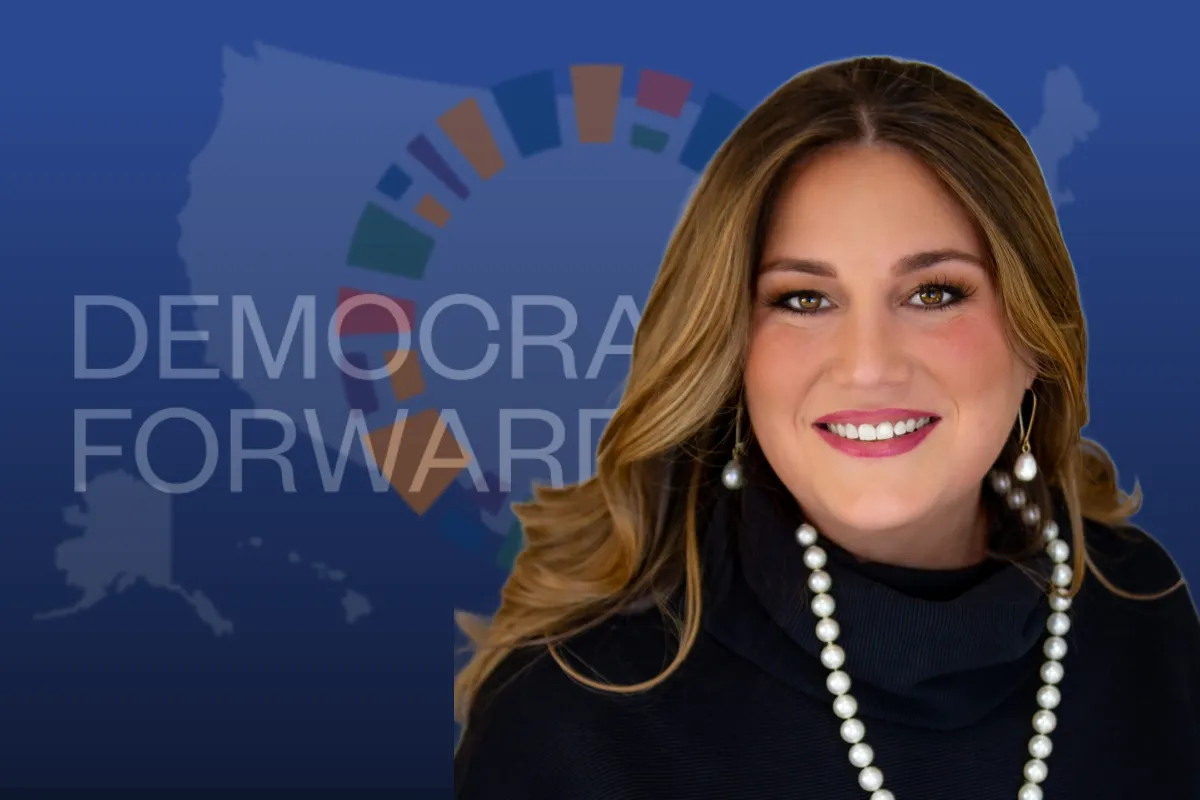
On this edition of The State of Belief, Democracy Forward President and CEO (and one of Time Magazine’s 100 Most Influential People in the World 2025) Skye Perryman is back to talk about the first year of this presidency. Democracy Forward has filed hundreds of court challenges to the administration’s unconstitutional power grab and has been remarkably successful in winning most of them.
She stresses that not even the conservative Supreme Court has always sided with this administration and that lower court judges rejecting executive branch policies are sometimes Trump appointees themselves.
Skye and host Rev. Paul Brandeis Raushenbush talk about the essential role for people of all faith traditions and belief systems to hold fast to their values and teachings regardless of the forces buffeting society, and how important maintaining community connections is to get through the enormous challenges we are all facing right now.
"Courage is the new currency," Skye often says, and stresses that there are many, many ways for people of good conscience to get involved in the work of defending and rebuilding our democracy - including, admittedly, options that do involve personal risk.
Democracy Forward has just released its 2025 Impact Report, documenting how the power of people in courts and communities has, again and again, been victorious over the relentless power grab of this administration. Skye stresses that these successes have come, in great part, thanks to the intense preparation that was done ahead of the election, and that a proactive stance regarding what may come next continues to be essential.
It’s available at https://democracyforward.org/work/research/2025-impact-report/
More About Skye Perryman:
Skye L. Perryman is the President and CEO of Democracy Forward, a nonpartisan, national legal organization that promotes democracy and progress through litigation, regulatory engagement, communications, policy education, and research. Named as one of the 2025 100 Most Influential People in the World by TIME Magazine, Skye took the helm at Democracy Forward a few months after January 6, 2021, in the midst of rising extremism in communities and courts across the country.
Skye has testified before the U.S. Congress and other expert bodies, and her legal work has been cited by the U.S. Supreme Court as well as state supreme courts. She is a frequent guest on network and cable television news programs, and her work and commentary are routinely covered in national newspapers, newsmagazines, and radio broadcasts.
Skye Perryman is also an invaluable member of the Interfaith Alliance board.
More about Democracy Forward:
Since January 2025, Democracy Forward has played a leading role in inspiring courage and in protecting the American people from harmful and unlawful federal executive action. The organization has filed hundreds of legal actions, launched hundreds of investigations, and, through its Democracy 2025 initiative, has organized the largest, most successful affirmative litigation effort against executive branch excesses in United States history.
Please forward this episode of The State of Belief to one person who would enjoy hearing this conversation - and thank you for listening!
Transcript
REV. PAUL BRANDEIS RAUSHENBUSH, HOST:
Skye Perryman is President and CEO of Democracy Forward, an organization that has taken the leading role in challenging the flood of policies, orders, and abuses of power this administration has put us all through in the past year. Democracy Forward has been incredibly effective in battling back many, many of the attacks on our values and our way of life.
Named one of Time Magazine's 100 Most Influential People in the World in 2025, Skye Perryman's biggest claim to fame is that she's an invaluable member of the Interfaith Alliance board. Okay, that was a little editorial there, but Skye, it is so good to have you back with us on The State of Belief!
SKYE PERRYMAN, GUEST:
It's great to see you.
PAUL RAUSHENBUSH:
So we did this a year ago.
SKYE PERRYMAN:
I was just thinking about that, Paul…
PAUL RAUSHENBUSH:
Literally like the week of the inauguration we were talking and you had the great line, and I'm going to repeat it right now, “There is no way forward but through it.” What did you say?
SKYE PERRYMAN:
The only way out is through.
PAUL RAUSHENBUSH:
That's it, the only way out is through. And boy, have we been through it. And so I would just love to start with: how do you assess the year we have been through? Because we have truly been through it.
SKYE PERRYMAN:
Well, I think this has been such a hard year - and hard doesn't really describe it. I mean, it's unthinkable for many people. It was expected for others who have been, unfortunately, the target of hate and abuse by these same very extreme movements that are now controlling our federal government. The United States is on a path to - and is vastly accelerating on a path to - autocracy.
There's no question about it. There's no debate about it. Last year when we were meeting, there were still people out saying, well, you know, it's going to be all different this time. We are in a vast acceleration into autocracy. And so that means that we're in a new paradigm. And it's a harmful paradigm where basic things like following your conscience and following your professional ethics and protecting your neighbor and protecting your family now have cost to them.
But the beauty of a new paradigm, especially one like this, is that the path forward is exceedingly clear, because what this administration has done is so offensive - not in a political way, not in a policy-making way, but it offends the very nature of our humanity as people, that there's nothing else to do but to use every power we have in our lives to resist it, to confront it, and to move forward with courage and commitment.
There was a bunch of hand-wringing last year: not sure, you know, should we say this, should we say that? You remember this - organizations were hand-wringing; powerful institutions still seem confused; really good people that had been committed, I think were sort of, what do we do in this moment? Hey, we're a year in, the path is clear, what we have to do, which is everything we possibly can. And so I think that's kind of the spirit in which I'm coming to this moment and to this podcast a year later.
PAUL RAUSHENBUSH:
I appreciate that so much, the clarity. In some ways, this is dictated by the tone that the administration has had. They have been very clear in their tone. I remember back at Trump 1.0, where people were just like, well, we can't say lie. There's no way that we can use the word “lie.” When, you know, Trump was lying repeatedly. And there was just, you know, we can't, we want to, we want to tread lightly and go forward lightly. And I think what I really appreciated from the beginning, literally, you were so ready - and it was so important that you were so ready - from the beginning, you were like, okay, we are going to file and file and file lawsuits, and many times you've won.
It's actually been incredible how many times Democracy Forward and other partner legal organizations have won. Can we talk a little bit about that? Because it's good to remember that we are not helpless and that there have been good things that have been happening this whole year. And we have to celebrate those, even as we lament what is happening.
SKYE PERRYMAN:
What we're celebrating is the resilience and the strength of the American people - because powerful institutions didn't step forward and didn't say, I'm going to allow the country to wrap itself as protected by us. Didn't happen. But what happened, in many instances, powerful institutions not just sat on the sidelines, they've actually engaged in a capitulation. I mean, funding the ballroom, law firms capitulating to the White House's demands. And it goes on and on.
But what the people have done is step forward. And we knew the first place that that could become visible would be in the courts. Because the ability of people to file litigation against their government is a huge power that people in this country still have, even though the president tries to take it away by threatening lawyers and judges. And we were determined to make sure that people had access to the courts free of charge, to use that power, to allow the nation to see what was happening. So that you have what we're seeing now, which is historic numbers of people in the streets and demanding better.
And so we actually released an analysis today on the year of inauguration at Democracy Forward. We'll be sure you have it in the show notes. Folks can go to democracyforward.org to find it. And it shows what happened with the legal cases. Because I know it's hard. People are seeing the headlines every day.
There have been more than 600 legal cases filed, all told, against the administration and federal court. And even more than that, if you count some of the immigration detention cases that have been filed. And overwhelmingly, people and communities have been winning in court - and they have been winning before judges that were appointed by Republican presidents, judges that were appointed by Democratic presidents, and judges that were appointed by President Trump himself. The win rate fluctuates between 70 and 80 percent, which is really incredible.
PAUL RAUSHENBUSH:
Wow! Let’s stop there.
SKYE PERRYMAN:
Let’s stop there.
PAUL RAUSHENBUSH:
80 % of wins… I mean, people, let's celebrate that right now.
SKYE PERRYMAN:
And people may say, it seems like you win, then the Supreme Court blocks things on the shadow docket. Actually, less than 5 % of all of those cases have gone to the Supreme Court in any fashion. And while I am not going to be an apologist for this Supreme Court that has the majority of the justices that have taken away people's constitutional rights, we have seen just recently, of course, the Court refused to block the court order that was preventing the National Guard from being deployed in Illinois. The president is facing more setbacks there than he would like people to believe.
But the real headline is that less than 5 % of these cases have gone and will go to the Supreme Court. This has been the largest and most successful legal effort against executive branch excesses in United States history. And it has been powered by people - because the large elite law firms aren't bringing the volumes of these cases. The large businesses and corporations - even though their rights, by the way, are being trampled on by the president - they're not really the ones bringing these cases. It's the people and communities and the educators and the students and the faith leaders and the houses of worship and the veterans and the voters and the workers and the unions who are also working with small businesses. It's all of these people across the country that are saying: we are not going to let this democracy go down without a fight. And I think that's what we're reflecting on today and celebrating - even as we see this autocratic playbook accelerate.
PAUL RAUSHENBUSH:
I appreciate that so much. It's absolutely true. Let's talk for a second about the Supreme Court because I think a lot of people, the “shadow docket” is something that people say and don't really know what that means. Maybe you can explain that. One of the things that continues to baffle me, and I think the American people, is to what degree does the president actually have immunity for everything he's doing right now, and how far out does that immunity spread? I mean, I just think right now he's completely out of control with all the things he's trying to do.
Okay, I know I've asked two questions in here, but the shadow docket is one thing, but this sense of like, I can do whatever I want. He recently said, I am only shackled by my own mind and my own moral compass - which means he's not shackled at all. So what is it? What is the perspective?
SKYE PERRYMAN:
Let me first start with the Supreme Court. So the shadow docket is the Supreme Court's emergency docket that has only been used in very, very rare instances. I'll give you a statistic: in the George W. Bush administration, so all eight years, and the Obama administration, all eight years, that's 16 years together: the shadow docket was used very sparingly. I want to say under 20, certainly under 20 times. I think it was used between eight and ten times, maybe.
In this administration the administration has already used it such an exponential more. They're appealing to the Supreme Court on the shadow docket because what they want to do is they want to have the justices that they perceive as allies on the Supreme Court block what the lower courts are doing - and to do it quickly and to do it without explanation, without argument, without full briefing. Because if you hear the argument and look at the full briefing – I mean, look at what the federal courts have done, including, by the way, judges that President Trump himself appointed. I want to keep emphasizing that, that we are winning even before those judges because this activity is so incredibly extreme.
PAUL RAUSHENBUSH:
You said something that I just want to make sure the listeners heard, which is: they can make decisions without showing how they made those decisions. Am I getting that right?
SKYE PERRYMAN:
Yes. And that harms... So let me give you an example in the Department of Education case. Our team won a court order that was sustained on appeal to prevent the decimation of the Department of Education. That was, course, a Project 2025 initiative. The president had to run away from it on the campaign trail because the overwhelming majority of Americans oppose that type of extremism - including, by the way, people that identify as conservatives and Republicans. They didn't even want to have anything to do with it.
They come straight in and do it. The courts clearly block it. I mean, this is an agency that was created by Congress to do particular things. The president cannot, with a stroke of a pen, decide that it goes away and that what Congress wanted the people to have, they don't have. And the Supreme Court blocked our order on the shadow docket without any explanation at all. Now, we're continuing to vigorously litigate that case. Eventually we will win and the shadow docket order will fall away. But a lot of the harm has been done. And so that's the concern with the shadow docket - and that the only way courts in our democracy have legitimacy is through what we call “reasoned elaboration.” The courts decide what the law is, they interpret the law, and they have to explain it to the people. And they're not doing that now. And so that is why the emergency docket, we're now calling it the shadow docket. The administration is trying to abuse that in any way. And the Court, so far, has seemed really willing, in many instances, to allow the administration to come up to the shadow docket and get a decision.
Now, it didn't in the more recent decision around the National Guard in Illinois. And I just think this is important on a day that we're seeing potential threats about militarization of our - again, the president has had to walk back his National Guard deployments because the people have stepped forward and because of this court action. And the Supreme Court has not allowed the president to do what he wants to do on the National Guard.
In terms of your question around immunity and accountability: you know President Trump has said from the beginning - even in 2016, before the Supreme Court was shaped by his first administration - that he sort of thought that he had this king-like power and could do whatever he wanted to do. And of course there have been instances - especially in Trump v. United States - where this majority of justices on the Supreme Court have seemingly expanded his power.
What we want people to understand is this is a president actually who has had to pull back a lot of the things he's doing. That's not to give people false hope. He's threatening our closest allies, the entire pro-democracy post-World War II order. He's threatening, as we speak, as we're talking on this podcast. So this is not to try to minimize what he's doing or what he may be able to do in the short term. But it is to say that we have seen people and communities hold this administration accountable through their actions. They have abandoned a number of their cases on appeal. They have abandoned a number of their initiatives. Remember the FCC and CBS and all the threats. So it is to say that - and this is where we say the only way out is through - collective action and pushing back and moving forward together and through this together is really important.
And then, of course, there will be elections where we hope that accountability comes out, too, and so much of our work over the next year and the work of every American in this country needs to be insisting on protecting those free and fair elections.
PAUL RAUSHENBUSH:
You and I have talked about this, and one of your first cases, like within two weeks after Trump was inaugurated, you started it with “In America, There Are No Kings.” And I'm so moved by that. I'm thinking a lot about Mary's Magnificat and like, “he will pull down the rulers from their thrones.” I just feel like there is something, both in our faith tradition - you and I are both open about being Christians - and also in our commitment to democracy that comes together in this. And I'm just curious, like, how do you connect these actions with your faith? Because I just find it so powerful to see those two impulses in your life reinforcing one another.
SKYE PERRYMAN:
Well, you know, my faith tradition and our shared faith tradition, which I so value, but certainly also the traditions of so many people across the world - I mean, we're both active, you're the president of it, I'm on your board at Interfaith Alliance. So, you know, every major faith tradition, every major faith tradition has an undertone of justice. And when you look at the stories of the prophets, of the leaders, of the people, the stories that make it through - and we know there are a lot of stories that didn't make it through and that aren't told, and we're always looking through history's lens, which can be a slanted lens - but even through that slanted lens, they're all about courage. And they're about people knowing what is right and wrong on some basic level, and committing that they are going to live in that way. Maybe not perfectly, maybe not without a lot of temptation or a lot of setbacks along the way. But fundamentally, it's about knowing the truth in some really deeply way as humans.
I mean, every major faith tradition: take care of the poor. Understand those left out. I'm not aware of ones that, when you really get to the bottom of what they're standing for, doesn't prioritize the least of these. And certainly our faith tradition, the Christian tradition, at its best, does that.
And then there you have all of the extremists that in all religious faiths seek to manipulate and utilize those faith traditions to stand for something else, which is why you and I have both been very active and vocal against Christian Nationalism - because that's our responsibility as Christians, as we've seen how this has been manipulated. And so to me, it really is so connected.
And then, of course, when you think about democracy overall - and this was a country that was founded, that its promises were not made real for the vast majority of people in the country, whether they were indigenous people, women, Black people, people of color, people that didn't own property. I mean, so many people were left out of that original promise.
But when we look at the best of that promise, which is the idea that we can be a living country that over time overcomes these barriers and expands this democracy so that it is accessible to all - and that's been the project of American democracy. So fundamentally, one of those pieces has been this personal liberty and personal freedom and the ability to pursue happiness and the ability to be able to worship freely. So I can't tell you how proud I was of Georgetown University Law Center, my alma mater, where I went to law school, when the U.S. attorney that Trump appointed in the early days, this was happening just a few weeks after inauguration last year, wrote them and said, you know, we may investigate you for talking about equity - and they write back and say: I'm sorry, we're a Jesuit tradition. And we're a law school which actually believes in some level of personal freedom, but like, can't fulfill our mission.
PAUL RAUSHENBUSH:
That was so refreshing. I recall that moment where you're just like, everybody read it. It was just like: no. No, you don't get to do that.
SKYE PERRYMAN:
And they were one of the only institutions at the time that was willing… And I like to believe maybe that is because of this conviction that they had. But then - so we look at the lawsuit that we filed in early February against the president's executive order that was seeking to outlaw, in some way, diversity, equity, inclusion, accessibility. They're calling it illegal DEI. They still, by the way, you can go to court today and ask them. They still won't tell you what quote “illegal DEI” is. They cannot describe it. And so we started it within the United States. There is not a king. Elected leaders, including the president, have to submit to the Constitution, to our shared understanding of what everybody in this country is entitled to. And you don't get to say, you can't say certain words. You just don't. And so that was sort of an early way we thought of explaining to people what was going on.
And then right after that, he comes out… This king. I mean, the White House puts it out on their channels and, without irony, he claims to be a king. And then, of course, people understand that, especially as we're in our 250th year where we're celebrating the Declaration of Independence and this country's throwing off the reins of monarchy.
PAUL RAUSHENBUSH:
And basically, all the organizers of the No Kings mobilization were taking it from you. No, but I think it's resonating with Americans across…
SKYE PERRYMAN:
I think it is resonating - whether it is with the lawyers writing the lawsuits, whether it is with people engaged in organizing, whether it is with people that are looking to observe the 250th anniversary of the Declaration of Independence in a way that has some fidelity to some of the better parts of our values as a country - it was all about throwing off the reins of tyranny, in many ways.
And then our Civil Rights Movement, our abolition movement, the other movements in this country have been about throwing off the reins of tyranny and autocracy, including those that have been in this country. And that's one thing - we were reflecting yesterday on Martin Luther King Day. I know this will come out a little bit later, but we're recording it the day after Dr. King's Day. And this is not the first time that this country has seen deep tyrannical power being misused against people. And we've overcome that. And that's the kind of courage and strength we're going to have to find as we enter the second year of this administration.
PAUL RAUSHENBUSH:
Well, let's get into the second year a little bit. Let's talk about how you're understanding this. What is your stance – meaning, how are you imagining going through it? Because we're going to see a lot about the 250th, and there's going to be people trying to own that. That's certainly something we're thinking about a lot at Interfaith Alliance.
SKYE PERRYMAN:
Just like people try to own our faith tradition.
PAUL RAUSHENBUSH:
A hundred percent. And then, of course, so this will be a major... What I didn't have on my bingo card, frankly, was Venezuela and Greenland and whoever else we might be invading over the next few months. So we'll see about that. The really important sort of international - which Interfaith Alliance doesn't really deal with, but it is fascinating.
And then we have the midterms. But I'm curious: how's Democracy Forward? How are you all? Because one of the great things about you, Skye, and the incredible team that you're a part of and the community that you've pulled together, you're really always thinking ahead: How do we prepare for the thing that's going to come, not for this moment, but for what is going to come so we can be as powerful as possible. So, how do you imagine 2026? And what should our listeners really be looking for and ways that they can be prepared in their own communities, wherever that is?
SKYE PERRYMAN:
Well, we're 20 days in to 2026 and we've already see one thing that I'm sorry that we were right about, I had hoped we would be wrong, I had some arguments with people in December that were saying, you know, next year, the whole conversation is going to be about what do we do after Trump? And I said, well, that's a great conversation and everyone needs to do more than converse about it. We need to plan for that moment where we get to rebuild and reimagine democracy. But next year is going to be a very bad, more accelerated version of year one.
And so what we know about autocratic actors is that they will sort of do anything to try to hang on to their power. And we are seeing now a more unhinged, more extreme version of what we saw in the first year - because the president, in fact, has lost public support. There were people that gave him the benefit of the doubt, people that voted for him that said, you know, he may make me uncomfortable on some things, but this is a person that seems like they're going to shake up the system. Our democracy had not been working for everyone.
Many institutionalists are a little too slow in admitting that. And so there are some people that saw this sort of shake up the system. Some people that were apathetic that said, you know, this government's not working for me. I'm going to sit on the sidelines. I don't need to take time to get involved in the ‘24 election. And so for lots of myriad reasons, you had some people that had given him and his allies the benefit of the doubt. All of that is gone.
You've seen his immigration agenda, which was supposed to be the agenda that was popular across the country. It's deeply unpopular, because people in this country, by and large, are good people. And when they see this visceral reality of what this administration is doing and how they are targeting and disappearing people, depriving people of due process - you're seeing that shift. And that is a grave threat to the president. There was a White House advisor that was quoted over the last few days that basically said, the president is committed to mass deportations. He just doesn't want people to see what that looks like.
And so over the next year, we are going to continue to be focused on the people using their power and showing up. But we are going to have to be doubly focused on shining a light. And Paul, your great grandfather Justice Brandeis, said, “Sunlight is the best disinfectant.” And he said that when he was referring to the courts, to the muckracking journalism of his time. We're going to have to do a lot of sunlight. We've already received a motion to strike from the Department of Justice to strike words out of a legal complaint concerning their cover up of the Epstein files. I mean, this is an administration that's going to use everything they can to prevent people from telling the truth, whether that is going to be intimidating protesters, intimidating the press, scaring people, intimidating judges, trying to deter lawyers. So that's number one, you're going see that.
The second thing this year is we do have the elections in front of us. And because this is an administration that has not governed as if they believe they are going to be held accountable by the people - I mean, they're not doing things that are consistent with what the people want - that should concern every single American. And so there is going to have to be a full court press effort for people to get engaged, to vote, and to be ready to demand that this country defend its election system. So you will hear more from us and from our partners. I know Interfaith Alliance will be engaged in that. But that's another piece this year.
And then the third piece that we always want to flag is, that we know that the number one tool that autocratic actors have is not voter suppression or gerrymandering. It's not misuse of law enforcement. It's not targeting people. It's making people believe that they're alone, that they're isolated, that they're afraid, and that they don't have power. And so we've been very proud of the resilience and the strength we've seen from people in communities over the last year. But we are going to have to really work this year to sustain that, because it is going to become worse. We've had people shot and killed at the hands of federal agents, and people are watching this.
My 10-year-old son asked me about it last night. I was not expecting it, but a friend of his who knows what I do decided to strike up a conversation with him about it. And so we're having these conversations with our kids. And this, for many communities and for many people, it is going to be hard to keep the faith, to stay in community and to defy isolation. So honestly, that is, for me, a big part of what this next year is going to be - is doing anything we can to support that.
PAUL RAUSHENBUSH:
And this actually is a perfect segue for my favorite thing that is going to happen on this podcast is that I get to share with you, the listener, that none other than Skye Perryman will be having a book come out this year - this year, for us. I'm going to let Skye describe it, but I'm going to hype it right now because having talked to Skye a little bit about this book it is really aimed at exactly what Skye was just talking about, which is: helping us not feel alone, helping us not feel helpless, and giving us the tools the resources we need to be active in our lives.
So Skye, first of all, I know it hasn't come out, I know it's too soon to talk about you know
SKYE PERRYMAN:
Your jinxing all of it, Paul, but that’s okay…
PAUL RAUSHENBUSH:
I'm not, because there's no way to jinx this. There's no way this isn't wonderful. But tell us what you can - and then, believe me people, we will be having Skye back on the show to go more in-depth. But I did want to just start the year out right with the hopeful knowledge that a great resource and compelling book is gonna be coming out.
Skye, what can you tell us about it right now, knowing that we will have you back on when we can talk more?
SKYE PERRYMAN:
Well, look, it is something I didn't seek… I didn't set out to do it. It's something that I started working on as we started hearing from people in communities across the country very early on last year, that more than wanting to know what our analysis was of where the lawsuits were going to be or what we were thinking about the midterm, all of these questions that permeate the cable news and the social media - people wanted to know what they could do.
Very early on after inauguration last year as the president, it was clear he was going to govern on what I had been calling a collision course with the Constitution, and people of all different ideological backgrounds and personal backgrounds, it just did not sit right. What do you mean we are shuffling individuals onto a plane without any due process at all, without any ability, never even ask them, Have you been convicted of a crime? Have you ever done anything? Never even bothered to ask them that or anything and shuffled them on in the dead of night to remove them from the country without any process at all. That happened in March.
And we've seen the militarization of our cities. We are seeing so much extremism. People wanted to know what they could do. And at democracy forward, we see through our work every day that it is the power of people that is making the difference, that is holding the line. And it's not just folks that are showing up at a Supreme Court rally or showing up in the halls of Congress.
These are people that in their communities are doing the things that need to be done to build a better future, to oppose extremism, to take care of their neighbors. And so the book that I've been working on will really summarize some steps that we can all take, with examples of things people can do, with examples of folks that have made a difference of what we've seen, to really help people in this moment that are looking for ways to plug in. And of course, it is a collaborative effort. So we're going to be talking about effort, because part of this is everybody understanding we come to this all differently.
You have an amazing way of advancing democracy, Paul. And that is not the same way I do it. And it's not the same way my neighbor does it. And it's not the same way that my son will do it. And so it's really an affirmation of: let's look within ourselves and see what is our unique contribution. Do we have time? Do we have money? Do we have connections? Do we have creativity? Are we able to make people feel good and bring people together? We all have a role we can play. And so this book is really about helping all of us encourage each other in this time, lean into those roles well.
PAUL RAUSHENBUSH:
And it really does speak into the question that you and I and everyone has gotten, which is: what can I do? I feel like there's nothing I can do. Just the way you laid it out, no, everyone can do something. There's a lot. And what I really like about what this book will offer is it is about responding to this moment, but it's also about essential democracy creation. It is really a primer for: what does it mean to live in a democracy in an active and contributing way, and make sure that it really can represent all of us. So, people, you will hear the moment…
SKYE PERRYMAN:
We'll have lots of things you can do even before the book is available. We'll have ways people can engage. So we'll come back on. But it is - and we're very clear, and in the work we've done at Democracy Forward and the work that you do at Interfaith Alliance - but I've always been very clear that these threats did not begin on Inauguration Day 2025, and they didn't begin on Inauguration 2017. These are threats that only manifest when there's deep work that still needs to be done to both achieve a true democracy and to ensure that we're fully confronting extremism where it pops up, even if it makes us uncomfortable and even if it requires some courage.
And so this book and the work that we're doing at Democracy Forward is of course very rooted in that reality. You know, Dr. King, “Injustice anywhere is a threat to justice everywhere.” And that could not be more true in this moment - but it's always been the case, even when people have been hesitant to really lean in to how we ourselves can be responsible for confronting that injustice.
PAUL RAUSHENBUSH:
Okay, people, there's so much here; and we have been blessed with Skye Perryman's time. Go to democracyforward.org, by the way. You will find out so many ways to plug in, to learn, to get the latest information. They have an incredible email that you can get that gives you updates. You will feel more powerful - because in some ways, knowledge is power in this moment, and learning and also staying… Of course, interfaithalliance.org. Go there too and get our emails.
But really, it is such a pleasure. Skye Perriman, CEO, President of Democracy Forward, an incredible human, an incredible American. We're so glad to have you on the show every single time. Thank you for your time today.
SKYE PERRYMAN:
Thank you for inviting me - and we're going to get through this. We all are, but it's going to take all of us. And so what we're asking people to do is to really think about how we're committing and showing up this year. And we're also asking powerful institutions and if they're listening and those that have been sitting on the sidelines, I don't know if any of them are listening to your podcast because all the listeners here are very engaged, but we want to really make a call right now: It's not too late to get on the right side of history. It's not too late to get on the right side of this moment. And we need everybody doing it.
PAUL RAUSHENBUSH:
Can I just underscore that for religious leaders as well? If you're wondering where you should be putting your efforts, where you should be putting your... This is the time to make a decision. There have been many times in American history where religious leaders have chosen, they've chosen which side to be on. And there is a clear side to be on in this moment. So, echoing that.
And the last thing, I know we've already said thank you, but each time I see you I need to ask you about courage. I know you speak so much about it. Are you thinking about courage in any way differently, or has it evolved in any way? it like Courage 2026? Do we need to keep downloading the new system? What do we think for Courage 2026?
SKYE PERRYMAN:
Well, so we say “Courage has become the new currency.” It's the only way. If the only way out is through, the way you're going to get through it is with your courage. That's the currency that will get us through. But courage is also a practice. And so I've been talking to people, and I say, courage is a practice. You can fake it until you make it. You can find one small thing that makes you a little bit uncomfortable, that makes you a little uneasy, but that you know in your heart is the right thing to do, and you can commit that you're going to do it. And we're going to do that every day. And then in those big days, we're going to be able to do that. So that's how we're looking at courage.
When you're in this change paradigm, a vastly accelerating autocracy, the path is very clear. And autocratic actors and extremists, they create cost to living consistent with our values, they do. But the cost of not acting is far, far greater than the cost of living consistently with our values and with our courage intact. So if it's a little scary or overwhelming, that is okay. But courage is a practice. We can do it together. We can build community together. And that's what's going to take us through.
PAUL RAUSHENBUSH:
Thank you so much, Skye Perryman, CEO and President of Democracy Forward.
SKYE PERRYMAN:
Thank you.