State of Belief
The Epstein Files as a Mirror, With Rabbi Jay Michaelson


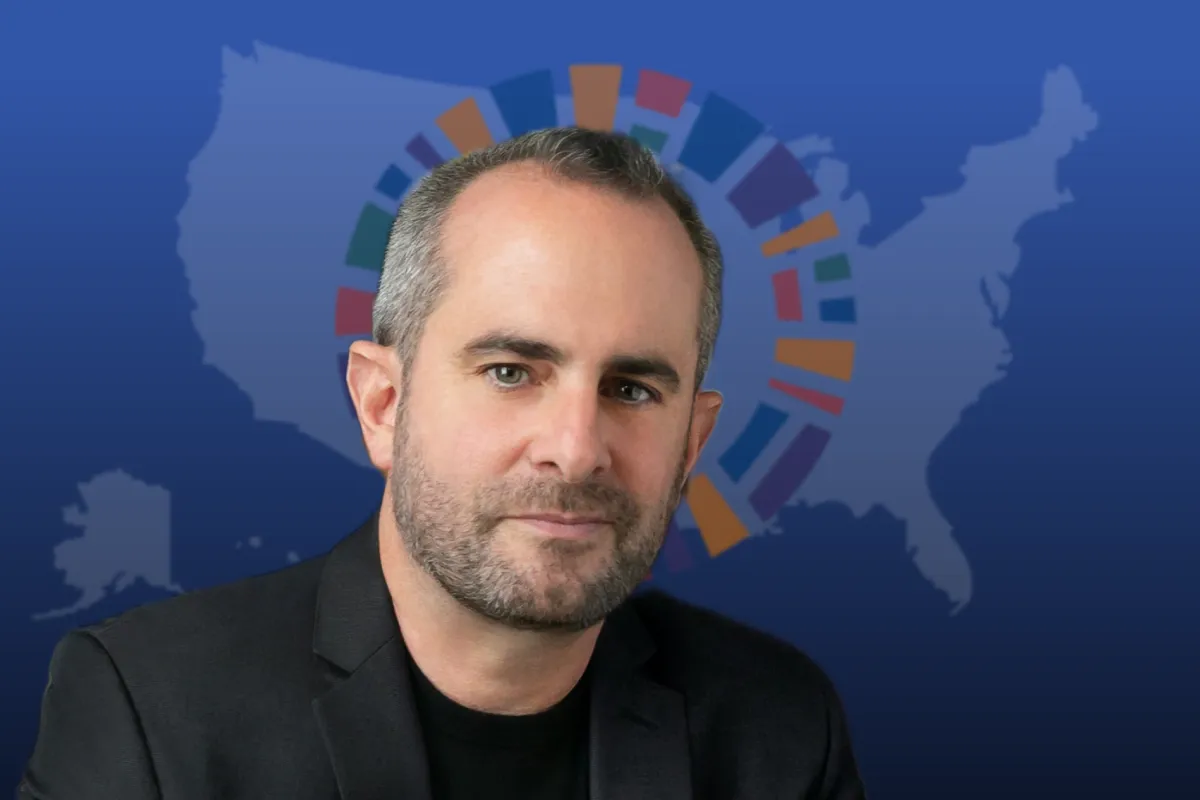
As exhausted as many of us are by the ever more sordid revelations in the Epstein scandal, author and journalist Rabbi Jay Michaelson says its importance is only growing. Joining host Rev. Paul Brandeis Raushenbush on this edition of The State of Belief, Jay argues that the way the scandal is being handled is nothing short of a moral referendum, “not just on Donald Trump and on the administration, but, really, on our society as a whole.”
Jay also sounds the alarm about developments in anti-Jewish bigotry in recent months, including an explosion in antisemitism in connection with the Epstein files. He has harsh words for the way responsible voices have been too silent in the face of the conspiracy theories proliferating in the ongoing chaos of the Epstein case.
In the midst of all this, a nationwide attack on LGBTQ+ rights, focusing especially on trans individuals, continues unabated. Among the latest initiatives: 47 right-wing secular and religious organizations, including some big names, are scheming ways to repeal marriage equality in this country. Jay has some thoughts on how the current Supreme Court justices are likely to approach any case involving this issue.
A meditation teacher as well as a rabbi, Jay highlights the concept of despair as a trap. And the importance of staying present and engaged. He also talks about practices that can help sustain us in these challenging times.
Paul also shares his words from the People's State of the Union, attended by a number of members of Congress and organized by MoveOn as an antidote to the theatrics that took place under the rotunda.
More about Jay Michaelson
Rabbi Dr. Jay Michelson is a visiting researcher at Harvard Law School and a field scholar at the Emory Center for Psychedelics and Spirituality. He is also an award-winning journalist whose work has appeared in The Daily Beast, Rolling Stone, and CNN. Jay worked as an LGBTQ activist for 10 years and is the author of 10 books, including God versus Gay: The Religious Case for Equality. These days, he writes a weekly Substack newsletter, Both/And With Jay Michelson, which is a must-read.
Transcript
REV. PAUL BRANDEIS RAUSHENBUSH, HOST:
Rabbi Dr. Jay Michelson is a visiting researcher at Harvard Law School and a field scholar at the Emory Center for Psychedelics and Spirituality. He is also an award-winning journalist whose work has appeared in The Daily Beast, Rolling Stone, and CNN. Jay worked as an LGBTQ activist for 10 years and is the author of 10 books, including God versus Gay: The Religious Case for Equality. These days, he writes a weekly Substack newsletter, Both/And With Jay Michelson, which is a must-read.
Jay, welcome back to The State of Belief!
RABBI DR. JAY MICHAELSON, GUEST:
Thanks, Paul. I love being here. It's good to be back.
PAUL RAUSHENBUSH:
Listen, there's so many things I can and will talk to you about, but I do want to acknowledge that early on, you were one of the few religious leaders as well as political commentators who really took the Epstein files seriously. And I do want to talk about an update and how you're feeling about it.
One of the things you said is, this actually had real repercussions for many, many victims. And let's center that. A lot of us, frankly - I'll include myself in that - we're looking at it from the political angle. What does this mean for the Trump administration? What does this mean for the elite class? And you reminded us to continue to bring it back to centering on those who were really harmed. And I think there was a really brutal moment at the Pam Bondi hearing. I think you know what I'm talking about, where - I can't remember which, there was a Representative who asked the victims of Epstein to stand and asked Pam Bondi, the attorney general, to turn around and look at them and acknowledge that they were there, which she refused to do. And I think that felt like a watershed moment to me. How did you react to that moment? And where are we, in your estimation, on whatever reckoning is supposed to happen with the Epstein files?
JAY MICHAELSON:
I think if I were Pam Bondi, I couldn't look those women in the face, either. Because not only have they not received justice from 20 years of delays; just in the release of the most recent batch of files themselves, they were again victimized. These were - probably some listeners are aware - the files redacted the names of powerful men who had sent outrageous emails that if they're at all true are certainly evidence of criminal conduct. They said they hid those names. But they did not hide the names and the faces of some of the victims. So somehow, Pam Bondi's Department of Justice found a way to further victimize these women who have gone 25, 30 years without justice. So yeah, maybe I would have hidden my face in my hands and talked about the Dow hitting 50,000 also as just a desperate attempt to face the reality of what this case was about.
I think a lot of us, certainly more progressives, might've just seen this as some other sex scandal and it's a distraction from the stuff that's really important about what the Trump administration is doing: ICE undermining the elections, rule of law, you name it. I think now that may have shifted as we kind of are understanding the scope of the evil. If it's true that up to a thousand women were sex trafficked by this guy and it was an open secret among elites of all different ideological affiliations and this just continued to happen, and that there was actually a perverse truth to the QAnon conspiracy theory - except for the little detail that the person who was supposed to save us all was actually one of the greatest potential criminals in the conspiracy. I think there's now an understanding that this is not a distraction. This is a central moral referendum, not just on Donald Trump and on the administration, but really on our society as a whole.
PAUL RAUSHENBUSH:
You have a child and I have a 10-year-old who, just this morning when the news broke that former Prince Andrew was arrested. And my son just said, that's so interesting that all around the world, people are being arrested or forced resignation, but there's nothing happening here.
JAY MICHAELSON:
Even the chair of, I forget the exact name of the company, but there's a large Dubai financial concern, and it turned out that the CEO of that was the person who sent a short email to Epstein saying he liked the torture video. We have no idea what that's about. We don't know what it's in reference to, but even he resigned. And this is an extremely powerful and wealthy individual. And it is, really, so far a lasting shame on our society that there's not the kind of accountability that we're seeing elsewhere.
Maybe the royal formerly known as prince might be a model for Trump himself. It's not like former Prince Andrew is consenting to having been arrested, but there is an adult in the room, even his own brother, the king, has said he wants the rule of law to take its process.
PAUL RAUSHENBUSH:
I want you to put on your rabbi hat and I want you to put on your broad religion and democracy hat - but you're also trained as a lawyer. And I think the question of how did this just flow? I mean, one of the things I think we forget is that Epstein actually was brought up on charges in Florida, and then they were massively reduced. or I can't even remember exactly, but there is a paper trail of how we got here that involves the legal community or involves our justice system - or injustice system in this case. Could you just take a minute to walk us through how we got from there to here, and the timeline? It's in the 90s, right?
JAY MICHAELSON:
Yeah, well, the offenses continued through the 2000s and most likely through into the 2010s as well. Some of this is old and is barred by the statute of limitations. It's not entirely clear. obviously Epstein is dead. So you know, Ghislaine Maxwell is currently in jail. She's now in a low security jail in exchange for unknown promises or favors done to the Trump administration. it's harder to get justice when the defendant is dead.
I think the line between actually investigating the suspicious circumstances around this affair and tin hat conspiracy theorizing is now incredibly thin and porous. And there's been a lot of disturbing conspiracy theorizing since the latest release of documents. So it's very complicated territory, but even the New Yorker, David Remnick just did a short video talking to a journalist from Miami who's covered the Epstein story for 20, 25 years, and who just went through all of the irregularities around his death, which was ruled a suicide in a New York prison six, seven years ago. There's still a lot of unanswered questions.
And folks may remember from a few months ago, there was video that was released from the prison where he was. But the video had been edited - which really went backwards. The one thing, if you're trying to clear up any confusion or suspicion, you don't edit the video. So that obviously just added more to it. But just to your question, there are a lot of similarities here where there are these very well-known male sexual abusers, Harvey Weinstein, Bill Cosby, Jeffrey Epstein, where it is this kind of open secret that's known for years.
PAUL RAUSHENBUSH:
This is crazy.
JAY MICHAELSON:
But these are very powerful people. And we kind of know but don't know, and then something breaks through and maybe there's an attempt at gaining justice. I think of the three, Weinstein is the one who's faced the most justified punishment and accountability. But the same was true for Epstein. It was just known something was off about him or it was just a little bit weird. But then he did receive kind of the sweetheart deal from the prosecutors in the original 2004, 2005 legal proceedings.
And then after that, I think that finally ended in 2009. It was like, well, he's served his time. He's done his time. And so all of these elites in the so-called Epstein class were happy to kind of reestablish relationships with him. And it is interesting - so we don't paint with too broad of a brush - there were also a lot of elites who rebuffed his advances despite all. And I think you and I both know, we've operated on the peripheries of these worlds for a long time. You know, who doesn't want to get invited to some exclusive dinner with a bunch of A-list guests? And it does take a certain kind of integrity to say, I don't know, just, was that one case in Florida, but there were rumors of so many more - is this really the guy whose dinner table I want to eat at?
PAUL RAUSHENBUSH:
Right.
JAY MICHAELSON:
And as we're now seeing with some of these guys, Howard Lutnick comes to mind, the Commerce Secretary who said, well, yeah, I stopped by his island, but I brought my family and it was just a lunch. I don't think you or I would bring our kids over to lunch with somebody who had such a disgusting, if not worse, reputation.
PAUL RAUSHENBUSH:
There's just a lot of failures. How would you understand, at this point, there's been a recent release of files that was badly redacted, as you mentioned, and then apparently some people, I guess members of Congress, can go in and see the totally unredacted files - although I heard one report where everything they're searching is actually being recorded and can be used against them. Well, I'm not even sure it's that, but there is a record of everything. So it's almost like there's an intimidation factor.
JAY MICHAELSON:
Members of Congress, right? So don't search for your own name in the file, says the word to the wise.
PAUL RAUSHENBUSH:
Where are we in all of this, in your assessment? Because you really have been following this. We're still not halfway there as far as the numbers of files released. And what people are beginning to think is what they haven't released must be really bad. I've heard that and I've heard on my Instagram or whatever when I'm scrolling through, my algorithm sometimes brings up these Joe Rogan types and Theo Von and these folks who are kind of in the manosphere who are really disgusted by all of this and they suspect much more is out there. And I'm just curious, where are we in this process? What do you imagine the future looking like as far as Epstein, even as Trump seems to be trying to distract at every moment?
JAY MICHAELSON:
I think the future is more political than legal at this point. And maybe it's even more, for lack of a better term, moral or ethical or even spiritual than political. It might be hard, if we assume most listeners and viewers are more on the progressive side, to really understand, it might be challenging to really understand how central this was to the populist appeal of Donald Trump.
He set himself up as somebody who was against all of these corrupt elites. He sold himself to the Theo Vons and Joe Rogans of the world as being a kind of outsider, which to a certain extent he was. Obviously he's very wealthy, but he was not in the sort of intellectual elite of DC or Washington. And he was held in some kind of contempt by a lot of those folks. And here he was, it turns out, the inside of the inside. I mean, that is a complete betrayal of what they believed about him.
And it's easy for us to say, well, how could you believe it? The guy's obviously a con man. Here are the 25 different con jobs he's pulled over the years. And I do believe that intellectually; but I think in terms of understanding the gravity of this moment, it'd be helpful to put that aside and just imagine that you had placed your trust in somebody who said he was going to be outside, he's going to take down the elites, and he's in the inner sanctum.
I don't know. First, just before even knowing what is in the remaining files, it's a clear violation of the law for for DOJ to be holding on to the remaining files. The law did not say pick half of them and release the ones you want. It said release everything. And that was a very close vote. And it required a couple of Republicans to side with a lot of Democrats to to make that happen. And once again, the administration is just openly defying the law – which, if you remember about a year ago, I said this would be the kind of line in the sand where there's a clear judicial order and the Trump administration just says, go to hell. They've done that now in several hundred immigration orders, we now know, around ICE. And now they're doing it not to a judicial order, but just a law that was passed by Congress. They're not complying.
PAUL RAUSHENBUSH:
We'll see what the moral fallout is. I remember just seeing four or five emails that involved Trump. And I was like, this has got to be the end of him. I mean, this is like so clear. Anyway, we shall see.
JAY MICHAELSON:
Well, how many times have we said that? I mean, it is the end. It is already the end of a certain period of the Trump presidency. And, you know, ICE in Minneapolis and Renee Goode and Alex Prady have a lot to do with that. I'd say it's really those two factors. There's that one where the middle has really turned against the Trump administration on immigration in particular, and soon they will on tariffs. And I think on a few other issues as well. But the right, the second major change, the right really has broken on this.
There are some, Fox News is trying to paper this over. They'd done a round table. Jesse Waters went on and said, yeah, Jeffrey Epstein, kind of a fixer. And not to be outdone, Greg Gutfeld called him the sex rabbi, which I now can say as a rabbi is one of the most disgusting jokes I've seen. And Greg Gutfeld should be fired for… So many other offenses, but that's like borderline antisemitic, I think. To call Jeffrey Epstein a rabbi is just disgusting. And imagine if I'd said that, you know, said he was a sex pastor or something like that. It's just revolting.
So they're trying it, but you know, I don't know that that's going to work. I think the more they try to sweep this under the rug, the more justified suspicion is that they're sweeping something of their own under the rug, that they must have something to hide. And not those two people individually, but just the various media voices who were saying, move on.
That's included centrist voices, as well. David Brooks has now ended his column, but he said we should all move on. Then it turned out he was in the files - not in a serious way, nothing like Trump, nothing like that, but he was in there. And it doesn't seem to me that this just kind of goes away because Trump attacks Iran or something like that, because of how central it is to how the MAGA base understood him.
PAUL RAUSHENBUSH:
Well, you know, the rabbi comment leads me to want to talk to you about something that you mentioned in one of your Substack articles, which is the kind of dangerous trope that's out there around antisemitism and the Epstein files. And I wonder if you could just speak into that really plainly, because it's really important that we do speak into that plainly.
JAY MICHAELSON:
Let me do one little preface, which is to say that the antisemitism industry is asleep at the wheel and is committing criminal negligence right now. They are myopically focused on anti-Israel, anti-Zionist stuff. And sometimes there is actual antisemitism on the left. It's not that it's not there, but they're only focused on that. And they're ignoring the two most important and troubling developments in antisemitism right now.
One is right-wing White supremacy and antisemitism in the administration itself. And there have been numerous kind of long-form reports about that. And now second, this explosion of antisemitism as a result of the Epstein files release. There are a lot of Jewish people in the Epstein files. Epstein was Jewish. He had a lot of Jewish acquaintances. That on its surface is not surprising. And it doesn't say anything, it's just his social circle.
However, it is also true that this is a moment where some of the conspiracy theories that have always been adjacent to antisemitism, right, so QAnon always had its overtly antisemitic variant, that it wasn't just a global cabal of pedophiles, but it was a global Jewish cabal of pedophiles, or a Zionist cabal of pedophiles, right? And now we find that some portions of that conspiracy theory are partly true.
And it's possible even that the conspiracy itself, the QAnon conspiracy theory may have even been started by Epstein and his associates to make it look ridiculous to say things that like there's a global cabal of elite pedophiles. So this is a dangerous moment. And if you look, it's not just Candice Owens and people like her, she's jumped all over this. This is all about Israel. Ehud Barak, former Israeli prime minister, was all over the Epstein files and maintained a close friendship with him that, parenthetically, if we're really saying that Epstein was working for the Mossad, would be a point on the other side, right? Ehud Barak was an opposition figure to the Netanyahu government. You wouldn't be palling around with a left-wing politician if you were in cahoots with the right-wing government. But maybe it's too much to treat any of these factual assertions as factual assertions.
Anyway, what's happening is a real explosion in online antisemitism and some of it is blending, Epstein was working for Israel, this is a Zionist thing. Some of it is overtly, this is a Jewish thing. And I have seen almost crickets from the Jewish establishment in terms of addressing this. I'll be writing on it a bit in the coming days. And this is truly negligent. The people who should be standing up to protect the Jewish community from antisemitism are so busy worried about pleasing their donors on right-wing Israel issues that they're ignoring what they should be doing. And I'm concerned about it.
Obviously the antisemitic part is not based in any reality, but the conspiracy part is based in some reality. It'd be easy to just say, these are all a bunch of flat earthers, right? These guys are just idiots. There's no connection to reality whatsoever. But there is some connection to reality. And that means I think there's more responsibility on responsible voices in the community to step up.
PAUL RAUSHENBUSH:
It is extremely disturbing to see these kind of blanket statements which frame the entire issue again decentering the victims and decentering the broader context. If we talk about Prince Andrew, if we talk about Donald Trump, if we talk about all the other people who are in there, it is not all Jewish - but then they do want to emphasize the name and all of that kind of thing.
JAY MICHAELSON:
There's a joke in the Jewish community, like, this is not good for the Jews, right? And this really isn't. It's really not good for the Jews that, the center of this hideous criminal enterprise that went on for decades - and look, it's also true that he initially made his money through Les Wexner, a Jewish billionaire. And Les Wexner just gave a deposition. It was closed doors. We don't know what he said, but if it's consistent with everything he said in the past, he's saying, I was just conned. I had no idea this happened in the 90s. I broke off relations in 2007. That was before the 2008, 2009 conviction. And maybe on the other hand, his name was further redacted in the latest drop of files releases. So that just raises more suspicion. Why was his name redacted? What emails was it redacted from?
It is a moment of reckoning. It is for, I think, internally, for the Jewish community that would be healthy to do, even if it weren't for the whole issue of antisemitism in the response, in that there were Jewish institutions who were beneficiaries of Jeffrey Epstein's generosity and donations well into the 2010s. And these are institutions that maybe should have made a different choice.
Large institutions always vet their funders. They never want to take money from someone who might cast a shadow on the institution. That's just a part of doing business. And yet somehow exceptions were made in this case where there were abundant red flags that this is not someone that religious schools or Jewish institutions should be taking money from. I would think those two could go together: a real introspection in the Jewish community saying, this is terrible, that this was somebody who seemed to be proud to be Jewish and did these unspeakable crimes.
This is terrible that it's the former prime minister of the Jewish State. This is terrible that it was a Jewish billionaire who first funded Epstein, even if he did not know about the criminal activity that happened. And that kind of accounting could at least be done in public under the lights and could say that this is something serious. Will that stop the antisemitism? Nothing really stops antisemitism, but it could at least be a contrary voice.
PAUL RAUSHENBUSH:
I think that that's part of the reckoning. I mean, however imperfect, the Catholic Church really tried to do that with the clergy. They have acknowledged it and they have condemned it. I'm not making excuses for the Catholic Church for sure, but I am just saying there are ways to do this that show your intent, if that's the intent.
As long as we're talking about, there's so much work that needs to be done to counter antisemitism. This is very important because there's spiking antisemitism. It's a reality. Anybody who is actually looking at real statistics, Jewish lives are less safe. There are attacks there. But unfortunately, and you wrote about this really convincingly, I thought, in your Substack Both/And with Jay Michelson, which I really encourage everyone to subscribe to, about the question of what is happening in Gaza - I'm not going to make an assessment about how to describe it - but there is a group out there that's saying any description of that is genocide. Or I don't even know if that's the litmus test, but any description of it is equal to blood libel. It's adding to that accusation. And I think what you said was so helpful, which is like, it's the denigration of all of these terms that makes them all kind of begin to be meaningless and flimsy terms in the way we're trying to describe real problems that are happening.
JAY MICHAELSON:
So to just give the factual background there, think the word “genocide” has been tragically drained of a lot of its actual meaning. First - I do think it mostly happened first on the left, which, before anything even started, really, in Gaza, the word “genocide” was being used to describe the Israeli military's activities there. And very early on, when there was just no factual evidence for that, and the word was just being used as a kind of ideological litmus test.
As the war went on, and as statements from Israeli government officials went on, the charge sounded a lot more reasonable. When a cabinet member of a government says, we're going to drive all of this population out of this territory by using force, that is genocide. They have a choice between being exiled, extirpated from their own territory, or being killed. So that may or may not have been the formal policy of the Israeli government. I think that's something reasonable people could disagree on, but it certainly got close. But then this word continued to just be used as a kind of virtue signal.
So there's California congressional election. All the candidates had to raise their hand if they thought that Israel's actions in Gaza constituted genocide. Imagine if we did that for any legal conviction. Well, let's all raise our hand, if you think that this act was manslaughter versus first degree murder, raise your hand. This is not something that politicians should be just up and down raising their hands on to say how much they care about innocent lives in Gaza being lost. Things can be horrible and deplorable and terrible and war crimes and ethnic cleansing. But to say that something is a legal category of genocide - that's something else. And that should be decided by a court, by the International Criminal Court in particular.
And now it seems like the pro-Israel side has taken over the anti-Israel side's rhetoric around this word. So instead of this being one of the most serious crimes against humanity, that's a serious charge that has to be really understood carefully in its elements and intent to destroy an entire population. Now a bunch of seemingly centrist rabbis and journalists say it's blood libel to even say so. It's blood libel to accuse Israel of genocide. And that is just a mind-bogglingly, such an unhelpful degradation of the discourse. So it's bad enough that the left is using “genocide.” The word genocide is just a sort of virtue signal. Now the right's going to do it, too.
Now, you know, large Israeli non-profit organizations like B’Tselem, an Israeli human rights organization, which has used the word genocide - they're engaged in a blood libel, which is antisemitism with no factual basis whatsoever that leads to the shedding of innocent lives. I mean, it's like at the very moment where we could be doing, in my community - as I say, we could be doing some attempt at healing some of these ruptures, now some of the same voices who could have helped us heal people who are not on the left but centrist rabbis and centrist journalists and people who speak for or spoke for some more centrist view, that's neither progressive nor nationalistic, they're saying that to even use this word is a blood libel. I haven't passed judgment because I'm not the International Court of Justice as to whether the actions constitute genocide or not, but I did write an article saying it's getting close, and it's certainly an accusation that has some merit behind it. Does that mean I've committed a blood libel?
PAUL RAUSHENBUSH:
Can you just, before we go on, can you just explain the resonance of “blood libel”? Because it's a term that I think is understood by some, but it might be a new term to some of our listeners.
JAY MICHAELSON:
Sure, thank you for that. The blood libel was a medieval antisemitic myth that Jews drank Christian babies' blood and used blood to bake matzah unleavened bread for Passover. Though obviously no - I don't know if obviously - but obviously no basis in reality whatsoever, right? Concocted out of the kind theological imagination of rabid antisemites. And it led to violence against Jews and accusations against individual people who were then killed. So it's not just a kind of abstract, nasty thing to say. It has a very particular meaning.
And it is, just to bring this back to what we talking about before, one variation of the Epstein-related conspiracy theories is that not only was Epstein trafficking girls and women for sex, but that they were engaged in ritual cannibalism, as well. This was based on something. It's based on one person who the FBI talked to. The FBI said this person's completely non-credible, has no evidence, but it's in the files. That's part of the risk. When you release files, it's everything. You want the FBI to talk to everybody, including lunatics. So this was one person who said this. The FBI said, we investigated this. There's absolutely no evidence for it. The guy's a nut, but it is in the files.
And now here it is, the blood libel in 2026, that there's an international Jewish conspiracy that's trafficking in the blood of girls, if not babies, then at least of girls. So it's not only is the blood libel some ancient medieval thing, but it's here again in 2026.
PAUL RAUSHENBUSH:
Let me ask you personally, because you are a person who is thoughtful and is not only deeply versed in Judaism, but also a meditation teacher. How are you doing? I just feel like, for me, I'm in these conversations. I do think it has particular weight for people, I'll say it, in the Jewish community who are really trying to figure out what is the center, what is my center of gravity in this? it just feels like things are just ripping people apart and ripping families apart. So I'm just wondering, how are you doing?
JAY MICHAELSON:
Thanks. I am an unusual journalist in that I do also teach meditation and I do scholarship on psychedelics. And so I'm very invested in my own spiritual practice. I do have a family. We are safe. We are privileged. We live in a cozy suburb. It is a blue dot suburb. most of the people we hang out with are, certainly; it's very boring to be gay here. That's great.
It's not not of interest anymore. That's also great. My daughter's school friends occasionally have questions about where she came from, but we're working that through with them. So I'm very aware of, we would say my own privilege or just my good fortune and my spiritual practice. And I think for me - and I've just been, folks can access this stuff - I was the teacher of the month at Dan Harris's new meditation app. So you can just Google my name and Dan’s, and danharris.com.
PAUL RAUSHENBUSH:
That's actually a big deal, because he discovered he really needed meditation at some point. I remember interviewing him back when I was at Huffington Post and when he was just kind of coming out of everything he had gone through. He was a former journalist. And so that's wonderful. Congratulations. That's big, big, big, big.
JAY MICHAELSON:
Thanks. Yeah, I worked with Dan for several years in his previous meditation app work and he and I are good friends. And everything I offered, which most of it's now on YouTube as well, are just meditations for this moment. I mean, finding what to do when you're exhausted, and how to just work with the basic ambient level anxiety, how to pendulate, go back and forth with your news consumption, finding the right amount.
I mean, you want to be connected. I am very privileged. I do want to show up for people who are vulnerable. And you did that yourself traveling to Minneapolis. So we want to be able to be available. And yet we also want to see how depleted we are. And I do think this isn't going away. I think my main fear that I experience each day is around whether we'll have fair elections next November. And I think one reason I have that fear is that I have that hope that if we do have fair elections and we restore balance of power in D.C. between the two parties, a lot of what we're seeing now will come to an end. And how that plays out could be a whole other conversation, but there will at least be checks and balances on this administration, which there just barely are now. And so with that hope, you know, whenever there's a hope, there's a fear.
And we're seeing it already, right? When an interview with a promising Democratic congressional candidate gets censored and pulled off the air by a partisan chair of the FCC making up a rule that hasn't been on the books in 25 years, that's how Viktor Orbán does it in Hungary. We will have elections. I will predict that now. There will be candidates on the ballots for those elections, but you may need to wade through ICE installations to get to the polling place. You may not be able to access messages from opposition candidates because they will have been censored by the regime. Or if Larry Ellison takes over CNN, CBS and Fox News, three of the largest news outlets in the country will be controlled by the right wing - and they're not putting out these stories. They're trying to blow past the Epstein files.
You asked how I'm doing. I think there's a hope for November. The numbers certainly cut the Democrats’ way and it's not just the left, it's the center as well. But with that comes a fear.
PAUL RAUSHENBUSH: (39:48.847)
Well, I do hope that you continue to practice your meditation and all that it involves.
You mentioned your family, and I just take this opportunity also to tell, my husband Brad has a book coming out about our family.
JAY MICHAELSON: (40:13.507)
How often does this guy write books? What is going on? The last book was really big. It was like this huge book. Now he's got another book.
PAUL RAUSHENBUSH: (40:18.214)
Yeah, it was a huge book. I think it's kind of he finishes the book and then while it's getting in production, he starts another book. And yeah, I know, that's when normal people would rest. But he had it in his mind to write a book about our family and our children and his and my relationship. And so it's coming out in June. And we'll talk more about that, because it's a story that, you know, our family, it's called, the title is so good, it's called Good Morning Moon: A Snapshot of an American Family.
JAY MICHAELSON: (40:57.593)
Are you going to get Samuel L. Jackson to do the, do you know how he did the, um, that, am I allowed to say go the f*** to sleep? There was that story. He did that. He did that. And then there's like, I don't know if it's him or an AI version of him, also reading Good Night, Moon. So firstly to go the eff to sleep, which was great. And then, either him or a fake him did Good Night, Moon. So maybe he could do Good Morning, Moon, as well.
PAUL RAUSHENBUSH:
I think Brad might be the narrator of it, unfortunately. It would be nice if Samuel Jackson would do it.
Anyway, one of the things that happened last week or the week before of the many horrible things happening is, I think 47 groups, including the Heritage Foundation and the Southern Baptist Convention, all kind of came out with a statement saying, we're gonna end marriage equality. I don't know exactly how they're planning on going about it. I do know that in states they're really trying, they're introducing measures.
How do you understand, as you think about this, the Supreme Court, and do you think there's a… I mean, there's threats and then there's different kinds of threats, because what that represents is permission given to people to withdraw support, withdraw love, withdraw relationship with families that look different from theirs, families that look like ours. And so there's that aspect of it, which is, think, maybe even more nefarious. But then there's the effort around the Supreme Court to undermine the legal case for marriage equality. I'm curious how all that lands with you as a lawyer and as a rabbi and as a part of a, I don't know, how we describe ourselves, same-sex marriage family, two-dad family.
JAY MICHAELSON:
Two-dad family works for me. Yeah, I am less fearful, actually, now than I was a year ago around this, in particular. think the Supreme Court did just turn down one opportunity that they had to review the Obergefell same-sex marriage decision. I think we're already seeing and will continue to see chipping away at the legal right.
So for a few examples: folks may know, there's now a kerfluffle over the administration taking down the Pride flag at the Stonewall Park in New York City. Symbolic stuff like that. I have friends, have a lesbian couple that lived right near one of the rainbow colored crosswalks in Orlando that got painted over. As we know, speaking of Orlando, Orlando Gay Days was canceled. A lot of the sponsors had pulled out.
So, these are small incursions so far, but these are signs that are on the wall. Obviously the main attack against our community is the attack on trans kids. Today, the House passed a national ban on all gender-affirming care. Unclear what's going to happen to that in the Senate. But I would call on folks who see themselves in the concerned center on this issue, who might have concerns around trans people, but, you know, to really take a look at where those concerns have led us. That the other side is not interested in just making sure that everybody's being taken care of.
We're not talking about sports or bathrooms anymore. We're talking about the erasure of trans identity and the increase in trans suicides, which will happen if medical care is not available. So that's the main piece. But I do think that there's an attempt to kind of have the vibe shift happen.
But the reason I'm a little more sanguine is not just about the Supreme Court, but it's also about some of the worst gays in the world. So today, Wired Magazine just published a really good longform investigation of the so-called gay mafia running tech companies in Silicon Valley. These are mostly centrist or right-leaning gay people. You can imagine Peter Thiel as an example, that's why I'm calling them - tongue in cheek - but that's why I'm calling them the worst gays in the world.
The reality is, you know, the guy I'm blanking on his name who runs the fake Kennedy Center… Grinnell. There is an embeddedness that cis white gay men have in the right that they, we, did not have ten years ago. Not saying that we're safe. I'm not saying it's a third rail, but if you break down just on the Republican side of the aisle, those organizations are playing to their own bases.
That's not a majority view within the party itself, let alone within American society as a whole. But what I think the trans backlash shows is that you do have to fight on the front line. You can't wait till it gets bad, right? So there are a lot of folks who are like, well, let's not talk about sports, right? And sports is a contentious issue, I get it. Or let's not talk about, you know, bathroom bills and stuff like that. That's a distraction.
But most trans folks did not actually say that. If you actually went to trans organizations, they're like, no, no, no, They're full of s*** talking about sports and bathrooms. They're really coming for us. And it would have been better if mainstream gay folks would have listened to trans folks when they said that. And I think the same is true now. Do I really care? I'm not one of those people who's so worked up about the rainbow flag at Stonewall. Screw those people. Not the people concerned about it, screw the people taking down that flag. They're in the minority and we're going to kick their asses at every election that we have a chance to run in. However, I am concerned that these smaller actions are the tip of the spear. And that, I think, we should learn from trans folks: we have to take them seriously.
PAUL RAUSHENBUSH:
And you know, it is not an accident that if you spend $250 million in an election targeting trans people, that you're able to do terrible things to that community. And they shifted opinion. People forget, bathroom bills were a non-starter. And they shifted opinion a while ago and they made them a threat, they made them dangerous, they made trans people dangerous, they made these people who are such a small percentage of the American population, who are just trying to live their lives a dangerous entity, dangerous people and they did that through constantly hitting people over the head with it.
JAY MICHAELSON:
You know who's not in the Epstein files? Trans people. There's exactly one transgender woman in the Epstein files and she was a victim of Jeffrey Epstein who apparently didn't know that she was trans. And she's actually gone public herself. So her story is available online. There are no trans people involved in this international pedophile smuggling ring. There are no drag queens. There are no gay activists grooming kids. The people grooming kids were Jeffrey Epstein and his associates who may include the president of the United States.
PAUL RAUSHENBUSH:
I do think that what was hopeful about the special elections this year were, you know, I think in Virginia, the candidate there just refused to throw trans people under the bus. I think there was a more frontal recognition that, actually, trans rights is not a third rail for the Democrats. There was a great song that came out of Minnesota. It was like, nobody gets left behind this time. If we can't get there together, we don't get there at all. And I really think that was so inspired to me. I'm going to leave you with this thought and you are just, given the tenor of this conversation, which has been a big bummer. No, no, I'm feeling like my time in, I need to talk to a rabbi.
JAY MICHAELSON:
You only have me on for bad news, man. I don't know if there is any good news, but if next time there is some, you just need to talk to a rabbi.
PAUL RAUSHENBUSH:
No, but I would say actually, the rabbis were part of why I'm feeling hopeful that in Minnesota there was such incredible energy and it felt like - and I'm seeing this all around the country - people want to show up, people want to speak out, there is incredible energy. I am viewing this moment as a potential next great awakening and it's a big term, but I think every great awakening has happened when there was turmoil, when there was things shifting under people's feet. And yet the people accessed this kind of spiritual power that they found in one another and they exercised it in the world. What I'm seeing is just - at least as far as Interfaith Alliance and all of our friends - people are showing up. They want to be a part of something right now. And I do think we have to tap into that energy even as we navigate these incredibly difficult things right now.
JAY MICHAELSON:
What's good about that advice is that the activism is also the cure, right? There's good, nice, boring scientific studies that show when there are senses of hopelessness, of despair, and also of the kind of anxiety that often goes along with that, efficacy, having some act, doing something that affects something that has efficacy is the number one best way to work with it. So make some difference.
And know there's a No Kings rally next month. But even before that, there's ICE activity everywhere. And it really is remarkable - given I was nervous watching Minneapolis - it doesn't take a lot of bad apples on the activist side to really mess things up. And yet by not just by and large, but overwhelmingly, here are activists putting their bodies on the line. and I do think not crossing the line.
There weren't that many reports of sort of problematic activists who were bringing trouble. And that is really powerful. And I think the presence of spiritual leadership plays a big role in that. I mean, what's nice, I guess, is that actually taking action benefits, obviously, the vulnerable populations that we're acting to help, but it also benefits the activist.
PAUL RAUSHENBUSH:
And also if you stay in that place of lethargy and despair, it is exactly what authoritarians want. That is their ideal situation: it is hopeless.
JAY MICHAELSON:
Or even, you know, I hope next time I come on, maybe we'll talk about the concept of the dual state, which is this great framing of authoritarian regimes where you can live as long as you don't disturb anything, you can live a semi-normal life and go out to restaurants. And yet just one block away, authoritarianism is happening and the military occupation of cities is happening. so despair is the ally of authoritarians. And so is apathy.
PAUL RAUSHENBUSH:
When I was out in Minneapolis, just going through George Floyd Square, and a local community person who had been involved in that neighborhood now for however many years, all of her life, but after the murder of George Floyd, she defined neighbor as, a neighbor is someone you choose to be in community with. And this idea of choosing to be in community, even that block over, the dual state, in some ways it's like, kind of reduce, eviscerating that marker between those states and recognizing that our futures are entwined.
March 28th is the next No Kings, No Kings III. I'm very much involved in rallying the religious communities from all different backgrounds to show up and be part of it. That includes you.
Okay. Let's put on your meditation hat. Give everyone who's listening one kind of either parting thought or a mantra or something that we should all take with us.
JAY MICHAELSON:
Despair is a story about the future, right? Despair is that we know it's going to go a certain way. We know this is going to happen. And we don't know that. We also don't know if it might go a really bad way. It might go a bad way on AI. It might go a bad way on climate. It might go a bad way on authoritarianism. We really don't know. And what that does for me is it resets to this present moment, to just ordinary be here now stuff.
Here is where and what's the choice that I have in this moment? How can I choose to have efficacy? How can I show up for the people who are around me who I love, the people around me who are vulnerable? And we don't know, we don't know the fruits of our actions. But we do, I think, have an access to the moral conscience in the present.
PAUL RAUSHENBUSH:
Rabbi Dr. Jay Michelson is an author, activist, and attorney working at the crossroads of religion and politics; also a meditation teacher. His Substack is titled Both/And with Jay Michelson.
Rabbi, it is always great to have you on The State of Belief.
JAY MICHAELSON:
Thanks, Paul. It's always good to be back.