State of Belief
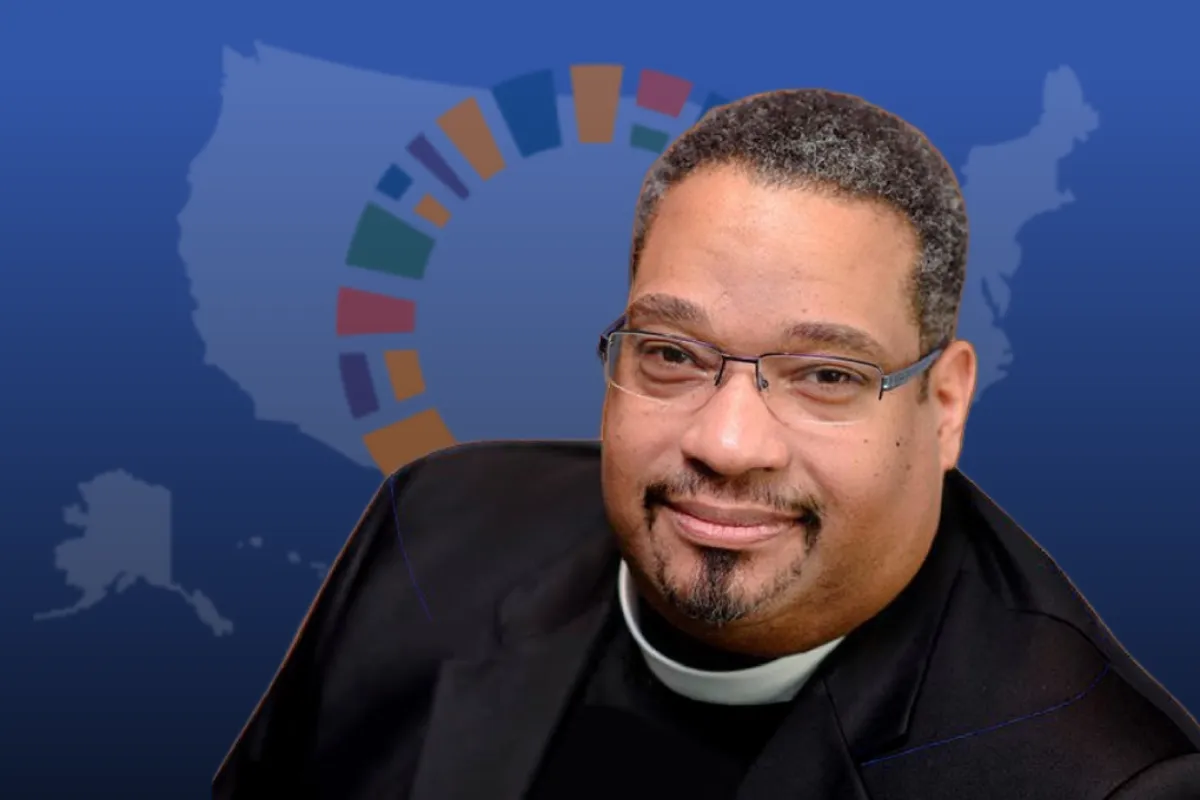
Faith in Action: Bishop Dwayne Royster's Call to Justice

In a time of mounting division and injustice, faith isn’t just a personal refuge—it’s a call to step up and speak out. This week, host Rev. Paul Brandeis Raushenbush is joined by Bishop Dwayne Royster, Executive Director of Faith in Action.
Talk about action—Bishop Dwayne and partners organized a massive, diverse, faith-inspired gathering in Washington, D.C. just days after a series of ICE-related deaths. 450 clergy mobilized in 72 hours, with multiple faith traditions coming together to oppose policies rooted in hate and fear—and almost 60 faith leaders arrested during the peaceful protest. As the bishop describes his own motivation, he subjected himself to arrest “for all my neighbors that don't deserve to be arrested, detained, or deported.” Others visited individual senators’ offices, making over 50 Hill visits to challenge funding for the extremist practices of ICE. It’s all a reminder that faith, when truly grounded, can be a revolutionary force.
With the 250th anniversary of the country this year, Bishop Dwayne has a powerful vision for faith-inspired organizing for the occasion: “We all want to survive and live our best lives, and that requires us to come together, love our neighbors, and build a different story for America.” This underscores once again that our faith and beliefs are a resource of resilience, meant to be shared in action, not just in prayer.
Another layer to this: it’s easy to feel overwhelmed by the scale of injustice, but each of us has a role. Whether we march, donate, pray, or hold space for others, our collective effort is what moves the needle. As Bishop Dwayne beautifully put it, “We all have different contributions—some in the streets, some behind the scenes, some in policy, some in prayer.”
That’s a crucial truth—each person’s place in this movement is vital. We can find the testimony that grounds each of us, whether rooted in faith, philosophy, or our own personal convictions. When the moment calls, that’s what will carry us—the belief that your action, no matter how small, is part of a larger and essential whole.
Also, Interfaith Alliance is taking the Trump administration to court. At the top of the show, attorney and Democracy Forward Executive Director Skye Perryman is back to explain this lawsuit, brought with a diverse group of partners, which focuses on the lack of representative pluralism in the makeup of the Religious Liberty Commission.
More About Bishop Dwayne
Bishop Dwayne Royster is a faith leader and community organizer who serves as the executive director of Faith in Action, a national network dedicated to grassroots organizing for racial and economic justice. An ordained minister in the Progressive National Baptist Convention, he has spent decades working at the intersection of faith, public policy, and social change.
More About Faith in Action
Faith in Action is a grassroots, nonpartisan, global, faith-based organizing network. It works with over a thousand congregations in more than 200 cities and towns through its 46 local and state federations.
More About the Lawsuit
A multifaith coalition—including Interfaith Alliance, Muslims for Progressive Values, the Sikh American Legal Defense and Education Fund, and Hindus for Human Rights—filed a federal lawsuit in the U.S. District Court for the Southern District of New York challenging the Trump administration’s Religious Liberty Commission. The plaintiffs argue the commission was created and structured in a way that violates federal law and undermines religious pluralism.
Transcript
REV. PAUL BRANDEIS RAUSHENBUSH, HOST:
Bishop Dwayne Royster is executive director of Faith in Action, a grassroots nonpartisan global faith-based organizing network. Faith in Action works with over a thousand congregations in more than 200 cities and towns through its 46 local and state federations.
Before he took over Faith in Action, Bishop Royster was executive director of Power Interfaith in Pennsylvania. Bishop Royster has decades of pastoral experience in churches, but now I feel he is serving as a pastor to the nation in our time of crisis. And I will say Bishop Royster, also, with Faith in Action is one of the most trusted and beautiful and open partners of Interfaith Alliance at this time.
Bishop Royster, welcome to the State of Belief.
BISHOP DWAYNE ROYSTER, GUEST:
Thank you pastor, appreciate you having me on today. I'm really excited to be here.
PAUL RAUSHENBUSH:
You know, we just saw one another last week in Washington, D.C. If you're ever wondering what's happening, what is going on, well, things are happening, things are going on. And one of the things that just happened was that Bishop Royster, along with a big coalition, helped to organize an incredible event in Washington, D.C. and the nation's capitol.
Bishop Royster, that came together in, like, six days. It was crazy how you made that happen. You, along with a lot of your team and a lot of our colleagues. Can you tell us what went down last week in Washington, DC?
DWAYNE ROYSTER:
Sure. Thanks, Paul. A lot of this is really spurred on by a team of ours that went out to Minneapolis, Minnesota to support Isaiah Faith in Minnesota, which belonged to the Faith in Action and Faith in Action Fund. And then there was March, which was another organization out in Minneapolis of religious leaders that were working to support their community in the midst of the great tyranny they're experiencing from ICE right now.
And we came back and that Friday was a great day. We had 30 people, organizers and staff and leaders from around the country from Faith in Action that went out to go support the actions that were happening there. We left on Saturday morning and by the time we had landed on Saturday morning, we heard about the death of Alex Preti. And we had already been out there because of the death of Renee Good and we know ICE had killed Keith Porter on New Year's Eve. And there's actually been a series of deaths at the hands of ICE across this country that we haven't talked about because a lot of those folk are folk of color or immigrants. And so we've sort of dismissed that.
And so we came back and I got home from the airport. I sat down for about an hour, was just thinking, and I decided to call my team together and I said, look, we can't let this stand. What are we going to do? And we got on the phone and started calling everybody we knew. So we were reaching out to everybody. We just feel like we need to get together as a nation and as religious leaders. And it wasn't really about the advocates or even about the organizers at that point. We wanted national religious leaders to pray for our country and to bring us together. And so we actually had that original call that brought together about 10,000 people in less than 24 hours.
PAUL RAUSHENBUSH:
I was amazed by that - and let's just say, a real diversity of people. It was incredible. And you know, one of them was I think a cardinal, wasn't there a cardinal on the call?
DWAYNE ROYSTER:
Yeah, Cardinal Tobin who is the Archbishop of New Jersey. He's one of the three cardinals in the US and joined us on that call as well.
PAUL RAUSHENBUSH:
That was incredible. People talk about breaking the internet; you broke Zoom. I want to get to the action that happened later, but I do want to just linger there for a moment, because the fact that that many people wanted to show up…
DWAYNE ROYSTER:
We did. We had to send people over to Facebook because it was too many people.
PAUL RAUSHENBUSH:
It's just so important to recognize the spiritual hunger that people have to show up right now with one another, recognizing something has to change and I want to be a part of it. I want to be there. I'm not gonna let them do it. I want to do it. And I think that the fact that you could get that many people that quickly - and also, you know, I saw it and I was like, ooh, I want to be a part of it. I don't have to speak. I want my organization to be associated with this. And then all of a sudden other people started, whoa, whoa, whoa. And eventually that list of organizations must have reached 30, 40.
DWAYNE ROYSTER:
40.
PAUL RAUSHENBUSH:
People recognized the moment. So a wonderful catalyst in that moment, and that faith needed to show up. Can you say a little bit about that? Because that's kind of the beginning and end of what you and I do; it's actually important that faith shows up in moments like this in a specific way and saying something clear that the people know in their heart, but need to have articulated into the world. Talk to me about why faith.
DWAYNE ROYSTER:
Faith is so critical. And I want to say, even going back to that call, that it was multi-faith. So there were all kinds of traditions that were on that call. It wasn't just Christian. It wasn't just Protestant. It wasn't just Catholic. I mean, Muslim, Jewish. We had Buddhist prayers being lifted. And I think people are longing and hungry for something far deeper than what we're experiencing right now. It's not enough. I've often talked about this in the movement spaces. We want to talk about the issues that are important, but people also want to know that they believe and there's a place for them to be able to be situated and to find truth.
And I think for right now, people need faith. Faith needs the lead. We need to show a different way. We need to show, some often refer to it as the third way of being. Where it's not as confrontational, but it is prayerful, it is centered, it is empowering to people. It also gives us sustenance from when we have to lean into those difficult moments: 22 degree weather in Minnesota, right? You know, tens of thousands of people are out there, almost 50,000 people are out there in negative 22 weather marching and saying that we don't want ICE in Minnesota anymore. People are hungry.
PAUL RAUSHENBUSH:
A hundred percent. And even adding to that, every day on the streets, watching, witnessing, being there. And again, it's important to say, I don't think either Bishop Royster or I are saying that it's only faith that has to do it. But faith is an important part of a broad effort to say…
DWAYNE ROYSTER:
That's right. That's right.
PAUL RAUSHENBUSH:
…This is who we are going to be in this moment. And faith can offer, for those of us who are faithful, just what you said: a reservoir of courage, a reservoir of resolve, and to get out there, not only to march, but also to witness, do, frankly, what so many are doing in Minnesota and all across the country. And so I just, know, it's really important, but I loved what you said about just the spiritual power and also the diversity of voices.
This is something I talk about, and as long as we're talking about faith, right now, it's hard to find someone who you might call on the other side who is inspiring in any way. I saw Franklin Graham praying for ICE, and you're kind of like, really? How does that feel in your soul right now? You know what I mean? It's not like they have this soaring rhetoric that is rooted in religion that is inspiring the nation. People can see it for what it is.
DWAYNE ROYSTER:
Yeah, you know, Christian Nationalism - and I mean, we're also very clear that in many ways it's White Christian Nationalism that is driving this. And let me be controversial for a moment if I can. I mean, it's a cult, right? It is a cult, it's White supremacy that uses Christian symbols to support the supremacy of a segment of society and a very slim segment of society. And that they're God's chosen people, for all intents and purposes. That's the way that they view the world. That they're designed to, they were created to run and rule everybody else, and everybody else fails in comparison to them. And I think it's important for us to understand that that's what it is.
And the thing about it is that people know truth when they hear it. But sometimes they have to be offered that. And they have to be able to offer to see what it looks like for multi-faith folk to come together, for people to actually stand in solidarity with one another, to understand that our neighbors, whether they look different or sound different or eat differently or love differently than we do, that we're all pretty much exactly the same. We all want the same. We want to survive. We want to live our full best lives.
And so I think in this particular moment, faith becomes so critical because people are looking to anchor into something, and we're offering them that chance to anchor. And we're also offering them the anchor in love, not in hate. And what our opposition is offering to us is hate. And so we have to wrestle - now I'm going to get Black Christian here for a minute - we have to wrestle against powers and principalities and rulers of darkness in high places. We have to do that work and we have to be strengthened for the journey ahead on that.
PAUL RAUSHENBUSH:
You know, Bishop, actually, it's funny, I almost called him Bishop Bunny. Bad Bunny, that's so funny. No, Bishop Bunny, I'm gonna just go. Bishop Bad Bunny, did you see his acceptance speech? He just said, know hate will contaminate us. We cannot allow it to contaminate us. We have to respond in this moment with love. And whether that comes out of, it can be out of a secular place.
But I think, also, we have to recognize that our faith can be used as a weapon of hate. And many people have experienced it that way through various manifestations. But White Christian Nationalism right now is giving sanction to some of the worst impulses of our country. They are literally giving sanctimonious sanction to ICE and all it's trying to do. So I just think it's so important what you say and how moved we are. I think those of us who have been around for a while - I mean, you're a young man, but I'm getting up there. We've been around for a while and there's just something very moving in this moment to see the kind of resolute power that we see in Isaiah, for instance, and March, and all the other great faith movements out there, including those rooted in the Somali community that are Muslim.
So one of the things that led out of that call was a gathering on Thursday of the 29th of January in which we joined, again… By the way, can we just say it has been freezing? Like, what's going on with the weather? Everything we're trying to do is being done in insanely cold weather. Anyway, it was another insanely cold weather day in DC. But it was not cold in the ELCI Reformation Church that's right next to the Capitol. I've been at events many times at that church. I have never been in an event where people were squished in and there was still not enough room. I mean, it was crazy. People were packed from around the country as well as local. Talk to us about that event and then what happened after it.
DWAYNE ROYSTER:
So Sunday we had the call. We issued a call and I hadn't really talked to anybody about it. I just said, okay, I'm going to lift this up and see what happens and pray that God works through us. And so I said, look, everybody on, this is Sunday night. I said, let's gather in DC on Thursday and we’ve got to go tell the Senate: not another dime for DHS, not another dime for ICE, and let's go. And folks started responding immediately.
We had a call the next day with all the co-sponsors and we started organizing that Monday. We had 450 clergy leaders from around the country show up in 72 hours. People, planes, trains, automobiles. We didn't offer hotels. We didn't do anything. People just came in whatever way that they could. And 450 clergy showed up. We did over 50 hill visits with senators that day. We had 58 people that were arrested in the Hart Atrium singing and protesting and calling for the Senate not to fund ICE anymore. Almost 30 of those 58 were arrested for the first time. Many of them said this is the first time they've ever done any level of activism like this in their lives - because people are saying no.
PAUL RAUSHENBUSH:
I was very impressed by that. And it included the ELCA bishop of DC, I believe, which is… There's an idea out there of Lutherans milquetoasty, marshmallows in their jello, and yet people are really understanding the moment we're in.
Now, you also, I believe, were you arrested? Tell me about that experience and what it means to take that step of saying: I'm actually going to break the law in a very peaceful - this is all, by the way, nonviolent, it is well within the rights and the history of this country.
DWAYNE ROYSTER:
I was, I was. I was one of 58 and was arrested.
PAUL RAUSHENBUSH:
It’s an element of our society, getting non-violently arrested for your beliefs. This is part of an American right to do that. So talk to me about your spiritual process of deciding. I think for many of us and many of our listeners, what does it mean to make that decision in addition to visiting the Hill and speaking out, and doing all the witnessing, basically saying, my body is here for this moment?
DWAYNE ROYSTER:
You know, I had to discern this with my wife before we did this, because certainly the way the federal authorities are operating right now, this is not normal times, right? I've been to the Hill before, I've done actions like this before, but the way that they're operating is very different. And so I really had to get centered, had to get deeply prayed up for that. And we actually offered special prayer for the folk that were engaging in this level of civil disobedience at the Hart building.
You know, when we got over there, we sang. We actually sang. We didn't talk. We just sat down and started singing in that space. It was a song that was being sung in Spanish and, forgive me, Kairos, the organization Kairos Center was leading it and I don't remember the name of the song. But it was very powerful and very beautiful. It's actually very haunting in a way the way it sounded in the heart atrium.
And you know I remember I was standing - because I didn't want to get down on the floor and my knees are bad, so getting up is complicated. And so I was standing there and the officer came up to me and he said, are you risking arrest? And I said, yes, sir, I am, for all my neighbors that don't deserve to be arrested, detained or deported. I am.
And they handcuffed me and put me in the back. was actually the third person arrested in the group. And, you know, it was actually something definitively powerful about that moment, because I felt like I was doing the will of God. I was really in that space and in that zone that we're making a testimony, much the way Paul and Silas did, in the ways that they continued to preach and tell the Good News that we were trying to show up and be Good News for our neighbors that needed hope and needed some way or another to feel that people actually loved and cared about them.
PAUL RAUSHENBUSH:
It's such an important testimony around, what does loving your neighbor mean right now? What does showing up really mean? And I think that if you go to the heart of what we're talking about in America, and even if you think about what democracy is, if democracy means anything, it's about loving your neighbor, being committed to being in community with people who can be very different from you, but being willing to love them and say, your life is actually as valuable as mine. Not more, not less, but as valuable as mine, and we deserve equal rights and equal freedom. And I think it's so important for all of us to hear that and to root all of our actions.
Now, not everybody wants to get arrested or can get arrested. There's lots of reasons; you had to have that consultation with your wife because you don't know what's going to happen or how long you'll be arrested for. But even showing up and being witness to ICE, or even showing up and delivering goods and distributing goods, you have to come from that place where you decide, I'm going to do this because it's rooted in this belief for me. And I just encourage all of the listeners, what is that for you? Like, what is that testimony? And again, it does not have to be rooted in scripture or a religious tradition. It can be rooted in a philosophy. It can be rooted in your poem, but find that place because that is where you can root yourself when the going gets tough.
It was extremely moving to see, one, it was moving at the start, because I had to go to another conference, so I missed a lot of the action. But seeing the big line of clergy, because there were many more clergy there than who got arrested…
DWAYNE ROYSTER:
Yeah, there were 450 clergy that were there, and then there were 58 of us that got arrested. So we had a series of teams: green team, yellow team, red team - and we should say there were folk that their job was just to go do the visits with the senators. And so they went off and did those visits. And we should say we had 25 clergy from Minnesota that went with every team so that there were Minnesota clergy. And so Isaiah sent folk. There were other folk that came from other places, but we sent them specifically to go meet with every senator, also with the folk whose state the senator was from that were in the room. So wanted to hear that live witness, that live testimony.
PAUL RAUSHENBUSH:
Yeah, that's organizing people. Well, I just want to say congratulations. At this point, let's do a little PSA for Faith in Action. It’s just faithinaction.org, right? Go on faithinaction.org, get on their email list, find out what's happening.
DWAYNE ROYSTER:
Faithinaction.org. Yep.
PAUL RAUSHENBUSH:
Don't abandon Interfaith Alliance, it's not a zero sum game. I think that's what's been important, as well, is that there is an opportunity here for us to come together and support one another. And it has been an honor to be walking alongside Faith in Action over this past year and a half, or how long, and going forward. It's just we all need to show up and we all need to show up together and be powerful in this moment, because the stakes are very high.
Let me just take one step back. What is your background? Where are you from? Where were you raised? Who raised you? Let's go a little bit into who is the person of Bishop Royster.
DWAYNE ROYSTER:
I'm born and raised in Philadelphia - Philadelphia, Pennsylvania. I need to clarify that it was more than one Philadelphia, but I'm a born and raised Philadelphia son of Dennis and Audrey Royster. My dad worked for the phone company all his career after he was - he was a Vietnam vet - after being in the military. He worked there 30 years, from the time he was 18 to the time he was 48. He retired at 48, which is incredible. 30 years he did, early out for him. Eventually went back and did some
My mother actually was an organizer, community organizer in Philadelphia back in the 70s. And so it's actually kind of funny. There's a picture of my sister, brother and I with my mom at an action that they were doing a few blocks from our house, you know, in the mid 70s. Yeah, that's why I said I'm not that young. I've been around. I've been around. I have a sister and brother, married; I’ve got a couple of kids, I’ve got a grandson, a five-year-old grandson, who’ll be five in May.
And just my religious background real quick, it's actually funny. My parents, my mom was the daughter of a deacon and my dad was the grandson of a Baptist trustee. they were both Baptist. And they both loved the Lord, but they despised the Church growing up. They were spiritual but not religious. I mean, we couldn't eat without praying in the household. We had Bible study. My mom was doing Bible study with us. And my mother's sister was Jehovah's Witnesses. We studied with them at one point.
But it was actually funny. My religious background is incredibly eclectic. So at one point, my grandmother, who was a good Baptist woman, said to my parents, I'm disappointed that you are not taking my grandbabies to church anywhere. So my mother, responding to her mother-in-law, decides to take us to the Unitarian Universalist Church down the street. So my earliest religious training was at the Unitarian Universalist Church of the Restoration in Philadelphia, and we went there for several years. And it was a beautiful experience. I loved the diversity, which is part of the reason why diversity is so important to me today.
PAUL RAUSHENBUSH:
Ooh, you went straight communist. That's beautiful. And the spirit, the spiritual openness of really looking around and saying, okay, there is beauty in many places. And that's a really great early lesson for someone whose spirit is opening up and trying to find truth. I just think that's one of the most, one of the great things that the Unitarians are.
DWAYNE ROYSTER:
Absolutely. But eventually we stopped going and studied with the Witnesses, Jehovah's Witnesses, for a while. Then eventually my grandmother decided that she was going to take it upon herself to take her grandbabies to church. And so we got dragged to church, my sister, brother and I. And my grandmother belonged to Zion Baptist Church in Philadelphia during the 70s and 80s. And it was a critical church. Leon Sullivan, the late Reverend Dr. Leon Sullivan was the pastor there. And a lot of people might or might not know about Dr. Sullivan, but he was really critical for a couple of different reasons.
One, he was the first African American to ever be on the board of General Motors. And so he did that. Then he also founded an organization called Opportunity Industrialization Center, which became a workforce development program that spread throughout the United States and then eventually to Africa. He was the founder of the first African-American - African Conference towards shared business and goals in alignment between the diaspora and the continent. And then the third thing he did is that he wrote the Sullivan principles, which were principles that governed how the United States dealt with South Africa during apartheid. And so he was really a critical leader.
He founded the first African-American mall in America, in Philadelphia, which was started by churches, called Progress Plaza, which exists to this day. Actually, when I was executive director of Power Interfaith, we moved into a building that was on Progress Plaza, exactly because we knew about what faith power could look like, or as Jane Lawson would talk about, soul force would look like. So we went to Zion. And then when my grandmother died, I went to United Methodist Church with my friend.
And then when I went to college, I went to Cambridge Mass Ave Baptist Church. Clarence McClendon was the pastor there, and I'm sorry, his last name was McClendon, I forgot his first name. then I joined the Nation of Islam for a little while while I was in college, because I was in my very angry state. And then kind of came out of that, answered my call to ministry while I was in college. I went to Boston College, which is a great Jesuit university, deeply influenced by the teachings of the Jesuits and the philosophy of the Jesuits, and came out and spent a couple of years kind of bouncing around New England, eventually wound up back in Philly and then really walked into ministry into the United Methodist Church.
I stayed in United Methodist Church for several years, went to the Mennonite Church, started a Mennonite Church in Philadelphia. It was ordained as a Mennonite. And then eventually wound up leaving the Mennonites, became a non-denominational, started a progressive non-denominational church, which was a bit of oxymoron, but it was actually very progressive. My mentor at the time, Bishop Kermit Newkirk said to me, you know, he said, your theology is very much in line with the United Church of Christ. And so we had a fellowship of churches that I belonged to as well, which is actually where I'm a bishop. But he said, you should really have a conversation with the UCC. He was UCC as well. And so eventually brought that church, which was Living Water Christian Community, into the United Church of Christ.
And so I served that church for 14 years, founded it and started, to stay there for 14 years. And in the meantime, I was doing faith-based organizing with Power Interfaith. I eventually left both Power and Living Water to become the political director for Faith in Action. I did that for several years, went back to Power, and then eventually came back as the executive director.
But in the meantime, I founded an ecumenical religious order called the Society for Faith and Justice, where we believe that social justice is spiritual discipline and spiritual practice. And it gave space for a lot of people who feel called to ministry, called to do the work, but their parishes are the streets, not necessarily inside four walls, and creating space and opportunity for those folk to get engaged. That's a little bit of where I am in the work I'm doing.
PAUL RAUSHEBUSH:
I appreciate that history so much and I love how it's so clear. You know, it's not always so clear when you're walking it, but when you look back, even just hearing you talk about it, you can see how the Spirit was moving, taking you into all these places that would prepare you for the next, that would prepare you for the next.
I wanted to just go back to this society. Tell me a little bit more about that, because that's actually new to me. What's the name of the society again? Does it have something where we could find it and learn more about it?
DWAYNE ROYSTER:
It's small. There's only about 20 of us that are part of it. It's called the Society for Faith and Justice. It's a really small entity started a few years ago. And it was birthed a lot out of my experience being in Ferguson after Mike Brown was killed, and talking to religious leaders who were sort of like, yeah, the Church, my denomination says if I want to be ordained, I’ve got to go serve a church first, but really, my parish is in the streets. I'm organized. And for faith organizers that feel called to that work but don't necessarily see a path for them in that space.
And then it was also for pastors who at that time were engaging in social justice, but their denominations or others were saying to them, yeah, that's not really my thing. I don't really relate to where you are. And so we started creating this space. So there's clergy in there, there's congregations that are in there, there are individuals that are in there that are actually operating in their assignments of social justice work. And it's a space for folk to be able to be healed and to hear from one another, to support one another.
You can find us, we have a page called Society for Faith and Justice on Facebook. You can find it on there. We actually had a website, but the person who was doing it got too busy to keep it up.
PAUL RAUSHENBUSH:
What I like about it is that making space for people who find ministries in places that are not traditional and where you're not supposed to do ministry or that doesn't fit the definition of ministry. And I think a lot of us who have been on a path, like for me in queer spaces, you're kind of like, you know, that doesn't count. You don't count. And I think a lot of us have had to just say, well, actually we do count and we're going to make spaces even if you don't make spaces.
Tell me a little bit about how you envision this year. Because we're imagining 2026 at Interfaith Alliance and all of our groups and all of our colleagues. And it feels like a critical time for us to bring all we have, spiritually, organizationally, all the power we can amass, to meet a moment that is going to make a big difference in how the future looks.
DWAYNE ROYSTER:
I did not imagine that ‘26 was going to start the way that it did. So we've been running between what happened in Venezuela and then what happened in Minnesota. And then, actually, yesterday I was in Springfield, Ohio with the Haitian community there. And because TPS was scheduled to end today – luckily, a federal judge stepped in and canceled that for the time being; the administration, of course, fighting that. Going back to your question, though, ’26, a critical year. There's a couple of different things here.
There's a way to actually put a wedge in some of the tyranny that we're experiencing right now through elections. But I also think that this is a real opportunity for faith communities, and we've got to get in alignment with one another. There's a different story about America that has to be told. And there's a different story about how faith exists in America that has to be told.
We're coming up on the 250th anniversary of our country. And actually, for Faith in Action, we're operating with this five year theme of what I call Architects of a New America. And part of that is the America that we have known will never be again. And it can't. We're in a transitional phase. Dr. Stephen Ray, former president of Chicago Theological Seminary, says there have actually been five American republics. And we're in that transition point between the fifth and the sixth. And the sixth is actually being contested right now.
And so we're actually saying to our folk, what is the America that you want? And these are the conversations that need to happen at homes and in coffee shops and in church basements and synagogue basements and mosque basements and various places where people are actually coming up with the America that we want in this moment. And then we need to actually answer the question, how do we want faith to show up? Because right now it shows up in some ways, not necessarily on our side of the fence, but on the other side of the fence, exclusionary and very destructive and very hate-filled. How do we, as people of faith, want to show up in some very powerful, transformative ways in this year?
And I think we're seeing that in Minnesota. We saw it yesterday in Springfield, Ohio. There was a thousand folk gathered to support the Haitian community in Springfield, Ohio. There's 15,000 people, 15,000 Haitians there, 60,000 people. The fire marshal had to kick people out of the building because there was so many people there saying, no, this is our community and they are our people too. And so how do we do more of that in the days ahead?
Part of what we're looking at is a series of actions to tell a different story about faith in this country. Dr. Date on our staff, Rev. Date tells us a story about, we have to talk about what faith is. And so we're looking at actions on Ash Wednesday and looking at big Palm Sunday actions around the country and trying to organize into that. I would like to say that was my idea. It wasn't; somebody else brought it to me and I was like, hey, I like that. Palm Sunday is a revolutionary day, and we're looking at actions on Eid and Passover actions that would exist, as well.
And then we want to move into the 250th anniversary. Faith in Action and others are looking to host a massive faith event in Pennsylvania in late June, a precursor to the 4th of July celebrations that are going to take place around the 250th anniversary, so we can talk about what faith needs to be in this moment. We're trying to bring thousands of people of faith together to talk about what it means to show up as not just a witness, but active participant in the public square and to be able to speak to people.
PAUL RAUSHEBUSH:
I love that, because it's not just talking about what we want, but being what we want. I think that's where the vision of the beloved community that Dr. King talked about was also something that really was imagined on earth and something that happened as we did the work. Not just as something that we aspire to in some future that never comes, but there are glimmers of it right now. When your heart swells and you see what people are doing, you kind of go, okay, that's what I'm feeling right now. So I love that.
DWAYNE ROYSTER:
That's right. Let me just say that in a - this is going to sound very strange. I'm kind of excited, though, because I think for the first time I see faithful crossing lines they have not crossed in a very, very long time.
PAUL RAUSHENBUSH:
I love that you say it, because I feel the same way. And I feel like the language I'm using, I feel called to this moment, and I feel like people feel called to this moment. A lot of people look at what you do and I do and they say, that must be so hard. And I'm like, well, it is hard. It's really hard. But also, because we're doing it with people who are amazing and give us strength, I feel like it's harder to sit in your home or on your phone than to be out there, in some ways, being surrounded by people who are doing good work.
DWAYNE ROYSTER:
It's actually funny you talk about calling for this moment. So back in ‘24, Faith in Action went through a staffing change and transition and I wound up coming in as the interim, and I was just being borrowed from Power to be the interim. I wasn't supposed to be a candidate for the permanent ED role. And actually, in May of ‘24, I was actually in California with the United Church of Christ doing some work around racial justice training and things of that nature. And I got this overwhelming sense - I mean, almost like a John Wesley moment, like my heart was strangely warmed. I got this sense that I was feeling like I was called for this moment and I'm doing what I'm supposed to be doing.
And so I went back and I talked to the chair. We actually were bringing all of our network directors together, the local federation directors together. And it just so happened that the chair of the search committee was going to be there. And I said, look, I know I can't apply y'all, but if you don't find somebody that you want, let me know. I'll do it. And eventually I wound up becoming the executive director of the organization. And when I asked them later on why, they said, because you said you answered the call.
And I do feel very called in this moment for such a time as this. I don't know how long this moment is going to last. But what I do know is that for this moment and for this season, I'm sitting in the place that I'm sitting along with a bunch of other gifted and dynamic leaders that are doing that.
But here's the other thing that I also know, Paul. It's not on me alone. We have to work together. And I keep talking to folk and I'm like, this is not a moment for big egos. It's a moment for people with big ideas, with people who want to build big bases of faithful people that actually want to do the work. And that's actually how we're going to make the transition and how we're actually going to get ourselves out of this mess.
You know, even during the civil rights era, though Dr. King gets a lot of credit, there were millions of people that were at work whose names we don't know. Some years ago I was at an event at People's Congregational Church in Washington, D.C. And there was a gentleman there whose name I cannot remember and I feel really bad about that. But they were honoring him for his work on the March on Washington. And he got up and gave his acceptance speech. He said, you know, I never marched a day in my life, he said, but every time there was an event, I was doing all the logistics. So he actually was the gentleman that managed the logistics for the March on Washington. And he said, but that was my contribution to the movement. I didn't have to do everything.
And I think it's important for folk to understand that we all have different levels of contributions that we need to make. Some of us will need to be in the street - and that will be, hopefully, a lot of folk. Some of us will get arrested. That's going to be a smaller group of folk. Some of us are going to have to be the ones to go talk to the power and principality folk, right? There's going to be a set of folk that are going to do that. Some of us are going to be the ones to help fund the movement, and we're going to need that too. Amen. We need folks that are going to pray for the movement across all different traditions to make it happen. And I think that that's the thing that's going to be important for this moment. We don't have the option to just sit in the pews. We actually have to do something beyond our normal if we actually want to get free. And we're really fighting for our freedom right now. We literally are fighting for our freedom.
PAUL RAUSHENBUSH:
You know, one of the things we're talking about a lot is courage. And I would love to hear your definition of courage.
DWAYNE ROYSTER:
My definition of courage is being scared to death and still getting up and doing what you’ve got to do.
PAUL RAUSHENBUSH:
I appreciate that so much. You know, this is not about bravado. This is not about, like, some people are just courageous. Some people have no fear. Listen, right now, if you don't have any fear, I don't trust you. That means you're not paying attention. So I love that you say that as someone who is out there and recognizing one of the reasons I think that the passage is repeated in the Bible so often is “fear not.” But what that indicates to me is that it is totally natural to fear. That means that God or God's emissaries are speaking into a reality that is true, even for the people like Mary. The first thing is: be not afraid. Mary is afraid.
And I think it actually honors our humanity, what you said, and recognizes that you can still step out, and you're not going to step out alone. And I think that's what you're organizing. Whether you view this from the spiritual perspective or a sense of history or whatever, none of us are solitary individuals who are doing everything on our own. That's just not what it means to be a human - especially in this moment. And so I just appreciate that so very much.
Duane Royster is executive director of Faith in Action, which advocates for racial, economic, and social justice, healthcare as a human right, and community policy priorities. It is also one of the most important groups mobilizing, organizing, and responding to this moment in such an important, beautiful way.
Bishop Dwayne, thank you so much for coming on the State of Belief.
DWAYNE ROYSTER:
Thank you, pastor, appreciate you so much. Looking forward to doing more work with you - getting in good trouble, as John Lewis would say.
PAUL RAUSHENBUSH:
Amen. Thank you. Thank you. I'm inspired. I really appreciate it.
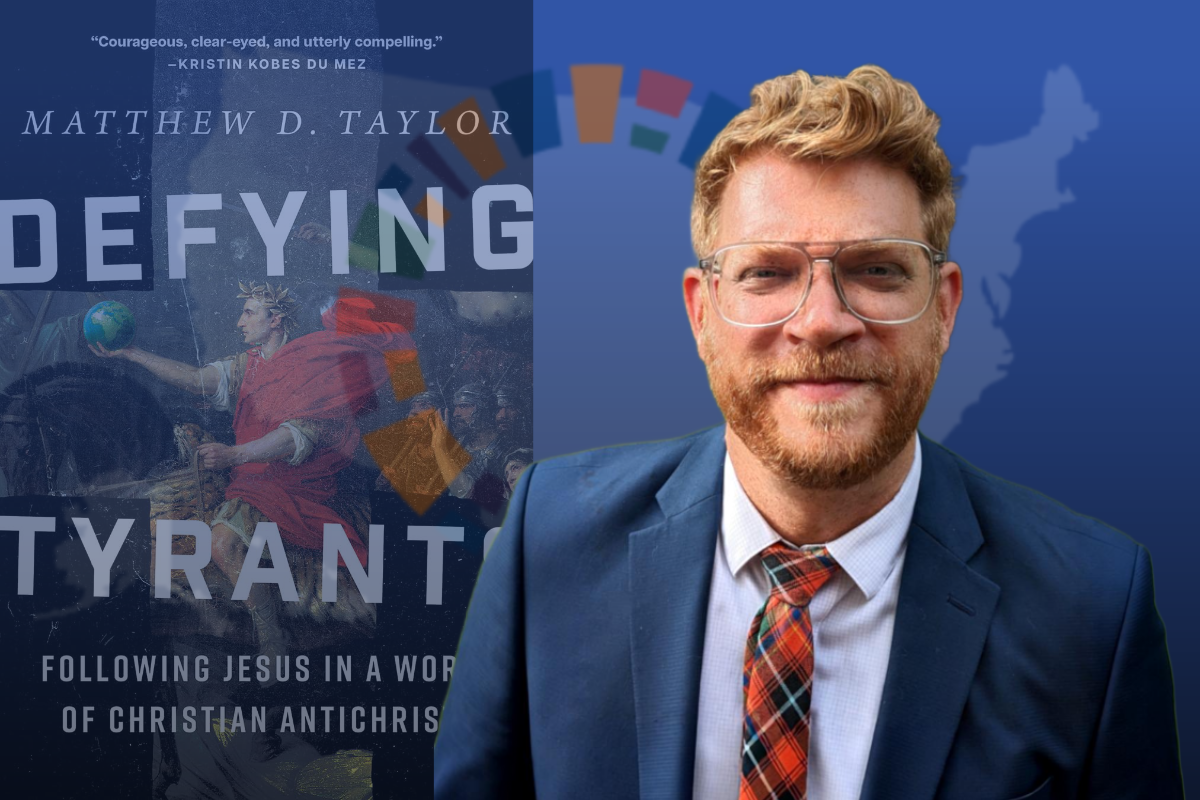
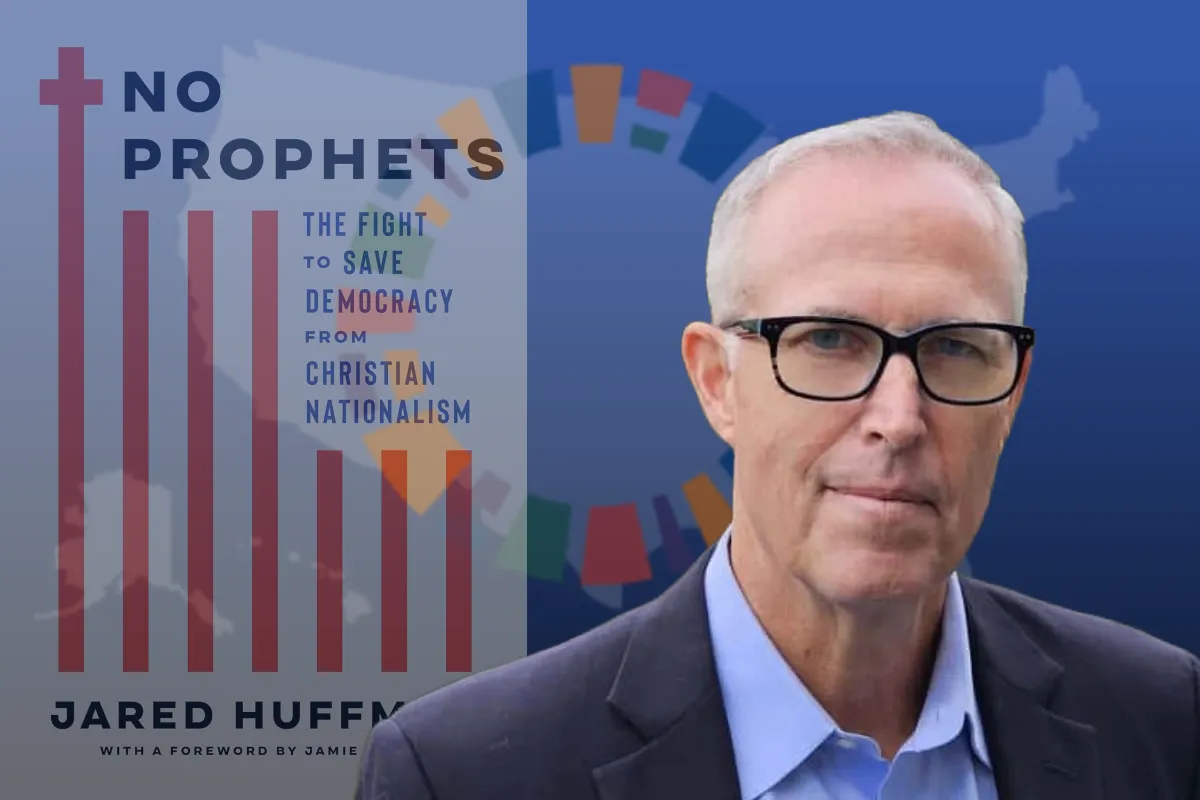
Congressman Jared Huffman: The Fight to Save Democracy From Christian Nationalism
The co-founder of the Congressional Freethought Caucus joins host Rev. Paul Brandeis Raushenbush to discuss how he's seen authoritarian impulses show up in our government and to share some of the insider stories featured in his best-selling new book, "No Prophets"