Research
What do religious Americans think of Trump's Anti-Christian Bias Task Force?


A new report issued by the Public Religion Research Institute on April 23, 2025, gives us a snapshot of how religious Americans view President Trump's Anti-Christian Bias Task Force. You can read the full report on the PRRI website.
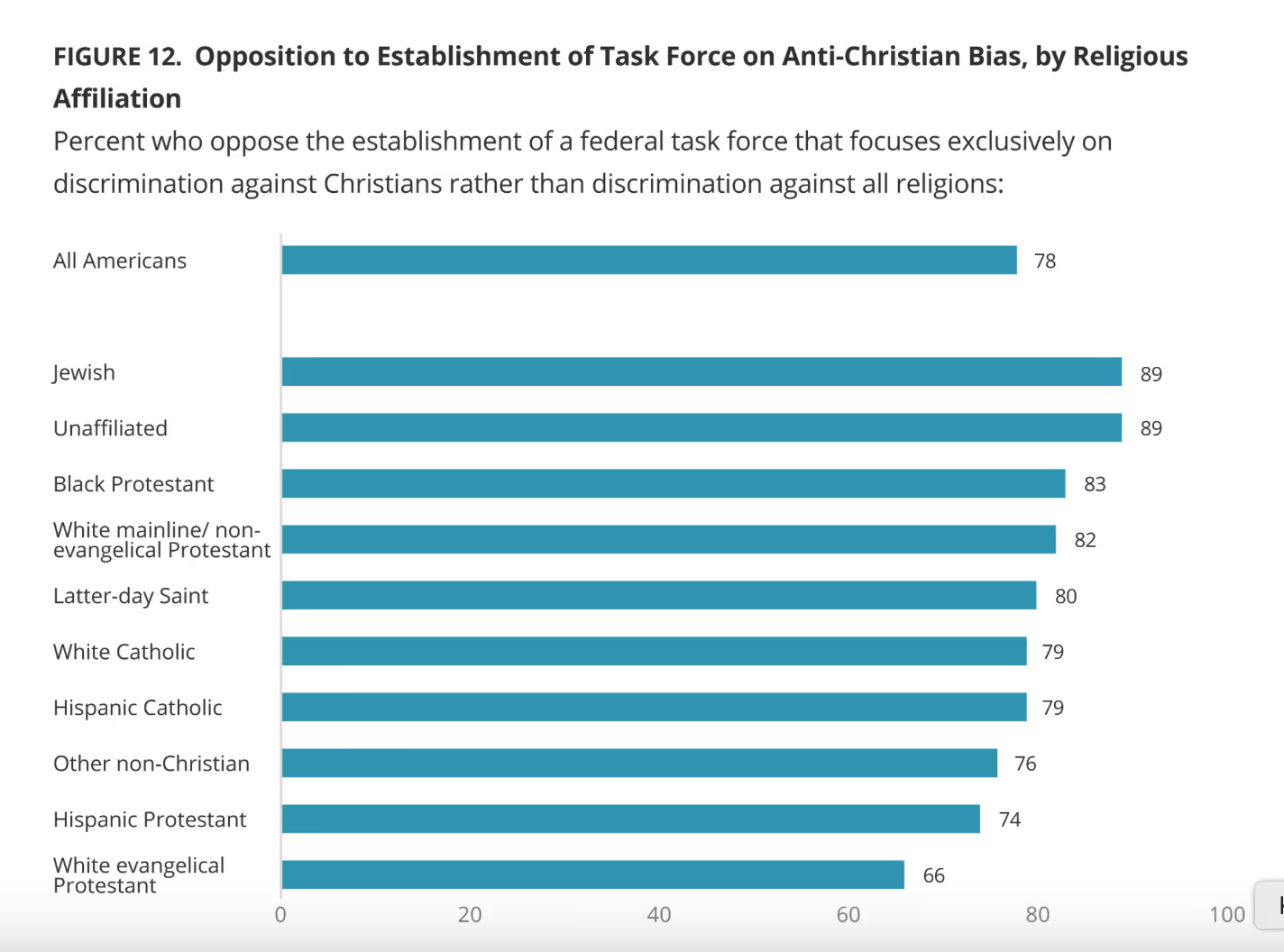
Most Americans (78%) oppose “the establishment of a federal task force that focuses exclusively on discrimination against Christians rather than discrimination against all religions,” while only 16% favor it. The majority of Democrats (91%), independents (85%), and Republicans (66%) oppose such a task force.
Jewish Americans (89%) and the religiously unaffiliated (89%) express the highest opposition to the establishment of a task force on anti-Christian bias, followed closely by Black Protestants (83%), white mainline/non-evangelical Protestants (82%), Latter-day Saints (80%), white Catholics (79%), Hispanic Catholics (79%), other non-Christians (76%), and Hispanic Protestants (74%). Although still a majority, white evangelical Protestants (66%) report the lowest opposition.
Most Americans across media trust, race, gender, education levels, and generation oppose the establishment of a task force that focuses on discrimination against Christians. Strong majorities of Christian nationalism Rejecters (95%) and Skeptics (87%) oppose the establishment of such a task force. Notably, a majority of both Christian nationalism Adherents (51%) and Sympathizers (69%) also oppose it.
Transcript
Same-Gender Marriage & Religious Freedom: A Call to Quiet Conversations and Public Debates
First published in 2009 and then again in 2013, this report makes the case that the United States can respect both civil marriage equality and religious freedom. It was the result of years of dialogue with affirming and non-affirming religious leaders.

The Critical Need for Humanist Inclusion
Humanism is a non-theistic worldview centered on ethical living and human responsibility, long protected as a religion under the First Amendment. A recent Texas court ruling threatens these protections by excluding non-theistic beliefs. Interfaith Alliance is defending equal religious freedom for Humanists and all belief systems.