Advocacy
Kansans Deliver a Win for Religious & Reproductive Freedom

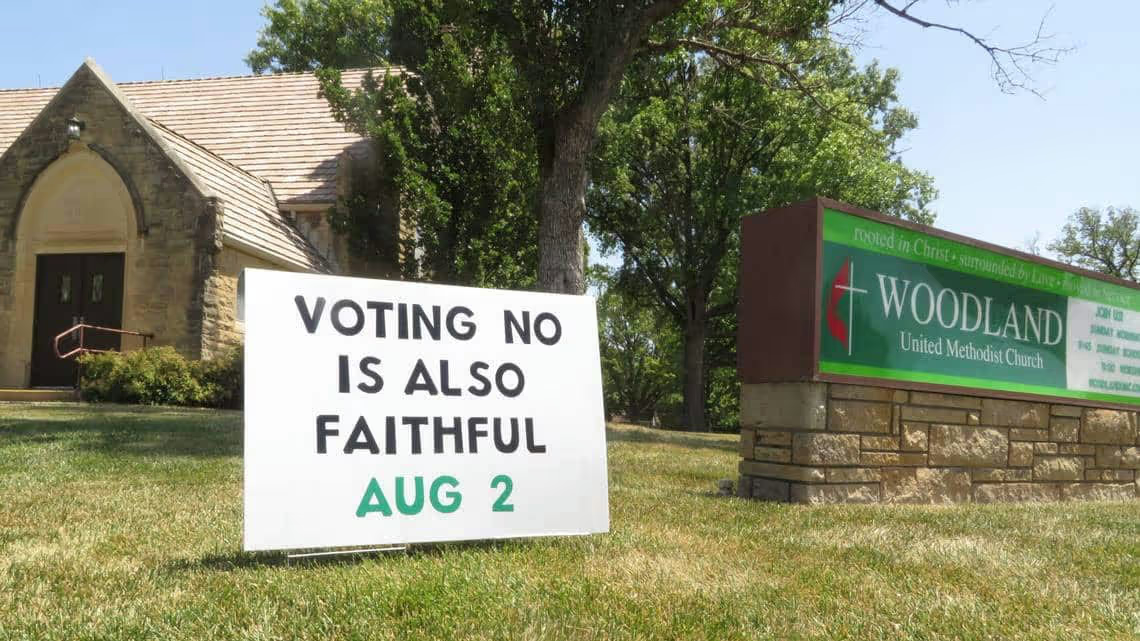
On Tuesday, August 2, 2022, Kansas became the first state to vote on the right to abortion since the Supreme Court struck down Roe v. Wade in June. Writing for the majority in Dobbs v. Jackson Women’s Health Organization, Justice Samuel Alito overturned nearly 50 years of legal precedent and concluded that “the authority to regulate abortion is returned to the people and their elected representatives.”
In Kansas, despite being a conservative political stronghold, the answer is now clear. Nearly 60% of voters overwhelmingly rejected a ballot measure that would have opened the door to further regulation and even an outright ban on the procedure. Despite polling showing Kansans closely divided ahead of Election Day, the final tally mirrors recent national polls showing 6 in 10 Americans believe that abortion should remain legal in all or most cases. Among people of faith, support for abortion access has increased dramatically in the past decade.
Faith-Based Messages Played a Key Role in Campaign to Protect Abortion Rights
Kansans for Constitutional Freedom, a bipartisan coalition working to defeat the proposed measure, emphasized faith support for reproductive freedom leading up to the August 2nd vote. In one ad, Pastor Jay McKell of Overland Park describes nearly fifty years of counseling members of his community facing difficult circumstances.
“As a Christian,” Pastor McKell explains, “we’re instructed to love one another. We do so when we respect and trust women as God does.” He goes on to say that the ballot measure “replaces religious freedom with government control,” leading him to vote no.
These sentiments were echoed by his colleagues in a letter to the Wichita Eagle, 30 Ministers Make Christian Case for “No” Vote on Value Them Both Amendment, emphasizing their support for the separation of religion and government and highlighting the disproportionate impact that abortion restrictions have on marginalized communities. Instead of further restrictions on care, they call for “comprehensive sex education, free and easy access to contraception, dismantling systems of patriarchy to reduce instances of rape and incest, and open conversation about sex.”
They add that “we do not support measures aimed at controlling people, especially not when it is being done in the name of the faith we claim.”
Patient-Driven Healthcare Furthers Religious Freedom
For nearly three decades, Interfaith Alliance has led the fight for an inclusive vision of religious freedom that protects people of all faiths and none. At the federal, state, and local levels, we mobilize dynamic coalitions to protect the right of every person to make healthcare decisions consistent with their beliefs and circumstances and to promote our collective wellbeing.
Healthcare decisions are deeply personal and are often informed by religious and moral convictions. Various faith traditions approach matters of health, sexuality, and family-planning differently. Patients should be able to act in accordance with their own conscience, not the religious views of the doctor or state legislators. By ensuring that no one religious viewpoint is imposed on all, we ensure that freedom of belief remains paramount.
Learn more about Interfaith Alliance’s efforts to advance true religious freedom.
Transcript
.avif)
Interfaith Alliance Joins Open Letter Denouncing Anti-Muslim Bigotry from Elected Officials
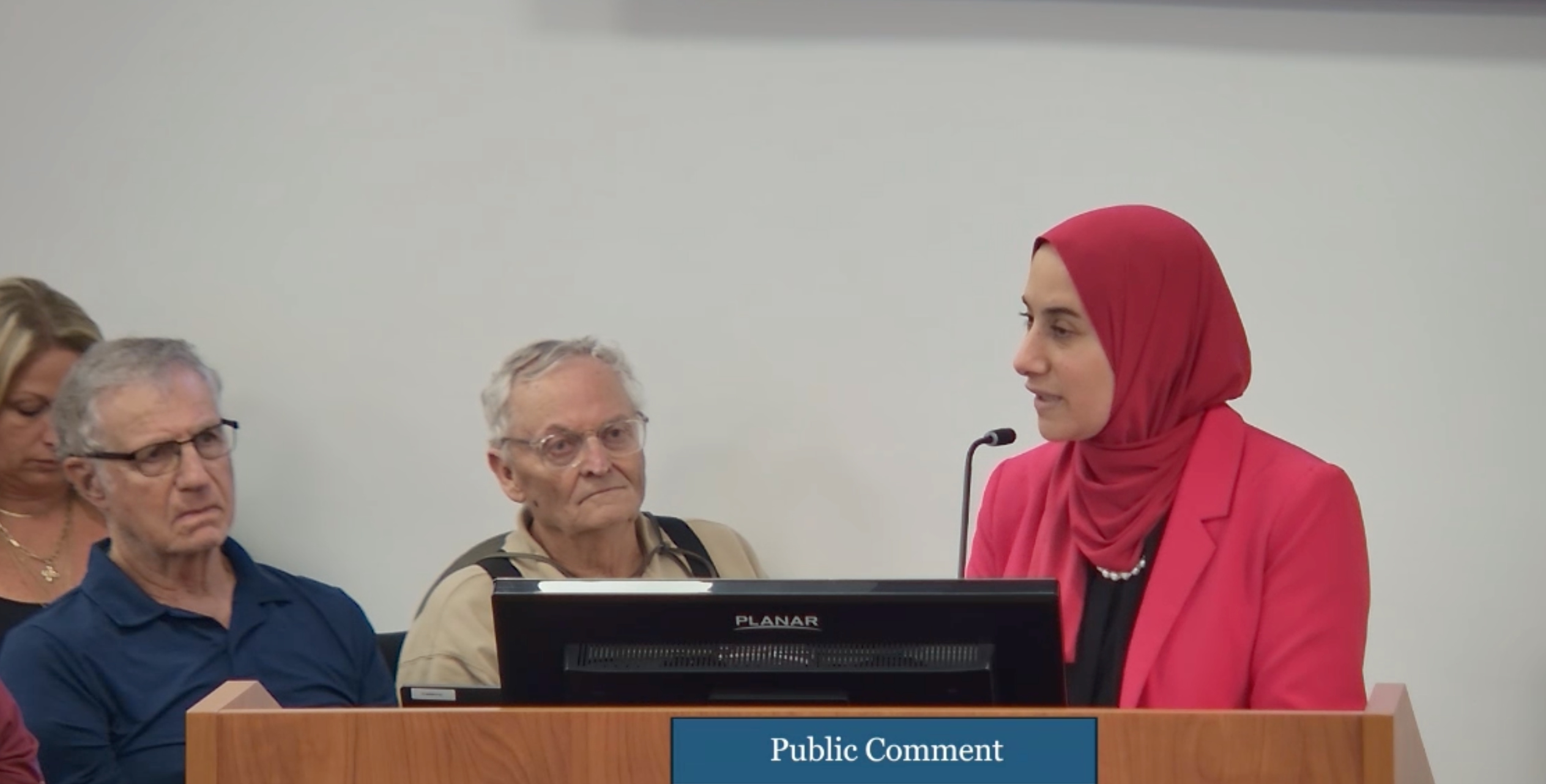
Joining more than 200 faith leaders and allies, along with over 70 religious and civic organizations, Interfaith Alliance signed onto an open letter denouncing normalization of anti-Muslim bigotry by U.S political leaders.