State of Belief
Majorities at the Margins

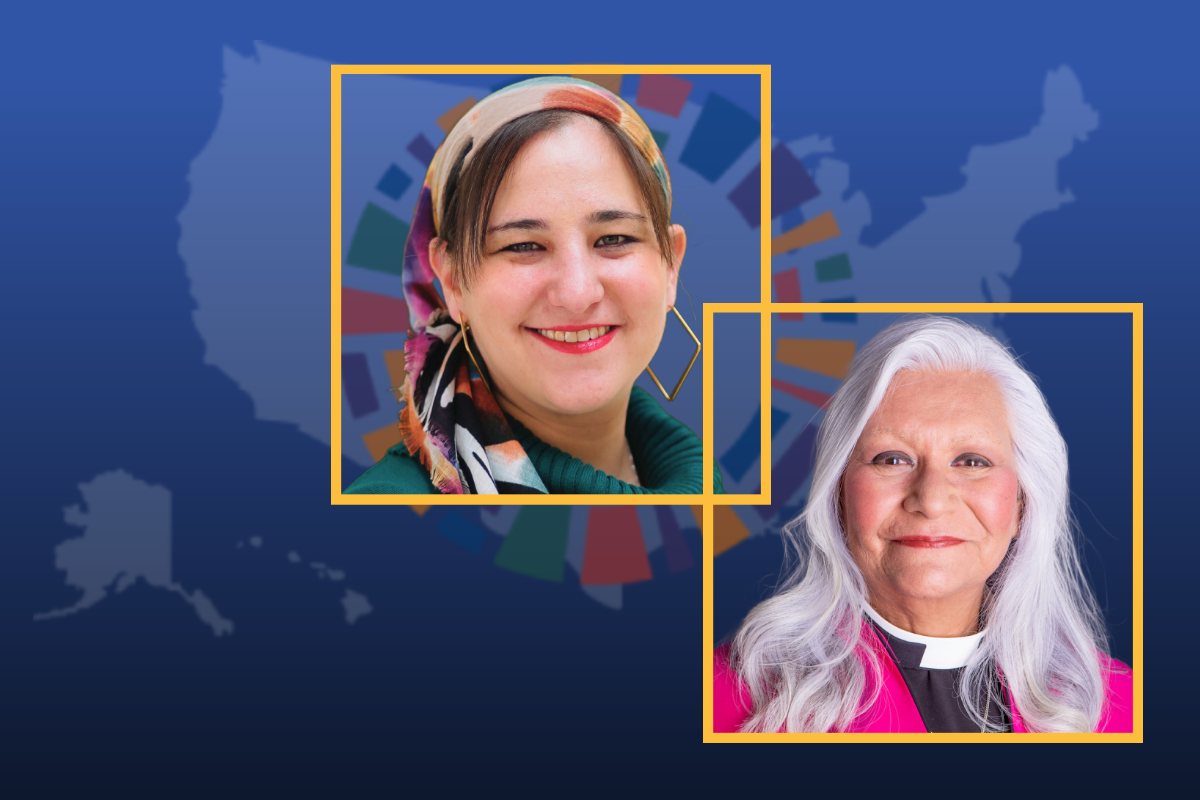
2023 is already a record year for anti-LGBTQ+ bills in the U.S, with at least 385 anti-LGBTQ+ laws having been introduced at the state level as of March 3. This week on State of Belief, Interfaith Alliance’s weekly radio show and podcast, Maharat Rori Picker Neiss, Executive Director of the Jewish Community Relations Council of St. Louis, and Rev. Nicole Garcia, Faith Work Director at the National LGBTQ Task Force, join host Rev. Paul Brandeis Raushenbush to dissect these attacks and how people are fighting back in their own communities.
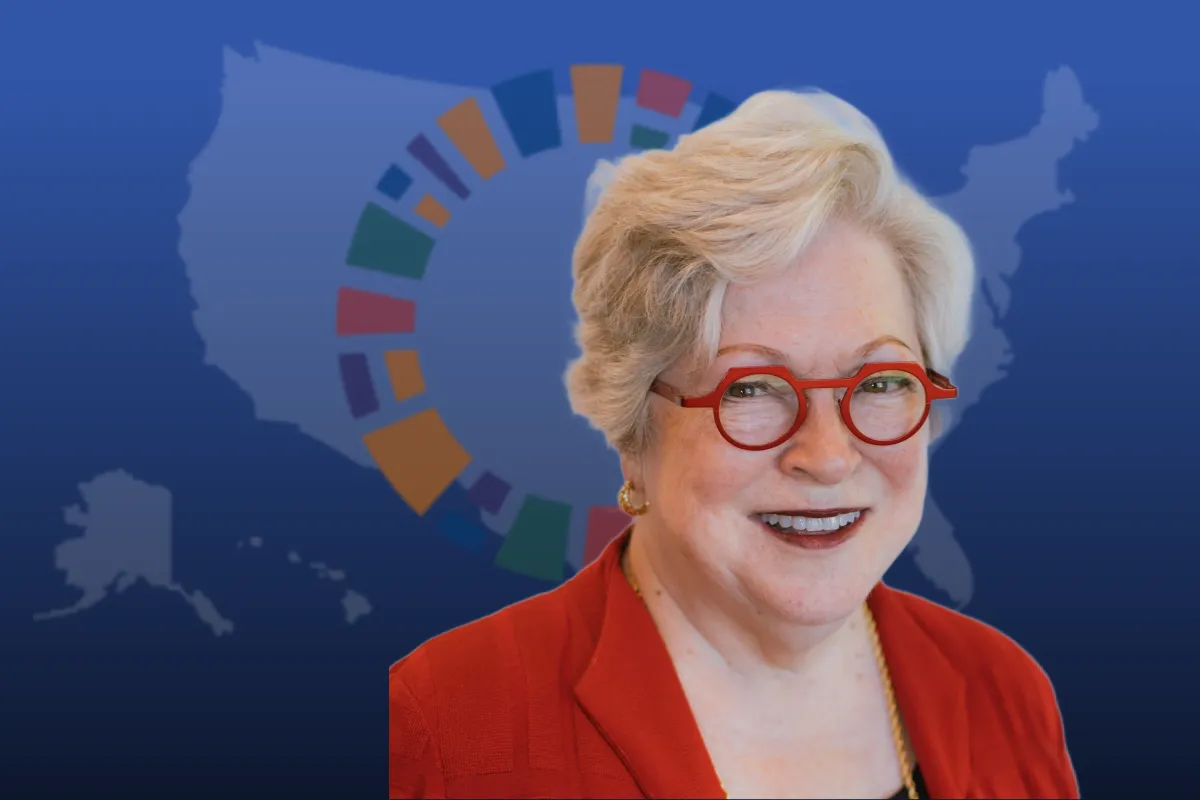
Then, Sarah Levin, founder and principal at Secular Strategies, will discuss how to most effectively build a coalition well-equipped to take on the dangers of Christian nationalism, from the grassroots to grasstops.
In addition to her work with the Jewish Community Relations Council of St. Louis, Maharat Rori Picker Neiss is a rabbinic fellow at the David Hartman Center, and the loving mom of an 11-year-old son who identifies as Transgender. At JCRC, she works to build bridges between the Jewish community and other faith, ethnic, civic, and political groups. In the activist spirit of his mother, her son began testifying on anti-LGBTQ+ legislation in the State of Missouri when he was just 8 years old. The National LGBTQ Task Force’s Rev. Nicole Garcia, who identifies as a Queer Transgender Latina and is a licensed professional counselor in the state of Colorado, will join Rori and Rev. Paul Brandeis Raushenbush, host of State of Belief, to share how everyday Americans can oppose bigotry in their communities and in the halls of power.
Sarah Levin is founder and principal of Secular Strategies, and a co-chair on the Democratic National Committee’s Interfaith Council. She joins Paul this week to raise up the inspired, and growing, opposition to the Christian nationalist movement in the U.S. Defending a pluralistic democracy for this and future generations will take all of us – and Sarah is expert at coalition-building across communities of identities and beliefs.
Transcript
REV. PAUL BRANDEIS RAUSHENBUSH, HOST
Maharat Rori Picker Neiss is Executive Director of the Jewish Community Relations Council of St. Louis. A rabbinic fellow at the David Hartman Center, and the loving mom of an 11 year old son who identifies as Transgender. The Rev. Nicole Garcia is Faith Work Director at the National LGBTQ Task Force and identifies as a queer transgender Latina. She is a licensed professional counselor in the State of Colorado.
Maharat Rori and Reverend Nicole, thank you both so much for being with us here today.
MAHARAT RORI PICKER NEISS, GUEST:
Thank you for having us.
REV. NICOLE GARCIA, GUEST:
Yes, it's good to be chatting with you again.
PAUL RAUSHENBUSH:
Rori, I wonder if we can start with you to tell listeners a little bit about your own background as a Jewish leader, and then also about your son, and how you come specifically to the issues of trans rights in your own state.
RORI PICKER NEISS:
Sure, absolutely. So, as you introduced me, I use the title Maharat, which is not the most common of titles. Essentially, I work as a Rabbi trained through an organization called Yeshivat Maharat, which was started to, specifically, train Orthodox women for clergy positions in the Jewish community at a time when Orthodox communities was then not oraining women as rabbis - although there has been significant shift within that.
I had been working in a pulpit. Now I run the Jewish Community Relations Council, which means that it's my responsibility to build bridges between our Jewish community and other faith, ethnic, civic, and political groups. We work together on issues that are important to the Jewish community and important to the region at large.
And so for me, my involvement in advocating for Trans rights is both a personal and professional role, and this is something that we feel incredibly passionate about through the JCRC and as a Jewish community, but also as a mom.
It's hard for me to fully describe what the process has been over the past four years of going into the state capital in Missouri, and needing to big legislators to just see our family as a normal family, to understand that my son is a child. He's now 11; he started testifying on these bills when he was 8 years old. And at the core, it's really about just seeing him as a person, as a full person.
We can keep unpacking all of the different pieces of it, but it has been emotional, to say the least. It's been challenging, and it's been really interesting, also, to find the intersection where so many of the voices that we hear in opposition to the Trans community, so many of the proponents of these anti-Trans bills cite their faith traditions when they testify in support of these bills. Two of the bill sponsors in the Missouri State House are pastors themselves; all of the bill sponsors in the State House cite their church affiliation in their bios. And so we have been an active part.
As I said, I've been doing this through my professional career. I've been doing this as a mom, but also as a faith leader working to try to build this counternarrative of faith voices who say: That's not what our faith tradition has to say. That's not the only version of this story that we have to tell.
PAUL RAUSHENBUSH:
Hmm! I think that is like that is the crux of it. I mean, I think that the idea that there is one position for the faith community…
I want to go, continue to go deeper with you, but I want to bring in Reverend Nicole here because this is very much, also, what you are passionate about, and so helpful for many of our broader community to help understand that the faith community actually has a really… Can and must offer a counternarrative here.
NICOLE GARCIA:
And we're really starting from behind the 8 ball. We have to recognize that the Roman Catholic Church has their own TV program, EWTN. My mother used to watch it all the time. The Evangelicals have had all these revivals on TV for decades. They've known how to use broadcast TV for years, and that's how they build their following.
I think what we can pull out of the pandemic and the forced shutdown and the force to use technology is that we in say the Progressive church are better at using apps, we’re better at using technology. You know, when I was serving in a church in Boulder and then when the pandemic started, we had, I broadcast on Twitch TV, and before I had no idea Twitch TV existed. But it was far easier for people to log on and watch, and so now that we're exiting out of the pandemic and all the restrictions we have to be able to do both.
And and I think we really have the opportunity to have ourselves imprinted on the Internet. How can we use this? You know, we're using radio right now. It's a great medium, but we also have to have other programs: podcasts; we need to have people out there writing OP-eds; and we need to bring voices together to counter that very negative conservative viewpoint of sexuality and gender identity.
RORI PICKER NEISS:
If I can just jump in cause I love what you said, Reverend Nicole, and one of the things that I've been struck by as I've spoken to faith leaders, and particularly Christian faith leaders, is that I think a lot of them don't really realize that they have a voice in this. And I wonder - and I don't know in your experience, but I wonder if there's sort of this discomfort for every reason you just said, because people see these conservative voices imposing on politics and there's this desire not to be that, there's been this sort of step back that I've seen a lot of people take. And I know for me, a lot of my work now has been pushing those people, to say: No, you need to speak out. You can't absent yourself from politics, because politics is happening all around us. And if we're not in the conversation, then we relinquish that space.
But it's been really hard, I think, for some of my colleagues to feel that they have a voice, or to step into that power and not be uncomfortable with it, because they're so uncomfortable with seeing other people of faith co-opt those powerful tools.
NICOLE GARCIA:
And if I may call you Rori, please call me Nicole, you know I grew up in… I was born in ’59, so I'm in my early 60’s, and one thing that I heard my entire life is: Two subjects you have to avoid are religion and politics. So what are the subjects that we're having such an incredibly difficult time talking about? Religion and politics, because we don't know how to talk about them.
And coming from the faith world, and as a pastor, I live in a 501(c)(3) faith world. So for those of you who don’t know, there are different levels of non-profit organizations, and in a 501(c)(3), we’re restricted from getting into any type of partisan politics. We can, however, talk on bills and and ballot measures without becoming partisan. So that's kind of where we've always been set. And I've always been criticized - or I shouldn’t say always – I’ve frequently been criticized for being too political in my sermons and in my writing, and for me the rabbi that I follow was extremely political. I mean, he challenged the ruling authority, and he ended up dying for it.
PAUL RAUSHENBUSH:
I wonder if you can talk a little bit – Rori, first with you and then Reverend Nicole - a little bit about how you do bring in religion into the conversation about Trans. Because I think there are talking points that we hear from the other side… For people who haven't been able to hear someone from the religious of authority talk about this, what are some ways that you feel are important that people hear: Some messages, some language that people can begin to learn from. So, Rori, what are ways that you bring your Judaism into the conversation about Trans rights?
RORI PICKER NEISS:
There's so many different ways. I think that the conversations evolve. For me, I think a big part of where I see the text is in the story of creation, in Genesis. And I'm laughing a little bit because I'm not sure if that's where I found it, or that's because so many of the Christians that I speak to who pushed back against it want to cite their sources. So, regardless of that, a lot of the narrative is, God doesn't make mistakes. God creates people, and this is how people are supposed to be; and I do believe that God creates people.
Also, God gives humanity wisdom, understanding, science, so many tools in which we then interact with - dare I even say, manipulate God's creation in the most beautiful ways. We have tools now to do surgeries. When people have disfigurements, we have tools to heal infections. We have cured diseases… All of that, to me, is just as much of God's creation. And so the idea that we are supposed to use all the tools of God's creation, which includes both our bodies and also every other element of science that makes our lives better, that's what I see when when we say in Genesis that everybody is created in the image of God; that the image of God is not just what my nose looks like, but that image of God is the full totality of our capaciity to participate in creation as partners with God.
PAUL RAUSHENBUSH:
I love that. I think that's so beautiful. Nicole, what would you add to that?
NICOLE GARCIA:
Oh, well, I totally agree, Rori, and in the Lutheran tradition we would say, we are co-creators with God. There is nothing that we have - nothing in my house, nothing in my refrigerator - that didn't come from something on this planet. We have been provided everything we need; and I know that if we shared all we had, there would be no hunger in this world. There would be no homelessness in this world. Everyone would have a place to be and have relationships they can begin. But unfortunately there are people who have made the choice that wealth and material goods are what proved their worth to God.
You know, it just galls me that people will quote a few verses out of Scripture and say, that's the totality of what God wanted. It makes people really upset when I say, Jesus Christ had no original material. Everything came from the Hebrew Scriptures. Every word Jesus said, which to me means that Eloquin is consistent. We've always been loved. Each one of us have been made in the image of God, and I've said many times, if you want to see the face of God, look in a mirror. You were made to be who you would be by your Creator, and for some of us it takes longer to figure out who we are. I didn't transition ‘til I was 43, and so I have the gift - sometimes I have a hard time thinking about it as a gift - but I have the gift of looking at life through the eyes of a Latino who was brought up to be hyper-masculine to the point, now, where I am a queer Transgender Latina, who is very happy, who is very productive. I earned two Masters degrees after I transitioned. I became a licensed professional counselor, and I became a pastor after I transitioned because I was supported and loved by my family and by my church and by the people who love me. Love and support can do amazing things.
PAUL RAUSHENBUSH:
What is especially galling, I'll say from the outside, you know I feel like I want to be with people, but I'm still like it's not immediate for me in the way it is for both of you, but the idea that some of this is under the guise of parental rights - and yet they wanted to undermine your parental rights, Rori? I mean, who's better to talk about your son than you and your pediatrician and whoever else you bring around you to care for you and yours?
Same with you, Nicole, you had a community around you. Who else is better for you to surround yourself? And there's these people who want to come from the outside, who in some other situations talk about overreach of government, and here they want to talk about like how government needs to come between you and your child, Rori.
I know you know so much better than I do. But I just think that the inconsistency and the disregard of the experience of people that is at the root of this movement just needs to be called out.
RORI PICKER NEISS:
It does, and I'm glad you're saying it. And I think it's important as we talk about this, that I think that there are individuals who are scared of what they don't understand. This is something that's different for them. It's something that they haven't been exposed to. Look, I don't claim to understand it as a cisgendered woman who has not felt that I am wrong in my body. I don't know what that feeling feels like, and so I know that that's a hard thing.
Now we also don't legislate laws just because we don't understand something - that's, I think, one of the basic foundations of this country. But I think what's really important to name within this, and I can't emphasize this enough, is that what we're seeing here is a political movement. This is not overarching desire, fear, any of these other words that we want to put in. And for all the reasons that you just said, Paul, there is a choice that is coming at national levels to make the decision to politicize Trans lives as a tool to advance people's political careers. That is what we are seeing here. And so this is part of why it's so difficult, because Nicole and I can talk about Biblical arguments - but that's not actually what people are interested in. And frankly it's also why, the more that my family and I go and sit with people - we're not going to be able to stop these bills, because what these bills are about are people's political careers.
And over four years we have built relationships with individuals on both sides of the aisle, and I have had so many conversations with people who, behind closed doors will say to me, I know these bills are terrible. I understand why these bills are terrible, but I can't be the tiebreaker vote. I can't be the public vote. I will support you behind the scenes. Well, I have to vote “Yes,” but make sure that this person on the other side of the aisle is going to filibuster, do this… There are people who are kind of manipulating these things behind the scenes, but feel like they cannot publicly actually say that they support Trans individuals, or they oppose these bills because they think that it is not politically advantageous. And that is what breaks my heart because people have decided that my family is useful at the political tool. And there are real people who are already being hurt by these laws and are going to be hurt so much worse. And making that decision means that people don't care who they are hurting as long as they are advancing power.
PAUL RAUSHENBUSH:
It's profiles and cowardice, I mean, really, it, you know, it's shocking. Nicole, I wonder if you can give us kind of the national view of this from your perspective? I think Rori got into this but it feels very coordinated. All of a sudden, we have 400 bills across the country that are being put forward that are aimed at LGBTQ people - specifically, often at Trans people - how do you understand this, from the national strategy perspective of what we're dealing with?
NICOLE GARCIA:
Well, first of all, I'd like to address – Rori, you are right on, you’re spot on; and the reason why they're attacking the Trans community right now is because it's effective. And we've seen it throughout history. You know that the laws in the 1800’s had excluded Chinese immigration; the Italians that showed up; the the Irish that showed up. You know slavery was justified in so many ways through the laws. It works, and unfortunately, right now we're looking at the fact that from my perspective, the conservative - since the 1980’s - the conservative moral majority has infiltrated a certain political party and they have played the long game. You look at all these different states, and they have gerrymandered so that state houses are being controlled by the minority - there may be a Democratic majority in certain states, but it’s controlled by Republican House and Senate because they have played the long game and been able to push these states farther and farther to the right, even though it's not the majority of opinion.
This definitely has been coordinated, definitely coordinated. And right now, what the Supreme Court is doing is pushing so many laws, taking away the federal rights and saying, well, it's a states’ rights issue. Why are they doing that? Because they've been manipulating, controlling state houses for 50 years. And this is exactly the game they've been playing in order to keep and maintain control. They've always had to be at least one “other” identified in order to focus hate and fury and anger and fundraise off a certain group of people. And it's been very effective.
PAUL RAUSHENBUSH:
Very effective. And it's classic. You demonize a group of people… This is just, you know, patriarchy. I hate to use that word, but this is really just like, you know, people insisting that there has to be a certain way to be a man and a woman, and this is, really, if you if you peel off the first layer of the onion, it's all rooted in this idea of this one way to be. And it is heartbreaking. Maybe you can get into some of the specifics right now, Rori, that are going on in Missouri as just one example of what's happening across the country, so that we can get a sense of what we're up against in the specific bills and what they're trying to do.
RORI PICKER NEISS:
So there's two... For four years now there's been two kind of primary categories of bills, although we can talk a little bit about some of the new bills that are coming up. Don't Say Gay, that we saw pass in Florida that's now appearing in other states, that’s trying to stop educators from being allowed to talk about gender and sexuality. And now a new rise in anti-drag bills, and this idea that drag shows are somehow, you know, pornographic and corrupting children, right? That's the lesson, the message of those. But those are newer bills that have been coming up, and are also passing, and are effective.
But the two categories that we've seen for a really long time - I'm going to classify one as the athlete ban, and one is the healthcare ban.I actually find, personally, I find the health care ban to be in some ways scarier, but the athlete ban to be far more insidious. The health care ban aims to say that children under the age of 18 cannot receive gender-affirming health care, and the message of that bill is it's saying that children don't have the ability to make these decisions about their bodies; that parents and doctors are somehow manipulating these children, and are doing irreversible harm to children. And it's a total corruption of understanding of medicine and science.
When we talk about gender-affirming care, first and foremost, when we're talking about young children, we're talking about supporting children. Most of the time… When my son, transitioned at the age of 7, it's really what we would call a social transition. He cut his hair. He started wearing different clothing. He used different pronouns. He changed his name. And so gender-affirming health care for him was the doctor calling him by his name and changing his pronouns in the system, and just talking to him about his experience in a supportive and loving way. That was gender-affirming health care.
As kids start to get older, we're talking about, first and foremost, puberty blockers: that is to delay puberty. So that’s exactly what bill sponsors keep saying we have more time to be making these decisions. So, instead of a child going through puberty of the gender that they do not identify, and then needing to have surgery later on in life, because now they're bodies have change and need to change again, that delays puberty. So you might not grow quite as tall as when their classmates start to shoot up. They might look a little bit younger. So instead of suddenly starting puberty at 10 or 11 or 12, you might be delaying it to 15 or 16, you know, later on. And then at some point, those teens are able to go on hormone replacement therapy and so they would go through puberty of the gender which they are, and then basically continue on into their adult lives.
The narrative that we hear is, people are doing surgeries on three-year-olds. Nobody is doing surgeries on three-year-olds; and even in a situation where you have a three-year-old who says, actually I'm a girl even though you thought I was a boy, all that means is letting that child grow their hair out, and then just loving them for who they are. So that's the health care bill, and that's going to have significant ramifications of putting kids through this experience in their body that they keep saying is not the body that they feel right in, and this is where we've seen a lot of cases when we have gender dysphoria that can sometimes lead to self-harm and even suicidal ideation.
The sports bills, I say, are more insidious in many ways, because those are the ones I found… A lot of people have said to me what you said earlier, Paul, like, okay, so parents are working with their pediatricians, their therapists, their endocrinologists, right? Like, we have a team of people that's been supporting us; who's the government to decide that they know better for my kid’s health care than this entire team of people? The sports bills are sort of like the bathroom bill 2.0 - if you remember when we were debating the bathroom bills - because what the sports bills try to say is, it's not fair, right? It's in the name of quote, unquote fairness, because people have bodies that are different. And so now Transgender women have a biological advantage over other women when playing sports.
Now again, there's scientific problems with all of this: as women go on estrogen bodies change, and so we're not really talking about this in the way that people want to claim. But the reason why I say it's really insidious is because it creates this narrative that there is a group of women who were men who were playing sports, who were ranked 20th in their sport, and then suddenly realized - woke up one morning and said, hey, if I become a woman, then instead of ranking 20th, now I can rank third, because you know, I'll be faster than most of the other women are.
And so people get really upset because they say, you know, and because there's been such a fight for Title IX and womens sports, and so all of these are called Save Womens Sports Acts. The number of people who testify, who get up and say, today, I'm a feminist. I'm finally fighting for women, right? I mean, this is the narrative, but it also subtly says, Trans individuals are actually not feeling like they are in the wrong body. It's actually just a secret plot to just advance in life, right? This is why I say it was like the bathroom bills, because the bathroom bills were basically trying to say to women - and again, it's specifically framing it in this sort of feminist ideology - it said to women, well, you're gonna have men who pretend to be women, just so they can go into a woman's restroom and assault you, right?
So trans people are actually sexually deviant. They're actually undermining. They're devious. They're manipulating… That this is the experience of Trans people, and that this is something you can turn on and off to the extent that it just gives you more advantage in life. And then completely dismisses the fact that we are talking about a population that is already severely marginalized; significantly more likely to be harmed and attacked, right? And so it completely flips this narrative on its head. And so it subtly keeps sending this message out into our world that Trans people are not people to be loved. They're not people to be cared for. They're not people who we should actually be paying more attention to because society has ignored. Actually, Trans people should be mistrusted because all of this is part of some nefarious plot that they have put together.
PAUL RAUSHENBUSH:
What you just laid out, I think, is so helpful both on both levels - the two different areas of the bills. And this is just beginning. I mean, I think both of you have stated this very well, this is about a quest for power. They do not have your family, either of your families in mind as they put these forward. They're putting forward a kind of a way to gain power for a certain party and a certain ideology.
Let me ask you, what gives you both hope right now? Are there areas where you can point to where, within this kind of terrible moment for Trans lives, you also see hopeful signs? Rev. Garcia, can can you take that?
NICOLE GARCIA
Well, I'm fortunate to live in a little town called Louisville, Colorado, just outside of Boulder. And so, you know, the Boulder, Denver, Fort Collins, area in Colorado has the most people - so with the largest population - and so our state legislature is Democratic, and we have a Gay governor who's also Democratic. And so we've made a lot of movement towards inclusion within the State of Colorado.
Three weeks ago I was at the State Capital, testifying on a bathroom bill which we pushed forward, and the bathroom bill was essentially: any new government construction - so state, county, or municipal - must include a non-gendered restroom on each floor, very straightforward, and also put in changing rooms and so forth, and so on.
But to go to Rori's point, right after that there was another bill that was being discussed about the Trans athlete ban bill. And it was put in by the conservative legislators in the State of Colorado who have to say, well, we're trying we're trying to protect your families. We're trying to protect your kids. But you know those liberals are pushing us out of the way. But I'm working for you. A total political gesture of their part, because, frankly, there's no way it will get through the legislature; but they had to introduce them because they had to try for their people.
And the the big issue is, there aren't a lot of Trans people out there. You know, we're less than 2% of the population, especially those of us who grew up in the 70’s and 80’s and transitioned in our 40s, you know. Many times I've been asked, wouldn't you have wanted to transition when you were much younger? I'm like, I would love to transition when I was 13 in 1973, but my family would have massacred me, because in 1973 the game was just really starting to get off the ground, and there was no concept of Transgender. There were a few Transsexual women running around, but they were not looked on with very much positive favor in my Roman Catholic Latinae family.
PAUL RAUSHENBUSH
But right now in your state, Colorado, there were people who stood up and said, yeah, we actually see Transgender people. We want to create bathrooms, which is basic needs to meet the needs of these constituents, these people, part of our community. And by the way, as a dad who had two kids, the idea that you could only have changing - this is tangential, obviously not the same thing - but the idea that you could only have changing room in women's bathrooms, because for men to have that, it's crazy. Like, what man would be changing? Well, you know, when you're two dads, someone's got to change the diaper, you know. So the idea that we’re different, but everybody should be welcome.
So, Rori, what gives you hope right now?
RORI PICKER NEISS:
You know, if you had asked me this question yesterday, I don't know if I would have had an answer. I've been, really, on an emotional roller coaster this past few months. But I'll tell you what gives me some amount of hope right now. The Missouri State Senate is right now debating the health care ban. The Missouri Senate has, I'm pretty sure both houses in Missouri have a super majority, if not close to a super majority. These bills are going to pass in Missouri. They're going to pass, and it's just a question of how bad they are.
But they took up the bill yesterday, and senators started to filibuster the bill. And you know, it's just the holiday of Purim in the Jewish community, which is when we read the Book of Esther. And it's sort of when hope comes: when people think that there's absolutely no hope, and there's no power, and I was having a lot of trouble accessing this holiday. Like just feeling totally powerless in this moment. And then I saw this filibuster start, and I thought, you know, what better than the story of the Book of Esther than this small group of senators filibustering when they really have kind of no hope of actually stopping the bill. And so they're filibustering right now. They're filibustering into today. They're going to continue filibustering. The plan, they hope, is that they're going to go overnight into tomorrow until the weekend.
And there is a group of faith leaders that is traveling to Jefferson City, which I just want to say for Missouri - every state is structured differently, but our big urban centers are St. Louis and Kansas City, both of which are two hours away from Jefferson City. And Jefferson City is surrounding by a lot of rural areas. And so we've got faith leaders that are driving to Jefferson City to hold a constant faith vigil in the Senate, a prayer vigil while the senators filibuster, and these are faith leaders trying to take back that narrative. And so I don't know where we end up. Right now, I know we're going to lose some battles. I believe we're going to win this in the long run, and we are surrounded by love and people who want to make sure that there's a better story than we're telling. And I'm just trying to hold onto that.
PAUL RAUSHENBUSH:
Hmm good! You know we are going to surround you with love, and your son and your whole family, and everyone who is directly impacted. I mean, this is your life that people are playing politics with your life, and that's what's so infuriating. It does give me hope that there are faith leaders who are available and understand why they need to show up in this moment for families like yours, like both of yours. I think that the long term it is going to be an ongoing that battle. There is a concerted effort against Trans people.
And by the way, to my cisgender Gay brothers out there: if you think you're not part of this, we’re part of this. And to all my Straight and Gay friends out there, this is about all of us. It's about human lives, and being able to live fully and beautifully. And so as a pastor, as someone who believes in freedom in this country, I want us all to come together around this and wherever we are in our local community, stand up and be part of the solution.
RORI PICKER NEISS:
If I can add one more thing, I just want to go back to what Nicole said earlier. This is part of history. Right now, it's the Trans community that's on the line, and we are going to keep fighting, and yes to everything you said. We need everybody to be part of it, and I am confident that while we're losing battles we're going to win the war, and when that happens it's every one of our responsibility to see who is the next person - because there will always be somebody else.
And so I think, especially as faith leaders, our job is to be looking for who is that marginalized person, and never to be part of that marginalization. So I hope everybody joins us in this fight, and I hope that we all continue to pay attention - because somebody is next after the Trans community, and we have to be ready to stand with them too.
NICOLE GARCIA:
We also have to recognize it's not just the Trans community that are under the microscope, so to speak. You know, I get calls all the time about immigration. How are we going to solve the immigration issue? And there are Trans people in countries outside the United States who are persecuted, who have death threats, who can't get to the United States. They're trying to come legally, but you know our LGBTQ+ siblings in other countries are being persecuted.
I stood in front of a synagogue last Saturday in New York City, because a certain group said they were going to do a day of hate, and I had to stand with my my Jewish siblings with my collar on and saying, you know, we all need to be more Jewish and you know we have to stand together.
The attack against Roe vs. Wade comes down to bodily autonomy. Controlling women has always been the effort of the patriarchy, and if individuals cannot control their own bodies, have a say over how we treat our bodies, then all of us are doomed. It's not just being able to determine, you know, if it's an abortion right, it's whether or not… You know, how many cosmetic surgeons have had to have a woman go through a year of therapy before they did a breast augmentation? And I guarantee you if they did, they’d probably find out they weren't doing it for themselves. They were doing it to save their marriage, or to land that husband that they wanted - not for good reasons.
They're coming after all of us who live on the margins, because that's what they're good at. That's how they get power and control. And they've been able to manipulate people to believe that if they get what they want, you're going to lose everything you have.
PAUL RAUHENBUSH:
Last question, this is for, again, Maharat Rori: I know you've been involved in this suit that is being filed with the Americans uniting around the separation of Church and State and abortion rights. And I wonder if you could just say a few words about that, because there's going to be more opportunities to talk about that, but maybe just a few words about how that happened and how you feel these things might be connected.
RORI PICKER NEISS:
Absolutely. And I think, Nicole, you just said it perfectly, why all of these things are absolutely connected. And it's a matter of bodily autonomy, but it's also, again, the manipulation of religious voices trying to claim power through our political systems.
So Missouri was the very first state after the fall of Roe v. Wade - when the Dobbs decision came down - Missouri was the first state to enact our trigger law and make abortion illegal throughout the state. And I am part of a lawsuit with 12 other plaintiffs, all of whom are faith leaders across the State of Missouri from a diverse number of faith traditions, who are suing the State of Missouri for an injunction against the law, saying that the law violates the separation of Church and State precisely because when the law was written, it was written with language saying things such as “Life is the purview of the Almighty God” and “Conception begins at birth” - which as a Jew, I'm going to say is a profoundly theological statement. It is not a scientific or biological statement; that is a theological statement.
And when Missouri wrote religion into our laws, and we believe that was a violation of the Missouri State Constitution that has written very clearly an establishment clause that says that Missouri may not prioritize a religion or impose a religion upon anybody, and so we are suing as citizens of Missouri, as taxpayers of Missouri - but all of us are also clergy - to say that we do believe firmly in religion. We are all deeply religious individuals, but we also know that as Americans, citizens, none of our faith traditions should ever be codified into our laws.
PAUL RAUSHENBUSH:
Thank you for all the work that both of you are doing, the witness that both of you have and bless both of you and your lives. I just feel very honored to have spoken with you, Maharat Rori Picker Neiss and the Rev. Nicole Garcia. Thank you both so much for joining me on State of Belief Radio this week.
RORI PICKER NEISS:
Thank you.
NICOLE GARCIA:
It's an honor to be here with you.
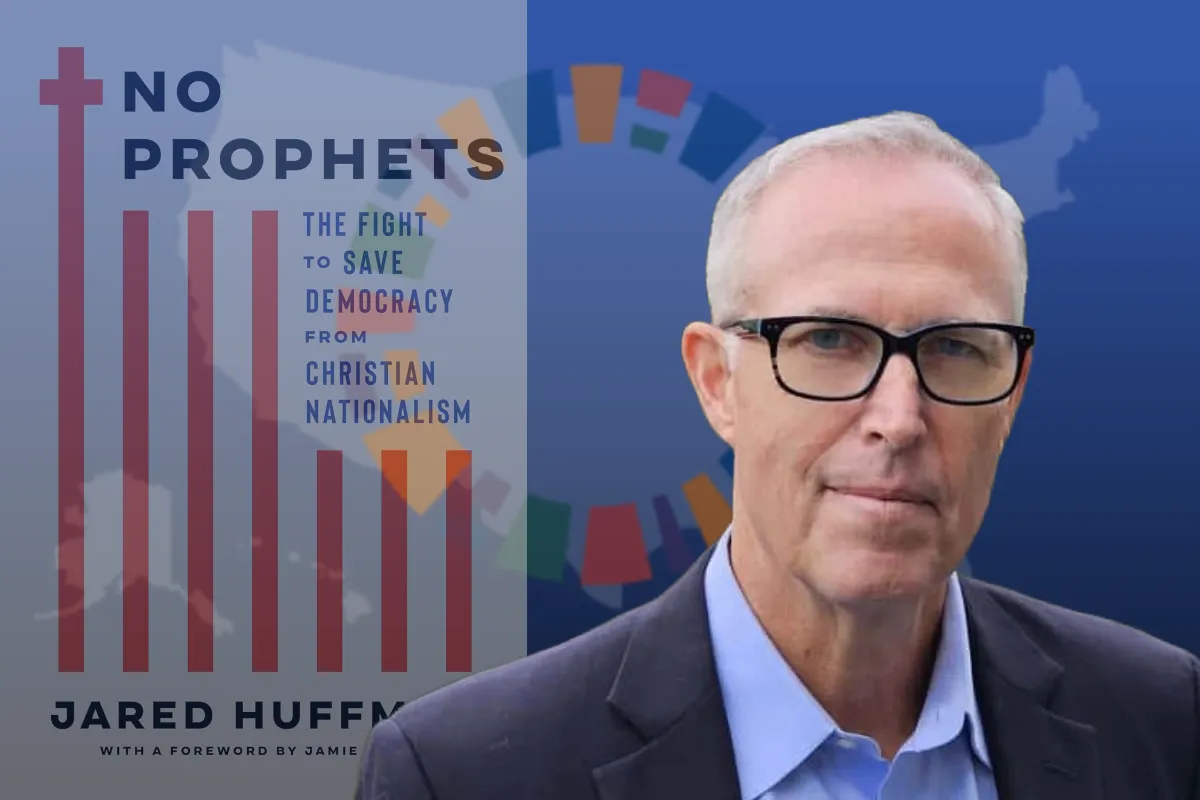
Congressman Jared Huffman: The Fight to Save Democracy From Christian Nationalism
The co-founder of the Congressional Freethought Caucus joins host Rev. Paul Brandeis Raushenbush to discuss how he's seen authoritarian impulses show up in our government and to share some of the insider stories featured in his best-selling new book, "No Prophets"