Advocacy
North Carolina Muslim Leader Responds to Attempts to Block Construction of House of Worship


In Mooresville, North Carolina, a town hall meeting regarding the Islamic Center of Lake Norman's proposed construction project drew a record crowd and sparked an intense debate over religious freedom. Although the expansion had already received official approval, residents flooded the room to speak both for and against the project. The atmosphere turned so contentious that, according to WCNC Charlotte, several comments were too hateful to air on broadcast television.
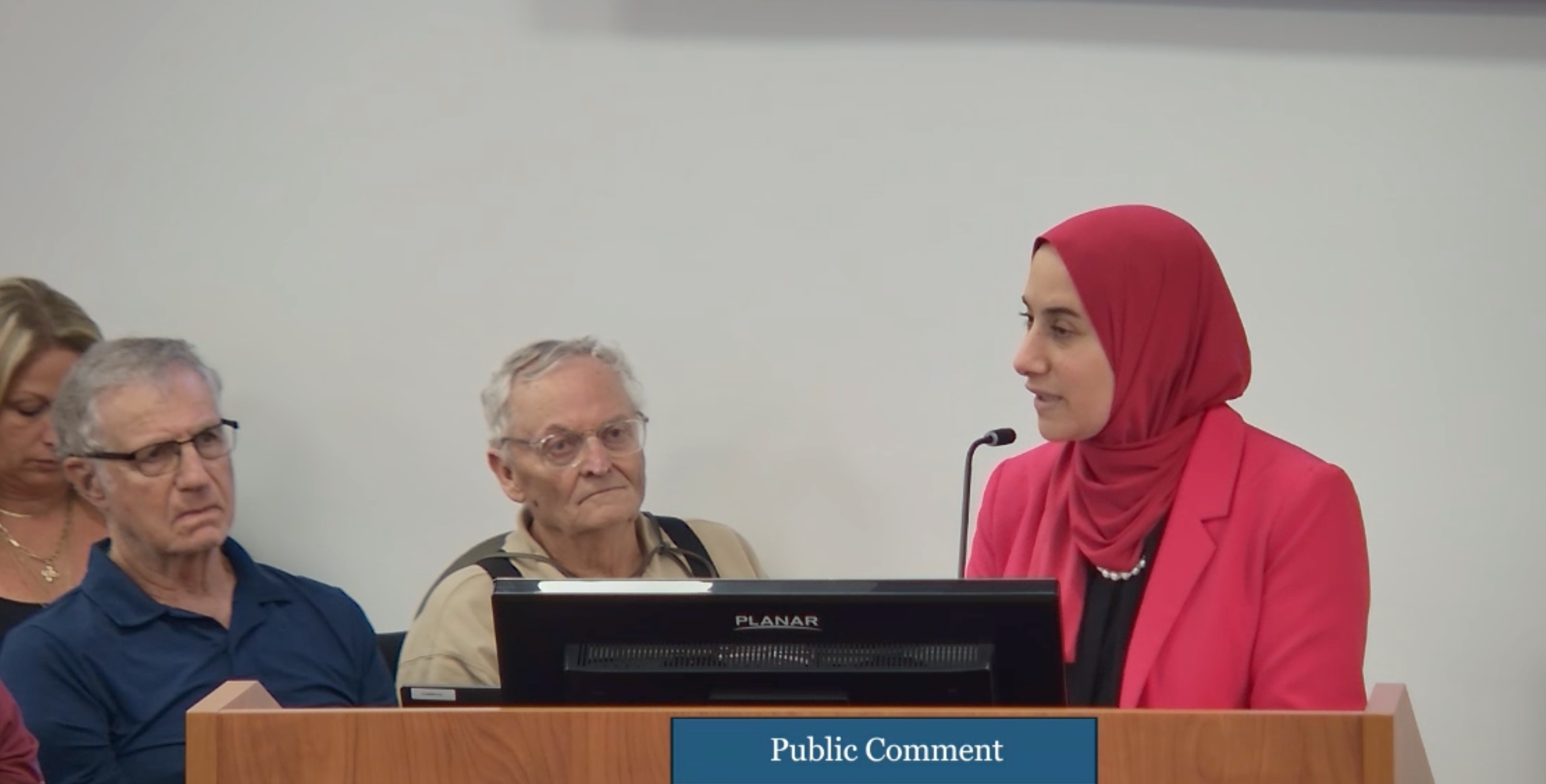
Dr. Hadia Mubarak, a professor of religion at a local university, spoke powerfully about the attempts to block Muslims from building a house of worship in North Carolina.
“I never felt as scared for my personal safety as a Muslim woman as I did yesterday, when I had to walk a few blocks to the Mooresville City Hall,” Dr. Mubarak wrote on social media following her speech. “I have an acute awareness of the violence that hatred, dehumanization and vilification can produce.”
She added: “While I found hate speech waiting for us at the doorsteps of Mooresville’s City Hall, I also found something far more profound. I found people of diverse faiths who left their work and families on a Tuesday evening to defend our religious freedom, human dignity and Constitutional rights to be treated like all other Americans. An interfaith group of clergy members, including LeDayne McLeese Polaski, Amy Brooks Paradise and Rabbi Becca Diamond, among others, stood shoulder to shoulder with us against this dangerous hatred and irrational bigotry.”
The full transcript of her remarks at the Board of Commissioners meeting:
"I was born and raised in this country and know no other place to call home. America knows me as well as I know myself. She is a needle that holds my thread, interweaving my story in her all-encompassing quilt. I’ve fallen in love with her way of life, her personal freedom, her respect for individuality, and her cultivation of diversity and tolerance. Her First Amendment writes the letters I mail to my elected officials and vocalizes my moral conscience without fear of persecution.
This is the American I’ve always known, an America that gives us the freedom to be who we are, to worship God freely, to teach our kids how to live a morally upright life, to speak our mind, as I do now, without fear of persecution. The America I know gives us the freedom to dance to the tune of our own song and craft our own stories instead of being relegated to a footnote in someone else’s story.
When I was 3 years old, my parents moved my sister and me from New Jersey to Panama City, Florida, where they still live today. My parents found their neighbors, who are mostly Christian, to be hospitable, living out the teachings of Jesus Christ by loving their neighbors and welcoming the strangers.
For over 35 years, my father diligently served his patients as a cardiologist, becoming a bit of a local celebrity for his humour as the first Arab redneck, as he liked to call himself. Our neighbors became familiar with Jordanian cuisine, thanks to my mother’s delicious cooking.
Growing up in the Bible Belt, my Christian friends and I bonded over our shared devotion to God. Our aspiration to live our life for a higher moral purpose connected us, despite our religious differences.
Today, however, I’m witnessing a different kind of America, an America where neighbors no longer smile at one another, but instead fear one another. I would like to ask all of us, what kind of America do we build when we teach our children to fear people who look different or pray differently than them?
To be honest with you, I felt afraid to walk into this building by myself, and I asked friends to walk with me. Is this the kind of America we want, where a woman does not feel safe to walk into a government building because of her choice to dress modestly and prioritize God?
To the honorable commissioners today: we stand at a historical crossroads. We can either uphold America’s foundational freedoms, embrace one another as fellow American citizens, and love one another, or we can choose a path of betraying the freedoms this country has promised to all, amplifying the hatred and sowing division between fellow Americans.
As a people who love this country, we are obliged to uphold its most sacred values, which is to allow the Muslim community in Mooresville their constitutional right to worship freely and build their sacred space."
Transcript
.avif)
Interfaith Alliance Joins Open Letter Denouncing Anti-Muslim Bigotry from Elected Officials
Joining more than 200 faith leaders and allies, along with over 70 religious and civic organizations, Interfaith Alliance signed onto an open letter denouncing normalization of anti-Muslim bigotry by U.S political leaders.