State of Belief
Religion, LGBT Rights, and the Law with Mary Bonauto and Ben Marcus from GLADLaw


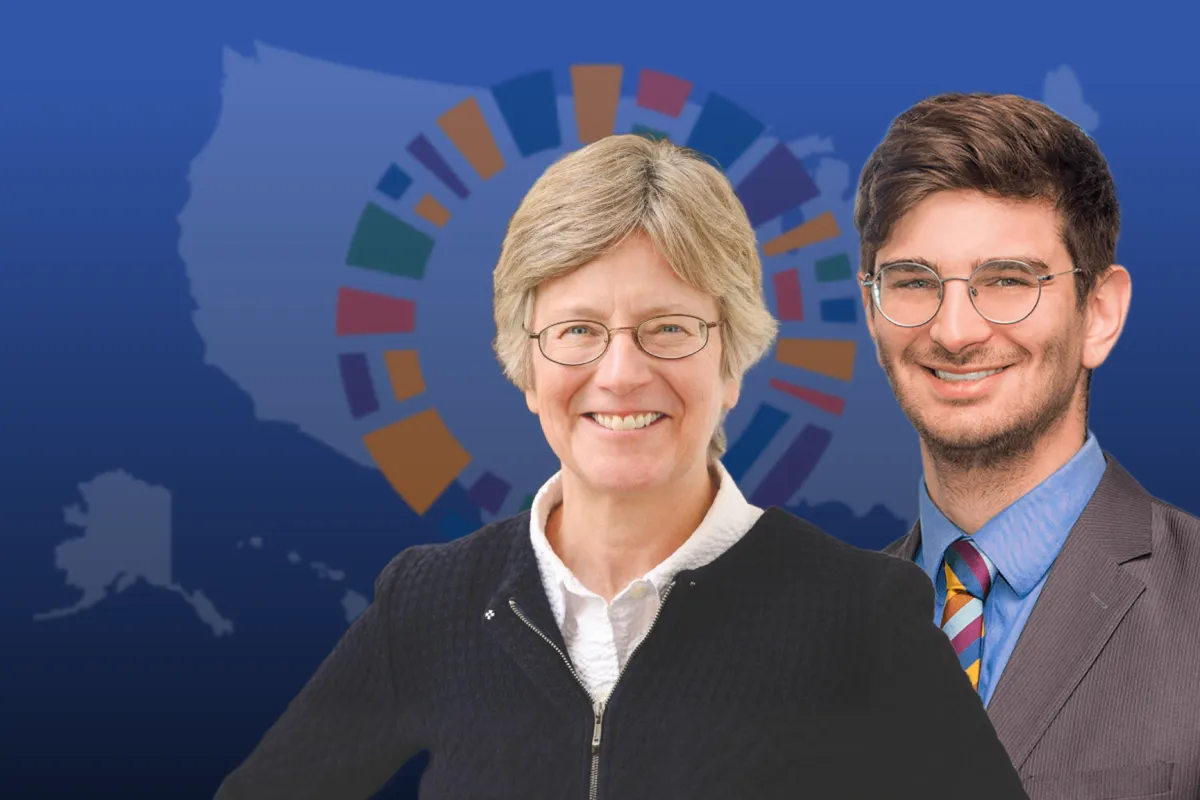
The latest episode of The State of Belief features two incredible guests: attorneys Mary Bonauto, a trailblazer in the fight for marriage equality who serves as Senior Director of Civil Rights and Legal Strategies at GLADLaw, and Ben Marcus, Senior Constitutional Law Fellow at GLADLaw. Together, they share invaluable insights on the current landscape of LGBTQ+ rights, particularly in the wake of recent legal challenges.
Here are just three of the themes that stood out:
- The Resilience of Marriage Equality: Mary reflects on the recent Supreme Court decision regarding Kim Davis's attempt to challenge Obergefell v. Hodges (which Mary argued before the high court in 2015). Despite the fears surrounding the potential reversal of marriage equality, the unanimous decision from the Court signals a strong commitment to protecting the rights of same-sex couples. Mary emphasizes that the societal benefits of marriage—providing stability and protection for families—are too significant to overlook. This reinforces the idea that marriage equality is not just a legal issue but a fundamental aspect of human dignity and community well-being.
- The Role of Religious Communities: Ben highlights that not all religious individuals oppose LGBTQ+ rights. In fact, many religious communities are allies, advocating for equality and inclusion. This challenges the narrative that LGBTQ+ rights and religious freedom are inherently oppositional. By fostering dialogue within religious spaces, we can create a more inclusive environment that respects diverse identities and beliefs, ultimately enriching our communities.
- The Urgent Need for Advocacy in Education: Both Mary and Ben stress the critical situation facing LGBTQ+ youth, particularly transgender individuals, in schools. With increasing hostility and discrimination, many students are forced to seek education outside of traditional settings. This underscores the need for robust anti-discrimination policies and supportive educational environments. As advocates, we must work tirelessly to ensure that all students feel safe and valued in their schools, regardless of their sexual orientation or gender identity.
This episode is a must-listen for anyone concerned with understanding the complexities of LGBTQ+ rights in today's society. Join us as we explore these pressing issues and discuss how we can all contribute to a more equitable future.
More about the guests:
Attorney Mary Bonauto has been with GLBTQ Legal Advocates and Defenders (GLADLaw) since 1990. She first fought for marriage equality in Massachusetts, as lead counsel in Goodridge v. Department of Public Health. She won, making that the first state to allow same-sex couples to marry, in 2004. In 2015, Mary was one of three attorneys who successfully argued before the Supreme Court in Obergefell v. Hodges, leading to the expansion of the right to marry to all 50 states. Mary is a 2014 MacArthur Genius Grant recipient, and this past January, she received the Presidential Citizens Medal in a White House ceremony.
Ben Marcus is an attorney and Senior Constitutional Law Fellow at GLADLaw, the leading LGTBQ+ legal services and civil rights organization. Ben has a deep interest in the relationship between religion and law, with a JD from Yale Law School and a master’s from Harvard Divinity School. Ben has held multiple positions at the Freedom Forum since 2015.
Transcript
REV. PAUL BRANDEIS RAUSHENBUSH, HOST:
And now to my guests. Attorney Mary Bonato first fought for marriage equality in Massachusetts as lead counsel in Goodridge v. Department of Public Health. She won, making that the first state to allow same-sex couples to marry in 2004. In 2015, Mary was one of three attorneys who argued before the Supreme Court in Obergefell v. Hodges, leading to the expansion of the right to marry to all 50 states. This past January, she received the Presidential Citizens Medal in a White House ceremony.
Also with us: Mary's colleague Ben Marcus, Senior Constitutional Law Fellow at GLAAD Law, the leading LGBTQ+ legal services and civil rights organization. Ben has a deep interest in religion and the law, having attended both Harvard Divinity and Yale Law School.
Mary, Ben, thank you so much for joining us on The State of Belief.
BEN MARCUS, GUEST:
Thanks so much for having us.
MARY BONAUTO, GUEST:
It's a pleasure.
PAUL RAUSHENBUSH:
So we are having this conversation kind of in the echoes, the wake, of an effort to go to the Supreme Court by Kim Davis to overturn Obergefell. And that failed, kind of surprisingly, unanimously - but I don't know what to make of that. And so I just want to start there, because it is the most recent foray against same-sex marriage that we've seen. What did you make of that? And what did you make of the fact that it reached the Supreme Court?
Mary, I'll start with you.
MARY BONAUTO:
There's so many layers in this, but just to do a really high level: she's the one clerk that we know of in the entire nation that asserted that the Supreme Court's decision wasn't clear about her obligation as a clerk in Kentucky to issue marriage licenses to same-sex couples. And so on that basis, she refused. Ultimately, she instructed her whole entire office to refuse licenses to same sex couples. And so she really ended up not doing her job and taking the law into her own hands to prescribe how others should act. And I have to say, she went to the Sixth Circuit Court of Appeals three times. Nobody would ever accuse that court of being a wildly liberal court, and it's ruled against her each time.
And so I think, initially, her claim really was about trying to get some sort of First Amendment exemption, and I think the Sixth Circuit had explored that and said there were other ways to do this, but not what you did here. And so, in the end, when you try to tee up a challenge to Obergefell - which was raised quite belatedly, I will just say, so it didn't have a chance to percolate to the courts, and it wouldn't have anyway - but when you bring it up at that late stage and so on and so forth, they weren't going to wrap their minds around it. It wasn't teed up properly to say, okay, now it's time, we're going to revisit Obergefell - when her attorneys, really, had just sort of made a mess of things for many years.
But the other thing is, we're not in that conference, so we don't know what they discussed. I think everyone saw that couples were extremely concerned about the idea of their marriages evaporating. We happen to believe that existing marriages are protected and that marriage, as the institution it is for people in general, should remain so. For the same reasons we wouldn't take marriage from anybody else.
But people were quite nervous about it. You even saw justices like Justice Barrett giving a long interview saying there's a lot of reliance interest in marriage; Justice Gorsuch talking about the idea of a marriage contract and that's something that people rely on. So I think there's a lot abrew here and we don't know what it all is.
I will say that one of the early signs for us that this case sort of had a little bit of a mark on it from the perspective of people who would like to see Obergefell reversed was that when she filed her cert petition, there were not briefs of sort of the typical organizations supporting her, the ones who really do try to roll back LGBTQ rights and so on, they just didn't come in. And so I think it wasn't just us; other people had figured out that perhaps there were some problems with the case.
PAUL RAUSHENBUSH:
Color me conspiracy theory, but the fact that none of the justices even entertained it, that was unanimous, made me think, okay, well, yes, good that this didn't go further than it did, but it also doesn't mean to me that this is over. This is one of the reasons I wanted to talk to you both is that I do feel like in my own marriage and in many of our friends' marriages, there is a creeping uncertainty, which is a terrible way to live. And so it's one thing for this to be pushed back, but it's certainly on my mind.
Ben, I want to talk to you about the fact that the Southern Baptist Convention, which is the largest Protestant organization, passed a resolution that one of their primary goals is to roll back Obergefell and same-sex marriage. And so, I am interested in how, putting on your Harvard Divinity plus Yale Law plus GLADLaw hat, how you understand this in the context of the religious reality that we're living through.
BEN MARCUS:
Thanks, Paul. I want to start by saying something that you know very clearly, which is that not all religious folks are against same-sex marriage or LGBT rights - that there are queer religious folks, there are straight religious folks who are strong allies of the LGBT rights movement. So we just want to be very clear that this isn't an oppositional LGBT rights versus religious freedom conversation.
GLADLaw has a proud history of being sensitive to the concerns of religious people and working with religious communities on LGBT rights issues. It is also true that there is renewed interest among some religious folks in the United States to contest not only same-sex marriage, but an array of priorities for folks who are concerned with queer rights and queer interests. That's not so surprising. I think as we see advances in a variety of civil rights movements, there's always a period of contestation. As things move forward, there are those who would like to see them either stop or roll back.
It's important to name that there are a lot of major religious denominations in the United States who have, since Obergefell, come to celebrate LGBT relationships, queer relationships, and same-sex marriage in particular. So it's not a one-way story that we're moving backward only. There's real, in my mind, progress within different religious communities that are having difficult conversations about who are we and how do we care for queer congregants.
PAUL RAUSHENBUSH:
I appreciate that so much. And it's actually something that we have to keep on saying and saying and saying, because I do think there are groups that are invested in this idea that this is an, as you say, oppositional moment; that there's LGBTQ rights and then there's religious rights and those are completely separate. And we have to keep on saying over and over again, actually, the majority of religious folks in America support LGBTQ equality. The majority of religious folks support marriage equality. And so I appreciate you starting out with that.
MARY BONAUTO:
Can I just add in here, just as you wouldn't expect that all different-sex couples have a particular religious framework, it's just so clear from the many people we've represented over the years, including at the Supreme Court, that there are plenty of same-sex couples who are religious, and their faiths are absolutely fundamental to themselves as a person and to their family and to their marriage. And obviously they are in congregations or faith traditions that are able to support them, which is lovely. And, you know, marriage has been historically religious and it's absolutely been a civil thing, to quote back in the day. And that duality has persisted. So I think we live with that duality and people wanting to emphasize one part or another, but you see it in the lives of real people where both coexist.
PAUL RAUSHENBUSH:
Thank you. So I think one of the things that I was really interested in hearing from both of you - and again, thank you so much. It's like talking to LGBTQ slash religion rights royalty, you two, on this podcast. But I am interested in how you view the lay of the land of of same-sex marriage, in part because it’s percolating in the states. We hear it from various folks. They just can't handle it. And then we have the Respect for Marriage Act, but how does that factor in? So maybe if you wanted to give us a little bit of how you view this question in play right now - especially given the background of kind of this Christian Nationalist moment that we're living in.
BEN MARCUS:
So I want to start with a statement that as a queer advocate - and I'm speaking for myself, not for GLADLaw, but I think this is shared by GLADLaw - I strongly believe in religious freedom as a core fundamental right within the United States. The First Amendment is vital to the democratic process. There's a scholar I really love, this idea that he has, that the First Amendment represents the life cycle of a democratic idea. We need religious freedom because it allows us to develop theories of the good in our own communities and then to express that to our neighbors, and then to try to bring that to our government and have our ideas represented in our government policies. I believe strongly in religious freedom.
There is a talking point, I understand it, that religious freedom right now is in service to a particular political or religious agenda. I hear that. I do think it's important, though, for all of us to go back to first principles about why we have religious freedom and why it's important.
The second thing I'll say is that we recognize that we are just living through a changing legal landscape. The Supreme Court has been changing doctrine on religious freedom through a variety of cases, some of which are directly about LGBT rights and some of which aren't. But we're seeing a change in what it means for a neutral and generally applicable law, how that's analyzed by the Supreme Court when it burdens religious practice in cases like Tandon v. Newsom and Fulton v. City of Philadelphia.
Fulton, of course, dealt with an LGBT rights issue related to foster care. We're seeing changes in the recent case, Mahmood v. Taylor, related to religion and the ability to direct the religious upbringing of a child. That was a case implicating LGBT rights to the extent that a school was including curriculum that exposed students to the diversity of families within their schools, including LGBT families.
And also, I want to point out that a lot of cases that are lumped in with religious freedom cases, because they involve religious claimants, are actually, as a doctrinal matter, formally a free speech case. And those are cases like 303 Creative, which was actually a case about what the court called pure speech. That was the case in Colorado related to a website designer who didn't want to make a website for a same-sex marriage because she said it was forcing her to speak against her own beliefs. And then we have a case right now before the Supreme Court, Charles v. Salazar, related to conversion therapy, that the therapist is devoutly religious, but it's formally a free speech case. So we are seeing a changing landscape. The court is changing legal doctrine. And what our concern is, is just how do we operate in this changing legal landscape, also recognizing that as the landscape changes, when court sets doctrine, it has to apply to all cases. You know, the facts might change, but the legal principle has to apply.
And so we are seeing that some advocates for causes like reproductive rights are using changing legal doctrine to advocate for their own interests. There's a great little article by the State Court Report about the variety of cases being brought by religious claimants who seek access to reproductive services, including abortion care, using religious freedom claims under new doctrine that the court is setting. So the throughline is a changing legal landscape that, for the purposes of this conversation, often involves religious claimants on these First Amendment claims, but that sometimes they're religious freedom claims and sometimes they're free speech claims. And that the doctrine as it's being set anew, sort of, by the Supreme Court, has affected negatively, in some cases, the interests of LGBT individuals and communities; but that doctrine, what remains to be seen is how it will apply when, in, again, the cases of this conversation, queer religious claimants are bringing claims for their own religious freedom or their own free speech rights.
PAUL RAUSHENBUSH:
Thank you. Mary, what would you add to that?
MARY BONAUTO:
Well, a few things. One is, I appreciate that Ben raised the non-discrimination cases, the public accommodation cases, like the website designer and the Fulton case with the Catholic social services not wanting to do home studies and so on for same-sex couples when they were contracted with Philadelphia and so on. And I raise it because in those cases, which to be clear, like we briefed in them and we were briefing, again, on the other side, okay, but again, I think in a hopefully sensitive way, but just like we can't just gut non-discrimination laws. And interestingly in those cases, what you see, I think, is a trend right now at the Court. And it's not a comfortable trend for any of us, but it seems to be a trend where both the Court wants to protect both religious liberty and it wants to provide protection for gay persons and same-sex couples.
And that's leading to some seeming awkward decisions like in Masterpiece Cake Shop, with the baker who didn't want to make the cake. You know, in the end, this kind of thing had been addressed decades ago: your views don't allow you an exemption from a non-discrimination law.
However, in that case, because there was hostility expressed by some people in the course of the administrative proceedings of the case, the court said: this was based on religious hostility, therefore the baker wins. So that wasn't a broad ruling - although I will say that that kind of idea of hostility is something that people still haven't wrapped their mind around. Just keep it to yourself. It's not really helpful in any kind of adjudicatory process or legislative process to be demonizing people this way. But I see that tension.
And you brought up the Respect for Marriage Act, and I think the Respect for Marriage Act is interesting, too, because it really did try to maintain the status quo. Right now, at that point, 2022, same-sex couples may marry, they may travel from state to state, you cannot deny the same protections and responsibilities as any other married couple would receive. That's the baseline, and they did protect it. And part of what was so interesting about that was when it first came up in the house, I think 40 Republicans voted for it. And then some people wanted to slow the process down and get into the Senate and perhaps, you know, barrier and amendments. But in the end, that neutral, that sort of: both sides are going to be protected here, we're going to just keep things the way they are, you can't use this in religious liberty arguments, it's just about protecting marriage as it exists, state to state, and not just same-sex couples, but no discrimination based on race, ethnicity, as well.
So anyway, what I'm trying to say is, I'm seeing that duality. And when it came time for the Senate to vote on this, I will tell you that the LDS Church, which had supported Proposition 8 in California to undo California's marriage equality ruling, they were right there. They were major supporters. And Mitt Romney, Senator Mitt Romney, who had been governor of Massachusetts when we won marriage here, had been implacably opposed in every way and brought a lot of people to come visit Massachusetts to make that happen. He voted for this law and said, like, I esteem and love all my fellow Americans equally.
All I'm trying to say is that things have changed to some degree, but they haven't changed totally, because we live in the United States and people are going to have different views, particularly on religion. But I'm seeing that what is happening is, the Court and I think some people trying to have a live-and-let-live idea where both of these things are important and they have to coexist. And I think we're in this period of trying to make that work out, as opposed to any kind of winner-takes-all. And it makes sense to me that we would be there, and it's actually a better place to be than some others. There are certainly people who want to undo it, no doubt about it, but I'm not sure that everybody feels that way. I'm pretty sure not everybody feels that way.
PAUL RAUSHENBUSH:
Well, you both are talking me down off a ledge. I mean, I'm very sky-is-falling and I think that there are a lot of people, I would say couples, who are like, what is really happening? But it feels like you're saying that it is possible that we will maintain same-sex marriage. But do you think it's also possible that different states will be able to reverse it? That feels to me like the most likely: send it back to the states, kind of Roe v. Wade. That's at least what some people are saying. You know, certainly Hillary Clinton famously said that. I don't know if that was helpful or not, but that was certainly the way she viewed the law.
But then you also have a couple of the justices, again, talking about that that wouldn't work. But if you had to look into the future, do you think that all of this, we’ll be able to maintain it? And then I do want to talk about other issues. But I am curious about looking forward. And also, are there things that we should be doing, religious folks could be doing, to ensure that we don't have a reversal?
MARY BONAUTO:
I wish I had that crystal ball. All I will say is that I think there's awfully good reasons to keep it - because nobody wants their family to be a political football there's so much at stake, it's the most important relationship in life to people, and to have that become. contested political issue after people having those protections is just, it's kind of unthinkable. And when you just accept the fact that, you know, 21 years ago, people started seeing people marry in Massachusetts, and 10 years nationwide - people see it's good for kids, it's protection for families.
And then when you think even harder, you see how it rolls out across society: employers, businesses, and so on, and every institution in some way uses marriage as a reference point. So to actually say just this one group of people is shoved out of that, again, when we have a decision from the Supreme Court saying this is the right to marry, we've had it a long time, and we've included more people in it along the way; and when you also add in something that wasn't in Dobbs, by the way, wasn't in the abortion decision about equal protection, we have very good legal arguments. And you could even set aside the legal arguments and say: look at the impact on people's lives. Are you really going to tear this away from people when it provides good to them, their families, their communities and the broader society?
PAUL RAUSHENBUSH:
Thank you. I'm compelled by it; I hope others are. I know that same-sex marriage is not the only thing that you all work on, and I am curious: you two, both, are so versed in the law, and more broadly, the premier organization working on LGBTQ equality through legal means. What are some of the priorities that you're looking at right now, especially, I would say, as some of our trans siblings are feeling the great threat and erasure, and others? I'm curious, what are the ways you're understanding how to spend your time right now?
MARY BONAUTO:
Sure. At one point, I remember being told to my face that I was a criminal because I was a lesbian. And, you know, a lot of stereotypes about gay people, LGBT people, and what can I say? It's hard not to see the same kind of thing coming out in great force, now, where there's actually, really, targeting going on with transgender people. So, you know, employment, housing protections that existed, the ability to get health care that is medically necessary for you, or if you're a parent for your child, pretty wild what is happening out there. And, you know, to have an executive order about K-12 schools and making sure that you don't respect a child and their gender, their transgender status, when a parent has come in and said: this is who my kid is.
So right now it is very hard for trans people to sort of exist as they are in public. and I do think that currently the government is trying to make it impossible for people to be who they are, and make it very hard to live. And I say this with great sadness, and maybe some people think it's an overstatement; but boy, we have so much litigation going on now and so do others. You know, stripping funding, stripping research, stripping websites, saying this doesn't matter anymore, we're going to roll back everything is something.
So yeah, right now, I think, for me, every opportunity that people get to stand up for the basic humanity and dignity of every individual is important - for me, in my own faith, that's just a central tenet - and be a lot less judgmental, and understanding we're all here and meant to coexist. It's full-on right now, is all I can say. And so we are all compelled, we feel as a legal organization compelled to use those tools to try to do something about it.
And I will just say, as you continue to read about people who are implacably opposed to homosexuality coming to a different perspective because it's their child - the same has happened in families all across the nation with respect to having transgender children. And I hope that more of those voices will come forward, and I think it's okay for people to say: I don't understand this. This is not something that's in my world experience, but I do understand basic human dignity and people should all be able to find a way to live in this world.
PAUL RAUSHENBUSH:
I thank you so much. That is perfectly said. It is unfathomable to me how this became just this rallying cry. And part of the reason it became a super rallying cry was the effectiveness, that it was viewed as a political tool. And so when you have the Republican Party spending $250 million on ads targeting trans people, then eventually you are able to dehumanize them in such a way. Just being at Stonewall when they just took away “transgender” from the website. I was like, how are you doing this? And then they just, one thing after another.
I have many many friends, clergy friends, who have transgender kids and it has been really moving to watch them, how their heart had to open in order to care for their child. And it just seems like this crazy government overreach for those who are always talking about small government to insist that these parents don't know their children and what their children need. And so It really is heartbreaking. And I do think this is somewhere where religious language that you just evoked at the end of what you were talking about, your own church and the way it's just around dignity and about love and respect.
Ben, how are you understanding, specifically with the attack on trans people, both from your religious lens as well as their legal one.
BEN MARCUS:
I think because Mary and I are lawyers working at a legal organization, we've been talking a lot about law, and that makes sense. And there certainly are opportunities for lawyers to work with religious communities to get the perspectives of religious communities in front of courts so that they have more context for this conversation, when things are often presented as oppositional: trans rights versus religious freedom or something, that it's important for courts to hear a different perspective. But courts aren't the only venue in which we're having these conversations.
This is a much wider conversation happening in our own communities, whether it's at school board meetings, or it's at town hall meetings, or it's at your home. We're coming up to Thanksgiving, and people have these kinds of conversations at home trying to make sense of the news. And it's true that a lot of folks don't know or don't know that they know trans folks in their personal lives. So this can feel like a very abstract discussion for many people. And I think religious communities, as places where people gather to talk about our values, what matters to us, what's most important, are spaces where we can model the kinds of conversations that we we hope that people have about our neighbors, about people in our own families, about ourselves. It's just very important for religious communities to recognize that there is a conversation that needs to happen outside of courts to help people understand why this matters.
And the language that they might use will differ, obviously, based on the religious communities that they come out of. I think of the language of being created in the image of God, and what does that mean? What does it mean to really approach the trans folks who are in our lives understanding that they're created in the image of God? It's an entirely different vocabulary, an entirely different way of talking about these issues that will connect with folks on a much deeper level than the kinds of conversations that we are forced to have as lawyers when presenting a legal argument to a court.
And we also know that judges exist in the world and they understand the world through the variety of experiences that they have; and as much as judges try to separate their personal opinion from the decisions that they render, and they use a language of law, they see the world around them and the conversations that are happening. We know that for many judges, religion is an important part of their lives. And so religious communities can play a a key role in a different kind of parallel conversation to the legal conversation to help folks understand why what's happening to trans folks is such a, in my mind, perversion of the Gospel. And so that's, I think, one role that religious communities can play.
PAUL RAUSHENBUSH:
Again, just like the specter in the room, the kind of White Christian Nationalism and this idea that underneath it around gender roles… I just feel like there's a resurgence. I don't know if it's a resurgence; maybe it's always been there, but about what women can do, what men can do, what is allowed - and I do think for some, if you come out of that mindset, the idea of trans, it subverts that paradigm so strongly in all different ways. And so there's just incredible resistance to it, but I hope that those of us who are in other religious communities can speak up. It's really something that I personally feel so passionate about.
And again, I feel like this is another example of just going after the people who are most marginalized and using them as scapegoats. There's not one solution to this, but I do think the more we talk about it and the more we lift it up as a priority, the better the future will look.
What other issues are rising to the fore? What other ways are you at GLADLaw thinking about the next years? Do you all do anything on how elections function? I'm just curious. I'm not sure the expanse of the issues that you take up, but what are some of the other areas regarding LGBTQ equality that you are looking at? Mary.
MARY BONAUTO:
Well, another important part of our work is around protection for families, married and unmarried, because we believe that the people who bring a kid into the world or the people who or raising that child, sometimes they're the same people, really need to have a secure parent-child relationship. So we've always been very protective of families, and that's something that we do across the country; and families are important to LGBTQ people in every way. So that's part of it.
Another focus of our effort has always been around schools. Schools are community institutions, sometimes the largest community institution in a geographic area and a place where people come together and everyone has to belong - and public schools are for everyone. And then to ask schools to live up to that can sometimes be a challenge. And particularly when it's come to how students treat other students or what it is that the adults in the room will call out. Because it's astonishing the number of LGBT students - and I'm talking about gay students and trans students - who have to be educated at home because they aren't safe at school. And it's still the case that there are so many young people who are raised to be ashamed of who they are. And, you know, other kids have learned that too.
And so I think the targeting, the bullying are quite intense - and it's not limited to LGBTQ people, but you really see it with kids who are being tutored and so on. So the idea of equal educational opportunity is something that's hugely important in my family's life. The idea of being able to succeed at school and that's your road through life. You want that for every kid. We want that for every child - and not to go back because they're gay and they have a disability or they're trans or whatever it might be. And so we really spent a lot of time on school policy and with and against school lawyers and sticking up for children and trying to get education out there.
And, you know, we constantly write these no human rights publications that are something that a lawyer would love, but we want everybody to know the law and that it's on their side, and that they can advocate for their children at school. You know, we care a lot about the teachers and the people in the schools, too, who are increasingly asked to do just broader and broader and broader jobs. And, you know, amazing human beings, by and large, who really try to meet that mandate with so little support.
So those are among the many other areas. But on the religion piece, I just wanted to say that because of what's been coming to the Court and what's out there in public advocacy is, increasingly we're addressing the issues like around government funding of religion. And I understand that's where the Court is, and that is a lot more about where the law is.
Then the thing that is sort of sometimes difficult to sit with, that we're still processing, is what that then means for non-discrimination laws. Because very often with government money comes requirements not to discriminate, including as to LGBTQ people. We are involved in a lot of that litigation and weighing in on that, not wanting there to be an exemption from non-discrimination mandates when everyone else is subject to those non-discrimination mandates.
So it comes up, whether it's social services, whether it's private schools, it comes up even with sports associations when, you know, you have high school athletics and there's religious schools in the area and they don't want to play if there's a trans athlete. They get kicked out, they sue, they win. We don't want for our society - this is Mary Bonauto speaking, not GLADLaw - I don't want a two track society. I want everybody to have a common understanding of their rights and responsibilities, and not have this special, what feels, sometimes, like, why does only one group get an exemption? And there are reasons for that people would tell me, and I understand, around the importance of faith in people's lives. I just think there are other things that are important, too. And I don't know that we've come to the right balance on that yet.
PAUL RAUSHENBUSH:
Yeah, I have two kids in public school, and I feel so fortunate because I live in a city. But the way I talk about it is, you don't have to agree with us on everything. You don't even have to… Honestly, you don't have to agree with my family, but we can live side by side and we can actually interact and maybe we'll get to know one another and maybe we'll learn from one another and maybe we can still be neighbors. But this fragmentation is almost like: I refuse to be in community with you, feels so dangerous and one of the things you said, which really had not occurred to me and I really appreciate it: I don't know if you have any numbers on this, but how many children have to be homeschooled because their school is is too hostile for them to even exist there, which is so terrible and such a heartbreaking idea.
And of course, it makes sense that that is happening. But if we don't all feel outraged by that and the fact that we can't create - and again, I'm not pointing the fingers, necessarily, at teachers for sure, because I think teachers often try as much as they can - but atmospheres can be so hostile. And so I really appreciate you bringing up families. I appreciate you bringing up schools. This is something that Interfaith Alliance has been working a lot on. We just launched an organization, a broad organizational principle, Religious Freedom in Public Schools, which is really about making sure that everyone has the rights in public schools to be fully themselves.
And the other thing you didn't mention which is true, vouchers often take money out of public schools but then they go to places where they have the ability to refuse people. They're often for private schools. They can say, well, we're definitely not going to take a queer kid. But not only that, we're not going to take a low-performing child or we're not going to take a the wrong religion. You know, they can do what they want. But public money going to these voucher programs is, I think a real danger.
Ben, that was really helpful for Mary. I can imagine you having lots of thoughts about those various areas. And what piques your particular interest in what Mary was saying?
BEN MARCUS:
Yeah. So I'll speak for myself now. You know, a lot of these cases, involving anti-discrimination law and access to funds or those who are seeking exemptions to anti-discrimination law end up in a realm of constitutional scrutiny that requires a court to consider a few things.
One is the sincerity of the religious belief. Is the person who's claiming the exemption actually sincere? Another question is, is this actually a substantial burden on their religious belief? And then another question is, if there is a substantial burden on a sincerely held belief, whether there's a compelling state interest there. For a variety of reasons, because those are the tools that we have in the law, advocates for anti-discrimination law have argued all three. Sincerity of the belief, whether there's a substantial burden, and the compelling State interest. And then there's another piece that I'm not going to get into.
The Supreme Court has signaled, I think - and maybe I'm reading this wrong - that there's less of an interest in adjudicating the sincerity of the belief or whether there's a substantial burden. And I have personal beliefs about whether I think really courts should, within the judicial ken, whether it's right for judges to adjudicate sincerity of belief or how substantial a burden is. I recognize why those are important parts of the legal analysis. I think it can get very challenging and often leads to discounting the claims of folks from minority religious communities when that happens.
Putting that aside, the reality is that more of the work now seems to be at this level of compelling state interest. And I just think it has to be the case that protecting anti-discrimination law is a compelling State interest, even if there is a substantial burden on a sincerely held belief. We just, as a multi-religious, multi-racial, multi, you know, plus plus plus society, we have to be able to enforce laws that prohibit discrimination on the basis of these protected classes. Because otherwise, how do we live together?
And I think we, as advocates, need to be more - again, this is my view speaking - be more clear about the fact that we might be burdening other people when we enforce anti-discrimination law. But that is the burden of living in a multiracial, multireligious democracy. That's just what it takes: sometimes we are burdened, but that what is good for the goose is good for the gander. I mean, it's good for all of us when we enforce anti-discrimination law, because in some community somewhere you're going to be a minority and you're going to want the protection of anti-discrimination law. And that's just so vital.
And I worry sometimes it gets lost in the conversation when people, especially in the court of public opinion, are saying, well, this person is not sincere - it's obviously just a cover for X, Y, or Z, or it's not really a burden on their belief. I get why that conversation happens, but it seems that it's never going to satisfy our opponent. Our opponents will never feel heard if we just dismiss their, I think often honest, sincere feeling of burden. And we should be just forthright about why we still, even so, still advocate for anti-discrimination law.
PAUL RAUSHENBUSH:
My first instinct after the, I think it was the website case, was like, OK, what would be to stop a pagan from saying, I don't want to, I'm not going to do any Christian websites? I know that's me being immature, but when do we just stop doing things for each other? When do we just say, okay, absolutely not. No, gross. No, you know, and I refuse and I will go to the mat for this and, you know, and my religious tradition absolutely, you know, makes that anathema to me. Do we really want to live in that world where we're just sayig: I'm not going to serve you. I'm not going to do anything with you because I've just decided what you believe is so disgusting to me and so against my soul that I just can't do that.
I wrote a piece long ago - I don't even remember when it was. I think it was back in Arizona. Maybe it was Cakeshop. I can't remember. Anyway, it was Sincerely Held Beliefs and the Fraying of America and the idea that these sincerely held beliefs could be used just to tear us apart is like a terrible idea. And so part of that is, our beliefs have to be better, frankly. We have to make our beliefs better - and that's not for the court to decide. That's for religious folks to say: actually, bigotry is a terrible belief to have even if it's sincerely held. And we're not going to – I'm speaking as a person, as myself, but as a religious leader. You know, sometimes we need to call out beliefs as bad beliefs. And right now that certainly is the case.
I just love this conversation. I am not a lawyer, but I play one on TV in the sense that my dad was a law professor. I'm surrounded by the law. And so I just love geeking out on the law. But what would you encourage people like me, religious communities, to do right now, to be about. What business should we be about right now so that when cases are coming into the legal realm, you feel you are stronger because religious folks have done their work specifically around LGBTQ rights?
Ben, why don't we start with you and then we'll go to Mary.
BEN MARCUS:
Yeah, there are different paths to take and I think it depends on the appetite of the religious community, on their resources, on a variety of factors. And all of the paths are helpful. So one path might be to use the special gifts of religious communities to speak with those within the community and beyond the community about why LGBT rights matter in the vernacular of the community - not trying to play lawyers, but being authentic to who they are and using that prophetic voice to say: here is what it means to do justice, to be righteous, to care for our neighbors, to care for the least of these, for those who are most marginalized. And I think that that is an essential role, because that's really where change happens, is within communities.
Courts often come at the end of a large, long movement within civil society, including within religious communities, about what justice looks like. And courts might be kind of a capstone recognizing a change in public consciousness. But the real work happens in community. And I just think it can't be discounted. I think religious communities, especially those that care about LGBT rights, I know that they're thinking this and they, from my experience, queer religious folks feel particularly hurt when the voices of queer religious people are ignored or obscured. And these conversations are just presented as LGBT rights versus religion because it does deep harm to those who feel, who are religious, who have found ways of not just reconciling, but recognizing that to be religious and queer is entirely compatible, that those parts of themselves mutually inform and strengthen one another. And so when that perspective, that experience is denied, that's harmful.
So if religious communities can lift up those voices to make it clear that this is part of the conversation, and then to those religious communities that have resources and interest in working with lawyers to tell the story in courts about how they feel about these issues, why this impacts them. Amici briefs can do a variety of things. Amici briefs are briefs that are submitted not by parties to a case, but by those who might have some interest in the case or feel that they can inform the court about a matter important to them that bears on the case. Amici briefs can make nice legal arguments that help the court interpret or analyze the discrete legal questions before the court.
But sometimes a really important role that amici briefs can play is providing background, just helping the court understand: who does this affect? What are the stakes here? What values are at play? And religious communities might play a role, especially when cases involve questions of religion and religious freedom. So there's a lot of paths, I think, that are open to religious communities. But I just wouldn't discount the path that lays outside the court. I think there's often kind of a fetishization of legal work that is somehow special and particularly meaningful or important. But I would say especially religious communities should know that that's not the case, that there's like something really important that's happening outside of our governmental institutions.
PAUL RAUSHENBUSH:
Thank you. And Mary.
MARY BONAUTO:
I thought that was beautiful. And so I appreciate that overview and forest, if you will, of ways of thinking about this. Maybe I'll just mention a tree for a moment, which is just to go back to schools. You know, I think it's, as Ben said, I think it's really important that every group, congregation, whatever, have its own authentic process and speak in its own voice about what it wants to do, try to figure that out. How do they engage more broadly in their communities?
I will say that right now, the hottest tickets in town are school board meetings. So much is happening and that's even more so now, given the Mahmood decision from the Supreme Court, which, you know, as Ben was talking about, does reaffirm that it's schools that decide the curriculum, but also is saying parents, you can opt your kids out of things if - I don't want to get overboard here, but there can be, at times, there can be an opt-out process if a particular type of instruction is, you know, contrary to the values that you're trying to instill in your child, bringing them into faith.
So knowing this, this is going to be another larger dimension of school board meetings. And I have just decided to try to put a positive spin on it and think about this as an opportunity for democracy and to hear each other out as parents, because you all care about the success of children, your own children and the community and the school. You want it to be good. And so I'm just going to say that having voices come in to say, to sort of cut through it sometimes. What are we talking about here? We're talking about what should be taught in the schools. They are for everyone. They are. Everybody belongs here.
And you know, you mentioned some religious schools not wanting LGBTQ kids. Well, sometimes they also don't want kids of LGBTQ parents, but by contrast the public schools are for everyone. So I do wonder about the possibility, sometimes, of people who spend more time thinking about values and their commitment and the dignity and respect that all people deserve coming into some of those fora, and getting a chance to raise their hand and say: the way I see it is… And I'm not going to say what they would say, but I think that will be really helpful, because I've been part of those meetings, sometimes, around policies and this and that, and it's just so helpful when somebody comes in with that clarity to just remind everybody, in the end, what this is all about.
PAUL RAUSHENBUSH:
Thank you for that. Both of you, I love the forest and the tree, and that tree is so important and I think that message is getting through. I mean, I live in Manhattan and we found we weren't paying attention to our local school board and for our district. And some people got elected from kind of Moms for Liberty types, and they passed an anti-trans resolution.
All of a sudden, everybody looked up and said, wait, what happened? Like, with all that we have to worry about, that was something that they did. And so a lot of us went up there, and I went up there as a religious leader and as a parent and said, this just doesn't represent what we want our schools to be about. They fortunately were voted out the next time because people were aware and that people began to be like, okay. And so I think that that's really important.
And I do want to brag for a second just in front of both of you because you said it's important for religious folks who are also queer to kind of make their presence known. And The Advocate put out a list of queer clergy fighting Christian Nationalism, and there I was on the list at the very top. And so I'm calling it the number one gay, but it wasn't actually in any chronological order. I just happened to be on the list, but I thought it was really important that The Advocate viewed that as an important thing to recognize. And I do think that sometimes we go into LGBTQ activist circles and they view their relationship with religion as adversarial when it doesn't have to be, in fact. In fact, there are allies on the table there that you're leaving, and I think the opportunity is for a much more collaborative understanding.
Mary Bonauto is GLADLaw's Senior Director of Civil Rights and Legal Strategies. Ben Marcus is Senior Constitutional Law Fellow at GLADLaw. These are two of the most amazing people in America. I am so honored to be in conversation with you. Thank you so much for being on The State of Belief.
MARY BONAUTO:
Thank you.
BEN MARCUS:
Yeah, thanks. I've enjoyed the conversation a lot.
Congressman Jared Huffman: The Fight to Save Democracy From Christian Nationalism
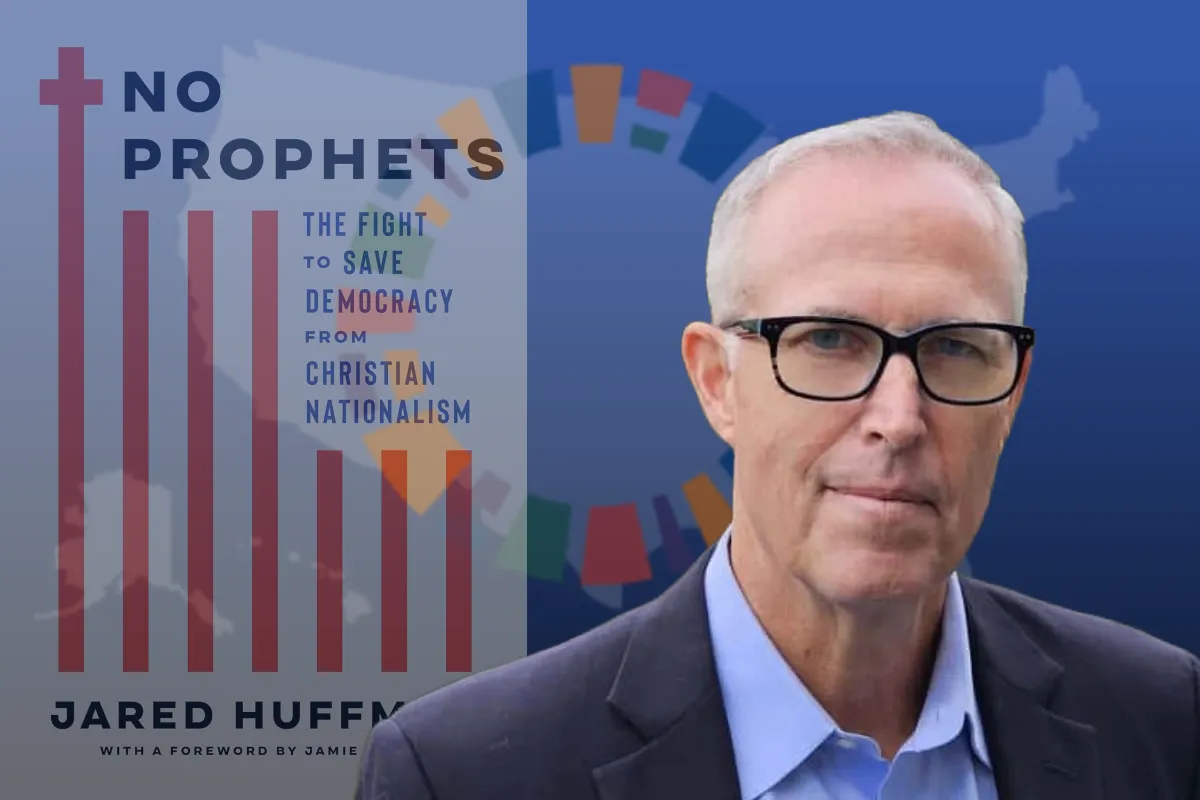
The co-founder of the Congressional Freethought Caucus joins host Rev. Paul Brandeis Raushenbush to discuss how he's seen authoritarian impulses show up in our government and to share some of the insider stories featured in his best-selling new book, "No Prophets"