State of Belief
"What Can I Do?" Skye Perryman's New Book Answers the Question

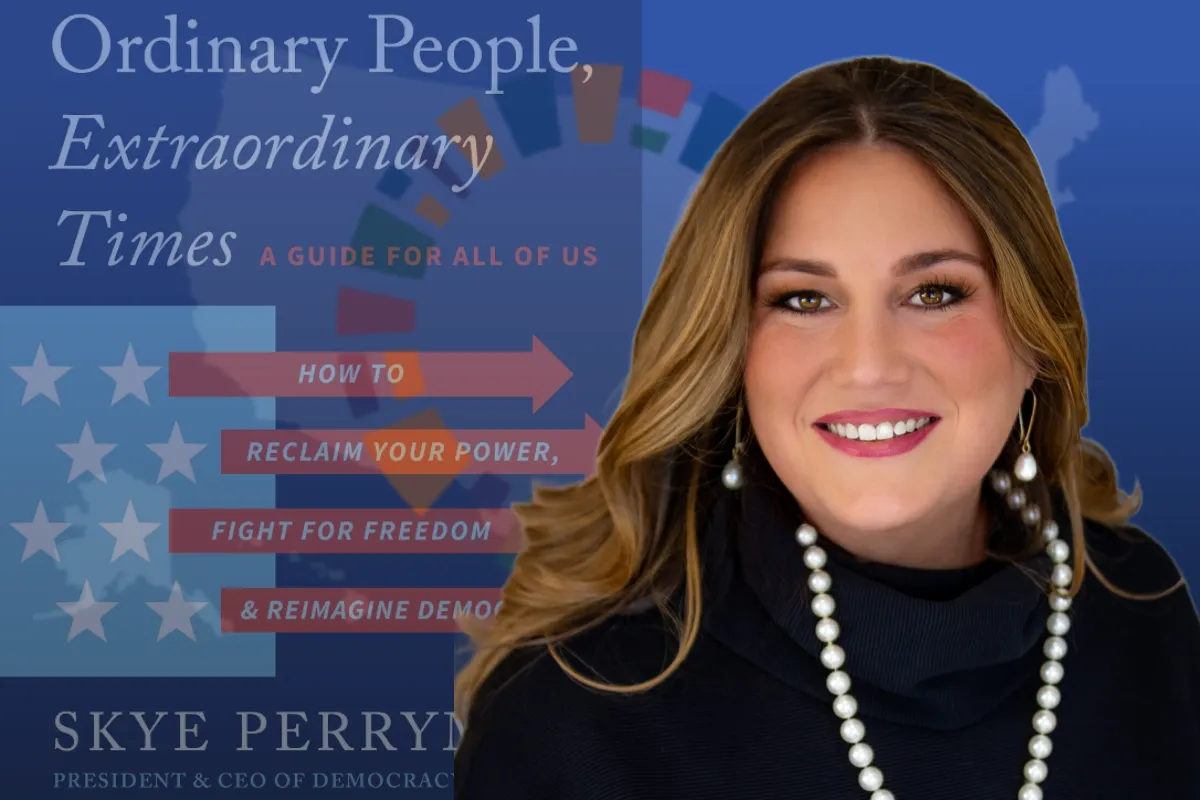
How is public paralysis an actual tool of authoritarianism? Democracy Forward President Skye Perryman lays out the answer in conversation with host Rev. Paul Brandeis Raushenbush on The State of Belief. She’s written the ultimate antidote, a book titled Ordinary People, Extraordinary Times: How to Reclaim Your Power, Fight for Freedom, and Reimagine Democracy.
Listen to this week’s episode for Skye’s key action items including:
• Audit your information intake and identify what is helping or harming your understanding.
• Replace doomscrolling with one concrete action, even if it only takes five minutes.
• Practice speaking across difference without surrendering your values.
• Find one local or national way to support democracy work this week.
• Treat courage and joy as part of the same long-term civic practice.
You’ll come away changed and with a renewed sense of hope and possibility.
Skye's action hub for engagement around these lessons and many more is ordinarypeopleaction.org
The State of Belief host Rev. Paul Brandeis Raushenbush is President andCEO of Interfaith Alliance.
Transcript
REV. PAUL BRANDEIS RAUSHENBUSH, HOST:
Skye Perryman is president and CEO of Democracy Forward. You've heard us talk about the organization filing hundreds of pro-democracy lawsuits against the Trump administration on many past episodes. But she's also been a repeated guest on this show, and she comes with insight and determined hope and brilliance and inspiration. And that's what we're gonna get today, people.
Skye has written an important, crucial new book titled Ordinary People, Extraordinary Times: How to Reclaim Your Power, Fight for Freedom, and Reimagine Democracy. The book comes out August 25th, and Hillary Clinton has called it “A manual for people who are tired of wringing their hands and ready to roll up their sleeves.” Boy, are we ready. I'm delighted that once again we have Skye Perryman on the State of Belief.
Welcome, Skye!
SKYE PERRYMAN, GUEST:
So good to see you.
PAUL RAUSHENBUSH:
Let me just start with abundant praise because I got excited reading this book. I just really need you to hear this. This is the book for the moment. This is the primer on democracy. This is how to engage, how to participate, how to be present. And it it is written in such a way that it is accessible to all of us. Skye, congratulations. I just got so excited.
We, you and I, both are out there a lot and we have people coming up to us and they want to do something, they want to engage, but they feel paralyzed - and by intention, I think. And they ask: What can I do? And you have created a beautiful response. Congratulations. Wasn't that the genesis for this book in a way? It was that question, what can I do?
SKYE PERRYMAN:
That was the genesis, because in the first days of the administration people from across the political spectrum, people from across the country, when they started seeing what was happening to their neighbors, things that may have been unimaginable to them that would happen in 2025 or 2026, resoundingly started reaching out. And I was thinking they were reaching out to say, could you please file a lawsuit on this? Could you please file a lawsuit on that? Which they do. And please do reach out to us at Democracy Forward if if you need us to file a lawsuit to protect yours and your community's rights.
But overwhelmingly, what people were reaching out to say is: What can I do? And that is a beautiful thing. It was the source for us, in dark days, of deep hope to know that while it seems like everything is stacked against us, the people were actually stepping forward and saying, What can I do? How can I help? And so that's what this book is all about.
PAUL RAUSHENBUSH:
Yeah, and you answer it in such a great way. Actually, the chapters are actions. Like action one - I love this: “Stop spiraling and pick up a shovel.” What a great way to start a book. And it's all true. But I do think it's really important for people to recognize we're in a moment, kind of this authoritarian moment, where paralysis is actually a tool of authoritarianism. And the sense that there's nothing I can do and there's no one I can do it with and it's hopeless, throw up your hands. And that is the opposite of what you’re saying. And I think it's so important that your brilliance is in legal strategies, but that's just one tool. We have so many.
Why don't you talk to me a little bit about how you decided to structure this book so that you would be able to reach people where they are?
SKYE PERRYMAN:
I will say - we do have the covers and everything has been printed, so this will be on shelves. This is what it looks like. And there's an audio book, and there's a book on Kindle and e-readers and all of those things. But look, I wanted to really have a book that reflected both what was needed in this time and what we know about where people are. And in a lot of communities that I have the privilege of going to and working alongside with, that our team at Democracy Forward has the privilege, it's not that people don't actually know what to do when they really think about it. It's that we are constantly fed this barrage of doom scrolling.
Every day, a new outrage, every day a press conference that suggests that it doesn't matter if you vote because your vote might not be counted, or it doesn't matter if you file a lawsuit because of what maybe the Supreme Court might say. It means all of this stuff. And then what we are actually seeing making change is people who are stepping forward and taking those actions and they're breaking through. And you see that a lot in the work of Interfaith Alliance, as well. And of course we mention Interfaith Alliance as a way to get engaged.
But I really wanted to start the book with the first step we need to take is to make sure our mindset is right. And that is not trite. And it's something we all struggle with. I mean, it's something you and I have talked about. It's not just because you're doing this work, you don't wake up some days and just say, what is all this? What are we even doing here? And so that first step is to stop spiraling and pick up a shovel.
We talk about why it's okay to spiral. We're in a really bad situation in this country. It didn't happen overnight. It didn't happen just in the last election cycle. This is an ongoing backslide. But we have to, in that moment, decide: How are we going to respond? Because that's really the only thing we have control over. And that's the piece of the mindset. So that was the first step.
Now the second step, and I'm interested in what you think about this since you've been in media for so long, but the second step is to achieve information sobriety.
PAUL RAUSHENBUSH:
Let me just stop you. That phrase, when you said “information sobriety”, I literally sat up straighter. I was like, God, that is a great way to put it.
SKYE PERRYMAN:
And I'm hoping that people can kind of tack onto these things and something. So it's, let's get our mindset right. And by the way, some days that is your action. It can't be your action every single day. You’ve got to get your mindset right and then do something with your mindset. But some days it is okay if in some seasons that needs to be the action. Because there is a lot coming at us and there are powerful movements that want us to feel powerless and alone. And one of the things that we want people to understand is: Confronting that as a person is part of the work. And that doesn't look like a big speech on the Supreme Court steps and it doesn't look like a voter registration drive. That is important.
And the second thing we've got to do is we've got to be very mindful about: What is even the information we're getting? What are the actual facts? I mean, there is an attack in this country on facts and information.
PAUL RAUSHENBUSH:
That is so good. It's so important to do that, because you can follow for a long time a trail that, actually, will lead you nowhere. And I do think really monitoring who am I listening to? I can make a choice around that. I can find reliable, trustworthy sources of information and help that surround my understanding of what is real and what does this moment require.
SKYE PERRYMAN:
So in the book, as you saw - because you got to see a preview of it - but in the book there is checklist about how you or your loved ones can take an information inventory, which we all need to do, and then how we can support and be more mindful about our intake. I cannot tell you how many family reunions, how many family environments where you're sitting around and everybody's read everything and I'm like, if we took these four hours and actually did something, as opposed to just this doom scrolling, maybe things would be in a better spot.
And we want everyone to be informed. We want you to get good information, but there's a lot of great ways to do that and how to support what we call a pro-democracy media ecosystem, we have tools for how to be your own fact checker. I've seen very well-intentioned people who actually are believing disinformation that exists because that is what they're being fed. And so how can we work that muscle where we've got to take some of this in our own hands? So I structured it around some of these early steps that people I think just speed past in our life.
PAUL RAUSHENBUSH:
Right. That that can't be important. My own well being, my own sense of empowerment. I have to do big, big things. And I think that's what really is important here, is, democracy actually is a a collection of people deciding to be engaged. As you say, democracy is about participation. It's a… What did you say? What is your phrase? Democracy is is not a spectator sport.
SKYE PERRYMAN:
Right, exactly, exactly.
PAUL RAUSHENBUSH:
That is so good. Democracy is a participation sport, and I love that. What I found, one of the most challenging sections for me, I have to say, was “practice tailgate accountability”. And you gave such a good example of that when you went to the, I think it was the State of the Union, wasn't it? And you talked about sitting next to a fellow Texan. You guys knew a lot of the same stuff, but then when it got real, it got really real. Tell us that story, because I think this is an example - and I want to get to courage, but this is an example of courage, everyday courage that can happen.
SKYE PERRYMAN:
Exactly. So after we change our mindset, make sure we're getting the right information, the book then becomes structured around, really, the steps we can take in how we're interfacing with people and society. So you know that chapter - which it made me think of you: “Begin at your front door” which is all about the work in our local communities; and then we go into tailgate accountability, which is another very communal, very personal actions that may seem small but that are really, really big.
And so the Tailgate Accountability chapter, I do start off with a story. I went to the first joint session of Congress of this administration. So sitting there in the galley, I was invited by a lawmaker who wanted me there as a symbol of people who were helping individual Americans push back, and so I felt like I needed to go and wanted to participate in that, to be there to represent people that we represent in court.
Not all America is hateful and not all America is spewing this stuff from the podium. But it was an interesting evening, because you're sitting there with a lot of people that were invited, and many people that were invited that were a big fan at the time - I don't know where this individual is now, but at the time - of President Trump. And Elon Musk was right there, like five seats over from where he was sitting.
And I start talking to this person, and it turns out one of the first things he says to me is, My wife was at the insurrection. And that was not a, “My wife was at the insurrection, it was terrible and she was…”
PAUL RAUSHENBUSH:
It wasn't a confession, it was a proclamation.
SKYE PERRYMAN:
He was very proud. And so first I made a lighthearted but heavy joke about the irony that you're bragging that someone was at this insurrection. You're sitting in the capital that they tried to attack and harmed people in doing. And then, you know, we started talking and I had to make it clear why I was there. And because we had had some small talk before we got into the subject, I do think he heard me. I don't think he changed his mind, but I do think he heard me.
And at the end of the speech, as we were walking out, he said, you know, I would have never known that you were invited here by a Democrat - because the lawmaker that had invited me was a Democrat. And he said, heck, I don't even know that I've really been around many people that are Democrats. Now we're nonpartisan at Democracy Forward, but of course the work that we're doing right now is in deep opposition to the president and his allies, most of which are in the Republican Party; and many of the people that are helping with that work and helping communities are in the Democratic Party.
And so he he says this and I really thought to myself, number one, I think that's actually true. I think in the echo chambers that so many people are in, I don't know what he thought someone that would have been invited by a democratic lawmaker would be, if he thought I was going to be some ogre or somebody that wouldn't talk - I don't know what he thought. But in that moment, I did melt some ice between me and him, and I talk about that in the book.
And then what I go into, and you and I have talked about this before, but I really believe, this is like a soapbox about this. People claim that this country is polarized. And there is polarization in the country, but it comes from a different source than what many polarizing actors want us to believe. People in this country are deeply aligned on many, many issues, the vast majority of people. And by the way, the vast majority of people are really concerned about the corruption that we're seeing. I mean, these are things that unify people. They want their kids to go to a good school.
And what has happened in our political environment is that our political parties and sort of the the way in which our political environment's operating, in part because of this media ecosystem, is developing these caricatures, where we have these caricatures of each other. It's deeply, deeply harmful when you look at something like the president says about immigrant communities or LGBTQ communities or Democrats. I mean, he's claimed that all Democrats are un-American. I mean, these are deeply, deeply harmful tactics that people who are not friends of democracy use in order to try to divide the population.
And I talk about divide and conquer. Divide and conquer is not just: You do the dishes, I'll sweep the floor after the dinner party. Divide and conquer is how autocratic actors have sought to divide societies in order to consolidate power away from the people. And so I give some of those historical examples, but the real thing that we have to do is we have to be accountable and not participate in that type of polarizing conduct.
And so we have really hard things to do about how we can speak across difference, but also how we set boundaries for ourselves and our loved ones. And we do not need to do things in the sake of: We're building a big tent, so that means we can say dehumanizing things about this people group or that people group because they're not in the big tent. That's also very, very harmful. And so that chapter, I hope you felt it, that chapter says both things.
PAUL RAUSHENBUSH:
Yeah. I feel you have been one of the best people talking about polarization. One, in how it's used as this: There's nothing we can do, we're so polarized - which is its own myth. But then also, how do we talk to one another in a way that is respectful, like you did. You said your truth, he said his truth, and at the end it was kind of like, okay, I see you, you're an American, we disagree. But you are a real person now. And I think that that's very powerful, the way you described that.
And heck, you're from Texas. Frankly, I grew up in Madison, Wisconsin. We were all commies there. But Wisconsin is completely a divided state and has all kinds of good people on all kinds of sides. And so I think that was really helpful.
I loved the next action and I wanted to spend some time on this. “Get serious about fear, courage, and joy.” And again, what I like about this book, and I think it's so valuable, is that it's very personal. You're not speaking to robots who are supposed to go and do what you say. It's recognizing that we're humans who are dealing with a lot as we engage.
You and I have talked so much about courage. And I think that that is a really important bridge between fear and joy. But talk to me about that chapter and why it was so important to have an entire chapter dedicated to those emotions.
SKYE PERRYMAN:
Well, what we know is, first of all, this is a very scary time. And for many communities, it's always been a very scary time given where systems and structures are. And then right now it's a scarier time for even people who have had some privilege and didn't have to contend day to day with whether law enforcement was going to attack them, with whether they were going to be otherized or targeted by their own government. So this is a scary time for many people.
And fear is this tool that anti-democratic actors use in order to try to control people; but fear is also real. You're not failing that you're afraid. We're afraid because fear is a protective emotion that humans have to protect themselves. And so part of this is to demystify. Let's talk about fear. There's no shame in being afraid. I'm very afraid every day for so many people in my community. Okay. That’s real. So let's get serious about that and let's talk about what that is.
But then we are people, and we are people who are agents, not spectators. We are people that have individual freedom in our own lives to respond to that fear. And courage is the choice that we make in response to fear. You can't be courageous if you're not afraid. You can be a good person, you can do good things, you can get big awards. There's a lot of things we can do. I hope we get to do more of these things ,because we're just people living in a good society where we're doing good things.
But if you want to talk about courage, you have to have some fear in order to even be able to step into courage. And I think that's why right now there's a lot of conversation about courage, because we are in a moment where there is a lot of fear that simmers everywhere. And so this chapter really breaks that down. I try to tell some stories of people that have really inspired me - including, frankly, people who were in or maybe unusual suspects to the the fight for our democracy.
I talk about people Jeff Duncan, who in the 2020 election in Georgia refused, against great threats - he's a Republican, or was a Republican. He's now a Democrat, but he was a Republican and he refused the president's pressure to modify and deny election results. And he did that and his kids got threatened. I met him on the fifth anniversary of January 6th.
We talk about, in the book, Pamela Hempel who is known as the MAGA Granny, who was an individual that was at the insurrection, there by choice, and realized in that moment that this was not what she thought it was, and has had the permission structure and the courage in her own life to change her mind.
And I also talk about lawyers, including lawyer Erez Reuveni, who is with us at Democracy Forward now, but he was the lawyer for the Department of Justice in the Abrego Garcia case, where he was fired from the department for refusing to lie to a federal court. And he's not sitting on a bunch of generational wealth that you can just lose your job and be okay. He was a civil servant who was fired for doing the right thing and didn't know what his next move would be, but knew in that moment he had to operate consistent with his integrity.
And so we talk about: Courage is not some knight in shining armor running across; courage is a person shaking in their boots, often, but who in that moment has the ability to live consistent with their integrity, and with their values. And courage is a practice and we can practice it every day. And so I think you saw there's some steps there about: How can we just do this in our own lives so that in the bigger times it might feel a little different and it might feel a little better and it might be a little more routine.
PAUL RAUSHENBUSH:
I love that. And courage is contagious. We've also talked about this: When I think about this as a kind of a spiritual value, the the the root of courage is love. It's heart. It's love. You're courageous because you love something. And whether that's democracy or community or truth.
When I've talked to the people in Minnesota, all of those who showed up for one another, religious folks and non-religious folks, people from all different backgrounds, their through-line is: We just loved one another. And that made us courageous, because we would show up. And I think imagining what it means to love our democracy, what it means to love our communities. And I think that that's an important lesson.
The other one, we talk about it and I'm curious for you to say more about what joy means in this effort for democracy. It's really important.
SKYE PERRYMAN:
This is where our ancestors and people that have come before us - by the way, who did far more with far less. That's what we have to remember about this moment is that we stand on the shoulders of and are inheritors of a tradition of people who found that courage, who responded to fear, at a time, in many instances, where people didn't have any representation at all, and found a way forward. And so I just want to say that's a part of the book.
I do try to weave in some history, and what we've learned from history is that one of the things autocratic actors try to do, whether that's the racism of the Jim Crow South or the Antebellum South, or whether that's an autocratic actor overseas or in some other country, is they want to deprive people of hope. They want to make you feel alone. All that gives you the conditions where maybe you're not going to be as courageous because you feel isolated.
And they want to take your joy. And that is something that we can control and not allow people to take our joy. And so the book talks about some historical examples of that, but encourages people in this moment to be willing to lean into the joy when it's there. Now, there are times where communities are being terrorized. There isn't joy happening. And I don't want to say that we can just pause reality and turn on some good music and all of a sudden we're having a dance party. That is not what we're talking about. But what we are talking about is: If in the middle of this you get to celebrate the birthday of a child, if in the middle of this you get to see a piece of art that moves you, if in the middle of this tragedy you have the opportunity to support some artist or to share a potluck with your neighbors and that brings you joy - there's no shame or guilt in having that joy. It's actually really important to fill our cup in order to be able to build the community and build the strength we need to take action.
PAUL RAUSHENBUSH:
I think that's super important to what you just said. There's no shame in feeling joy when you can. And I think some of the people who are frontline people feel: I can't. I can't. And I think this has been a through line for the last decade or so. Where is our joy? We're not going to give that up.
SKYE PERRYMAN:
No, we need to be accountable and I want to be very clear. If what you're doing to protect democracy every day is you're going to go find your joy at the mimosa brunch every single day - I want to be very clear about all of that, including the mindset change. That's the first step. There's a whole lot of steps. But it is really important. And because you counsel people in your work as a minister, and then obviously at Interfaith Alliance, but we do see this from some of our most frontline people.
The realities are so harsh that it is hard to find those windows of joy. And we need to make sure that people understand it is essential to find those windows of joy in order to be able to do that frontline work. And I quote - there's a little bit of poetry in there where we were able to get some permissions and things of people that have said: To not appreciate the joy is, to some degree, to minimize what we're fighting for. Because we're fighting for all people to be able to thrive and for all people to be able to find that. And so to deny that, you're sort of in some way minimizing what this whole thing is about.
And so it's a really hard chapter, but I think we thought it was really important to be in there. And of course you all have supported, we at Democracy Forward support, a range of efforts that can be joyous while we're doing the work. And I have some good steps in there to take for that.
PAUL RAUSHENBUSH:
Mm, I love that. Absolutely. Now just a couple more actions - but what I just want people to understand from this incredible book, and I'm going to read the title one more time so that you're really able to get it while you're listening, you should get online and order this book, it is Ordinary People, Extraordinary Times: How to Reclaim Your Power, Fight for Freedom, and Reimagine Democracy.
So the next action I think is really important because it allows us to understand that we are part of a trajectory. This is not an isolated incident. There are things that have happened before, and there is a future. And the future part, I think, we've talked so much about this in our work is that one of the things, actually, that religious communities can offer pro-democracy movements is that this is not the only truth right now. We can imagine a future. We can see a vision. We've been promised, in some ways, a vision of something more beautiful, something to work for. But also to recognize that what we're dealing with right now also has its own history. Can you talk a little bit more about this? this This chapter, Action Six, Remembering the past, fight for the future.
SKYE PERRYMAN:
So Action Six: Remember the Past, Fight for the Future - there's history we've woven throughout the book and a lot of the strategies that are in the book, they're tried and true strategies. One of the hardest things about writing this book, I said I don’t know if I'm going to do this book, because by the time it comes out, the country is just going to be even worse than it is, and people are going to think… All of these strategies are so tried and true. This is what people have done in order to make change in in in earlier times.
But we do need to remember this country - and I think it was a really important chapter to have in a book that's coming out during the 250th year of the United States, because our past is not precious here. And we can be proud of some of the progress that we have achieved through movements in the past. But to be very clear, this country was founded on ideals that sounded very good, but those promises did not match up to practices for the vast majority of people in our country.
And even when we got our act together a few years later to form a Constitution to try to improve the country, the Constitution still fell short of really, truly, being structured to represent the vast majority of people in this country. And it has been people - not politicians and not institutions - it has been people that have demanded more, have pushed for more, have put, in many instances, their lives on the line and their futures on the line for more, that has sought to achieve a truly unrestricted democracy, a democracy that's for all people as opposedto one that's just a for some people.
And so every time you get to wake up and find yourself in a depression about what the Supreme Court has done today, we’ve got to remember this is not the first time that people have woken up to that reality. We've had a Supreme Court in the past that issued decisions like Dred Scott and Plessy vs. Ferguson and Karamatsu. So I talk a lot - because people are struggling with, how do you square all of this? Skye and Democracy Forward, we're in the courts winning court orders every day, but then it seems like the Supreme Court does these things; or, Congress was supposed to protect us, but the Senate may not, right? And it's like people are really struggling with this. And part of it is, we’ve got to remember the past.
PAUL RAUSHENBUSH:
And just on the Supreme Court, our friend Rep. Raskin was on, and this shows my naivete, I was thinking about Brandeis and I was thinking about that moment and I said, Congressman Raskin, the Supreme Court is not going to protect us. And he said, Paul, the Supreme Court has never protected us. It's always been slow. It's always been the people who had to come first. But most of American history with the Supreme Court is not that.
SKYE PERRYMAN:
Which is what we talk about. And that's an example. We use some other examples, but remember the past. Be humble about our past. We're trying to do something that's never been done. We're trying to achieve a democracy for all people, all people in this country. and our systems and structures were not set up to allow a glide path to that. And so, remembering the past and then fighting for the future. And this is where the book is about reimagining democracy.
And there are things throughout the book, Paul - I was interested in what you thought since you are a dad - but I have places in the book where I'll say this is a really great thing to do with young people. And this is one of these areas. The reimagining democracy. Have you ever talked to a young person about what they want to see in their country? You should start there. Because it's bold and it's good and in many instances it's really fair. And it's also usually quite logical. It's like, why are we doing this if it's going to burn the earth up? I mean, it's just very logical.
And so this chapter is about both getting real about our history, and some of these bold changes that we're going to need to see in the structures of our country, and inviting people to engage in reimagining as we are also working to protect our neighbors.
And I thought you might like this, but as you saw, there's a tip sheet that really reminds people direct nonviolent collective action is the mechanism that has made change in social movements in this country and in many other countries. And so we define what is a boycott, what is a work stoppage, what are these things? Because these are tools that we're seeing are needing to be used with more and more frequency in this time. And so it's a good, I think, callback to: We're not the first generation that has had to turn to these tools, and these tools are pretty good.
PAUL RAUSHENBUSH:
These tools are pretty good, and it's a opportunity to plug, again: go to Interfaith Alliance and you can find all the trainings we offer, because you mentioned this and it kind of blew my mind at the time, but we are getting trained up as a nation to actually do this collective action. And you said we are training more people, actually, in numbers than were trained in the civil rights movement. And it is so important to remember that.
And again, I tell this story so many times, but I have to tell it again, is that I had an opportunity to have a conversation with with Congressman Lewis before he passed and he said, no one went out to the front lines without being trained. And I think that this whole book, in some ways, is a training. We're getting people trained up in how to do democracy. But I think this idea of reimagining the future, it's about all of us engaging in democracy so that we can reimagine a future that is actually for all of us.
I want to get to the last one, because it's actually so moving to me. It says, “Keep going, the only way out is through.” And you remember this, we had a conversation before the inauguration of Donald Trump, of this term, and you said that phrase: The only way out is through. And so this is full circle, in a way, in that we recognize that was true then, it's true now, and it's always true. Talk to me about why that felt so important to have that be Action Seven: keep going, the only way out is through.
SKYE PERRYMAN:
Sometimes that's what we need to hear because it's so true. And we are in a world now that does move at a fast pace. And I'm sure in prior generations they thought their worlds moved at a fast pace, too. But we are in a world where we've had an unprecedented level of convenience, of I can solve this problem. And I do have, by the way, in the book, what you can do in five minutes. If you only have five minutes, we've got to be clear…
PAUL RAUSHENBUSH:
I love that. I'm going to underline that. I'm going to underline that, because you have segments of time. Do you have three hours? Do you have a half a day? Do you have a weekend? That is so genius. I don't have time…
SKYE PERRYMAN:
Right. Instead of sending the group chat yet another Truth Social post that Donald Trump has put up, if you’ve got the five minutes, go log on and do this. So we try to do that.
And by the way, I should plug this. When the book comes out on August 25th, when you go to the website, ordinarypeopleaction.com, and this is all over the book, and we'll have it in Interfaith Alliance, we'll have resources there, we are just piling in on more of this, because I couldn't put every five minute action. So this will be a dynamic community, we hope. But anyway, we are living in a time where we do have an unprecedented amount of convenience and of instantaneous results. And the work of justice and the work of democracy has always been urgent and has never been instantaneous.
And so when people take action, they get out, they go register their friends to vote, they go become a poll worker, they donate some money to somebody they believe in - and then an election cycle happens, and all of a sudden the clouds don't spread out and the new democracy renaissance doesn't sort of pour forward, we have an issue in this country where many people think like, well, I did all that and it didn't do any good.
That is not what this is about. This is about a movement for a reimagined future that we've never even seen before. This is about generations and decades of people that came before us that struggled for rights that they ultimately didn't get to enjoy, but that they did the work so that people could also enjoy them in the future. And so part of this is: Keep going. The only way out is through. First of all, one foot in front of the other. These things do make a difference.
And in this time, the thing you can control is what you do. We can't control what all these people are doing, Paul, but we can control how we respond. Keep going. The only way out is through. But then also I try to relate it to reminding ourselves that we are part of something that is bigger than ourselves. We are invited into this moment, which I believe is such a critical moment for the history of human freedom. We've been invited. Our generations have been invited into this moment, and we have to keep going and we have to have some humility about the fact that the work that we're trying to achieve is generational work.
This isn't something that you go do something and then you don't see the result the next day and so you throw your hands up. That's what actual autocratic actors and anti-democratic actors want you to do. But we know that people are bigger and better than that. And people show so much resilience in their own lives. And I wondered what you thought about this, Paul.
People show so much resilience in their own lives. They have a broken relationship. They get laid off from a job. Somebody that they love dies. Somebody disappoints them. And they find a way to work through that. That's what people do every single day in their personal lives. And what we need to do is to show that same amount of resilience and love and compassion and tenacity, we’ve got to show that same amount for what we're going through as a community. And autocratic actors underestimate the power of the human spirit. And we see it every day in people's lives. And I think we can see it every day in the life of this country, too.
PAUL RAUSHENBUSH:
I love that. And maybe we can - I often start with this, but I'm going to end with it because I wanted to make sure we got time to get, really, the breadth and the depth of the book. But where do you come into this? I mean, each of us as individuals… You talk a lot about, in this book, you talk about your grandparents, you start there early on, and then you have a family and you have a faith. I'm curious, when you're looking for courage, strength, the next step - what are some stories from your own background that you want to bring into the mix that help you both pull from the past but also propel you into the future?
SKYE PERRYMAN:
In large part I feel I'm a person, so many people that have been reaching out to us, so many people that we're working alongside, that is: what do I have that I can contribute in this time? Now, in this time I'm a lawyer and I know how to lead lawyers and so we've been able to contribute a lot through the courts and our work at Democracy Forward. But democracy is much bigger than that.
And so there's all these things that we have in our own lives, how we treat our community members, how we show up to our communities - I've seen so many people make a difference that might seem small to them, but was huge in inspiring a next generation, in helping a neighbor from the brink, in making someone feel seen and environed.
Or they might not feel seen. We've talked a lot about, I grew up in Texas and I spent a lot of time in small towns in Texas. These are not the most progressive places in America. And I've seen the power of a person coming forward and making someone that looked different than someone else or that loved different than someone else feel accepted in that moment. Those are huge things and they're pro-democracy things.
And so part of this book was supposed to maybe invite all of us in when so many people are like, well, I, you know, I I'm not a politician, I don't want to run for office, I'm not a lawyer. What can I do? Well, guess what? There's so much you can do. And I do believe that I've had the benefit and the privilege of seeing how people in communities across the country are doing these just tremendous things and making a difference. And if we all did it, and if we can tune out this intentional voice that is coming at us from all directions to say, what we can do isn't big enough, isn't good enough, if we tune that out, we can really achieve something good for ourselves and for the future.
So I hope that's what the book brings to people is some guides and ways to do it. We do try to talk about a lot of organizations that are doing great work, ways people can patch in and get engaged. And like I said, the website ordinarypeopleaction.com where you can pre-order the book right now, but that website will also have a lot of resources because we're in a dynamic environment. And there are going to be new things that we're going to have to do as we move forward in the future.
PAUL RAUSHENBUSH:
Skye Perryman is president and CEO of Democracy Forward. Her new book, Ordinary People, Extraordinary Times: How to Reclaim Your Power, Fight for Freedom, and Reimagine Democracy, comes out August 25th and is available now for pre-order. One thing that you can do right now is get this book. You will not regret it.
Skye, thank you so much for being with us again on The State of Belief!
SKYE PERRYMAN:
Great. Thank you.

Congressman Jared Huffman: The Fight to Save Democracy From Christian Nationalism
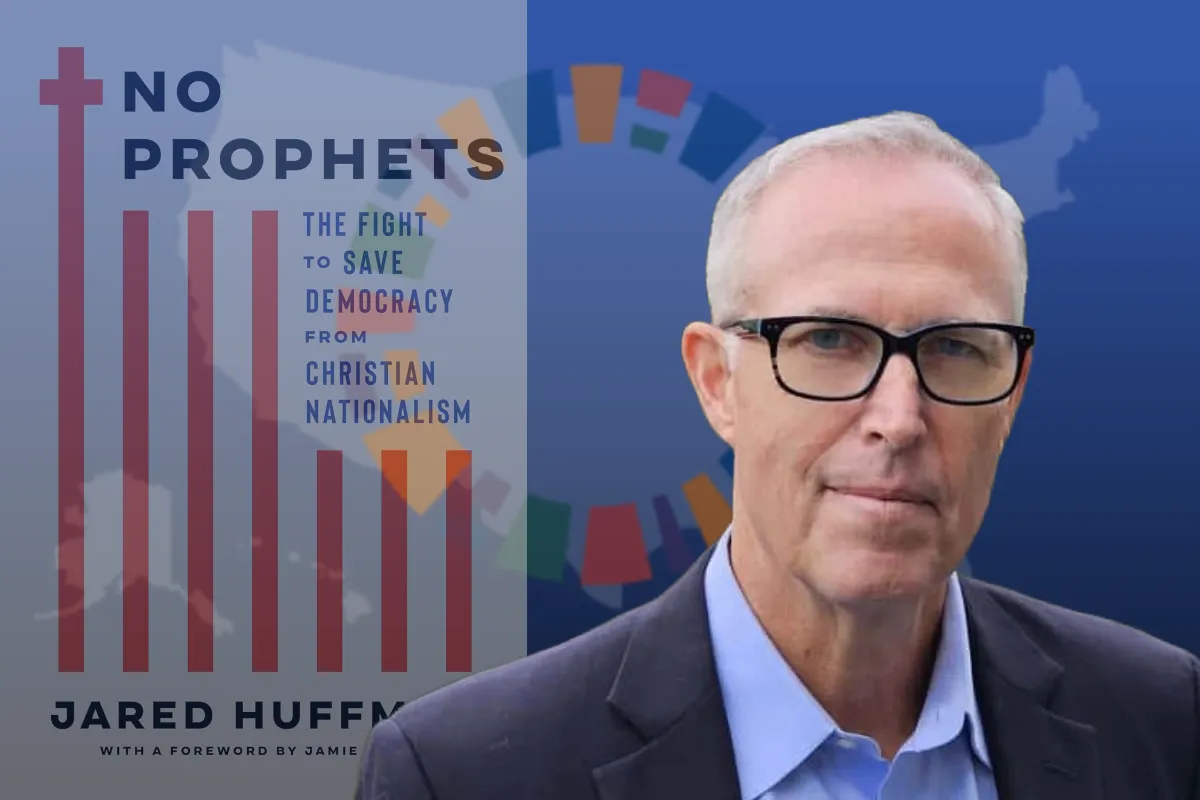
The co-founder of the Congressional Freethought Caucus joins host Rev. Paul Brandeis Raushenbush to discuss how he's seen authoritarian impulses show up in our government and to share some of the insider stories featured in his best-selling new book, "No Prophets"