State of Belief
A Slow Civil War with Jeff Sharlet

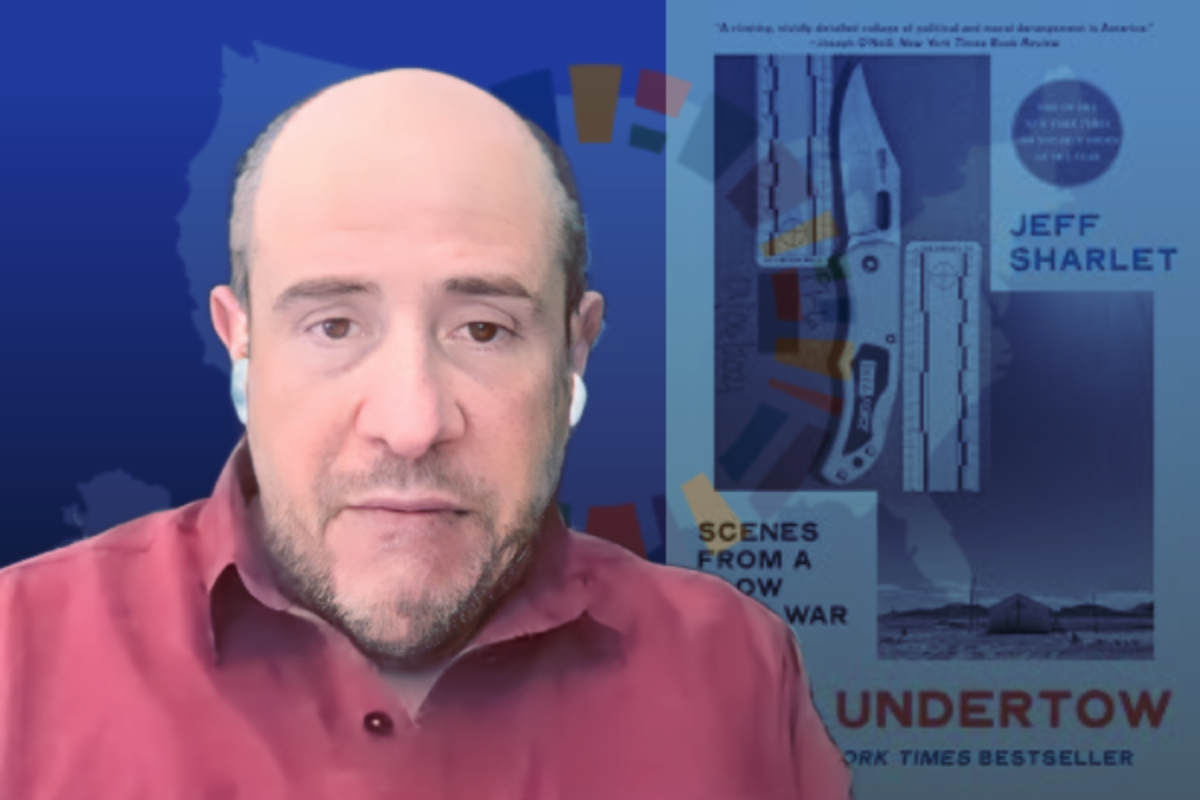
The political climate in the last few weeks has left many feeling overwhelmed and scared, waiting for the next shoe to drop. The increasing collaboration of right-wing groups to rally around Project 2025 shows the threat of what the Christian nationalist right’s interpretation of the Bible - and of America - might look like in the future. For this week's episode of The State of Belief, Interfaith Alliance’s weekly radio show and podcast, host Rev. Paul Brandeis Raushenbush is joined by author and journalist Jeff Sharlet to discuss his most recent book, and how we can come together in the face of the White supremacist militarized vision presented by Project 2025.
“Now the mainstream press is starting to pick up and report Project 2025. But they're still looking at it in traditional Washington terms, and not noticing what that project is, is really an attempt to merge Reaganism and Trumpism. But not so much to merge them, but to fully fold in the last vestiges of the right-wing Reaganite Republican Party into a full fascist Trumpist movement. And in that service, in terms of Christian nationalism, they lay out four pillars. [...] one is God and the family. Putting the family at the center of things. And it's astonishing and sad that in the United States, now, the word “family” has been claimed by the right. Everybody has one, but the right seems to think they own that word.”
-Jeff Sharlet, best-selling author of eight books, including The Family and C Street, which focus on the Christian nationalist forces deeply embedded in the halls of American power. His latest book, The Undertow: Scenes from A Slow Civil War, surveys the national landscape in the aftermath of Joe Biden's ascent to the White House. Jeff is Frederick Sessions Beebe '35 Professor in the Art of Writing at Dartmouth College. You can follow his writing on Substack.
The State of Belief host Rev. Paul Brandeis Raushenbush is President and CEO of Interfaith Alliance.
Transcript
REV. PAUL BRANDEIS RAUSHENBUSH, HOST:
Jeff Sharlet is the best-selling author of books like The Family and C Street, focusing on the Christian nationalist forces deeply embedded in the halls of American power. His latest book surveying the national landscape in the aftermath of Joe Biden's ascent to the White House is titled The Undertow: Scenes from A Slow Civil War. Jeff is Frederick Sessions Beebe Professor in the Art of Writing at Dartmouth College.
Welcome, Jeff, to The State of Belief!
JEFF SHARLET, GUEST:
Hi, Paul. Good to be with you again.
PAUL RAUSHENBUSH:
Well, I was very proud to have interviewed you on the day that The Slow Civil War was published. And what a book! I have recommended it so many times for people to get a glimpse into what is actually happening in places that they may not visit every day, but where it really, really matters. And you called my attention to it, and so many of us. And, you know, the unfortunate truth is that we have not improved since that time a year ago or so. And we're taping this just as the Supreme Court has ruled immunity, essentially, for President Trump and, I guess, any future president or even current president, around acts that happened during their reign. I guess we could use that term now.
Let me just get a temperature check with you right now as far as how you're doing. How are you feeling?
JEFF SHARLET:
You know, just yesterday, I thought I'd look up - what is it? The Bulletin of Atomic Scientists have been, since 1947, keeping what they call a “doomsday clock.” And they meant it, when they created it in 1947, to measure the threat of nuclear war. And this was coming from the scientists who knew best. And I said, well, where is that doomsday clock? And I discovered that, in fact, this year it's at 90 seconds to midnight, the closest has ever been. And I was startled when I looked at their assessment - not just looking at what a lot of us put aside is the proliferation of nuclear arms, the conflicts and so on, the problems of AI. But they also had moved the clock closer because of the possibility of Trump's return. They specifically cited sort of the norms that he flouted and so on.
And so they’re at 90 seconds to midnight. I am a much more optimistic person. I'm going with 11:55. We've got plenty of time to change for 4 or 5 minutes.
PAUL RAUSHENBUSH:
We have five minutes. Well, you know, we're living through extraordinary times, and I know our listeners are experiencing that. All of us are really experiencing that in our daily life. And just like, at 3:00 in the morning, kind of waking up and going, oh my God, oh my God, oh my God. And what is happening? And so I guess maybe we have a current moment, a current crisis, which will be ongoing. So in the months since you published the book, what updates can you give us from The Slow Civil War? I mean, what have you been hearing? What have you been seeing? Who have you been talking to? What's the state of the nation?
JEFF SHARLET:
I think the two most significant changes since I published the book back in March 2023 is: now we know a lot more about something called Project 2025, spearheaded by the Heritage Foundation, a right wing Washington think tank, but joined by - and I think this is really significant, and I think the press still hasn't caught up to this massive coalition of right wing groups, including many who normally don't work together. I think a lot of us on the left and the liberals tend to see the right as a monolith.
The good news is they have all kinds of hatreds amongst themselves as well as for other people. The bad news is they're overcoming those hatreds within to converge on this massive 900-page document with a really full plan for extreme laissez faire capitalism, imposing a kind of a stunted version of their idea of the Bible on the public, and really, there's no other way to put it, creating concentration camps, massive camps to concentrate the population of undocumented people. And what they promise and have planned for with lawyers, with all the kind of groundwork that they didn't do in 2016, for a massive militarization of the US. So that's number one. That's pretty bad.
Number two, activists started talking about that late last year. In fact, I went down to New York to talk to a group of really good, great progressive in the trenches, activists. It was put on by another group. And the bad news was those young leftists, they didn't care. they didn't think it mattered. and that was alarming. that kind of disconnect. And then the part two is the press. That's the other thing that's happened.
When I published that book in 2023, I thought the threat of Trump was so great that we were not… The press wasn't going to be great, but we were not going to have a replay of 2020. And I was correct. We're having a replay of 2016. This is where so much of the press is at. And, to be honest, I had hoped to be working on other things. I thought, hey, I've had my say here. And now I think none of us - you, me, folks listening who are alert to the full scale of this threat - can take time off. Right now, it's all hands on deck.
PAUL RAUSHENBUSH:
One of the most chilling parts of your book was just your ability to be in these churches that were very militarized, and these Christian identities… Sort of, I don't know, nexuses of kind of a White supremacy Christian identity militia, almost. And I'm just curious: how do they fit into this coalition that's invested in the 2025 vision.
JEFF SHARLET:
Now the mainstream press is starting to pick up and report Project 2025. But they're still looking at it in traditional Washington terms, and not noticing what that project is, is really an attempt to merge Reaganism and Trumpism. But not so much to merge them, but to fully fold in the last vestiges of the right wing Reaganite Republican Party into a full fascist Trumpist movement. And in that service, in terms of Christian nationalism, they lay out four pillars - and two have to do with deregulation.
But number one is God and the family - putting the family at the center of things. And it's astonishing and sad that in the United States, now, the word “family” has been claimed by the right. Everybody has one, but the right seems to think they own that word. And obviously we see that across the country and school boards, there's a lot of… Again, the press gets sort of stuck on this group called Moms for Liberty, right? And they had a big scandal. One of the founders of Moms for Liberty turned out to be a swinger, for lack of better words. But what people aren't paying attention to is all those school board fights are still happening.
I visited, in Texas, it was a convention of the Texas secessionist movement, and we could dismiss that as fringe. Texas is not going to secede - except for the fact that what they're really doing is providing the kind of the shock troops of an extreme right wing movement there.
I attended a panel on book-banning, on how to do it. it was a PowerPoint presentation by a woman who was sort of one of the lead book banners in Texas, and there I learned that beyond all the sort of the public fights, for instance, over book banning, she and the movement consider those really kind of feints, as red herrings - because the real work of purging our libraries, they said, happens after the publicity has passed on. After, as she shared with me, these photographs of librarians saying, look, I just got these books out of the library. I just did it under cover of the normal breathing in and out of a library - that's happening. People are doing the work. They're so frightened. They're doing the work for the fascists.
PAUL RAUSHENBUSH:
I was just at the American Library Association, and actually speaking about religion and book bans, and how religious communities have to show up for libraries and librarians. And the trauma that librarians are experiencing right now is so real. And so under attack in many places. At least at that conference, which was thousands and thousands of librarians, there was just a sense of, like, what is happening? And kind of an ongoing struggle. And it's a terrible advent.
You know, one of the things that has really just been unbelievable to me and there's a lot of internal screaming going on, but the rehabilitation of the January 6th people and how that's actually become a calling card. They're celebrated in this movement. We all saw what happened. We all saw cops dying and our Capitol attacked. And yet somehow they've managed to flip that. And they are kind of the heroes of the MAGA movement. And you write about going to a kind of a service or memorial for the young woman who died on January 6th, and her kind of being proclaimed as a martyr. And I'm curious how you're understanding this current moment with January 6th - which at the time everyone agreed was horrible. And yet now, all of a sudden, they're heralded as protectors of our democracy - when they were exactly the opposite.
JEFF SHARLET:
Well, remember, everyone agreed it was horrible for about a week, and it was really only about a week before Republicans started snapping into line. And they knew it was horrible, but they started snapping into line. And part of the reason I made that book was when that young woman, her name was Ashli Babbit - she's now heralded as “unarmed”; on the cover of my book you can see the knife she was carrying as she went, by her own terms, to “storm the Capitol.” That's what she was there for when she was climbing through a smashed window, on the other side of which were members of Congress. She was armed.
And I knew that they were going to make her a martyr because they started making her a martyr on the afternoon of January 6th, and she sort of fit the role of a White woman killed by a Black man, and that old White supremacist, racist myth, right? As I'm making the book, that martyrdom sort of started to accelerate.
But still, the book comes out a year after that, and even then, when the book came out a year ago, we were nowhere near where we are now - with not just January Sixers celebrated as a kind of transgressive act, which is sort of where Trumpism and Republican Party: look how badass we are, we're actually celebrating these criminals. Now, it's just a simple article of faith - a simple article of faith backed up by the Supreme Court of the United States. It is the full redemption - not just the redemption, but the valorization of January 6th. We are not making… Not we, but the right is not making excuses for them. It is holding them up as the model.
And we saw that after the Supreme Court immunity decision, the head of the Heritage Foundation, that Project 2025 spearhead, came out and said, look, this is a revolution and it will be bloodless. I'm quoting here, it will be bloodless - if the left lets it, which is a direct threat. Not from the fringe, not from a Proud Boy, not from an Oath Keeper, but from the heart of the Republican establishment.
PAUL RAUSHENBUSH:
I mean, it was the head of the Heritage Foundation, right?
JEFF SHARLET:
Spoken of as a likely chief of staff in the next Trump administration.
PAUL RAUSHENBUSH:
I mean, this is absolutely terrifying. Jeff, you have a Substack. Can you tell us a little bit about… A lot of us have podcasts, a lot of us have Substack, but I think it should be mentioned for our listeners, Jeff is a writing professor, and he writes so beautifully about such often terrifying things. So you're simultaneously like, oh, that's really beautifully put - and even more terrifying because it's so beautifully put.
Can you say a little bit about your Substack and how people can follow you? Lots more to talk about, but I do want to make sure that that people have a chance to follow you closely.
JEFF SHARLET:
Thank you for bringing it up, because in terms of what I was saying about imagining that the media was going to step up - I had made my book, The Undertow, and, and I had another book that I'm supposed to be working on right now. And you'll appreciate the irony. It's a book about books that never get finished. it's a book about undone books. Books that become utopian in scale… It was, if The Undertow was a sort of a no book, a scary book, this was going to be my - as one of my subjects, Octavia Butler put it - a yes book, an imagination book of what could be.
But I made the Substack because I said, ah, I don't think I can sit this one out. And I don't want to go back to the magazines, which, by the way, there's a lot less space. I don't think people understand the difference just between 2020 and 202 in terms of the scale of press coverage focusing on Trump. It's much, much less now. There's much less space. And many of the writers - God bless them, they're young, they're filled with energy - but you've got writers out there on this beat who were in high school in 2016, and they bring certain energy, but they don't bring that depth of knowledge.
So I decided, all right, I'm going to make this Substack. And what I wanted to do, and I think what I am asking people to do, is obviously, we want to all look beyond the horse race, as the great Jay Rosen puts it, to pay attention to the stakes, not the odds.
I should say the name of the Substack. It's Scenes from A Slow Civil War, JeffSharlet.Substack, whatever. I was thinking about reading the post-debate sort of discussion, in terms of Joan Didion's The White Album, the great Joan Didion.
PAUL RAUSHENBUSH:
That’s also someone who writes about important things so wonderfully.
JEFF SHARLET:
And a hero of mine. She's got this line and your listeners may have heard of it. “We tell ourselves stories in order to live.” And, you know, you can see this on a cross stitch. It's considered an inspirational quote. Isn't it wonderful, we’re the storytelling animal. Then you read the rest of the paragraph. “We look for the sermon in the suicide. What writers are always imposing a narrative line, trying to fix the shifting phantasmagoria.” And what she means is, telling yourself stories is not always the right thing to do. Sometimes we have to look at the fragmented reality. and to look at, not to impose a narrative line. That's what I'm trying to do with this writing. That's what I want to see more.
And I see flashes of it. Look, I mean, I thought one of the better pieces of reporting recently was, after Trump's conviction, one of the first things he did was go to an ultimate fighting match. And it was a particularly grotesque one because the winner of one match actually very visibly snapped the arm of the loser just feet away from Trump's face - and then went and, in effect, bowed before Trump as if: this is my offering to you. And there was a New York Times reporter, Shawn McCreesh, did a really visceral piece about the violence and the ecstasy of that violence. Because what we can afford to do is to sit there and say, well, that's just terrible. That's terrible. I don't like ultimate fighting. You've got to understand how this gravity is working. You don't study a black hole by saying, well, I disapprove. You have to figure out how the gravity is working.
PAUL RAUSHENBUSH:
I also have just, from time to time, been thinking about you, specifically in light of, I think one of your children is trans. And this has just been a really horrific year, where trans people, in almost a tactical decision the right has decided, well, you know, people in love, we'll get to them. But, you know, the easiest target are trans people - and especially trans kids. And so we're going to target trans kids and we're going to target their families. It must have been a really hard year in that regard as well.
JEFF SHARLET:
It was a dreadful experience watching that debate with my 15-year-old who follows politics, because for them, they do feel it could be a matter of life and death, for their friends. Their school is in New Hampshire, which is a state that is on the brink of just the small things: kicking kids out of sports, those kind of brutal things; pushing kids, pushing them into lockers. The state becomes the bully. It has a greater power than the bully who's actually in the hall, because then you say, well, where can I go? Where can I turn for help? And again, this is happening all over.
I think of a friend of mine who also has a podcast, Pete Dominick, in Rockland County, north of New York. Which is sort of an interesting county. A lot of New York firefighters, cops and so on. So even though it's close to New York, it's more conservative. They beat back two challenges, two Trumpish challenges to take over the school board, on issues like DEI and so on.
Third time's the charm for the fascist. Just earlier this spring, an extremely far-right slate, a fully fascist slate, took over the school board, and they did so by raising a hysteria about trans kids and bathrooms. And I think people struggle with this because “bathrooms...” It sounds so small and trivial.
Imagine, if you can go back to your own childhood and if you had any scary bullies in your school, and remember when you went into the bathroom and it was scary because it was a lawless place, right? That was where kids could smoke. It was where kids could beat each other, as we saw in Oklahoma, where that trans kid was beaten to death. It's not trivial, and I think the fascists have been quicker to understand that and to understand that those spaces that they can contend for are actually wedges with which they can then seize power, as they did in Rockland County, as they have in Lancaster County.
I think one of the things I thought the press would do, and they haven't done, is we need way more local reporting. Stories from a school board here, a town council there. Part of the reason that doesn't happen is you make it to the New York Times, Washington Post, L.A. Times, you're in the big leagues now. You want to be a national reporter. Those were the kind of stories you reported coming up at your local paper. And don't worry, your local paper will keep covering it. Except it won't - because it's not there anymore. In this year, we're looking at something like a third of local papers in the United States dying. The coverage isn't there. And so those stories don't get told by anybody.
PAUL RAUSHENBUSH:
Well, it's terrible. I will say I've been involved in Manhattan in the most, kind of the highest, District Two, school board in Manhattan. Not a school board, it's a parent advisory group, but it has some power. Passed an anti-trans resolution. And it was just one of these things that all of a sudden, like, I don't think I've ever voted for that group. I have no idea who they are. And then all of a sudden we realized, and so a lot of us showed up.
The resolution was like struck down by the Chancellor. But they refused to rescind it. A woman who's affiliated with Moms for Liberty brought in some anti-trans activists to the last meeting, and it just turned into a nightmare scenario. So this, really, it's everywhere and it's very tough. And now we're in a we're in this moment where our political life is in total flux. And I'm curious, as much as you want to talk about your experience of the debate - you mentioned it - and the aftermath. It could be by the time we actually pressed “publish” on this conversation, more will be revealed and there'll be some resolution. But I'm curious if you have a thought about, if you had the almighty power over the Democratic Party, if you have a way forward.
JEFF SHARLET:
I mean, look, I'll say I watched the debate. My 15-year-old, my 10-year-old, they were watching Ted Lasso, but they decided to turn it off because they wanted to watch the debate. And my 10-year-old wanted to hear them talk about climate. And my 15-year-old wanted to hear them talk about trans rights.
I suppose, we could say, the good news was Trump didn't even get around to attacking trans people. That was left to President Biden the next day - or not literally the next day, a few days later, the White House putting out a very peculiar statement that seems to be courting the TERFs, the trans exclusionary radical, this idea of liberal anti-trans people who I'm guessing are what's at play there, where you are, in Manhattan.
PAUL RAUSHENBUSH:
I don't even… Some of them. Yes. Some of them are, but some of them aren’t.
JEFF SHARLET:
Well, and I think this is what they figured out, and this is what those of us who study the right and especially the religious right, if we go back to the school board revolt of the early 1970s, when the religious right, as such, couldn't really win national races, but they figured out that no one was paying attention to school boards. And they could follow a model. That's an old model. You go back to the Great Awakening. Go back to Jonathan Edwards and the folks around him saying, you know what, let's convert the small towns. Then we'll work inwards to Boston. We'll build up this pressure. So it is with issues like trans rights, which a lot of people say, it's like, well, I feel very sorry for those trans people, but that's not a main event. And the right has always understood.
I remember interviewing, years ago, Chuck Colson, who was a Watergate felon and wrote a bestselling book called Born Again and became sort of a Christian right, far-right intellectual. And he was always transparent that whatever the issue of the day was, was just a wedge. The fight was against secularism, and that was it. And whatever wedge was useful at the moment. And right now that, for them, it's trans folks.
But watching the debate with my kids, you know, from the minute sort of Biden came on stage, they were ready to laugh at Trump. That was going to make them feel good. When you're afraid, it feels good to laugh. And there wasn't a lot of laughter. And they were sort of stricken, and they were looking at me to sort of give them guidance on how to feel okay about what they were witnessing. And I didn't have that for them.
So going forward, I think I'm very wary. When I started making this Substack, for instance, I made a rule for myself: I'm not going to do no takes. And I'm not a prognosticator; I'm not going to sort of say this is a way to go or so on. I'm not going to say, vote for Harris or, or open convention at which Booker wins or whatever. I'm going to say: let us, for a moment, take a break from, as Joan Didion, said, telling ourselves stories so that we can live. And what is the right course forward? I really don't know. But I'm absolutely certain that this idea that everything's fine is delusional. This way of telling ourselves, well, the polls are wrong - the polls in which Biden was losing well before last Thursday. The fact that we live in a country that this can even be close, and that so many states are already lost and that lives are already lost…
In between the publication of the book and now, I was very saddened by a young activist who I admired Ash Clatterbuck in Lancaster, Pennsylvania, young trans man who grew up fighting a pipeline, put his energy into fighting for trans rights. This was a guy who went to a massive right-wing rally so that he could stand in line to shake General Michael Flynn's hand and then say: there, you've shaken a trans man's hand. Was it so bad? A huge heart. And he took his own life this year. Now, suicide has countless, countless sources. But that was a big part of it for him, that despair. Lives are already being lost. We're past the time where we say: it's going to be okay - because it's already not okay.
So I'm a break the glass person. I don't think that's bedwetting - or if it is, then the bed has been wet because the fear is real. Why are we diminishing the fear? When I look at my ten-year-old afraid because they don't have anything, there's nothing in that debate about climate change which scares him. What do I tell him? It's going to be okay? Our 10th 90-plus day in Vermont, which we don't get weather like this, means nothing? The fear is real. Let's acknowledge the fear. Let's confront the fear, not pretend it's not there.
PAUL RAUSHENBUSH:
Right. You know, A couple of weeks ago, I interviewed the president of the Southern Poverty Law Center, Margaret Huang, about the 2023 hate report that they had just put out and other things, and this sort of insane antisemitism that is just pervasive. And, a lot of people want to talk about the left and Palestine and that and I think that's important conversation to have; but also, simultaneously, there are serious kind of Christian identity, White power movements that are kind of rooted in an antisemitic framework that that just is not getting the same kind of attention. I actually don't think people are awake to that threat that Jews are facing, but also our broader society. And so I'm just curious…
I'm sorry, I'm kind of like: and what do you think about this bad thing? And what do you think about this bad thing, Jeff? I know there's more to you, but…
JEFF SHARLET:
These are days for talking about bad things. I mean, look, on Monday, the New York Times ran an interview between David Brooks and Steve Bannon. And this is a once in a lifetime moment: I'm going to recommend that you read something by David Brooks, who I consider the king of smarm and a fool. And yet, partly because he's sitting down with Steve Bannon and it's two factions of right wing-ism, the sort of establishmentarian, kind of never-Trumper branch that he, Brooks, represents, and what Bannon is, kind of courting each other, flirting with each other - you learn a lot.
And one of those things you learn is, Brooks does say, what about the booming antisemitism in your movement? And Bannon's answer is no, no, no, don't worry. We love the Jews. Their only hope is - and I think the terms he has is - a complete weld with Christian nationalism. His term, his term. If you don't want to... This is the same thing as the Heritage Foundation leader saying, the revolution will be bloodless - if the left lets us. The Jews will survive - if they kneel.
It reminds me, back in 2004, I was interviewing, then, the head of the National Association of Evangelicals. And I go back to that time because I think a lot of what's happening now is the fruit of a transition that maybe began on 9/11. But this was a man named Ted Haggard, who was the head of the National Association of Evangelicals. And of course, that group has always been very pro-Israel and Philosemitic in their ways. But they did not like the fact. They were becoming more comfortable with addressing head-on the fact that Jews tend to vote very democratic. And I can't remember the exact words of his warning. He says, like, look, we love the Jews - as long as they know what's good for them. And that love doesn't go forever, right? so I think I think that's really important.
But look - and I agree with you, the sort of focus on antisemitism on the left when we have a presidential candidate who is working antisemitism regularly into his speeches and been doing so for a year, when he says, we're going to drive out the globalists, chase out the communists - he's referring to the money changers. He's citing two gospels, just so you don't miss it, and antisemites are not.
When he pauses in a speech to call out Jeffrey Goldberg, the editor of The Atlantic, who he hates especially because he's the one who did the piece exposing Trump for calling veterans “suckers and losers.” He puts a lot of emphasis on that word: Goldberg. I can't help but think of 1984 and Big Brother calling us out and sort of denouncing: Goldstein. So to talk about the left when that's happening is missing the point. But to talk about the hate of this moment as purely of anywhere is also to miss the gravity of the Trumpist scene, the age of Trump, when Trumpism shapes our rhetoric.
Because I do see there is antisemitism, there is other bigotries, and there's growing affinity for violence. That's all there. it's not major, but it's all there on the left. And I think, well, of course it is. Because if this stuff is in the air, we're all breathing this stuff all the time. Some of us are going to say, just as we've seen folks saying - well, first there's jokes, but some people are going beyond jokes to say - well, if the president is immune, maybe we should, take out Trump. No, no, you don't destroy the village in order to save the village. You don't fight for democracy by attacking democracy. There is no way forward on that path. And so I think that is the biggest sort of surge of hate crimes, of it becoming a norm rather than an extreme.
PAUL RAUSHENBUSH:
Wow, that is amazing. So let me just turn, because you're a writer and I'm married to a writer and do some writing myself, and my husband has said, you know, writing is revelation, in a way. And sometimes you don't know what will come until you start writing. And I am curious, this is more of a spiritual question than anything, but in your own life, what role does writing play for you in a moment like this, when you teach writing, you are a writer. How would you describe the role of writing in your mode of living in this crisis time?
JEFF SHARLET:
I don't want to say writing is a form of making sense, because that, to me, smacks of imposing the narrative line, of pushing a thing into a pre-existing container. but I do think - and the reason I made this Substack that would let me write without, you know, I'm doing this particular magazine piece, I can look at this rally and think about it, was to observe; was to exercise the power of perception - which is a power, right? When you're feeling powerless, it feels good to remind yourself you still do have some agency. The agency to see. I can't believe I'm going to be so corny as to go to Orwell twice, but to say that two plus two equals four, right? To observe that. And I think that writing is there.
I want to give a call out to a young writer who's working with me on this Substack, a student of mine at Dartmouth College. Armita Mirkarimi is a tremendous young journalist and reporter who’s interested in these young people who are turning toward Trump or just checking out altogether. And, she had a great line I can't get it exactly but she's going to write it soon for the publication so you'll see it. She talked about watching that debate with a group of young Washingtonian Democrats. and they come in, there was a drinking party and they had bingo cards and they were ready. And then the silence that came over the room and the despair and the sense of: which way do I turn? And she had a phrase about a nothingness that was almost palpable.
And now, if that doesn't cheer you up, right? Except I said, oh, I need to write that down. That's a good line. And because she's a good writer, she knew it was. And she wrote it down, and suddenly she's not in the void. Suddenly she's naming the void. And that's a different thing. That's perception. That's that first step.
Well, what's your solution? You say. Writers, we cannot be captive to: well, you shouldn't say anything unless you know how to solve it. Imagine if science proceeded on such terms. We have to describe and describe and describe and bring to bear our vision as fully as we can. And that is some hope.
And now, you don't have to be a writer to do that. That's the good news, right? You have to be a person who is going to sit there and say: when I watch the news, I'm not going to look for reassurance. I'm going to look for the best I can tell of what is, I'm going to exercise that power right then and there. And I think that's our best bet for leading to some kind of action. What that action is, I don't know. As I say, I don't do solutions. I'm on the perception division of this initiative. And, hopefully, the work that, that we writers do and podcasters and so on, can give those who are good at solutions some of the material they need to work with.
PAUL RAUSHENBUSH:
Yeah, I love that. Thank you so much. I have one more question about… It's just another subject. Another essay in your wonderful book, The Undertow: Scenes from a Slow Civil War. That was the main essay of the book, but there were other great essays, and I'm just remembering one essay about a singer songwriter, a musician. And, actually, it was someone who I hadn't really heard of before, but I just want to invite you to talk about that person, because it felt like even talking about someone like that was, just felt powerful. Can you can you revisit that essay with our listeners?
JEFF SHARLET:
Yeah. it's called, appropriately enough to the hour, The Good Fight is the One You Lose. And it's about a singer-songwriter named Lee Hays, who older listeners will remember as one-fourth of a group called The Weavers, one of the most popular groups in the country before they were blacklisted.
The lead singer of the group was Pete Seeger, and Lee and Pete Seeger were sort of a songwriting team. I came to that story, actually, through another, sadly, not well-known enough named Paul Robeson. And it was an account in a novel called World's End by T.C. Boyle about a Paul Robeson concert in Peekskill, New York, in 1949. And there was a right-wing riot to shut it down. And I became interested. And so I started digging into that. And there I discovered who this fascinating character of Lee Hays was - who wrote the lyrics of so many songs that you know, like “If I Had A Hammer” and “On Top of Old Smokey," and popularized songs like “Goodnight Irene” from the great musician Leadbelly, and “Kisses Sweeter Than Wine.”
And I think it's relevant to think about them now. The reason I ended the book with those folks is because of a line of Lee's. In a memoir of his, he was talking about driving through Arkansas, rural Arkansas, where he was from, with a group of union organizers, and they were Black and White. And this is in the 1930s, and that's dangerous enough in itself. And they're union organizers and they're being chased by gun thugs, and they start singing.
They're singing labor songs. But they'd all been raised in the Church and they had those songs together. And so they started singing. They were communists. They didn't believe in it anymore, but they believed in the song, and they were singing it together. And he has this great line. He says, “For a while, it was possible not to be scared, even.” and I give it away; that's the last line of the book. It's the first line in the sense that I was like, that's where this book is going to end: “For a while, it was possible not to be scared, even.”
That doesn't tell you everything's going to be okay. It speaks, in fact, not to the safe space, but to the possibility of a safe moment created together, even in a car that is being chased by gun thugs. And it speaks to, as well, I think, to where our minds need to be in the struggle to stop fascism. But just as I speak of the lives we've already lost, the recognition of fascism is already here. The struggle, also, to keep our souls intact within fascism. To remember that to date, no full fascism has lasted. In fact, fascist regimes tend to expire, mostly, relatively quickly. The goal is to keep ourselves intact and human through it.
And that's why I ended this book about this current political catastrophe that we're in - we're going back to the 1930s, 40s, 50s - because they were defeated. Let's not fool ourselves. Lee Hays knew he was defeated. Lee Hays was called before Congress, before that un-American Affairs Committee. He was terrified. Pete Seeger was sentenced to prison. Lee Hays wasn't as brave as Pete. Not everyone can be. and Lee Hays shook and his heart never really recovered. He never really recovered. He was defeated. He kept singing. But he was broken.
But then comes another generation of singers. Another generation of singers. I think there's a way in which musicians who are attuned to the songs that come before them are more aware than some of us about the way - maybe this is appropriate today - about the way you hand the song to the next singer. You say, you know, the song doesn't belong to me. I get to sing it for a while, and then, thank God, there's someone else when my voice weakens to pick up the tune.
PAUL RAUSHENBUSH:
Well, I often end this podcast asking for words of hope. And you've certainly just given me those, and I want to get that phrase one more time. “For a while, it was possible not to be afraid.” Do I have it right?
JEFF SHARLET:
Close. For a while, it was possible not to be scared, even. I don't know; there’s something about the language, the way he put it, that “even,” that that hedge. For a while it was possible not to be scared, even. As if he's saying, Can you believe it? Can you believe it? That with all the fears around us, but still, for a while. And that qualifier… It's not like everything's fine or… For a while it was possible not to be scared, even.
PAUL RAUSHENBUSH:
Wow. Jeff Sharlet is a best-selling author, a journalist, a college professor, and an astute chronicler of what he describes as America's slow civil war. His latest book is titled The Undertow: Scenes from a Slow Civil War. And you can - and should, if I can tell you what to do - follow his Substack at the handle @ JeffSharlet. That's J-e-f-f-S-h-a-r-l-e-t.
Jeff, thank you so much for being with us again on The State of Belief.
JEFF SHARLET:
Thank you, Paul. Always good to talk with you. Be well.

"We Are Ready": Attorney Extraordinaire Norm Eisen Talks 2026 Midterms and Beyond
The co-founder of Democracy Defenders Fund and former Obama Administration ethics czar joins Rev. Paul Brandeis Raushenbush on the eve of the election to recount victories and unveil strategies for ensuring a full and fair vote.
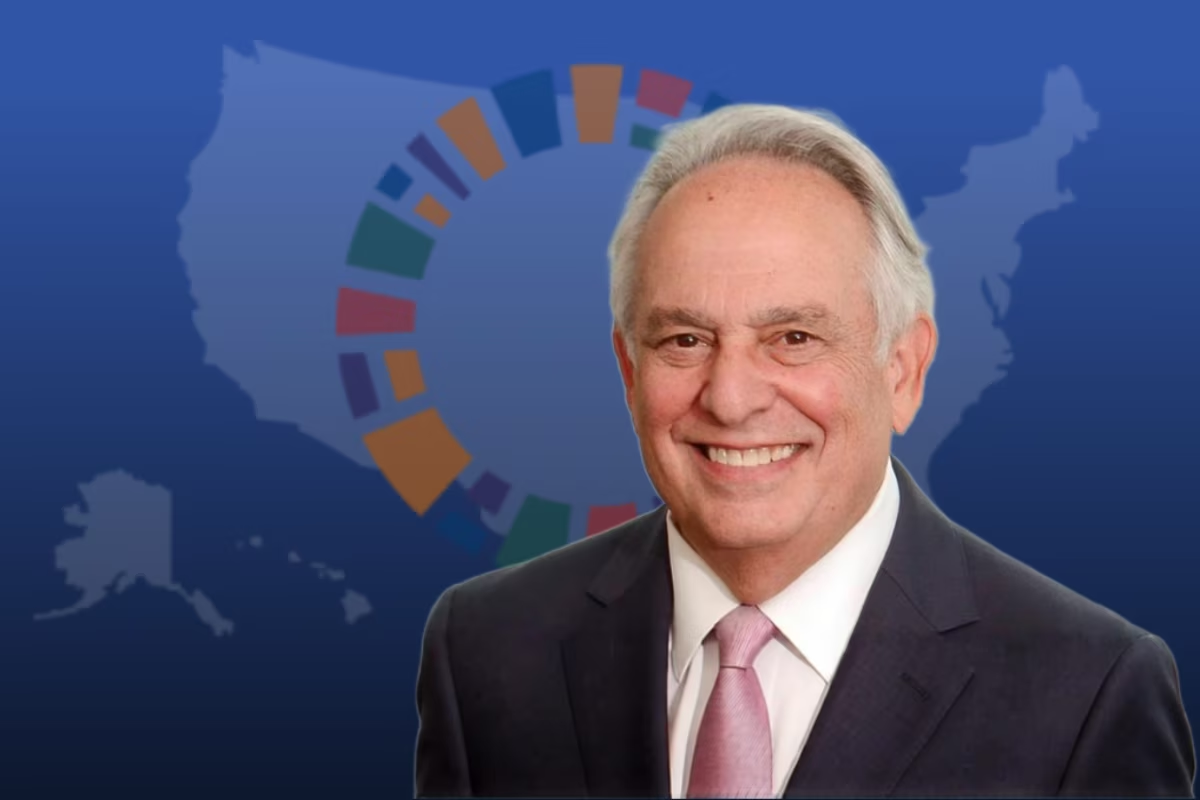
“Nauseously Optimistic”: The 2026 Vote Through A Legal Lens
American Bar Association Election Law Committee Chair attorney Jerry H. Goldfeder joins Rev. Paul Brandeis Raushenbush to discuss how lawyers, faith leaders, and many others are poised to defend the midterm election against all threats, foreign and domestic