State of Belief
Faith in Choice: Two Years After Dobbs


Often in the reproductive healthcare debate, the voice of the faithful gets portrayed only on one side - the side of those trying to restrict women’s autonomy and access to abortion. However, this does not portray the entire picture. There is a rich and storied history of people of faith coming together to collaborate to ensure access to healthcare, defend autonomy in the healthcare decision-making process, and protect abortion access.
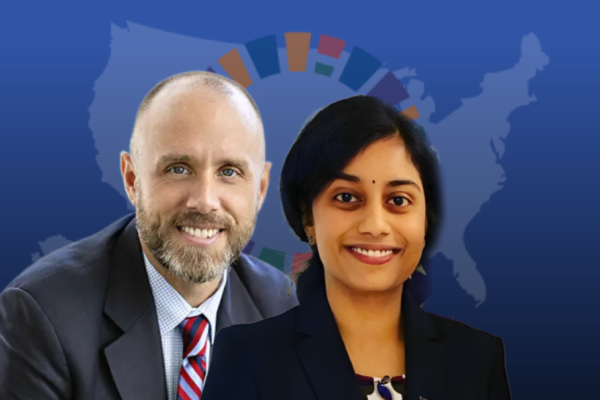
Rev. T.J. Fitzgerald and Smriti Krishnan are both working to build cross-faith partnerships to preserve access to reproductive health care, especially in hostile states. This week on State of Belief, Interfaith Alliance’s weekly radio show and podcast, they join host Rev. Paul Brandeis Raushenbush to discuss cross-faith collaborations and partnerships to advance human rights, specifically reproductive rights and the health care decision-making process.
“Restricting anyone's right to share that information with someone is unconscionable. It's irreligious, in my opinion. It is not at the heart of Christianity. It is not at the heart of Islam. It is not at the heart of Hinduism, and it's not at the heart of any of the great faiths of the world, certainly not of Judaism. [...] And it's called Truth Pregnancy Resource Center because Sojourner Truth said the truth is powerful and prevails. And we believe that sharing the truth with people and trusting people to do what they need to do for their family and their own health is central to what it means to be human, what it means to be a person of faith in this world.“
- Rev. T.J. Fitzgerald is the Minister of Care and Community Engagement at First Unitarian Church of Dallas, with a Master of Divinity from Yale. T.J. also has a law degree and practiced law before pursuing ministry. With this background, he is well-equipped to stand at the intersection of faithful beliefs and partisan legal challenges to the fundamental values held by many in his home state of Texas around reproductive freedom.
“So how do we make decisions? We make decisions by turning to the people we trust. We might talk to our parents. We might talk to our friends. We might consult our spouse. We might consult our children, other close relatives, and we might also consult our faith leader. So when that faith leader has a particular text or a particular faith background that allows that individual to provide guidance to a person seeking reproductive health care, including abortion access, we can really see how much of a strong role that faith plays in that decision-making process."
- Smriti Krishnan, attorney and graduate of the University of Alabama School of Law. She has served as a law fellow at the US Senate and a legislative assistant in the House. She currently is Legislative Counsel at the National Council of Jewish Women, where reproductive justice is both a matter of religious freedom and a fundamental human right. Smriti works on an interfaith basis to emphasize the narrative that people of faith do believe in abortion access and, more broadly, reproductive healthcare access. With a Hindu background and two immigrant parents, she prized the perspective instilled in her to consider the similarities that various faith traditions had: empathy, kindness, compassion, doing good for others, service, and education.
The State of Belief host Rev. Paul Brandeis Raushenbush is President and CEO of Interfaith Alliance.
Transcript
REV. PAUL BRANDEIS RAUSHENBUSH, HOST:
Rev. T.J. Fitzgerald is the Minister of Care and Community Engagement at First Unitarian Church of Dallas, with a Master of Divinity from Yale as well as a law degree. Rev. Fitzgerald is well-equipped to stand at the intersection of faithful beliefs and partisan legal challenges to the fundamental values held by most Texans around reproductive freedom. Prior to Dallas, he paid his dues in parish ministry in Honolulu, Hawaii. And we're all so sorry for him. Welcome to the show, Rev. T.J..
REV. T. J. FITZGERALD, GUEST:
Thank you. Paul. It's so good to be here.
PAUL RAUSHENBUSH:
Smriti Krishnan is an attorney who graduated from the University of Alabama School of Law. She has been a law fellow at the US Senate and a legislative assistant in the House. Her current title is Legislative Counsel at the National Council of Jewish Women, where the issue of reproductive justice is very much a matter of religious freedom as well as fundamental human rights.
Smriti, welcome!
SMRITI KRISHNAN, GUEST:
Thank you so much. I'm looking forward to our conversation today.
PAUL RAUSHENBUSH:
Well, I really appreciate both of you. And you both come from very rich traditions.
Smriti, maybe we can start with you and talk about, what is your background? We heard a little bit about all your accomplishments in the legal field. But how does that blend with the work at the National Council of Jewish Women and your own personal background?
SMRITI KRISHNAN:
So my personal background is that my parents are immigrants from India. And I was born and raised here, and my family background is is of the Hindu faith. And growing up, I was always taught to think about all the similarities that various faith traditions had: empathy, kindness, compassion, doing good for others, service, education. So these are the pillars and values with which I grew up.
And as I got older, I think it was very natural to gravitate towards a field or career in which I thought I could do some good for the community that I lived in, for my country. And eventually, as you know, from Capitol Hill I found my way over to the National Council of Jewish Women. I've been here a couple of years, and as we know, Judaism and we have such an affinity for reproductive rights and justice. So at NCJW we’re very glad to collaborate with various different faith traditions across our different work.
For example, I do work on our amicus briefs, and those are always done on an interfaith basis. Again, leaning into our shared belief that reproductive rights and justice should be accessible to all. And most importantly, we really emphasize the narrative that people of faith do believe in abortion access and, more broadly, reproductive healthcare access.
PAUL RAUSHENBUSH:
It's so important. We just have to keep saying that and saying that and saying that because the narrative, as you both know very well, is: it's religion versus these secular communists, name your thing, who are trying to offer abortion access; when in fact, every poll now states that the majority of religious traditions support access to reproductive freedom for all people. And so it's just really important to say that. And of course, the National Council of Jewish Women just has such a legacy of working on issues of justice, and it's just it's great to have you with us.
Rev. TJ, why don't you talk a little bit about your own background?
TJ FITZGERALD:
Thank you very much. And Smriti, great to hear the incredible work you're doing. Thank you for sharing that. And thanks for inviting me on.
Some of my background: I was raised in the Roman Catholic faith and spent a fair amount of my childhood there. And over time, I went through undergraduate and got into the practice of law. Not particularly in the civil rights area; I was an intellectual property attorney doing a fair amount of copyright, patent and trademark work. But in that work, I defended a lot of artists and promoted and helped protect a lot of artists in their expression, whether it be through their art or their performing or things like that.
But over time, living in New York City and working at a New York firm, it became more and more clear that there needed to be more done than could just be done in a courtroom, and I started thinking about human rights law. I started doing that kind of thinking, and more and more, faith is what stood at the center of my own heart as a way to reach people where they are in the most need. And we only have so much time on this earth. And there was just a moment where I said, if we're not meeting people where they are, what am I doing?
And that is what led me to move into a faith like Unitarian Universalism, like many faiths, just one of many, that takes very seriously the rights of autonomy, the rights of the individual to make their own choices. And it does not shy away from discourse like this in the public square. And we have found quarter and compassion and understanding with the Jewish community, with many Baptists, with many Congregationalists, the list goes on. Part of our faith is about partnership. It's central to our existence, essential to building community.
And I think this is one of the most important areas, the area of autonomy, of making medical choices. We believe health care and reproductive dignity are one and the same. Reproductive dignity is health care. And this is one of the ways that faith and practical application of our faith can be lived out together in community.
So we find this work extremely important, if only to meet amazing people like I'm getting to meet right now.
PAUL RAUSHENBUSH:
So the opportunity for collaboration is definitely there. And I think the more we can show up across this religious spectrum, the more compelling we are. And I think that this, it just represents the fact of it.
Listeners to this podcast know I like to reference my mother, who was the reason we went to church every week. And she also was the reason that, first, contraception was available in Wisconsin, and then later abortion access with the passage of Roe v Wade. And for her, those two things were part of the same thing. And it's just really important for those of us to recognize that this isn't in spite of our tradition. This is because of our tradition.
And I think that that's something that I've heard so compellingly spoken about from - especially from those who are working on this issue - from the Jewish advocacy space is that this is actually part of religious freedom for many Jews to be able to exercise their own choices around this moral issue.
Smriti, could you talk a little bit about that, and some of the ways that you see that being played out? It's an important point to make, that this is an expression of religious freedom for many, many people, and the vast majority of Jews would agree with that.
SMRITI KRISHNAN:
Yes, certainly. And I think one point I'd like to emphasize now is that under a Jewish faith tradition, the life of the pregnant person takes precedence, when that person's health is in danger. And rabbis and some scholars have interpreted this faith tradition to include also mental health. So when we talk about that, we're really thinking about the health of that person. We're thinking about the well-being of that person.
When we see this play out in a practical aspect, I want to reference the the Zurawski vs. Texas ruling that just came down a couple of weeks ago, when we saw that the Texas Supreme Court had thrown out this case filed by over 20 plaintiffs talking about their access to abortion care within the state. We're also thinking about how people are having that decision-making process.
And, reverend, I think your background is absolutely fascinating, to have such a strong foothold in both the faith aspect and also the legal aspect. I think both of those professions share a lot of commonality. You have to have empathy for the people you speak to. You have to have a careful decision-making process when you provide guidance. And so when we really think about putting ourselves in the shoes of people who want to access abortion care, who want to access reproductive health care, we think about that decision-making process.
So how do we make decisions? We make decisions by turning to the people we trust. We might talk to our parents. We might talk to our friends. We might consult our spouse. We might consult our children, other close relatives, and we might also consult our faith leader. So when that faith leader has a particular text or a particular faith background that allows that individual to provide guidance to a person seeking reproductive health care, including abortion access, we can really see how much of a strong role that faith plays in that decision-making process.
PAUL RAUSHENBUSH:
Yeah. I mean, you mentioned a bunch of different people who should be involved in this process, or who could be. The one that you didn't mention, which is really important, is some governmental official standing over you saying, I'm going to tell you what to do, and not giving you the space to make these decisions on your own; to look around you, to make a moral choice on your own. And so I think that's a very compelling way that many people are framing this is between you, your faith leader, your doctor, your family, but not you and your governmental official who's there kind of trying to enforce a certain way of doing it - and which is, we should say, rooted in a particular understanding of a tradition and imposed on others. So it's almost a kind of religious coercion.
I'd love to hear more about the work of the Truth Pregnancy Resource Center. What was the genesis of it? What need did you see, and then how did you go about filling it?
TJ FITZGERALD:
Sure. Thanks for the question. You only need to drive a few miles around any road in Texas, and you will see a sign that says, “Pregnant? Need help?” And then a number. These are signs that are posted outside, usually, of houses of worship or faith places, and what they're advertising are what are called “crisis pregnancy centers.” Over and over, issues of public health and awareness have shown how damaging experiences at these places can be; coercive, as these places can be. Many separate any partners that come to them. There's been actual documentation of lying about the age of the prenate. There's all kinds of things that go on in this. And our senior minister at our church, First Unitarian of Dallas - this is the church out of which our women's group, our Women's Federation, helped bring about the Roe case, so we have a strong tie. Roe started here at this church. The plaintiff in Roe came to the Women's Federation at this church, and they helped coordinate the case. The plaintiff was affiliated with the church. So we hold the importance of that case extremely close.
For those of you who don't know, also, even before Roe, the Texas tornado, Louise Raggio created the Family Act in Texas that then went national - before which a woman could not get a checking account without her husband's signature. So the roots of the autonomy of birthing people and of women are so deep embedded into the fabric of this community that to us, it is central to our faith, this idea of trusting women with our lives, with the people making these decisions.
PAUL RAUSHENBUSH:
People forget the radicality of a lot of Texas women. You know, you have Ann Richards; some of the most important witnesses to what democracy can be come out of Texas. So we have this idea of it just being this, like, you know, name your stereotype - and yet some of the most important witnesses that we've benefited from have come out of Texas. You know, Sheila Jackson… It's an incredible state. And it's just important to remember that in moments like this, when we try to paint things with big brushes and write people off and write communities off - it's not the way to go. There's genius everywhere, and let's always be looking for it. So that story is so powerful to me.
TJ FITZGERALD:
Well, that not only that, Ann Richards was a member of the church who, you know, would bounce Cecile Richards on her knee in the front pew, who then went on to lead Planned Parenthood. So just to give you the depth.
But I just want to also hold up that we're on a call with an Alabama-trained lawyer here. So it's not just Texas; that people across the South and across entire regions that get painted with all kinds of single colors in this debate - it really irks me when the brilliant, resilient, thoughtful, wise people of those entire regions are just forgotten. People just don't give the credit that is due in these regions like Texas. But just to hold this up, it's a vital way of taking back what I think has been a very unfair representation of parts of this country.
And also, we will not abandon our people. I grew up in Texas. I left Texas as a as a kid when Ann Richards was still in office. And when I got the chance to come back and try to be a part of bringing back some sanity to this state, I jumped at it. I left Hawaii to come here. Just saying.
PAUL RAUSHENBUSH:
Okay, so now, take us forward.
TJ FITZGERALD:
Well, there's not a whole lot more. Listen, we realized what was happening at those, quote, emergency pregnancy crisis centers. And our senior minister, Daniel Kanter said, what if we had a crisis pregnancy center without the crisis? Where people still get sonograms, where people still get birth control, where people get counseling, where they get held, where they get loved, where they get all the options that are actually available. We don't live in some hermetic seal of reality. There are airplanes. There are places to go to get the health care that people need - and to restrict any persons, regardless of the fact that they happen to be a reverend or they happen to be religious - restricting anyone's right to share that information with someone is unconscionable. It's irreligious, in my opinion. It is not at the heart of Christianity. It is not at the heart of Islam. It is not at the heart of Hinduism, and it's not at the heart of any of the great faiths of the world, certainly not of Judaism.
And so that is what led to this idea, and that spirit that Rev. Dr. Kanter had was to found this place. And we actually were able to get the space that the old Southwestern Women's, which was the largest abortion provider in the country, had vacated after Dobbs. They had to close down shop. So we were able to get that same space, and open a place where there is comprehensive emotional counseling. There is clear and honest discussions given with people who show up there; multiple languages, multiple experiences, and both the executive director and the fulltime counselor who are there are well-trained with years of experience to provide the kind of care, understanding, and honest representation. And it's called Truth Pregnancy Resource Center because Sojourner Truth said, the truth is powerful, and it prevails. And we believe that sharing the truth with people and trusting people to do what they need to do for their family and their own health, is central to what it means to be human, what it means to be a person of faith in this world.
PAUL RAUSHENBUSH:
Wow. That's just wonderful. And I know that this is lifesaving for people and that people are coming there. And the great thing to trust here is that if what people are looking for is like, I really want to carry this pregnancy, then you're like, okay, let's do that. I think what's important here is that it doesn't have an agenda, as opposed to these crisis, you know, that you that you mentioned earlier, it doesn't have an agenda. The agenda is to help the people who come through the doors to achieve…
And I just think that's really important differentiation; and also that this is all about care, it's about love. It's an extension of ministry without the trappings of enforcing one perspective or another. And I just think that that's just really, really great and brave.
Smriti, are you seeing other efforts like this around the country? Have you heard of these kinds of things, or things that are similar, in your in your broad work?
SMRITI KRISHNAN:
I will say, I think, first, the center is incredibly unique, and I'm really glad that folks have this resource. Part of what we, when we think about abortion access and reproductive health care access, is to think about the misinformation and disinformation that‘s spread out there. And we want to really make sure to guard against that. So when we have a resource that is a brick and mortar place or that that has a website or people have more access, to go to a place where, again, they can have the autonomy, control over the decision-making process, consulting the people that they feel have the most relevance in their lives and future decision-making process.
In terms of efforts, yes, we've seen folks helping people access reproductive health care in hostile states. We are seeing folks help out financially folks who need to perhaps leave the state or access reproductive health care, including abortion care, in another way. We are, of course, seeing organizations, legal organizations stepping up, as they have been for decades; but now even more to help folks who might be facing criminal consequences or civil consequences because of their decision-making process when it comes to their own reproductive health care.
So, yes, I think certainly we can say that we are seeing efforts across the country in a variety of ways. Particularly because NCJW is an advocacy organization, I'm seeing a lot of consistent, zealous advocacy. I really want to bring in the point that reproductive rights, health and justice organizations have been doing this work for decades, and since the Dobbs ruling back in 2022, there's been an increased spotlight on abortion and reproductive health care in general. but I want to really emphasize the fact that this work has consistently been taking place, and it will be for decades, because we always need to consistently and zealously advocate for reproductive health care.
When we look back at the trajectory of American history and we look back at whenever people have had access to dignity, respect, equality, inclusivity - it just didn't happen. It happened because there were people brave enough to speak out. It happened because there were people brave enough to take on personal consequences to make that dignity, equality, respect and inclusivity happen. And so in terms of abortion care, I hope that's where we're headed as well.
PAUL RAUSHENBUSH:
Yeah. And, you know, along those lines, we can make all kinds of progress and there's no guarantee that it will stay unless we continue to fight. Abortion access is a perfect example of that. I would say with LGBTQ equality, we're facing another moment where, just the future is uncertain because of some of the courts and also how exercised people who want to take away those rights are right now. And so there is ongoing work, and you can speak to this, Rev. TJ. There was an argument that could be made that even before Dobbs, it felt in Texas, like abortion access was essentially not there. So this had already been chipped away, chipped away, chipped away.
And it's worth mentioning, of course, the economics of this, and that it's one thing for wealthy people to be able to jetset around; for many people, it's just not so easy to go to another state, you know what I mean? And so I think these funds can help there. But this is also around economics and it's nefarious. But I am curious: do either of you have - I know just enough to be dangerous - but you know, pre- the ruling in the 70s, there were churches and Jewish organizations that were doing kind of underground work, so what we're talking about now is actually not a new phenomenon. We're recognizing that people have been aware of this need, and that faith communities have stepped into this need in previous times. I'm just curious if either of you have done any research on that time. I know that the church I started going to when I first got to New York City was Judson Memorial Church, and they were one of those places, they were part of a collective of Protestant leaders who were really involved in helping women access reproductive health care at that time. But that's kind of all I know. And I'm just curious, maybe you can take us a little bit, as much as you know - and I'm putting you on the spot - but some history of this, and going back actually, as far as you feel like you want to go.
SMRITI KRISHNAN:
I was going to say the first thing that that comes to mind in that time, frame when we're talking about before 1973, is the Clergy Consultation Service, which, as I think you alluded to in terms of people of faith communities stepping in to fill that need. And so from what I know, sort of around that time frame of 60s, you know, early 70s, right before 1973, there were rabbis, there were ministers who came together to help people access abortion care. Sometimes, perhaps, I read anecdotally how folks had to leave the US and get abortions elsewhere, maybe accessing abortion within the US by posing as someone's father or someone's relative. And so they were working to fill that gap not only financially, but also on a personal level. They would counsel folks, they would help folks get connected to the right people. This was, of course, long before we had the technology we have today, so that people-to-people connection was really important. And they stepped in to fill that need at that time.
TJ FITZGERALD:
Yes, thank you for that. The senior minister of this church at the time was part of the Clergy Consulting. And actually, there were places you could go in the Gulf of Mexico to receive abortion care, so would drive people there, drive people to northern states. He drove people everywhere and was part of that process. But that tradition has actually continued today. For the last few years, we've been flying people from the Dallas area. Well, not us flying. We don't fly planes, but we accompany people who are traveling to receive this medical care. Ministers, I believe, are called to go wherever it is hardest for people. And so we travel with people who are receiving abortion care in Albuquerque and other places, who've arranged their own travel and can do all that where abortion is legal, like in New Mexico. They can arrange travel that way. But we'll go with them.
And for a while, we were meeting at the church and coordinating groups of people, up to 20 people, and going to receive that. And we actually believe abortion happening in a group is a deeply spiritual experience. The community we've seen built on those trips that are still happening is unbelievable. Even when we only travel with one person, the experience that one person has of being held and seen and understood and not judged and just helped - especially when they have never been on a plane before. The number of birthing people we have met who've never been on a plane, who were then going to do this thing that society has told them is so scary and wrong, they don't even know not to wear sandals because planes are cold. So there's that group. And then we have people who are working for multinational companies who the only way they can get help traveling, they want to travel with the group. So we have a range of people who travel to receive this care.
And we understand that in some clinics out of state, 75% of their patients are coming from the Dallas-Fort Worth area. So the enormous growth of this and the continuation of this tradition that rabbis and ministers started in the 60s is coming alive again. It is needed. It's important. It's inspired work. There are two rabbis that traveled with our groups for years.
PAUL RAUSHENBUSH:
I'm curious. You're both attorneys, and especially in some of the states which have passed some of the most harsh laws, including Texas - what are the legal risks? for the Unitarian Church or any other religious organization that wanted to, from their own conviction, participate in this ministry, if you will, or work of the religious community. What are the legal risks, or what are the legal threats, what has been levied at you, Rev. TJ?
TJ FITZGERALD:
Well, there's always, as you know, as any attorney knows, there's threats, there's possible outcomes, and then there's the reality. And we are not doing anything against the law. What is operating here is fear: the message of fear that is coming from lawmakers, that's coming from the rise and the tide of Christian nationalism, however you want to call it, is effective and it is making people afraid. The fact is, every legal scholar we have talked to has said there's nothing wrong with what's happening. Will the law change someday? There's a good likelihood. There are states that are starting to get into these travel bans. But the 14th amendment, last I checked in the Constitution, still exists. So you can't ban someone from traveling - in my opinion, my analysis - and then also accept the state-issued license that they have to operate their motor vehicle. There are ways that this nation exists as a republic, that exists in its foundational principles, that militate against these kinds of laws.
Now, any attorney will tell you, if you have to depend on a few judges in robes somewhere at a bench as the last line of defense, there's probably something wrong in your society in the first place. And one of the beautiful things we're seeing nationwide right now is when this question is being put to people of faith, or just civic people at all, to decide how they want their healthcare to be administered, how well they want their access to be available - it's overwhelmingly passing all the time. So what we know is that the tide is shifting, but we've got to keep building this movement - because when you talk about the chipping away of these rights, that is part of a 30-year plan that has been happening since the passage of Roe. We've got another 30 years to go to push the tide back, I think. And so we've just got to keep doing it. But nothing we're doing is illegal. And as far as threats go, you know.
PAUL RAUSHENBUSH:
There was a bounty, almost a bounty on some… And again, I'm removed from it. But people being rewarded with, potentially, $10,000, it just seems so, so crazy that there would be a law that would turn neighbor against neighbor in this way and promote vigilantism. Does that have any implications for the work you're doing?
TJ FITZGERALD:
Smriti, do you want to take that one? You're right in the firing line of this one, too.
SMRITI KRISHNAN:
Well, yeah. And, reverend, I think when you were earlier talking about the chipping away of rights, when we think about the sorts of legal challenges that are that are happening right now, it's very important to also keep timing in mind. So we had a variety of lawsuits in the decades having that that constitutional right to abortion. So between 1973 and 2022, there were plenty of cases about reproductive health care and access to reproductive health care. But now we are in a different legal landscape. We are what some folks refer to as a post-Roe landscape. I just call it a different landscape because it's just a landscape where there's no longer a federal constitutional right to abortion.
And so when we're thinking about the legal challenges that are being mounted, one, we're seeing constitutional challenges that are rooted in federal in the federal Constitution. We are also seeing challenges rooted in state constitutional challenges and, of course, state laws themselves, as you were mentioning - when there is a civil penalty or when there is a criminal penalty, how does that play out?
So after the Dobbs ruling - we're going to be two years out on June 24th - how is that playing out in the courts? How are the courts deciding in this new landscape where there is no federal constitutional right? What does it look like as states are taking up this jurisprudence and states are defining the scope and contours of abortion access individually, state by state by state. And so when we're talking about the impact of work, it's something to track. It's something to keep in mind.
We're also tracking other policies like fetal personhood. What implication does that have for abortion access work? So there are a variety of policies to track in this new legal landscape. And we're seeing those challenges play out. So every ruling that has come down since June 24th, 2022, I am particularly paying even more attention to: what does this look like and how can we use this as a prognosis for the future of our work? we know that this work - again, reverend, alluding back to what you said - is going to continue for decades.
So as the stage is being set for the decades of work, we need to be looking out for the arguments that can be challenged. We need to be looking at the successful arguments, and above all, when we're thinking about legal challenges, when we're thinking about how this plays out in a public manner, we should always, always center the people most impacted. Are the plaintiffs in a legal challenge going to be kept safe? Do they want to share their names? Do they want to share their stories with their communities? Because there are real repercussions. You know, it's their story. It's their life. And when you are a plaintiff in a lawsuit, the trajectory of your life can change forever. and so that's something we always want to make sure to do, is center the people most impacted and keep their safety, keep their story, keep their faith, and keep their autonomy at the forefront of our minds.
PAUL RAUSHENBUSH:
What's interesting, all of this is happening, and then as was referenced earlier, anytime this is put up for a referendum, and it's mostly been in very conservative states, it's actually been very clear what the people want. I think that the right to abortion has won pretty much every referendum it has been put up for. Part of what - because I'm not a lawyer, but I am someone who's very interested in public perception and narrative as it plays into how change happens. I think we're in a moment where we can begin to be a little bit more on the offensive around how what we're doing is actually representing the will of the people and representing the care for the individual.
And I do think in some ways there was a kind of assumption, you know, it'll never happen. It'll never happen. And frankly, the Supreme Court justices who made it happen said they wouldn't do it when they were being interviewed. And then they did it. But now we're in a different, as you say, different landscape. But I think part of what we have to take back is the narrative that what we're really representing is the will of the people to make decisions about their own life.
And also, you know that this can be a moral choice, that it's up to the individual to make their own decision about their own body and their own life. And so I just think we're also in a narrative battle. And I think it's one that we can win, and that we have been winning, recently. And it'll be interesting to see what happens in the upcoming referendum in Florida, for instance, which seems very hostile territory. But who knows? I mean, if it can win in Ohio, who knows what can happen in Kentucky, North Dakota or South Dakota, you know? So anyway, it's just a different moment.
We have a couple cases that are about to come down in the Supreme Court, which also have to do with this. And the personhood issue. And, you know, as someone who has a personal experience with IVF and how important it was in my children's existence - and yet you have people weighing in saying all kinds of things. And I have to say, to have a chief justice reference the will of God in an opinion just seemed like beyond the pale to me. But I'd love to hear from both of you about - it's amazing that you're both attorneys as well, coming with a faith perspective. How do you imagine, both the immediate next steps that you feel will be coming from the Supreme Court, but then also kind of moving into the future as far as what you would like to see faith leaders do, especially since given that's my area. What advice would you have for us?
TJ FITZGERALD:
If you don't mind, I'll just kick off on that. Personhood is what has always been, I believe, the plan here: is to is to make every age, every time, every bit of control over the power of a woman or birthing person to reproduce partly an instrument of the State - and a State-led, a moving, ever forward towards some kind of Christian nationalism. I don't think I'm saying anything that is completely out of the realm here.
So what I would say is that solidarity with the people who are most affected, just as my colleague just said, and really making the effort to understand, to hear, to support, to be part of - and not participate in saviortism, but in understanding the centrality of how much more we have in common with the people who are being impacted most disperately by these policies than we ever have had not in common with them. Finding that human center of sharing, which is at the core of all true faiths, is what needs to happen for faith leaders. And if you have questions about how to do it - just ask your friends. Ask people in the community: how can I be part of this? How can I support you? Because the disparate impact on people who are poor is a war on the poor, in my view.
And that by battling this, among the many other things that are impacting those among us who are suffering the most, that is where salvation comes. That is where redemption comes. That is what faith is for. And if people are wondering what to do, that's what I would say. But I defer to my colleague as well.
SMRITI KRISHNAN:
So since, reverend, you addressed the second part of the question, I'll take the Supreme Court part of the question. So, yes, we are waiting down on two cases, FDA vs. Alliance for Hippocratic Medicine, which is about the access of one drug in the two-part drug regime for medication abortion, and the second case, Idaho vs. United States, which is really about accessing abortion care when facing emergency medical circumstances. So I want to emphasize that the mifepristone oral arguments were back in March and the EMTALA, which is the statute at play here for the Idaho vs. United States case arguments.
Oral arguments took place in April. So we're due to get those rulings on a decision day sometime this month is the hope there. And when we're talking and thinking about the impact of the rulings of these cases, again, it's really going to impact on-the-ground access. So we'll have to wait to see the rulings themselves, the text, the language, to know more about the impact and interpretation that we can carry with us going forward. But essentially this, particularly the access to mifepristone, this is the first time that abortion has been up in the court in such a big way since 2022.
So again, we're really thinking about the decision-making process of a person. We know that when folks have access to mifepristone and misoprostol, two drugs there to access medication abortion, we're thinking about the comfort of folks accessing medication abortion, particularly in places where they might not be able to go to a brick-and-mortar location to access abortion or reproductive healthcare, at least there's another option of having medication abortion. And some folks have shared their experiences, in terms of being able to balance their employment with having a medication abortion at home or having a comfortable place where they can access abortion, as they're going through that process. So it's a very, very important case.
And the second case, Idaho vs. United States, is also very important when we're thinking about people facing medical circumstances, urgent care - and abortion care is part of that. And so when there needs to be a medical decision made that requires abortion, can an individual access it? And again, really want to emphasize the point that at the heart of these two cases is access: abortion access. And we really, really need to emphasize the fact that people of faith do care about abortion access, safe abortion access, across all spheres.
PAUL RAUSHENBUSH:
Yeah. You know, there's murmurings now around contraception, even. It's really like, okay, we're backing up, backing up, backing up - which is, again, it's complete, Christian nationalism.
I just want to say how you are both doing amazing work, and I know it must take a lot out of you. And so one of the questions we ask at the end of every show is: what is giving you hope right now that you can maybe share with the people who are listening? And so, either one of you can go, but what are some places that you're finding hope or inspirations for hope? Ways that you keep hope alive in your work.
So, Smriti. Why don't you go ahead and then we'll go to Rev. TJ.
SMRITI KRISHNAN:
I think what is giving me hope is, honestly, the continuation of this work. I'm seeing people from around the country - I grew up in Alabama, and so the IVF ruling in late February really, really hit home, as we were talking about that earlier, and all of the response we saw after it. So every time something is happening in the work, there are people from every single state who have stepped up, who at great risk to themselves, to their families, to their friends, who are carrying on this work - whether it is in a single act capacity, driving someone somewhere - or in a larger way where they've devoted decades of their lives to this work. So that gives me hope. And sometimes I think, as we're really thinking about our work, it always helps me to know that there are thousands of people out there also working to ensure that people have access to a full spectrum of safe reproductive health care.
PAUL RAUSHENBUSH:
Rev. TJ.
TJ FITZGERALD:
To me, my hope comes from just… Individuals doing small acts are really my heroes. The small, little pieces of, just as my colleague said, taking this time… It's hard to speak about too much, because some of the things that I've been in touch with people doing, or I know they're afraid they're going to get in trouble for doing so, I think that's it. We are in the new social gospel movement. We are in an era of coming together, of uniting in a way and holding up these small acts of compassion, of love, of trust and of caring of one person to another, done not despite or to spite or in some way as an act against anything. But I think watching them and understanding these acts as acts of one's true internal faith and their relationship to the divine, or just their relationship to another fricking human being. Pardon my language, but it's like we are moving into such an incivil time that I see this as an act of a co-civil religion, of saying, I see you, I feel you, I will make this step for you. I will drive you where you need to go. I will walk with you through this really hard time that you're having. I will make this way for you.
Great religious leaders, through all of history have said: I will go with you where you go, and that is what I think Smriti is doing, that is what I am doing. That is what you are doing. And we're only the inheritors of a tradition that has always been on the side of justice, compassion and love.
PAUL RAUSHENBUSH:
Well thank you. You both give me great hope and I'm so grateful for you both.
June 24th marks two years since the Supreme Court Dobbs decision struck down Roe v. Wade, opening the doors to ever-more restrictive bans on access to reproductive care at the state level. Rev. T.J. Fitzgerald, Smriti Krishnan, thank you so much for being with me today on The State of Belief.
TJ FITZGERALD:
Thank you. Paul.
SMRITI KRISHNAN:
Thank you both so much.
"We Are Ready": Attorney Extraordinaire Norm Eisen Talks 2026 Midterms and Beyond
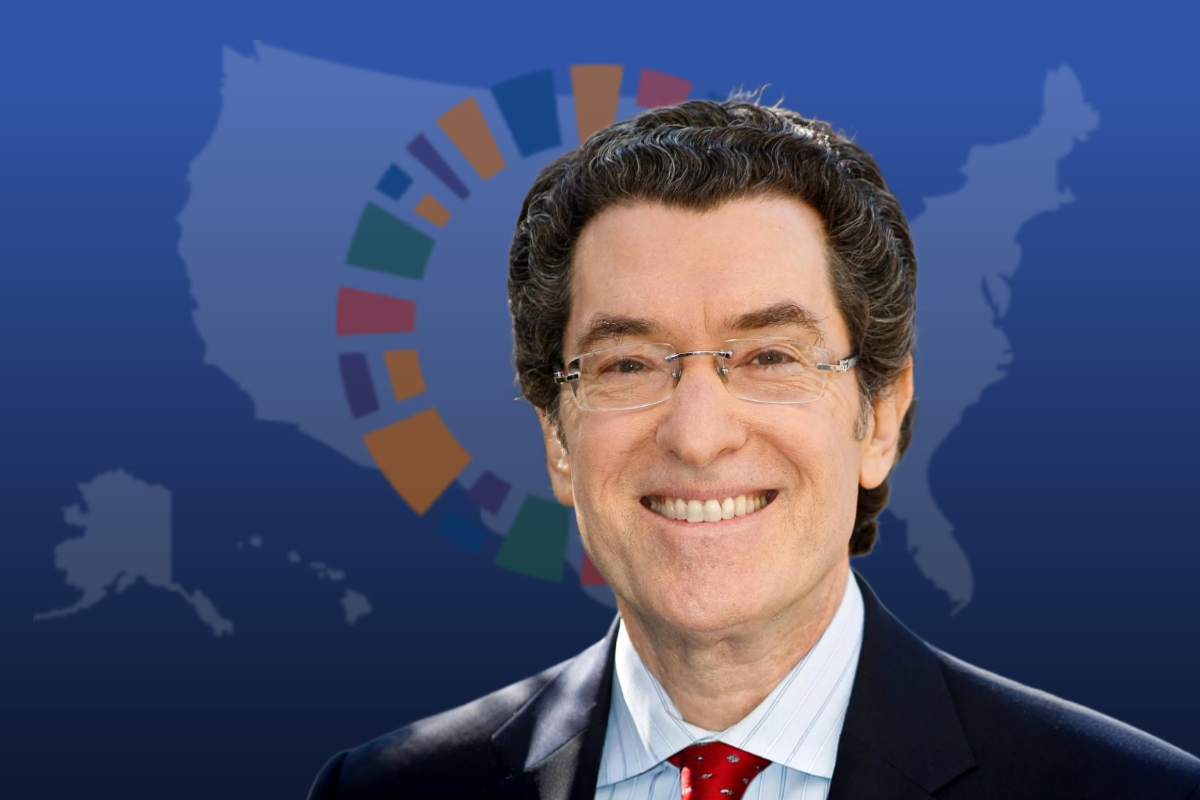
The co-founder of Democracy Defenders Fund and former Obama Administration ethics czar joins Rev. Paul Brandeis Raushenbush on the eve of the election to recount victories and unveil strategies for ensuring a full and fair vote.
“Nauseously Optimistic”: The 2026 Vote Through A Legal Lens
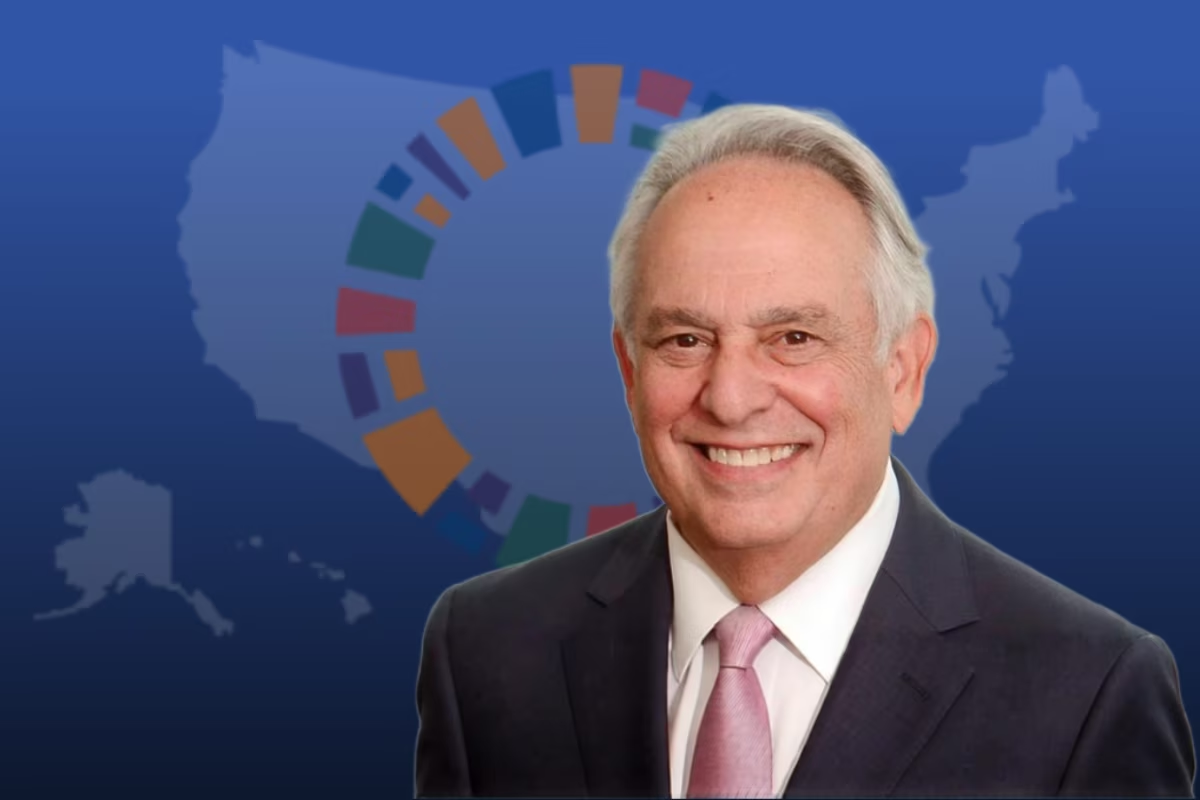
American Bar Association Election Law Committee Chair attorney Jerry H. Goldfeder joins Rev. Paul Brandeis Raushenbush to discuss how lawyers, faith leaders, and many others are poised to defend the midterm election against all threats, foreign and domestic