
State of Belief
"Never Saw Anything Like That": Veteran White House Reporter Peter Maer on President Trump and The Press
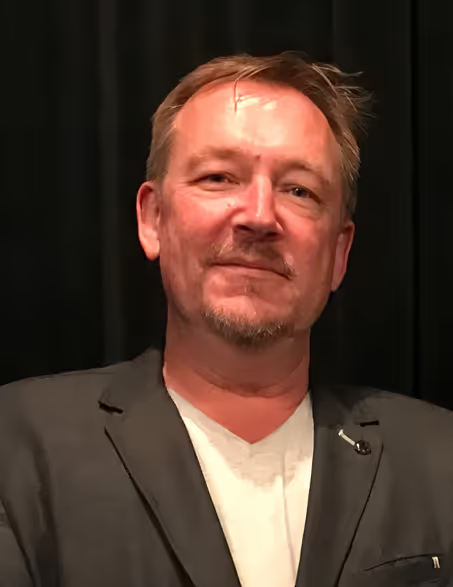

It’s easy to look at the Trump White House and say, "It's not like it used to be.” But this week, host Rev. Paul Brandeis Raushenbush welcomes Peter Maer, a journalist who covered every president from Carter to Obama and brings a first-person account of how things really were… And how they appear to be now.
Peter Maer served as a network White House correspondent from 1977 to 1995. His new memoir is titled Chasing the Story: A Reporter's Journey to the White House. Peter recalls how religion was expressed in past presidencies and isn’t shy to share his impressions of the current administration’s fraught relationship with the press.
More About Peter Maer
Journalist Peter Maer first reported on the American presidency for Mutual Radio in 1977. He later served as White House correspondent for NBC radio, and from 1998 until retiring in 2015, Peter was CBS Radio News White House correspondent. His tenure spans the terms of presidents Carter, Reagan, Bush, Clinton, Bush, and Obama.
In those 29 years he also covered every presidential campaign, convention, and election from 1980 through 2012, earning five Merriman Smith Awards from the White House Correspondents' Association.
The State of Belief host Rev. Paul Brandeis Raushenbush is President and CEO of Interfaith Alliance.
Transcript
REV. PAUL BRANDEIS RAUSHENBUSH, HOST:
Journalist Peter Maer first reported on the American presidency for Mutual Radio in 1977. He later served as White House correspondent for NBC Radio, and from 1998 until retiring in 2015, Peter was CBS Radio News White House correspondent. His tenure spans the terms of President Carter, President Reagan, President Bush, President Clinton, another President Bush, and President Obama.
In those twenty nine years, he also covered every presidential campaign, convention, and elections from 1980 through 2012, earning five Merriman Smith Awards from the White House Correspondence Association. Now Peter tells his story in a new memoir titled, Chasing the Story: A Reporter's Journey to the White House. I couldn't resist having him back on The State of Belief to talk about it.
Welcome, Peter. I'm so glad to talk to you about this great new book you've released.
PETER MAER, GUEST:
Well, Paul, I am just so flattered and honored to be here. You know what Interfaith Alliance and you know what State of Belief both mean to me and this is just quite a moment for me to be with you.
PAUL RAUSHENBUSH:
Well, I am thrilled and let me just say, reading your - I guess it's a memoir of sorts, but it's also history. And that's what struck me: I was reading through your book and I was like, my God, all the things that I had kind of forgotten, but that make up the cumulative effect of American life. You were there and you were reporting on them.
And one of the benefits of this amazing book, you can order it on Amazon or anywhere else, Chasing the Story: A Reporter's Journey to the White House, is that you remember these stories that were huge at the time, but now have kind of faded in our current moment. And one of them I was just thinking, like, yeah, when when Saddam Hussein invaded Kuwait. That was a huge moment. And yet it had faded from my my memory. But you were there, you were covering it. And it's just so great. So big kudos on this book and the way that you managed to capture what was happening in an important time.
One of my first questions, and I say this as someone who has spent some of my life doing journalism and telling stories, is how does it feel to experience history as a journalist, as someone who's tasked with telling the story - it is a different way of experience history, isn't it?
PETER MAER:
It certainly is, and you know, there's so many things that happened that I never anticipated would happen. I don't know if I can do them in chronological order, Paul, but you think about the impeachment of a president. You think about that, and that was Andrew Johnson. But I covered it from start to finish with Bill Clinton. The election of the son of a president: You think of John Adams and John Quincy Adams.
George H. W. Bush and George W. Bush. I never imagined that. And I have to admit that like so many others of my generation, your generation, we never envisioned the history-making and important moment of the election of our nation's first Black president. I didn't fathom that I would ever have the opportunity to cover such a momentous event, but I was there when Barack Obama started his campaign when he announced in a frigid day in Springfield, Illinois, all the way to Grant Park in Chicago, where he declared his momentous victory.
PAUL RAUSHENBUSH:
Incredible. Incredible. But you know, I think what's different about it – because I remember most of that, we're similar ages - but I wasn't tasked with telling the story. And you had to figure out, well, what do I lead with? What is the main message of this moment? So that's very exciting, I think, as a journalist, because you know, I remember when you were just starting out, you said, I had an editor who really followed the principle “If it bleeds, it leads.” And that only carries you so far. It does carry you far, but then when you get into the kind of milieu and the stratosphere that you worked at, you have to think in different terms. What is the story here? And I think that that is something that's a skill. That's what makes a great journalist versus someone who kind of just is a recorder of history. Can you talk a little bit about that skill?
PETER MAER:
Sure. I grew up in a very small town in Illinois. Well, it wasn't all that small, it was about thirty, forty thousand at the time, a place called Granite City across the Mississippi River from St. Louis. It was a steel town, it was a melting pot. I was the only Jew in my graduating class of about eight hundred kids. By the way, never had any type of an antisemitic incident. People always wonder about that. But when I covered stories through the years, I always thought, what would the people in Granite City want to know about this?
And it really was my anchor, it was my North Star, it was my guidepost, Paul, to wonder what the people in my hometown, the steel workers, the doctors, the lawyers, the laborers, the folks I grew up with and their moms and dads, what would they want to know about this Labor Department report on unemployment? What would they want to know about this summit between Ronald Reagan and Mikhail Gorbachev? Or the night of the capture of Osama bin Laden and the drama of President Obama announcing that. So I always went back to that as basically my starting point.
PAUL RAUSHENBUSH:
That's the ultimate question. Like, I have an audience. How am I going to speak into my audience? How am I going to use language that my audience will understand? I think that that's a journalist. And also, a lot of your work was in radio, so it was your voice, also, speaking into that. I think that that's very exciting. And you know, we still have radio and many people still get their information, their news from radio, but more and more it's coming in different ways, online and digitally in all kinds of ways. What, in particular, about radio was so powerful?
PETER MAER:
Well you know, I always wanted to be a newspaper reporter when I was a very young kid. And then on the day that or the days after President Kennedy was assassinated, there was a public park across the street from my home in Granite City, Illinois. I keep going back to that. And I looked at the newspaper reporter for the newspaper that came out twice a week, and then I saw the radio guy standing there and he was describing it as it was happening. And I just love the idea of the immediacy of radio.
I'm not saying that I was bit by the radio bug that early. But I did have an opportunity soon thereafter to do a weekly radio show at the the local radio station. And from then on I thought, well, forget about newspaper. I want to be in radio. I love the immediacy of it, and I love the challenge of painting what one of my bosses called word pictures. He said: Turn your microphone into a camera. And just the fun and the challenge of describing things as they were happening, sometimes live and and sometimes recorded.
And as you were indicating, Paul, there's been just this evolution. Look at the medium that we're using now, a podcast. Who would have ever thought? And podcasts are just the main source for so many people now. Their main source for news and entertainment and in the case of State of Belief, a little bit of both and information too.
PAUL RAUSHENBUSH:
And actually, interestingly, podcasts are still about voice, about hearing people say things and being and it becomes relational. And so, it is an interesting medium that podcasts really kind of kept alive in a very intentional way.
You talked about immediacy. For some reason I'm flashing on that story of when George Bush, Sr., I think, got ill in Tokyo and threw up. Again, another thing that I had forgotten but at the time was a huge story. And you were at your post and actually were able to kind of paint the picture before a lot of people were able to get it out there. That's a perfect example of telling the story.
PETER MAER:
That was one of the scariest moments of my career. we were in a what we called a press filing center in a hotel in Tokyo and a pool of reporters would be traveling with the president, and I was not part of the pool that evening. So I was at the hotel and we looked up on the TV screen and we see flashing ambulance lights and two guys holding a sheet trying to cover the the picture.
As it happened, they never took President Bush out in an ambulance, but we knew something was going on. And I went up to a Japanese hotel worker, one of the servers in the hotel, and I said, What are they saying? And I still can hear his voice saying, They say your president has fallen back. And I said, What does that mean? And he said, Maybe stumbled, maybe fainted, or maybe - Heart attack! And we didn't know for a while what had happened until President Bush's able press secretary, Marlon Fitzwater, was able to assemble the facts and come in and tell us that perhaps President Bush overdid it with a tennis game in the hot sun in Tokyo and had the effects of maybe the flu or or maybe heat exhaustion. But it was very scary.
PAUL RAUSHENBUSH:
My gosh. But you were able to - it was scary, but you were also able to say something quickly to folks that something has happened. And you know, I think that that kind of discretion - we're not sure, but something has happened - that's an important thing.
You know, I attended President Carter's memorial service in in Washington D C and was just very moved by him. Can you tell me anything about, like, specifically I'm thinking about the accords that were at Camp David. What was it like? Because you had kind of followed Carter from the beginning so you knew who this guy was.
It's interesting, I was just talking to people about my interviews with Jimmy Carter and how intimidating he was. People think of him as a kindly peanut farmer and, you know, church school kind of thing. He was so smart. He was so on it. When I was interviewing, he was in his eighties, I think. But but he was completely in control. And it really was awesome because he was so in control and in command of his incredible intellect. But you had followed him, this was such a major, major accomplishment. Do you remember those days?
PETER MAER:
Absolutely. I first covered Carter for WSB Radio in Atlanta, the major station there then - and still - and covered him when he was governor in the State House. He had more or less of an open door policy with reporters in the governor's office. But I always say about Jimmy Carter, what you saw was what you got. He was just a humble guy from Plains, Georgia. I'm not saying that he didn't have an ego because you don't get to the Oval Office without having some kind of an ego.
I envy you for having the one-on-one interviews that you did with him. It's an opportunity that I really never had. But I will tell you this. I think it was in late 1974, I was among - and I described this in in the book - a small group of reporters along with my boss, the news director, invited to the Georgia governor's mansion for an off the record roundtable. Literally, we sat in a circle around Carter in the ballroom or the living room of the the governor's mansion, and of course the conversation came around to: Gee, Governor, there are rumors that you want to run for president. And he said, Absolutely. And I had to bite the inside of my mouth to keep from laughing. it was it was just beyond belief that Jimmy Carter was going to run for for president.
His own mother, when he told her: I'm running for president, and his own mother, Lillian Carter, said to him: President of what? And the headline on the Atlanta Constitution was: “Jimmy Who is running for what?” There was a poll, I think it was a Harris poll of who the potential nominees in 1976 were. And Jimmy Carter was at the bottom of the list - but you know, he got the last word.
He really was savvy in knowing, in the post-Watergate era, that running on the motto of: I will never tell a lie, and quoting his mentor, Admiral Hyman Rickover, when Carter was in the Navy, sub-mariner, of why not the best. Those were the hallmarks of his campaign, and it was just an amazing thing to to see happen back then.
PAUL RAUSHENBUSH:
Well, you noted - and this is directly from your book - Jimmy Carter fulfilled a pledge to name minorities to key posts. When he left office, UPI reported Carter had nominated four times as many women judges as all previous presidents combined, and twice as many Black judges. People tend to talk about his post-presidency, but it was fun to read about your recollections of Carter.
Moving on to Reagan, very different and someone who I have no love for, but you talk about his observance of the fortieth anniversary of Normandy and that you were there. And that struck me as someone who understood a moment, understood a historic moment, and rose to the occasion rhetorically, but also understood what it meant, that moment, and how important it was. Can you talk about that moment and being there?
PETER MAER:
Well, I was privileged to be at Normandy on the fortieth - and on the fiftieth with with President Clinton, and another anniversary with George W. Bush. It's quite a moving place. I wish every single American could go there and see the place. as for the fortieth anniversary, by the time Ronald Reagan got done with his oration at Point Du Hoc, you would have thought that he had been there himself, although his World War Two experience was looking at films as part of some sort of a special services unit in California. But he did know his place.
He was a guy who would look down and ask “Where's my mark?” you know, to stand at the right place. And he had incredible media advisors, a guy named Mike Deaver, and Peggy Noonan was the speech writer extraordinaire. And she wrote the address that he gave that day.
You had to station yourself in different places. A lot of reporters went to the more well-known Omaha Beach or Utah Beach. But a colleague of mine that I was traveling with was told that this was going to be the hallmark speech at Point Du Hoc. For those who don't know, it was a place where army rangers scaled straight up cliffs and came under intense German fire, but eventually took that territory.
And Ronald Reagan was standing there above the English Channel, above those cliffs, and this jut of a rock that pointed out Point du Hoc. And he was surrounded by a semicircle of veterans of that battle. Some of them had their sleeves tucked in, pinned back, where they had lost an arm or a pant leg where they'd lost a leg. And they were on crutches and some in wheelchairs and others standing upright. And Reagan said, These were the boys of Point Du Hoc. These were the men who helped to - I'm paraphrasing - win the war, save the world. So it it was quite a dramatic scene, and he played it to the hilt.
PAUL RAUSHENBUSH:
I use that in some way as a setup to talk about the current president, who you did not officially cover. but you must have a particular take on how he uses moments. He went to Normandy, and I do want to get into how you understand what it must mean to do the kind of job you did with all of those presidents, and have to do it now with this president. Do you recall? Recently he went to Normandy. And do you remember, he didn't use the moment… Well, he used the moment for what he wanted to use it for, but I think it was far from admirable.
PETER MAER:
Yeah, I'm tempted to say don't get me started, but please do get me started. I I am an institutionalist when it comes to the presidency and to the White House itself. And as I write in the book - and I have to tell you, there were people who said, Don't go there, don't talk about Trump. You didn't cover him. Well, I'm not sorry, I just feel that it's just something that had to be said.
PAUL RAUSHENBUSH:
Yeah, I am going to get you started.
PETER MAER:
And I listed many of the the misdeeds of Donald Trump, in my estimation, and I feel that he has absolutely denigrated the office of the presidency and he has desecrated the White House itself: paving over the Rose Garden, demolishing the East Wing, gilding the Oval Office that I felt, every time I went in there with six presidents, was a goosebump moment. I'm not being hokey, that's just the way it was, and if you don't get some sort of a feeling every time you walk through the gate of the White House, as I know you have, there's something wrong. I'm sorry, that's just the way I always felt, and this guy disgusts me.
PAUL RAUSHENBUSH:
I just think in moments like that… Take me into the idea of: what does it mean to to cover a president like that in the press? And I immediately go to the - I don't know, is it five or six, half a dozen women who have been denigrated using terms like “Piggy.”
Peter Maer
Piggy. Yeah.
PAUL RAUSHENBUSH:
How can someone do that? I don't know. Explain to me how that is permissible with the office of the president, with the press corps who are asking questions that have been asked of presidents since the beginning, or at least as long as we've had press, which I guess is the beginning. And is there any precedent for this? I mean, there have been adversarial relationships, but not that.
PETER MAER:
Well, I never saw anything like that at all. I know for a fact that there were times when presidents were irked at questions that I and others asked. And you could tell, and maybe the word was given to you later on by someone in the press office, but never anywhere near the level that we have seen. And it is just so personally, again, disgusting to see the way he has talked, especially to women and to people of color.
It's just bully tactics. And reporters who are dedicated to covering the White House or anything else, you don't want to become part of the story. And people say, Well, why don't they react? Why don't they go back at him? And it's just that inner feeling that, well, I don't want to get engaged with him. I'm only imagining. but you know, there are reporters that he just doesn't like. But he does like to tangle with them. And I can't imagine, I can't imagine what it's like for them.
I asked a colleague during his first term, how are you dealing with this? And this is a highly respected person. And he said, Well, we'll just cover them the way we always do, we'll play it straight. And you have to play it straight, but you have to put some context on it too, in in terms of his behavior.
PAUL RAUSHENBUSH:
We could go on for hours about this, but I do think it's of a piece, he’s talking continuously about how he was robbed of the election, without any proof, in 2020. But he also sows distrust in the media: everyone in the media is against me - except for his preferred brands. And then if they do any story against him, he'll attack them. Even Fox News has gotten the ire of Donald Trump recently.
So I think the importance of the press, not a perfect thing, but it is about telling the story of what we can know - and mistakes all the time, but trying to as best we can tell the story. And I just feel like at this point, he has sown so much distrust in the press, in government institutions. all of it is geared towards undermining any institution that would challenge him and his sense of his rightful place as the ruler of America. It really does feel like that.
I'm curious what you think about the Correspondents Dinner and the decision to hold it and all of that. I mean, you can pass if you want to, but it felt uncomfortable.
PETER MAER:
You know, it's a long-standing institution. Full transparency, I was on the board of the Correspondents Association, served as secretary and a couple of other positions. It's a wonderful organization that really fights for access and fights for pushing for certain travel logistics and coordination and things like that. And the dinner exists for scholarships, to raise money for scholarship money for young journalism students. I personally would not have gone if I were still there. I wouldn't go to a dinner with this guy who just continually trashes a free press.
PAUL RAUSHENBUSH:
I admire you for that. And that felt like an easy call to me, as well.
I do want to talk a little bit, given the nature of the show, “Where Religion and Democracy Meet,” are there stories from your storied career about religion and democracy or religion and politics that you recall being big moments for reporting and that are worth remembering as we continue to cover religion and democracy in this era?
PETER MAER:
Well, you know, there were the times at the White House when various religious occasions were observed in such a dignified way. You think about Christmas at the White House - although it really was not, for most presidents, and I'm really digging into my mind here, where they would turn it into a sermon about the story of Christmas. It was more of a - how would you describe it? You're a minister.
PAUL RAUSHENBUSH:
Well, I went to a Christmas celebration at the White House and yeah, it was used as a civic celebration of the holiday. But of course there are religious specific moments in the in the White House as well.
PETER MAER:
Almost civic the way it was observed. I mean, some of the presidents observed the Jewish holiday of Hanukkah. Barack Obama had a Passover Seder every year with his Jewish staff members and other staff members to talk about the story of Passover.
PAUL RAUSHENBUSH:
Let me interject there. So one of those people ended up being a colleague of mine at Huffington Post. And so I did a whole thing about the Passover tradition, because it was when he was on the campaign trail. they decided to have a Seder, and then all of a sudden the president walked in and was like, Is this where the Seder is? And then it became a tradition and the same people, really, were invited. It's incredible.
PETER MAER:
I think that most presidents are cautious about mixing religion and politics. They really are - just because of the time-honored tradition of the separation of Church and State that most of them really did adhere to that approach.
PAUL RAUSHENBUSH:
I'm curious, there's just moments when religion kind of comes in and I'm thinking about, like, with Barack Obama and his pastor and there was this moment where then-Senator Obama gave a speech kind of articulating his vision of religion and I think so many of the, I guess I'll just say the presidents that I really cotton to, are the ones who actually were able to articulate a really important vision of religion in the public square. I think Carter did that amazingly when he said, I don't want to invite Billy Graham to the White House because it will feel like an endorsement of a certain kind of religion over another kind of religion, which was a very powerful thing to do because he was actually a pastor he admired. And Carter himself was a serious Christian, however you describe him.
So I'm just wondering if there were moments when you were reporting where you're like, religion is the story here. Do you recall? Because I know that's a tricky moment for political reporters or people covering the White House, but there must have been moments where, actually, religion is part of this story.
PETER MAER:
Well I'll tell you, I always said that I was a reporter who happened to be Jewish, not a Jewish reporter. But that said, I found myself at the places where my people, including my family, were profoundly affected by when when we went to different Holocaust sites or to the Warsaw Ghetto in Poland. My grandfather happened to immigrate to the United States from what was then Austria Hungary, later became Poland. One of the reasons he left was because of the treatment of Jews.
PAUL RAUSHENBUSH:
Who did you go there with? Do you recall which president?
PETER MAER:
Yes, I went to the Warsaw Ghetto with President Clinton, with President George H. W. Bush. They laid a wreath there. I think President Obama. By the way, Trump was the only president who went to that part of the world and did not go to those sites. Obama went to Buchenwald. It hit my heart to to be there, and to witness those places. I went to Israel of course with President Clinton after the assassination of Yitzhak Rabin. President Obama went there not really great atmospherics between him and Netanyahu. So all of those things are in my memory.
PAUL RAUSHENBUSH:
I just think that the front row seatedness of it, and I have to say there is a great privilege with being a journalist, in a way, in the sense that you always have an - where I was, I won't compare myself to you, but where I was, I kind of always had an excuse to call someone. You know, because I wanted to tell a story. And expanding my Rolodex. When Raphael Warnock was the pastor of Ebenezer before he became senator, but I went to seminary with him so I could call him for stories and you know, being a journalist is exciting because you always can have, what is the story and how do I tell that story? And then what's the next story that comes upon it. And so it is really fascinating.
So I know you wrote this because you kind of wanted to tell these stories, but part of it was that you wanted your family to know about these stories - because you had had such an interesting life and you have grandchildren now and and I just I love that you wrote this. Have they been able to read it? I don't know how old your grandchildren are, or what is then the reaction of your family?
PETER MAER:
Well, my oldest grandchild is nineteen and a college sophomore, and he was part of the impetus to write this book. He overheard me say, I'm sure you hear it too, you've got to write a book, you've got to write a book, you know, you need to write a book about Interfaith Alliance, or you need to write a book about your career. And boy have you had a career. But that's your story. But anyway, he overheard me say, Well, who in the world would read it? And he said: I would, and I think you should write it. So I started writing.
PAUL RAUSHENBUSH:
I think that's great. I think I told you I've finished and now I'm doing footnotes and all of a biography of my grandmother, one of the two daughters of Louis Brandeis, and part of my regret with my grandmother was that I didn't ask her good questions. I never got her story. But I've inherited papers and photographs and letters that have never been seen between her and her parents, and in some ways these are like clues that I'm putting together. And it's been one of the most gratifying experiences of my life. I feel like, in some ways, I didn't know my grandmother, and now I get to know her for who she really was, all of her. And you've offered that to your children, but also your grandchildren. I think it's a great gift.
PETER MAER:
Well thank you. One of the things that I've really come away with after this project is just the feeling that everyone - you didn't have to be a White House correspondent or a renowned pastor. Everyone should write their story for their kids and their grandkids.
PAUL RAUSHENBUSH:
I agree with that. And I've been giving these talks about my family and my grandmother and at the end of it I'm like, your story needs to be told as well. If I'm talking to a synagogue or a church or whatever, every one of you has a story of the world that needs to be told because it is fascinating when you get in on it. But all that is to say that you've had a particularly fascinating story and it's really amazing that you can look back on it with such memories. Do you still have the tapes? Has anybody done the supertape of Peter Maer’s, you know, from the beginning to the last - that would be amazing. That's a project for your nineteen-year-old grandson. Tell him I told him so.
PETER MAER:
Well, one of my colleagues at CBS News did do that when I retired and surprised me with this kaleidoscope of audio. There's a closet behind me here that contains boxes and boxes of cassettes. You're probably too young to remember cassettes.
PAUL RAUSHENBUSH:
Cassettes. No, what are cassettes? What are LPs?
PETER MAER:
I went back through a a number of those to jog my memory, for sure. I regret not keeping a diary. So many of my colleagues, especially some of the esteemed CBS News correspondents from another era - I think of my my hero and dear friend the late Bill Plante. so many of them kept all of their files, all of their notes and so forth. And I have a lot of notebooks, too.
You know, I had two major life-changing assignments that I write about in the book. And I went back to listen to the tapes of the 1985 Mexico City earthquake, where I was standing in front of a hospital, a children's hospital, and babies were crying under the rubble, and sometimes they saved them and sometimes they didn't. And it was the time of the Jewish High Holy Day of Yom Kippur, where the rabbis always speak of who shall live and who shall die in the book of life, and I'm standing there witnessing who shall live and who shall die.
And then the tsunami trip with former presidents Bush and Clinton to the Asian areas that were devastated by this gigantic tidal wave and earthquake - and again, who shall live and who shall die. And the two presidents meeting a humble man in Indonesia, and they said, What is the fate of your family? And he said, They only live in my heart. So, you know, these are profound experiences that really stayed with me.
PAUL RAUSHENBUSH:
You must have had a chance to meet Walter Cronkite, who was honorary chair of Interfaith Alliance, and such an important speaking of voice, most trusted man in America. And I I'm curious if you want to say a few words about him, because you didn't do the same thing, but in some ways you were you both given the honor or tasked with the responsibility of telling the story to Americans of what is the American story.
PETER MAER:
Well, Walter was truly one of my heroes and I did get to meet him several times. He of course had long been retired from CBS News, but he did come back and did some radio projects and I had a chance to - I don't want to say work with him because that would be an overstatement, but certainly share a mic and had some times with him on on social occasions, and as he always signed off, that's the way it is.
And that's the way he was. He was just a straight shooter, objective reporter, just a giant of journalism and broadcast journalism. I can't imagine what he would think of covering the current era, but I think - and I use this quote in the book, and it really resonates, and I know we're getting close to our sign-off time here, but it was a a quote from Rabbi Abraham Joshua Heschel, the great rabbi and civil rights leader who marched with Martin Luther King, and he said, “In a free society where terrible wrongs exist, some are guilty, but all are responsible.”
And that really, in all modesty, kind of sums up why I felt a responsibility to comment in my book about Donald Trump and about the way he has conducted himself and his administration. We're all responsible to do what we can to right wrongs, especially what we can do for our kids and grandkids, to right those wrongs. Hate to get preachy here on you, Reverend, but that's just the way I feel.
PAUL RAUSHENBUSH:
Journalist Peter Maer served as White House correspondent from 1977 to 1995. His new memoir is titled, Chasing the Story: A Reporter's Journey to the White House. In 2019, Peter received the Interfaith Alliance Walter Cronkite Faith and Freedom Award and served on the Interfaith Alliance Board.
Peter, it is always great to see you. Congratulations on the book and thank you for being with us here today on The State of Belief.
PETER MAER:
An incredible honor. Thank you, Paul, for having me.
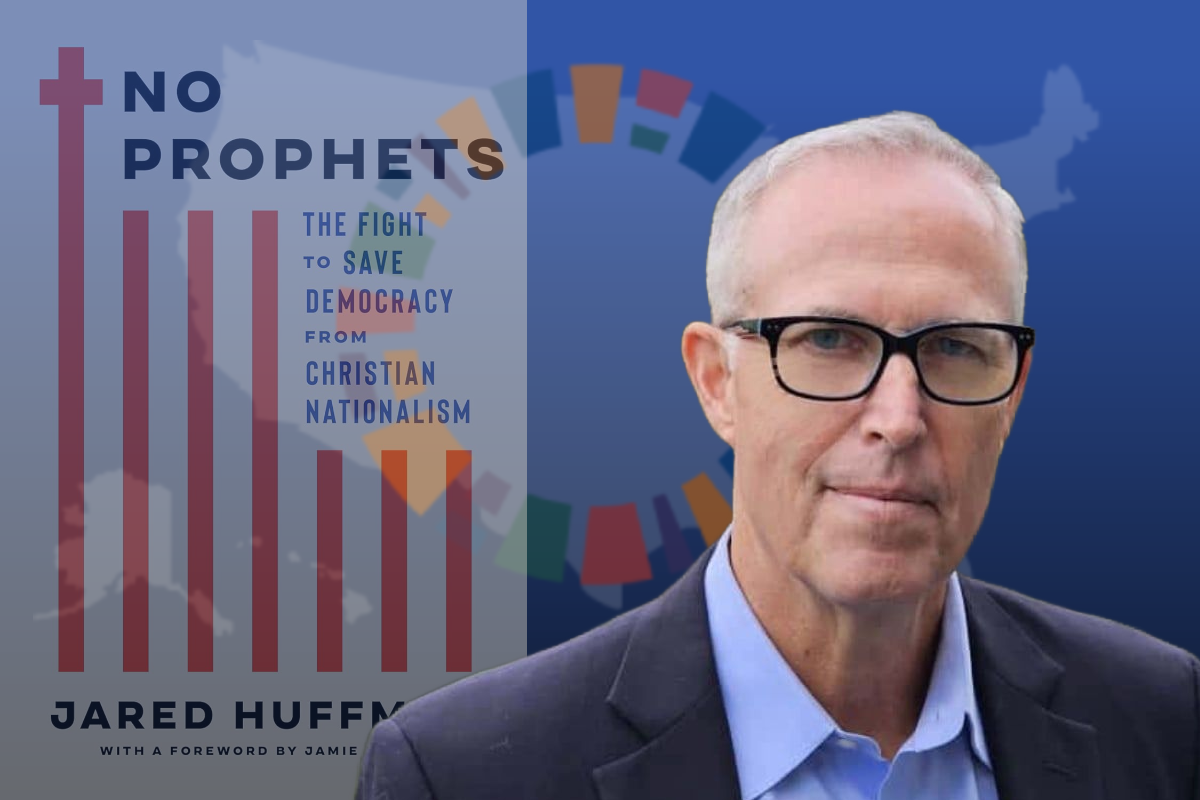
Congressman Jared Huffman: The Fight to Save Democracy From Christian Nationalism
The co-founder of the Congressional Freethought Caucus joins host Rev. Paul Brandeis Raushenbush to discuss how he's seen authoritarian impulses show up in our government and to share some of the insider stories featured in his best-selling new book, "No Prophets"
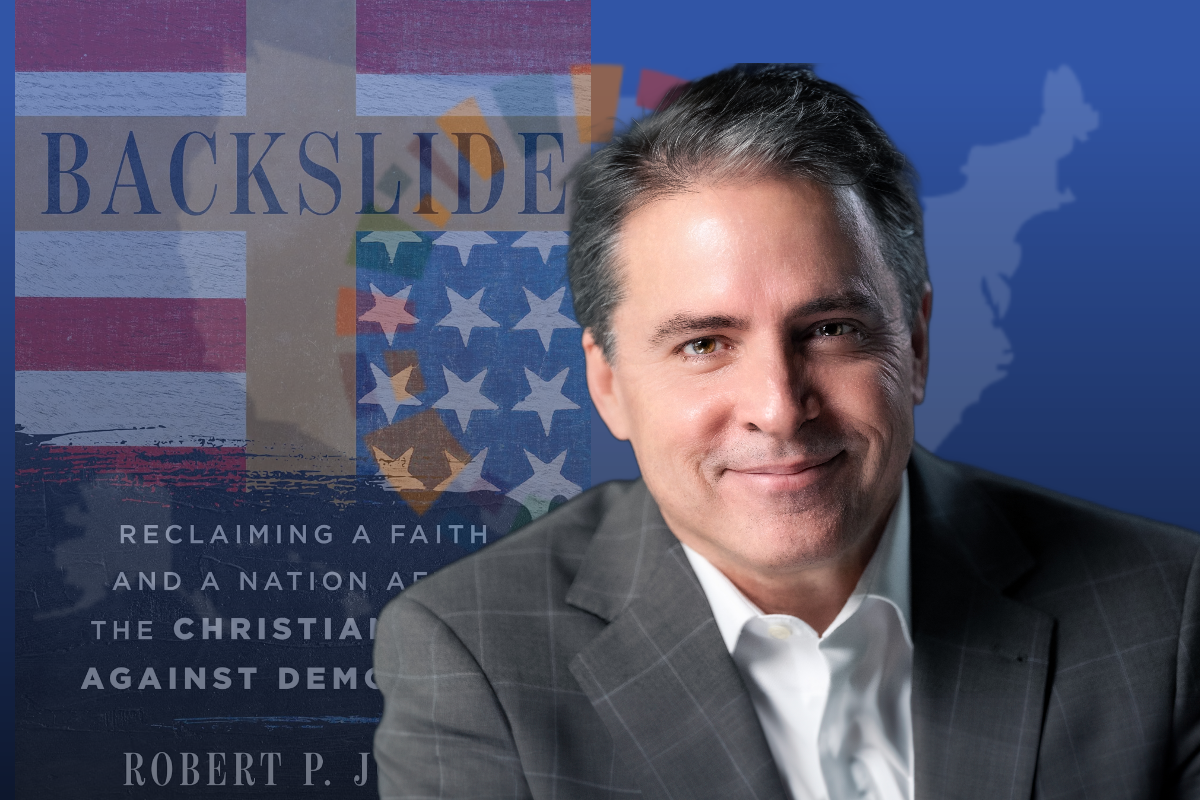
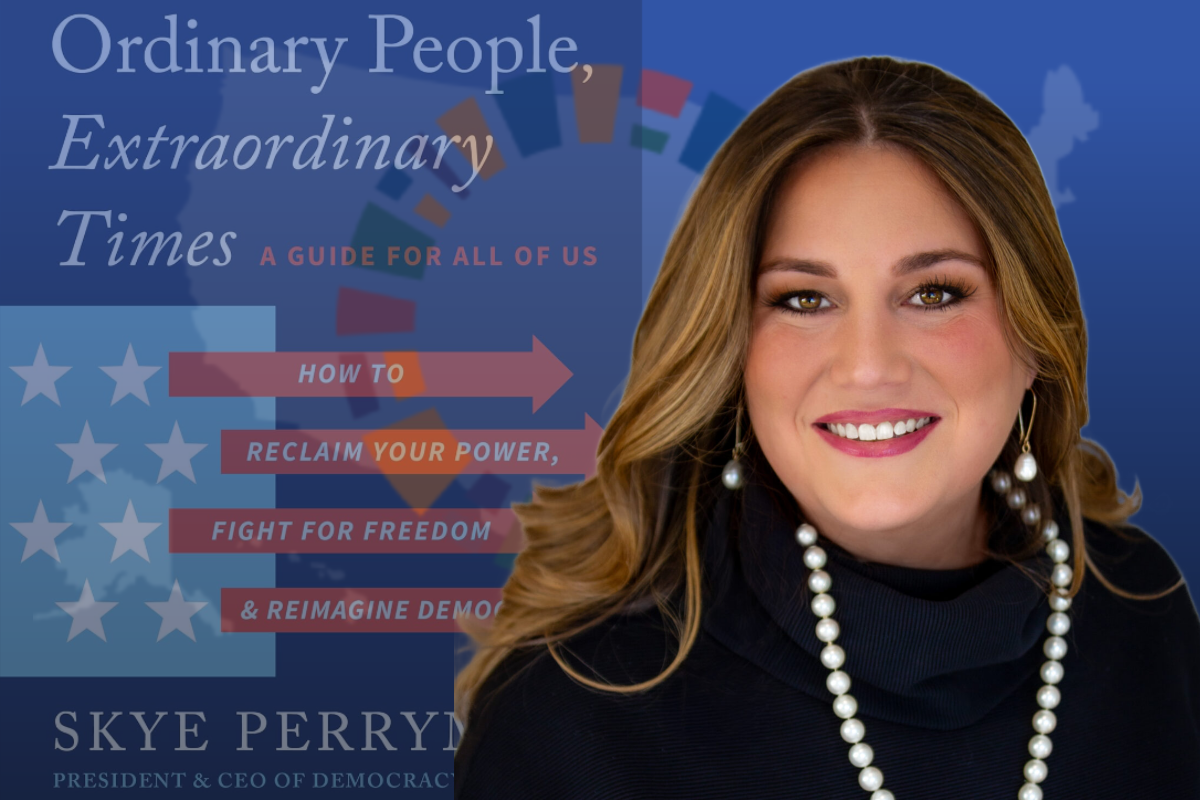
"What Can I Do?" Skye Perryman's New Book Answers the Question
The president of Democracy Forward joins Rev. Paul Brandeis Raushenbush to unpack the calls to effective action in her new book, "Ordinary People, Extraordinary Times: How to Reclaim Your Power, Fight for Freedom, and Reimagine Democracy"