State of Belief
Human in the Lead: Cheryl Contee on the Future of AI and Faith

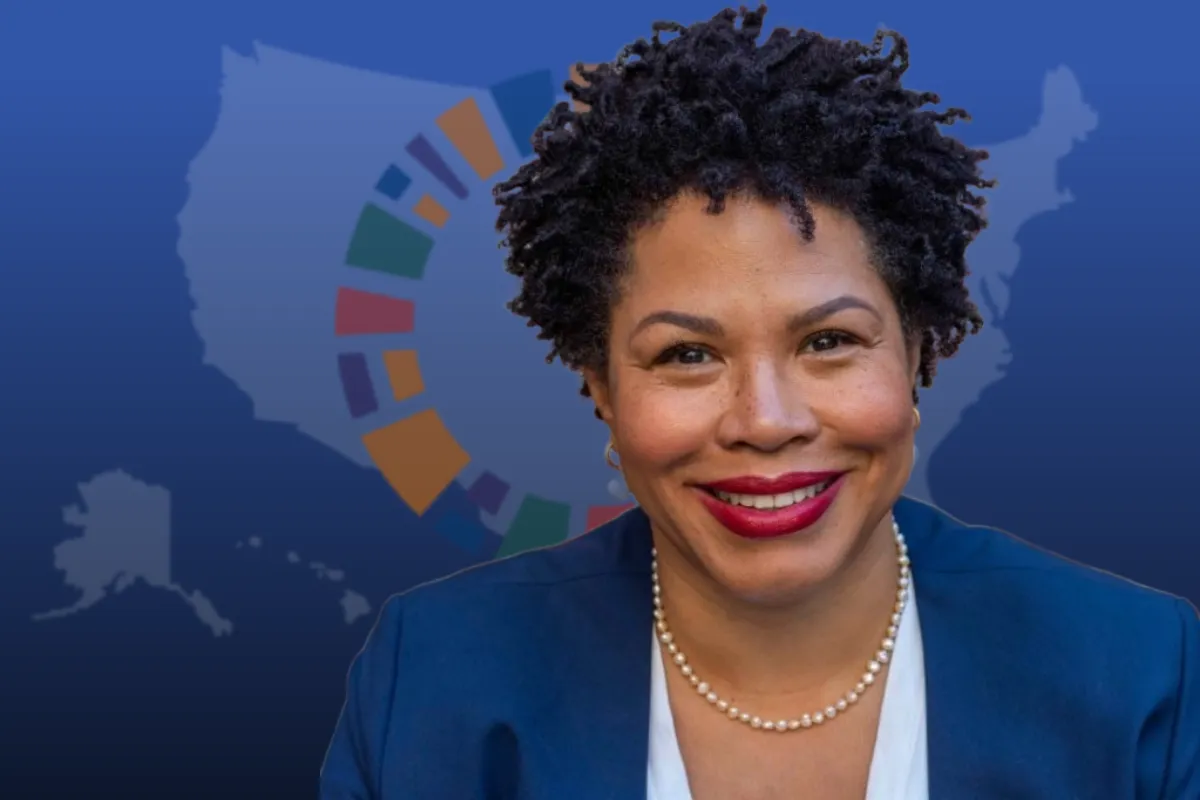
AI is all around us – and you've probably been affected by both the hype and the scaremongering. The fact is, harnessing it for the good is as much a question of ethics and intentionality as it is of technology. That’s according to technologist, entrepreneur, and best-selling author Cheryl Contee who joins host Rev. Paul Brandeis Raushenbush this week. They get into AI's role for nonprofits, faith communities, and ethical AI training, as well as AI’s potential to revolutionize healthcare, education, and longevity. Cheryl stresses the role of religious leaders and faith communities navigating AI’s influence, including Pope Leo’s call to “disarm artificial intelligence.”
This episode is about as timely as any we have ever produced.
More about Cheryl Contee:
Cheryl Contee is an author, investor, and entrepreneur, as well as a leading expert on real-life applications for artificial intelligence. Cheryl is currently Chief Innovation Officer at Brightworks.ai, Senior Advisor to PosterChild.ai and Changeagent.ai. She's the co-author of the best-selling book AI for Nonprofits: Putting Artificial Intelligence to Work for Your Cause.
The State of Belief host Rev. Paul Brandeis Raushenbush is President and CEO of Interfaith Alliance.
Transcript
REV. PAUL BRANDEIS RAUSHENBUSH, HOST:
Cheryl Contee is an author, investor, and entrepreneur, as well as a leading expert on real life applications for artificial intelligence. Cheryl is currently Chief Innovation Officer at Brightworks.ai, Senior Advisor to PosterChild.ai and Changeagent.ai, and she's also co-author of the best-selling book, AI for Nonprofits: Putting Artificial Intelligence to Work for Your Cause. Cheryl has been a pioneer on the potential of harnessing technology for good for a while. And I am so honored, glad, happy, ecstatic to welcome her to The State of Belief.
Cheryl, welcome!
CHERYL CONTEE:
Thank you so much. Paul, the work that you've done in this space is so important. I consider myself a faith-informed person, so it's really exciting for me to be here.
PAUL RAUSHENBUSH:
Well, I remember when we first met, I was thinking back and that is, let's say, a while ago. And we were at a conference where people were pitching ideas about technology and you were talking and there was just something and I went up to you and said, Hey, I'm kind of in the faith and technology space, interested in that. And she was like…
CHERYL CONTEE:
My aunt is a nun. My aunt is a nun. My grandfather founded a church in Baltimore.
PAUL RAUSHENBUSH:
Exactly. So you immediately got it. And then we have conspired in many ways, and I'm just such a fan of the way you really believe that technology can be a force for good, but also recognize that only comes with intentionality. And you are someone who raises that awareness, and you're also a groundbreaker. I mean, didn't you have a company, first Black woman-owned company, tech company, that went public?
CHERYL CONTEE:
Well, we didn't go public. That would have been amazing. But yes, my tech startup, Attentively, as far as we know, is the first tech startup with a Black female founder on board to be acquired by a Nasdaq-created company. And what's really exciting to me about it is that it was an impact startup, meaning positive impact in the world, acquired by an impact-focused corporation, which is Blackbod. You know, they are one of the primary providers of software to nonprofits across the country, including quite a few faith-based nonprofits.
PAUL RAUSHENBUSH:
I've definitely been in organizations that used it. So talk to me a little bit, AI, you hear it everywhere. Okay, AI is coming. It's here. It's already done everything. There's just so much out there. I'm sure you're asked to do this all the time, but I know my listeners would appreciate, just, like what is AI? I'm sorry to be so basic, but…
CHERYL CONTEE:
No, this is an important question because I think there are so many misconceptions about what AI is and what it isn't. And I think that that is driving some of the angst. So the way I often explain it is, there are mainly three types of AI. There's classifier AI, and that form of AI people have been using for 10 to 15 years now. That's your GPS, that's your spam filter, it's your spell check. It's how Instagram knows that you actually do want those shoes and can get them to you in two days, and you can watch the truck on the app come to your house. All of those things and more are AI-driven.
Now, what changed in 2022 was that what was previously the focus of developers, software engineers, CEOs in the background, became something that everyday people could use. And so that's generative AI, AI that can create. Now, people have a lot of feelings and thoughts, legitimate and otherwise, about the kinds of things you can create and when you can create and where you can create, etc. But that is one form of AI, generative AI.
And then, finally, there's agentic AI. Agentic AI is AI that can think, plan, and act. And a lot of people are experiencing agents not as like, now I have a digital employee. It's more like a feature, right? For a lot of people, these agents are actually showing up as new features in software where you're like, I can do that now. That's great. Da-da-da. So I think we're going to see more agentic AI in our lives, whether it's in how we work, how we play, how we learn, how we teach, how we shop. But we're only a few years into kind of agentic as a powerful option for AI.
PAUL RAUSHENBUSH:
This is so helpful. And actually, I feel my blood pressure going down and I'm sure my listeners do too, because it feels all, just, like, it's basically we're being taken over by the robots, it's over. And I do think many things are happening at once, some of which we have already experienced and are using, and other things really are revolutionary in the way that technology is being developed.
Can you talk a little bit about your sense of pace in this? Because I think some of it just feels like, five years ago we were talking about the internet and we were talking about various manifestations of the internet, then AI was one of those things, and then all of a sudden it became like, it's all AI. And then I had someone who was helping me with our website and he said, I would have designed this website completely differently if I had done it now as opposed to twelve months ago. And I'm like, wow. You know, just the pace. How do you understand the pace of AI and especially the agentic part of AI that feels like it can do things?
CHERYL CONTEE:
It can definitely do things. You can you can definitely do things with AI.
PAUL RAUSHENBUSH:
Yeah.
CHERYL CONTEE:
What I'd say about that is, there are different forms of AI, as we talked about. And I think part of the challenge is when Chat GPT released or when OpenAI released Chat GPT in2022, it was all of a sudden this very powerful tool. It wasn't like a tool, when you think about word processors, right? You know, Paul, you and I are old enough to remember the word processor, or like, the super-sized typewriter. And so there was just this slow progression of typewriters to word processors to sort of primitive, that happened over decades, really. Whereas with Chat GPT, it kind of came out, not necessarily fully formed, but it was very powerful from the outset.
And I think that's part of what why people felt like, Wow, we just went zero to sixty with this, with not many guardrails or controls around it. Because it's new. So when you think about the pace, it's still early days. And for AI for Nonprofits, my book, we interviewed 57 different experts across of a wide variety of fields. And one of the things the futurists in particular that we talked to independently said, look, over the next five years, you're going to see things change. The way you used to do some things, you have some new options. Or maybe some sort of robot slips under your car and valet parks it or whatever. That would be AI driven.
In ten years, everything is going to be different. Because we will have new ways of doing things, including things that humans used to do that they actually might not like doing, that robots can do now. Now, in terms of the pace, you might recall, Paul, that a whole bunch of leaders of AI-focused companies were out here last year or the year before that, saying, everybody's going to lose their jobs to AI. There's going to be no more jobs. Everybody's going to get laid off, and we need to figure that out. And also, maybe that's a good thing.
Now, that has actually not come to pass. And in fact, what they're finding is that humans sometimes are cheaper to do that same job than the AI. And also, AI needs human supervision. It doesn't have meaning the same way a human does. It can't do quality assurance the same way a human does. It doesn't have lived experience or context. You might have heard the term “human in the loop.”
PAUL RAUSHENBUSH:
That was in your book, that was actually one of the very helpful things is that there never should be no human in the loop - and especially for someone like me who's trying to figure out, well, how do we how do we use this in our work, human in the loop was a great term. Say what that means.
CHERYL CONTEE:
Sure. And it's a technical term. Human in the loop. That is a programmer, a software engineering term, meaning, you enter something and then something happens and then it will come back around to do that same thing. Depending on what's happened. So, there needs to be in that cycle, in that loop cycle, a human. Somewhere in there. That term is important.
But I am really liking the new term that people are starting to use, “human in the lead.” And I think that that's what's really important. That humans stay in the lead. These tools are so powerful. And I often tell people, look, AI is an amazing intervention for the parts of your job that you hate the most, the tasks on your list that you save until Friday at 4 p.m. and then don't do. It's great for those tasks that are repetitive, time consuming, expensive, tedious, etc.
So imagine if you took all of those tasks off your plate, and then you can just do the parts of your job that you love the most. That's part of human in the lead. You're supervising a bot that's taken some stuff off your plate. You have, essentially, digital employees to help you, and those might be agents, in fact, over time. But you still are sitting on top, making sure and managing the quality of the output.
PAUL RAUSHENBUSH:
Thank you so much for that. I I want to just back up for a second just to talk about you, because you are such a spectacular human who really does care for the the good of the people. And just so that people understand who we're listening to, it's one of the the great figures of movement-based activism who takes grassroots movements very seriously, the movements for justice for women, the movements for justice for people of color, Black people.
This current expertise and information and interest in AI has deep roots in a care for the world. And I just think it's important that we recognize who we're talking to here and how important it is to listen carefully because you started as someone who really was trying to develop ways that people could do good using technology. That's one of your great contributions to the world.
CHERYL CONTEE:
Well, Paul, those words mean a lot coming from you, Reverend, for sure. So thank you. But yeah, sometimes I talk to students - high school, college, graduate - and I tell them often, look, when I was your age in college, for example, or even in graduate school, the work I do today didn't really exist. I was part of a cohort of people who essentially made up their own jobs and then helped to make up jobs for others, and the cohort that I found myself in were the people who saw the opportunity for emerging technology to be helpful to humans.
And so all of my work, if you look at my LinkedIn or my resume, I've done a lot of different things, but the chocolate ribbon running through all of those is: how can we use this emerging technology to help people in ways and at a scale that wasn't possible before. And that's partly because my parents were educators. Almost everyone in my family on both sides has some sort of job that contributes positively to the community. So that's just intrinsic to how I see and approach the world and feel my way through it.
And we've got a lot of problems. Things are - I don't know if y'all have noticed, but things are not optimized. Things are not a hundred percent cool at the moment and probably never have been. Things are getting better. It's easy to focus on the things that are not going well, but a lot of things are still going well, better, right? There are more freedoms for more people than ever, there is more prosperity for more people in the world than even twenty, thirty, fifty years ago. But there's still a lot of inequity and injustice in the world. And can we use this technology in positive ways that add to people's lives, not detract from.
PAUL RAUSHENBUSH:
Yes, yes. I like that, chocolate ribbon throughout your life. And let's talk a little bit about your book, because it is so helpful and you have amazing people contributing to it. So it's not just you but it's so many people. One of the people who contributes, Dana Boyd, who I think is so smart and so, like, same with you, she understands technology, human-led technology can be great, but just, let's all watch it. But that's what I loved about this book. The throughline is you can actually do more if you do this well with AI. And let me say the name of the book again. AI for Nonprofits: Putting Artificial Intelligence to Work for Your Cause.
So, actually, this is going to change the way I'm approaching my work. We are going to seriously engage with AI. We've been using it, just like you said - there's a chapter about individuals accessing it on their own. But I think what we need as Interfaith Alliance, and I think many of us who are working in this space, trying to be most effective, we need to create an intentional approach to AI technology for our organization.
One of the questions I really am kind of burning to ask you is: part of what we can learn to do is create more efficient systems internally with fundraising and with administrative things. I am curious, given your history as an activist who is surrounded and has inspired activists, what does it mean for actually mobilizing people in this time when we need to be mobilized, whether that's for a cause or an election, we need to be showing up physically. Talk to me about how AI intersects with that kind of activism.
CHERYL CONTEE:
CHERYL CONTEE: (17:48.786)
Absolutely. You know, what's great about AI is that it has the power to redistribute power. So particularly for small organizations, a lot of faith-based organizations are maybe a handful of people who have a big mission ahead of them. AI can provide capabilities that were once reserved for million-dollar organizations, like rapid research and policy summaries, multilingual outreach, right? Imagine a Paul that can talk in 40 different languages. That's possible now. Customized volunteer materials, accessible content for people with disabilities. As you said, fundraising, communication, analysis of community feedback.
One of the things that always grieves me about email lists is that
organizations send out email, send out these email newsletters, but people often write back. And there's this inbox filled with messages that no one's answering. What a missed opportunity to build community and grow it. So a five person, say, justice or faith-based organization - or both - shouldn't need the budget of a Fortune 500 company to analyze information and organize it to reach people in multiple languages and to tell its story effectively. And particularly for historically excluded or marginalized communities this can be a real expansion of their capacity to participate in civic affairs.
PAUL RAUSHENBUSH:
I know you must have paid close attention to the encyclical that Pope Leo put out. And I found it fascinating that his first encyclical actually addressed AI. There's so many things he could have been talking about. But it was called Magnificent Humanity or Magnifica Humanitas. And I think he's saying a lot of what you're saying, which is, humans still have to come first, and the concerns for humans. One of the things he said, which is a great quote, is: “Artificial intelligence needs to be disarmed.” How how do you hear that?
CHERYL CONTEE:
How I hear it when he says that we need to disarm AI - and by the way, I think this encyclical is a very important historical document. I'm on some semi-secret WhatsApp groups of folks who are thinking very deeply about AI. And it got our attention. We talked about it in depth. And I think that a lot of people think that was a high use of his position as a moral leader to really come out strongly about something that everyone's talking about.
Look, my aunt lives in a convent in Nashville that has 300 nuns. And they are many of the teachers and nurses and medical professionals in the Nashville area. And when my book came out, I sent it to my aunt and they actually requested more copies. They said if you have it in you, because we all want to read it. Now think about that magnified thousands, hundreds of thousands of times, throughout not just the Catholic community, but other communities. So I do think that what he did is super important and will go down in history as kind of a a pivot point.
But when I heard him say AI needs to be disarmed, I think he's not saying that we have to abandon technology, that we have to take all of the toys away that AI is giving us. I think he's saying, look, can we not take away AI's toys, but take away its weapons? What are those weapons? Those weapons are secrecy, intrusion, concentrated power, dehumanization, manipulation, and even just the concept that just because you can do a thing, that you have the right to do that thing.
PAUL RAUSHENBUSH:
I think that's exactly what he said. He said, just the threat of how it might be used for exploitation. And specifically he named how it might be used for war and injustice. So I think he's very much aligned, he didn't say don't do it.
Interestingly, am I right, one of the leaders of Claude, one of the AI platforms, I think was with him when he was announcing it, which seemed very interesting. And I feel like we're in a moment where, I don't remember what era, if it's like the thirties or whatever, when there were so many car companies and then eventually it just came down to the top three or four. But do you have a sense of where the future is, of who's going to provide the kind of AI that we're all gonna adopt? And maybe that's not a good thing. I don't know. But I feel like people are judging me on the AI platform I'm using. And I'm curious if you have a thought about that part of AI, because it is still a for-profit thing where people are putting out platforms. I mean, explain that part of the AI universe.
CHERYL CONTEE:
Sure. Look, I live in Silicon Valley, in the San Francisco Bay Area. So there's lots of people here who talk about this a lot or are working on it. And if you drive around the city, they're all, the bus ads, the billboards, like, AI's everywhere. so I definitely think and talk about it a lot. I think that when people think about AI, your average person, they've heard of the big companies like OpenAI and ChatGPT or Claude or Gemini or NVIDIA. But in fact, there are many, many millions of people who are building apps all the time.
I really recommend folks check out a site called theresanaiforthat.com. Literally, that is the URL, theresanaiforthat.com. And if you go there, I just love to check it once a month or so, because you can just see the panoply, just the explosion of all of these different ways to solve problems that people are creating every day because it's so much easier to code now.
So I think it's very much early days. I think that actually some researchers came out from NVIDIA a year or two ago and they said, look, the future isn't large language models like your ChatGPT or Claude. It's small language models. It's people, taking their own, you can build your own AI model that just sits on your computer. I mean, that's possible now. So, I think it's very early days.
I think 10 years from now, we will have a better idea of how this shakes out, but I am the co-founder and senior advisor to a software called Change Agent AI. You can find that at thechange.ai. And we sat around some years ago and said, wow, we need to learn from the social media experience where these organizations are not necessarily going to choose good all the time. They're going to choose profit sometimes.
You can have good and profit at the same time, but sometimes there is a choice. And they have not always made the right choice. So, our feeling was we need to make, just in case, we should probably build something for the nonprofit sector that we know for sure is built on the right DNA, and is mission-driven. So, Change Agent - this isn't an advertisement, I'm just saying there are alternatives.
And also, a lot of people have hesitated to start using AI because of of their ethical concerns about some of these companies, that are legit. So, the change.ai Change Agent, we've built it to be eco-friendly. We've built it to be data-private and data-secure for vulnerable communities. And in fact, our first client and investor was Center for Community Change, which focuses on immigration.
And finally, it's trained on the values that we believe most people working in the nonprofit sector share. So I think that there are going to be increasing alternatives and different options. And I think it is way too early. Just as you said, there used to be a lot of car companies, and I think it's way too early to settle on who's going to be the biggest driver - just because there's actually so much more innovation in AI than people might realize.
PAUL RAUSHENBUSH:
You said something that captured my imagination. You said it's trained in ethical considerations. I think that that captures a lot of the excitement and weirdness at the same time, that you can train a digital entity in ethical considerations. Can you say a little bit more about what that looks like?
CHERYL CONTEE:
Sure - and almost all of the big players actually do have staff. Whether or not they follow everything that that staff says is a different kettle of fish. But they all have ethicists who are working inside to ensure that these bots are able to respond within general human moral boundaries.
But there's still bias built into a lot of these platforms. Now, most of them are trying hard to weed out that bias. You know, bias is a problem. It just - taking away sort of the moral considerations of it, which are important, but just let’s separate that out: Bias is inefficient. It's inaccurate. So they are trying, but if you have, for example, mostly one kind of person, if you have a monoculture building these tools, you're going to build a monoculture tool. And I think that's a a big concern.
So, in terms of training, though, that's why you hear them going after university libraries. I've heard, through the grapevine that they're very interested in what Howard University has because they have a lot of books that other people haven't seen as important. So they want, they actually do want - the more these tools know, the more they can deliver, and the better quality they can deliver in terms of output.
That said, any AI chatbot, for example, and I use lots of different chatbots just because different ones do different things and it changes what they're good at. But over time they get trained on you. You know, they get trained on your values. On your priorities. And so I think it's important for you, who are listening, to be thoughtful about how are you interacting with this bot because everything that you put into the bot is also training it at large. Not just for you, but for other people. So, bring your best self to the tool and you will find that the outputs reflect you and your values, and you are helping to build those values into that tool for everybody else.
PAUL RAUSHENBUSH:
This is a random memory, but I remember visiting with you in California and you were talking about someone who just made the point that you said the way you interacted with - I don't know if it was Siri, Alexa - and you were just, kind of like the way we all do, we all say: Hey, Alexa, do this.
And they said, you're treating Alexa not nice. I think about it way more than I should because my kids - first of all, my kids, if they don't agree with something I say, they go to Alexa because Alexa's a real authority, unfortunately. It's slightly a joke, but actually that happens quite a bit because it's another authority in the room. But anyway, tell the story.
CHERYL CONTEE:
People are hopefully going to vibe to this. So my son had just been born, and you were one of the people who came, which was very meaningful to me. But so did one of my college friends, and she is an attorney, an attorney who works in a very different field from mine, mostly around housing and civic housing. And she's, actually, in her world, very knowledgeable, very powerful.
So I'm holding the baby and I'm talking to the - I, in my mind, I think of it, especially at that time, I thought of it as a robot that's just responding to me. And she stopped me, and she looked at the baby and she looked at me and she said, You know, Cheryl, you're teaching your child how to talk to it, and have you considered saying “please” and “thank you” because he's not going to understand that this isn't a person. And, in my mind, as a someone who's a technologist, I was just like, “Does not compute. It is a robot. That's extraneous syntax that's just going to slow it down. I'm just giving it commands.”
That's how I thought of it at the time. And Alexa is AI, folks. Again, this is kind of classifier, it it's kind of in between, but it's mainly classifier AI. A different one, though, because you can interact with it in a very different way than, say, your GPS. So, I think about this story too, sometimes, because now I have taken a very different approach. I don't always say “please” and “thank you” to to her, but I definitely approach AI in a very different manner just because it's a mirror of us. It reflects us.
And if we are treating it in a certain way, it's not only going to respond negatively; there's a lot of questions about whether AI has consciousness, can gain consciousness, what is it? The jury's still out on that. But I think, if we even just understand it as a mirror of humanity, how would you want someone to talk to you and talk back to you? And if you have children listening, how do you want them to reflect how you engage, not only with people people, but AI people.
PAUL RAUSHENBUSH:
Well, and also, you talked earlier about how we were training AI. And if I'm just barking commands, that's something that AI is learning, that that's how we interact. It's very interesting.
Because I got ordained and started working in the field very quickly online, a lot of my consciousness around religion was online religion, and what
online religion looked like which was actually different than offline. And so I've been thinking about this, and one of the things that I started talking about maybe 10 or 15 years ago was AI pastors. And you can certainly imagine that this does already exist in some ways, and you can ask religious questions to AI. And so I am curious how you understand the impact of AI on religion writ large.
CHERYL CONTEE:
Well, first I want to say, no AI is going to be Reverend Paul, okay. That's not going to happen. and I don't believe that AI can really fully replace clergy. I just don't think that that's a thing, because pastoral care involves relationships. It's discernment, judgment, ethics, confidentiality, which is hard to achieve right now with AI. Responsibility, knowing when someone is in danger.
You know, they say that something like 90% of human communication is nonverbal. AI is not really great at that right now, at nonverbal communication. So, I think if you're a member of the clergy and you're listening to this, don't worry. Your job, my man or my girl, is safe. Okay, lady, don't worry.
I think that AI can simulate faith-based language. It cannot live a faith-based life. It can compose a prayer, it can summarize scripture, it can reproduce the vocabulary of compassion, but it can't pray. It can't repent, it cannot stand in moral responsibility, it cannot experience or even fully mirror awe, or grief, mercy, sacrifice, compassion. It just can't do those things.
So, I think that at three in the morning having a bot to talk to is really useful. And if you are the kind of person who is struggling privately or the things that you're struggling with might be socially dangerous to talk about - maybe you're a member of the LGBT community and you live in a community that's not friendly to that. I think that AI can be a really great option, at least to start, to work through some of those feelings.
But I definitely do not believe that AI should be treated as any kind of an oracle or spiritual authority, or it does not substitute human people. And I think that most Americans think that, too. There's a a Pew Research stat that says 73% of Americans believe that AI should play no – zero - role in advising people about their faith in God.
PAUL RAUSHENBUSH:
Yeah, it's interesting. I do think, just having an advice column in 2001 - we're talking twenty five years ago - online advice column where people were reaching out to me because they didn't have a local… I still was a person, though. They were getting a a real person. I love your answer, and I'm very curious how it translates into people who are like, okay, so what does the Bible say about gay people? And then it'll be so interesting to see how AI decides based on the person asking that question. And my sense is, right now if you ask that it'd be like, there are diverging opinions about all of that, which actually is great for some people.
One of the things that we do at Interfaith Alliance is, because we're in these kind of battles with, frankly, the Trump administration about the definition of religious liberty, who gets to decide who gets to be free, all these things. So one of my colleagues asked Claude about, what do you think about religious liberty and America 250? And what happened was is actually, all the work that we had been doing showed up in Claude's response. And so we were like, okay, good. They didn't get to dominate the narrative. Someone really looking for that could find there's two different understandings about the role of religion in America today. And so that's wonderful.
I am just fascinated because there's one very popular Christian music song that was totally AI generated. These things are happening and people don't know it. And honestly, it's not surprising. It's kind of like, when there's a factory kind of putting out like boy bands or whatever and they have a generic sound, that's pretty easy to to mimic.
But it'll be interesting to see how faith leaders - because a lot of faith leaders are using AI to generate sermons - and in some ways that is totally understandable. The question is, does it kind of smooth out? I worry that too many people will be saying too many similar things because they're inputting the same thing and the human-led that you started with - that's my caution to anyone listening. I'm not judgy, but I am, like, what's the caution here? Which is, how can we make sure that in our work, both as activists but also as faith leaders, that we're figuring out what is the human element that we want to bring into all of these, and then be intentional about how we use the technology. It feels like that's your bottom line.
CHERYL CONTEE:
Yeah, I'm plus one to all of that. I think it's good that right now, if you are asking that kind of question about how the Bible thinks about homosexuality, that it's going to give you a broad bunch of answers. Because in a lot of places, there's just one answer. There's just the one answer, and I think it's good for people to know that there's multiple ways to approach these questions.
You know, in terms of AI and writing sermons, it's funny: this is a big conversation, at least in my world, where people say, look, I can tell when I get an email that is written by AI alone, and it's very insulting. I don't like it. And people can feel that there's just something ineffable, there's just something in our human neurology that can just sort of somehow pull in the inputs and just know that a robot wrote this and no human hand touched it. And I think humans staying in the lead, especially with something like sermons, is so important.
You know, AI can help you find words for what people are feeling or thinking, but you can't confuse language with wisdom or response with presence. And, if you are a member of the clergy, or or even a lay person, who's using AI to write, a first step to improve the quality is upload as many writing samples of yours that you can. Because then it can get trained on how you talk and sound more natural. And sometimes I have to prompt my chatbot. You know, it'll produce something. I'll be like, can you make it sound more shareable? Can we add a little hot sauce to this? And then I get a slightly better draft.
Nothing, nothing you say online or out in the world should be just robot. Okay? Any output needs you to read it and ideally edit it in some way such that it feels like a human was involved at some point, because otherwise it's really going to turn people off. And the objective that you had, which was to sound maybe more polished or more intelligent or more knowledgeable, whatever, you're going to diminish that because it will be clear that the you is not there, and the you that you're trying to impress someone with is absent.
PAUL RAUSHENBUSH:
There's really helpful. This book that you created – which, by the way, you were like, AI was used. You were very upfront in the beginning: “AI was used in the creation of this book.” And everybody also read it - so you practice exactly what you just preached.
One of the helpful things you have in the book is do's and don'ts. And I wonder if you would just offer us maybe three big do's and big don'ts with AI that might help people… Maybe that's too much, but there are things that I think it's just helpful for me to remember. Yeah, there are do's and there are things that, actually, you don't do with AI right now.
CHERYL CONTEE:
Hopefully I can come up with three for each, because there's the long list and then the short list. So short list, do think about how you're interacting with the bot. It's a mirror of you and it will start to reflect you. And put in your writing samples. Don't send out anything that you haven't read and edited. Don't do it - for just the sole reason that people won't like it. It will not be as impactful as you hoped.
Do use your discernment. Make sure that, if you're asking it questions, make sure that you are asking for credible sources. And then click on those links to make sure they're actually authentic. There are still hallucinations - hallucinations meaning, the bot will try to please you and therefore just make up facts. So it's very important to make sure that you are double checking the credibility of any facts. And you can ask it. You can just ask your bot, like, okay, here's a thing, but give me links to the actual source material you're getting this from - and it'll do that for you. It definitely improves the quality.
If you are concerned about data center use, environment, environmental impact, do titrate the level of AI power you're using for whatever task. So, for example, in a lot of tools it will say, well, do you want instant results? Do you want it fast? Do you want it more thoughtful? Do you want the really deep thinking, deep thought? The more deep thought or heavy analysis you’re using - you're using more power. So if this is a fairly basic question or task, consider using the the lowest possible model or version for that.
Maybe one more don't: Don't not use AI. If you're listening because you're mad about AI - and trust me, I've been in rooms where… I recently gave a talk to a a a local school board of directors and for the school system. And I go in, there's 20 different board members, 20 different emotions, some people were already mad at me, some people were scared, some people were intrigued, some people were excited, all of it. And look, I've had all of those feelings too. You know, I'm with you. Okay, sometimes I'm freaked out too. Okay. but don't not try it because you are scared, because you think it's evil. Get in there, experiment, see it for yourself. Because chances are, there might be a tool that is helpful, that is impactful.
For me, what I love about AI is that I can get more done in a day and I can spend less time doing it, which means I have more time to spend with my son and my dog. If you can get half a day back or even a couple of hours back in your day…
I'll tell you a quick story, Paul. You know, early days, I used AI to help me build a deck for a webinar that I was going to do. And normally, I had set aside most of the day to do this because usually it took a whole day to sort of think of everything and then input it and edit and build the deck. And I was done in about 20 minutes. And I was beside myself. I didn't know what to do. You know, I'm used to working and I like to work and all the work was done. And so it's just like, well, now what? So I went to a yoga class and then took a nap.
And I want that for you, listener, okay? I want more yoga and napping for you. And I believe there are going to be ways - the data center issue is real, it is serious, but if I had to project into the future, we are on a snowball acceleration of clean energy adoption. And I think within 10 years, most of these or maybe all of these data centers are going to be powered by clean energy, if for no other reason then it will be cheaper and companies like cheaper.
So, a lot of the problems, it's important to point out these problems. I'm not saying we should dismiss them or not take them seriously. But I think that some of these problems are going to be fixed because of consumer and political pressure, but also because of just the trends, whether it's clean energy or bioengineering or quantum computing - life as we know it is going to look really different 15 to 20 years from now.
PAUL RAUSHENBUSH:
I think you're a futurist. I've always thought of you in that way. But in addition to the data centers, which I'm so glad you addressed that, what will life look like with this technology more and more fully adopted? What. changes can you imagine? If it all goes well, how about if we just tilt the conversation that way. If it goes well, what could change?
CHERYL CONTEE:
I think we're in a moment. You know, the Gilded Age, sort of after the Civil War up until kind of the Great Depression, that was all about amplifying what human muscle and animal muscle can do. Before, we were limited to what people could lift and carry, what a donkey can lift and carry - and all of a sudden there are cranes and there's trucks and there are all of these machines that extend the strength and the speed with which humans can build or do anything. So that's exciting. A lot of things change. Some of them, in the beginning, not so positive; but overall, over time, very positive. Very positive in terms of, again, more freedom for more people, more prosperity for more people, more access and better access to health care and education for more people.
I do think that we're going to go through a similar tough time. I'm not going to sugarcoat that, but I do think that on the other side, once we start to figure some things out and start to build, rebuild how we think about our governance, and how we manage economies, I do think that - and it is those four technologies, to a certain extent, that are coming together. It's AI plus bioengineering. It's quantum computing plus clean energy. I think, for example, it's all four of these interacting with each other that's really going to transform what's possible.
So, for example, I don't know if folks have been following cancer research, but there have been huge leaps forward. Even the COVID vaccine: People were very suspicious of how quickly it was able to be developed, but it was they used AI. They just threw the best state of the art technology at it, because we were facing human lives being lost. And I don't think that the researchers and the scientists who put this together did a good job of explaining to people: Why they were able to do this more quickly than ever before.
I think that we are going to find a lot of diseases that we didn't have answers for are suddenly not a problem anymore. I mean, what if we are able to cure most forms of cancer in the next 10 to 15 years? That's pretty exciting. That we extend even just the quality of human life considerably. That alone, I think, would be huge.
Or think of all of the people around the world who don't have access to education, to a really great education. My son talks to AI all the time. He's been able to teach himself through the power of AI-driven algorithms. You know, at six, he taught himself light atomic theory - because he's not normal. That's not normal, but the fact that he was able to do it, the fact that he was able to teach himself for fun about neutrons and electrons… There's a kid somewhere in Mexico City, living in a shack, who has a cell phone. And that kid is going to be able to become, like, an Albert Einstein level physicist - for nothing, just because he has access to tools that he never had and he can ask questions to someone who actually has the answers in his world.
PAUL RAUSHENBUSH:
Cheryl Contee currently serves as Chief Innovation Officer at Brightworks.ai and is senior advisor to posterchild.ai and changeagent.ai. She also co-authored the best-selling book AI for Nonprofits: Putting Artificial Intelligence to Work for Your Cause.
Cheryl, you always inspire me. You always give me hope. And it's just such a pleasure to be speaking with you again - and everyone get this book, and l just love the way you laid this out for us. Thank you so much for being with us on The State of Belief.
CHERYL CONTEE:
Reverend, it is an honor and a privilege, always, to be with you and to be with your amazing audience. Thank you who are listening for all that you do to make the world suck a little less every day.

“Nauseously Optimistic”: The 2026 Vote Through A Legal Lens
American Bar Association Election Law Committee Chair attorney Jerry H. Goldfeder joins Rev. Paul Brandeis Raushenbush to discuss how lawyers, faith leaders, and many others are poised to defend the midterm election against all threats, foreign and domestic